Commercial Roofing in Sand City, CA
Commercial roof inspections and repairs for Sand City properties, with drainage, flashing, access and project review needs mapped to each roof.
Overview
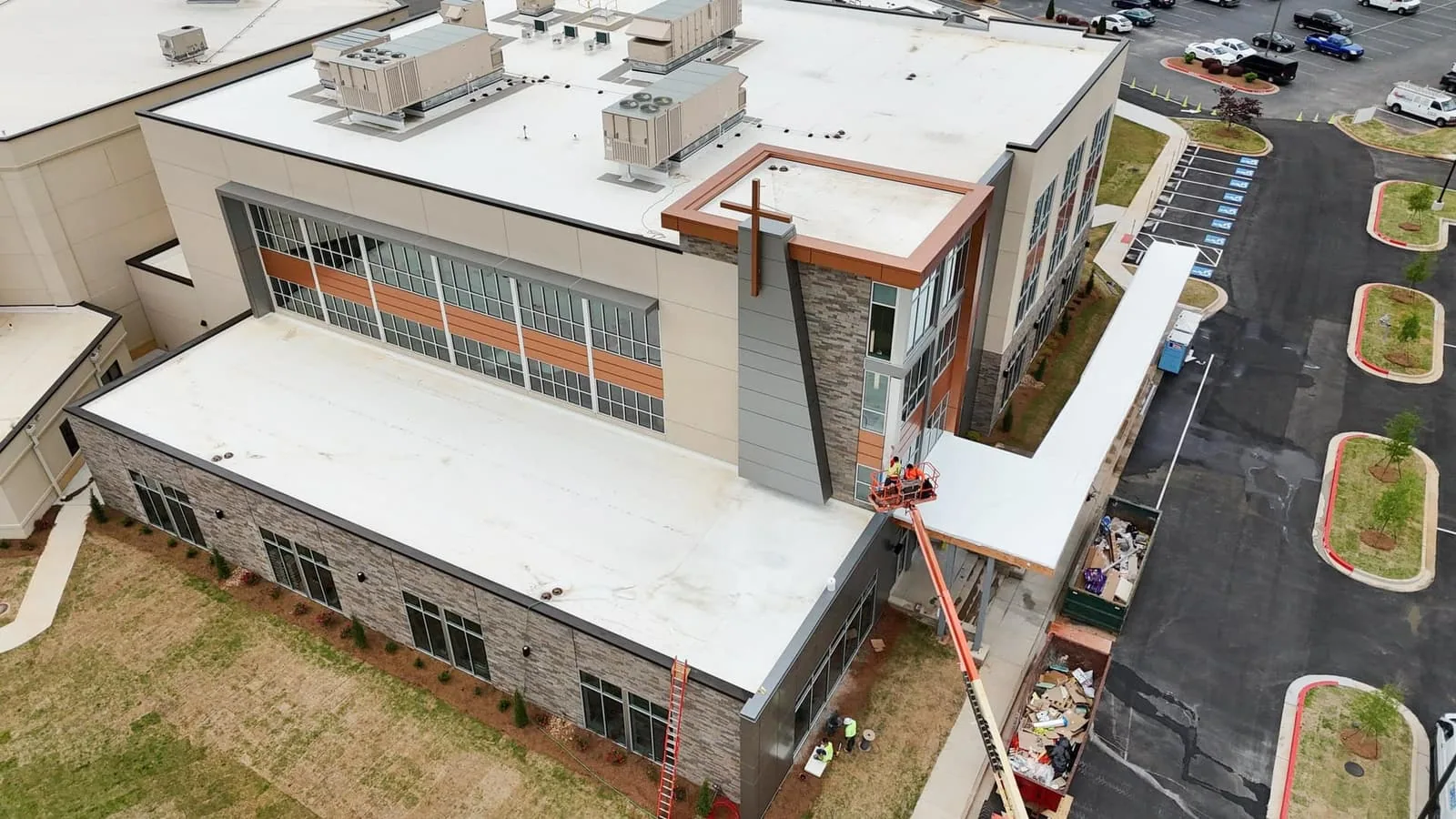
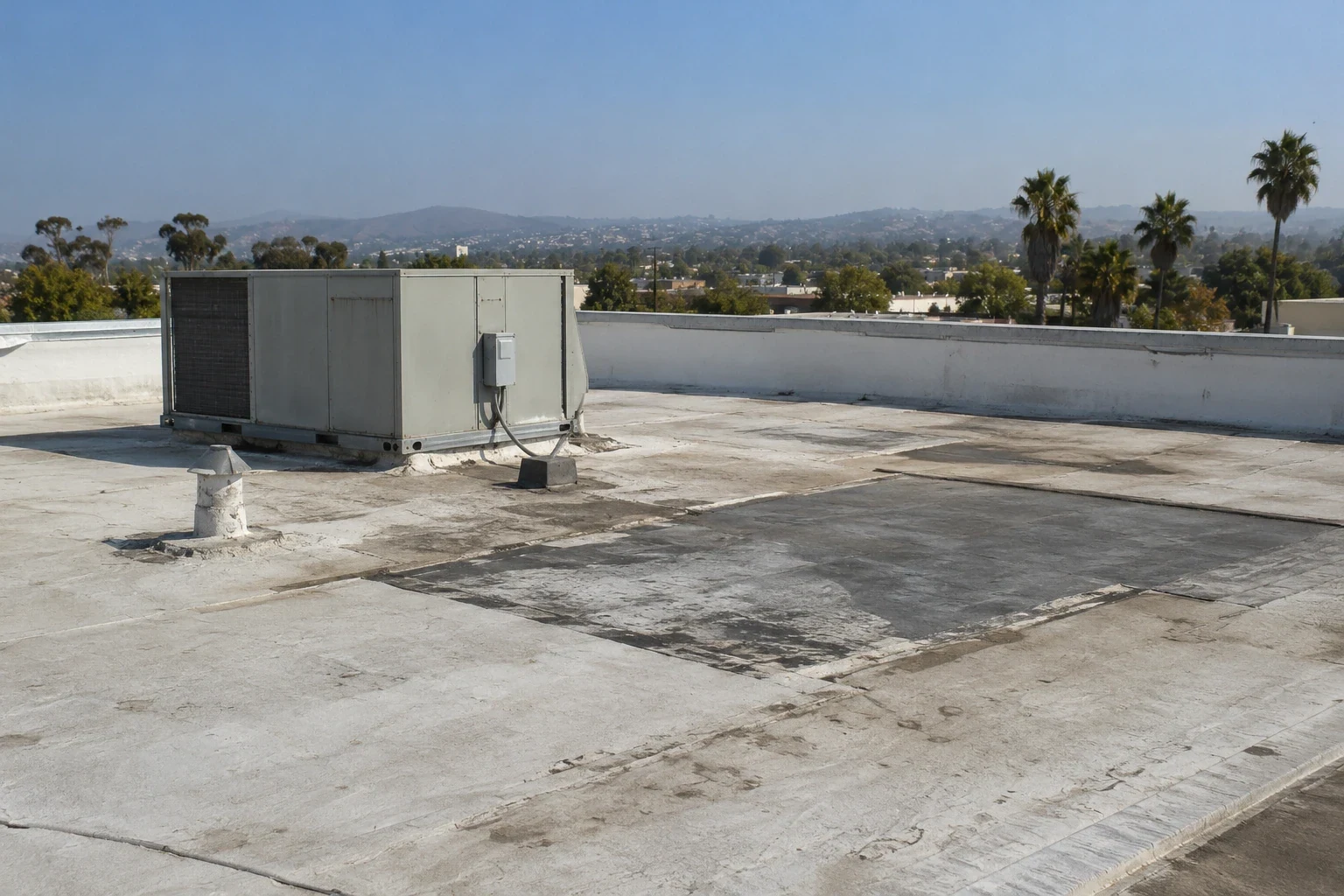
Retail centers and other commercial properties in Sand City need roof work planned around the people and businesses below. The city’s General Plan identifies a destination-commercial district with existing retail centers and commercial properties east of State Route 1. That gives the owner a broad local context, while the membrane, drains, curbs, and repair history still need a site review. We begin with the roof zones tied to the reported concern and the access available for inspection.
Salinas, CA normal rainfall is concentrated in the cool season. Those station figures belong to Salinas, not a property in Sand City, but they reinforce why an owner should have drainage and flashing checked before the wet period in the service region. A commercial roof inspection records conditions by area and gives ownership a basis for choosing repair, maintenance, or a broader renewal scope.
What should be checked on a Sand City retail roof?
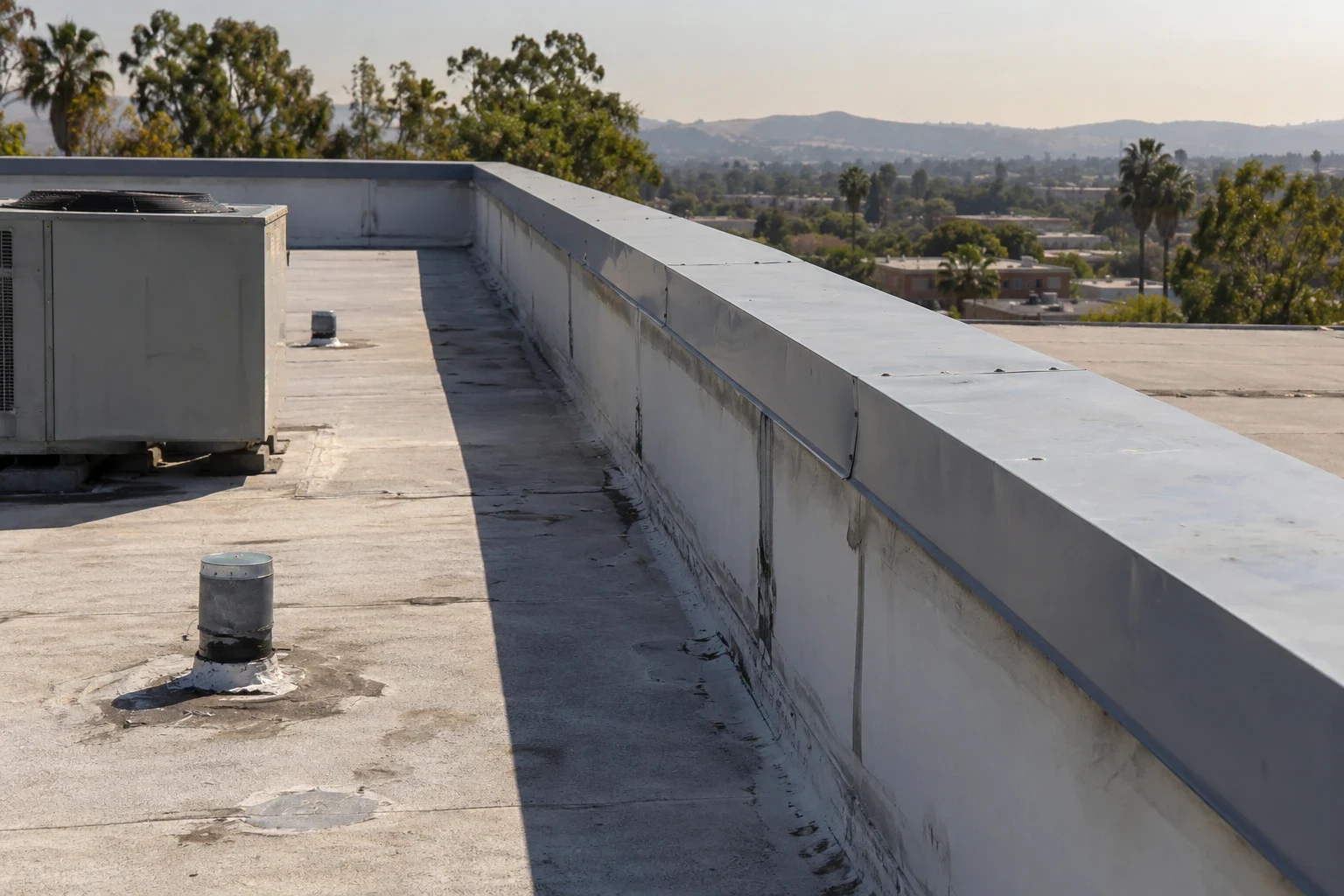
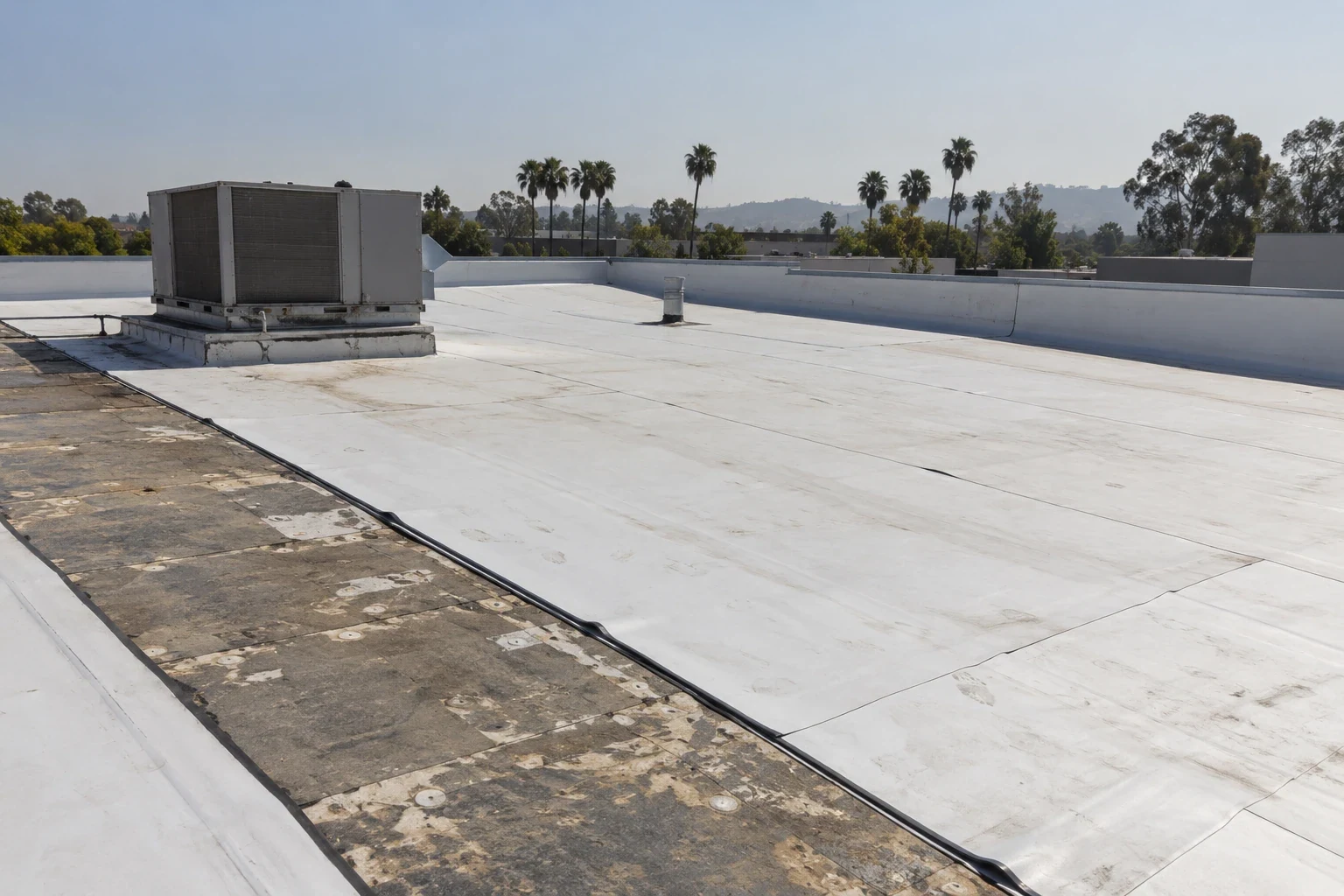
Retail centers can have multiple tenants sharing roof sections, drains, equipment curbs, and service routes. We map which roof areas belong to the building under review, then check membrane seams, metal joints, wall transitions, penetrations, skylights, edge metal, and visible prior patches. Equipment service may affect where a crew can work, so we record rooftop units and paths used by other trades. We do not assume one roof assembly across an entire center.
The city’s local conditions identify commercial properties east of State Route 1, but they do not list the membrane or condition of any individual roof. We confirm that at the building and compare it with available plans and repair records. If an owner manages more than one property, keep distinct condition files for Del Rey Oaks and Seaside rather than carrying a roof finding from one location into another.
A practical survey ties each image and record to an identifiable roof zone. That lets a facilities manager follow the repair boundary, see which details were included, and understand where access stopped during the first visit.
How do leaks and drainage affect the scope?
A leak report should include the room or tenant area, the time water appeared, and whether the condition returns after rain. On the roof, we trace the area around drains, scuppers, seams, curb flashings, parapets, and changes in elevation. Water may travel under a membrane before it reaches the ceiling, so the nearest roof detail is only a starting point. We compare the report with slope and outlet direction before deciding where a repair or test should begin.
Where the roof surface is intact but moisture remains a concern, an infrared moisture survey may help identify areas that need closer evaluation when conditions suit the method. We connect any follow-up to a question that could change the repair boundary, such as whether insulation should be opened or removed. If the issue is at a drain or scupper, a drain and scupper repair can address the outlet and the adjacent flashing detail together.
Most annual precipitation in Salinas falls in the cool season. We keep that statement tied to Salinas and inspect Sand City roof conditions directly, including current drainage performance and surface state, before recommending material work.

When can a repair stay within one roof area?
A repair is worth considering when one defect is defined and nearby materials remain suitable for a compatible connection. We inspect beyond the visible opening to check seams, flashing, fasteners, and past repair edges. If water has returned at the same detail, separate areas show distress, or moisture extends under the surface, a patch may not address the wider condition. The recommendation should show the observed defect and its limits.
For a localized failure, commercial roof repair can be scoped to the material and detail at issue. A broader renewal review considers layer count, deck and insulation condition, attachment, drain height, perimeter details, and transitions to adjoining sections. A roof recover evaluation asks whether existing material can remain below a new assembly; replacement may be more suitable if it cannot.
Cost and timing change with the number of zones, material removal, flashing and drain work, equipment protection, and the access window available to the crew. We describe those scope elements separately so an owner can compare a limited repair with a larger project using the same assumptions. Deferring a known opening can allow water to affect adjacent materials, so the owner should see what temporary protection is proposed while a larger decision is pending.
How can work fit retail hours and property review?
Tenant hours, receiving periods, public entries, and rooftop equipment schedules can shape the work sequence. We confirm who arranges roof access, which areas must remain open, where materials may be staged, and whether interior protection is needed. If several roof zones are involved, a phased plan can identify each active section and explain how it will be secured before the crew leaves. The property manager can then coordinate notices and access with the tenants affected by that phase.
If a roofing project is part of a larger property change, coordinate the roof scope and schedule with the owner’s other project contacts before mobilization. We focus the roofing scope on the existing assembly, repairs, and proposed details, and identify where separate project coordination affects the schedule.
For occupied retail space, an occupied-building roof sequence can state work areas, daily closeout, and protection below. Any change that affects structural or fire assemblies should be described early enough for the owner to resolve the related review before crews reach that detail.
What should the owner keep after the visit?
Keep roof plans, inspection photos, leak dates, invoices, and open recommendations together by building and tenant area. A useful report identifies what was visible, which areas were reached, and whether testing or a return visit remains necessary. It should distinguish completed repair from proposed repair so a future manager can see the roof’s current status without treating an estimate as proof of work.
A roof condition report can group findings by urgency and roof zone. For a center with more than one property, keep a distinct condition record for each roof and compare recommendations only after each site has been inspected. Scheduled maintenance can revisit drains, seams, and penetrations on an agreed calendar and carry unresolved items forward.
If one part of a roof can be repaired now while another requires further investigation, make those paths visible in the record. Ownership can plan the next access window and budget decision without losing the location of open items or confusing one tenant’s report with another’s.
Questions Owners Ask
How do you identify a roof system in Sand City?
We inspect the specific building to confirm visible membrane or metal, flashing, drainage, repair history, and access needs.
How do you investigate a leak over a retail tenant?
We compare the tenant’s report and timing with roof zones, drains, seams, penetrations, and nearby transitions. Water can travel, so the visible ceiling mark does not by itself set the repair boundary.
Can the roof work happen outside store hours?
We coordinate the access window, staging, public entry protection, and tenant notices with the property contact. The roof assembly and task determine whether a phase can be completed and secured in that window.
When is a roof recover worth considering?
A recover may be evaluated after checking moisture, attachment, layer count, deck and insulation condition, drainage, and edge heights. If one of those findings is unknown and could change the assembly, further investigation can come first.
How do you schedule roof work in Sand City?
We review the property’s drainage and current weather conditions before setting repair or installation timing.
Related Roofing Work
Schedule a Sand City roof review
Send the property location, leak history, roof access contact, and operating schedule. We will map visible conditions by roof zone and outline the next repair or renewal decision.