Commercial Roof Drain and Scupper Repair in Salinas, CA
Repair commercial roof drains and scuppers in Salinas, CA with a review of flow paths, flashing, outlets, ponding areas, and safe roof access.
Overview
An obstructed drain can turn ordinary rain into standing water around rooftop equipment, seams, or a low flashing edge. Commercial drainage work in Salinas starts with how water reaches the outlet, not only with clearing the strainer. We inspect drains, scuppers, nearby membrane, and overflow routes, then identify whether the problem is maintenance, a failed detail, or a broader slope issue.
Most of Salinas’ normal rainfall comes in the cool season, after a long dry period. Leaves, packaging, grit, or roof work debris can collect between inspections, so outlets should be checked before rain returns. We also review how the roof behaved during recent weather, because a clean drain does not explain recurring ponding elsewhere on the field.
Where should water move across the roof?
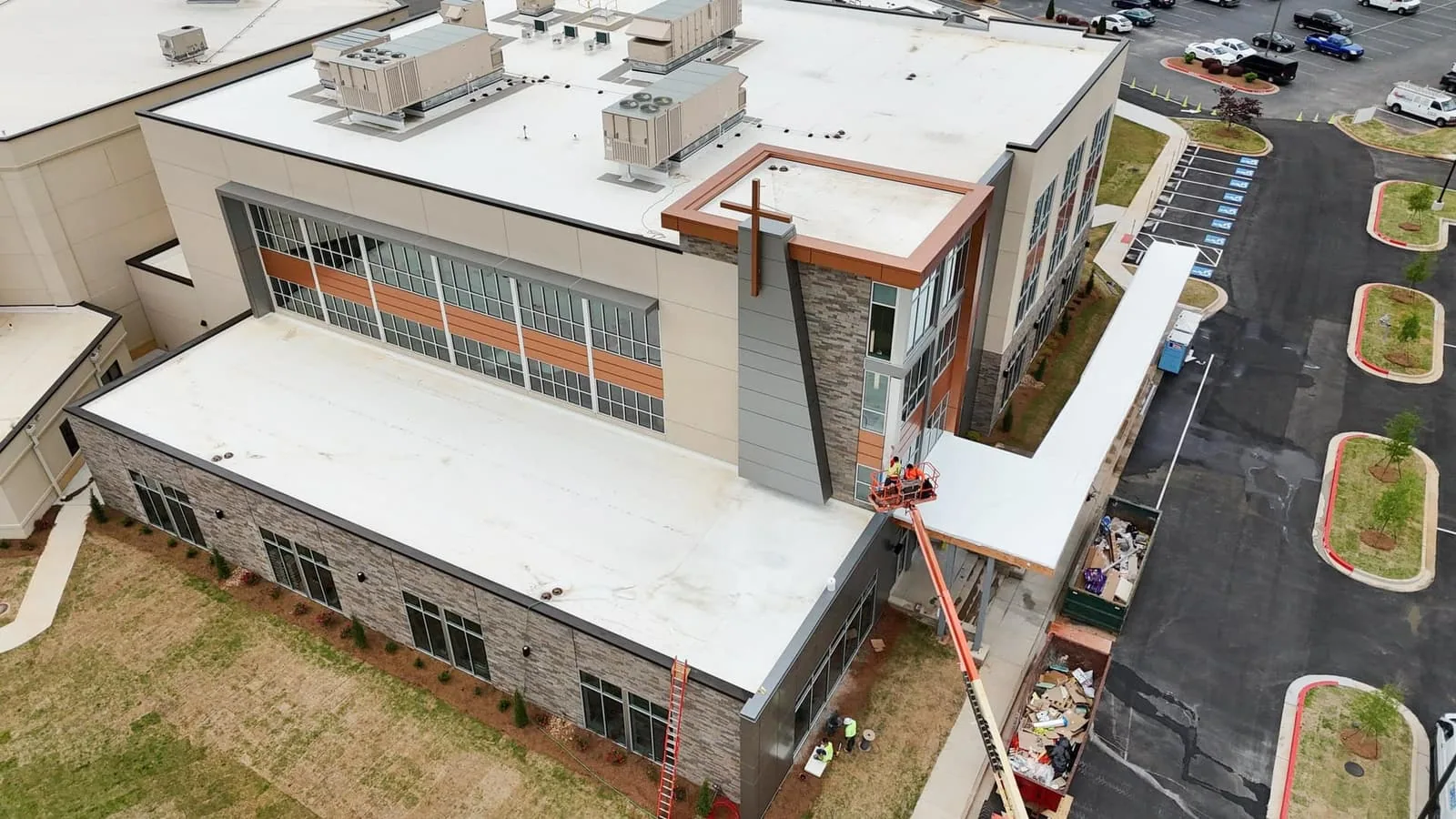
We trace the intended drainage path from high areas toward each drain or scupper. Tapered insulation, crickets, roof framing, and later additions can direct water in unexpected directions. A low spot near a curb may have been created by a repair, while a clogged strainer can raise water in an otherwise functioning area. The inspection records what is visible and whether the roof plan matches the flow we observe.
Standing water is not one problem with one fix. It can result from debris, a blocked outlet, deflection, inadequate slope, a settled drain bowl, or a structural concern. We check the outlet and surrounding membrane, look for water marks and debris lines, and compare the affected area with prior photos. If the cause is not visible, we may recommend a closer evaluation before changing the roof assembly.
Overflow routes matter as much as primary drains. Scuppers, secondary drains, and emergency outlets should remain open and discharge where intended. We identify where water would exit and whether the opening is damaged, blocked, or sealed by previous work. A roof that has no safe overflow path may need a broader review by the appropriate building professional.
What can fail around a drain?
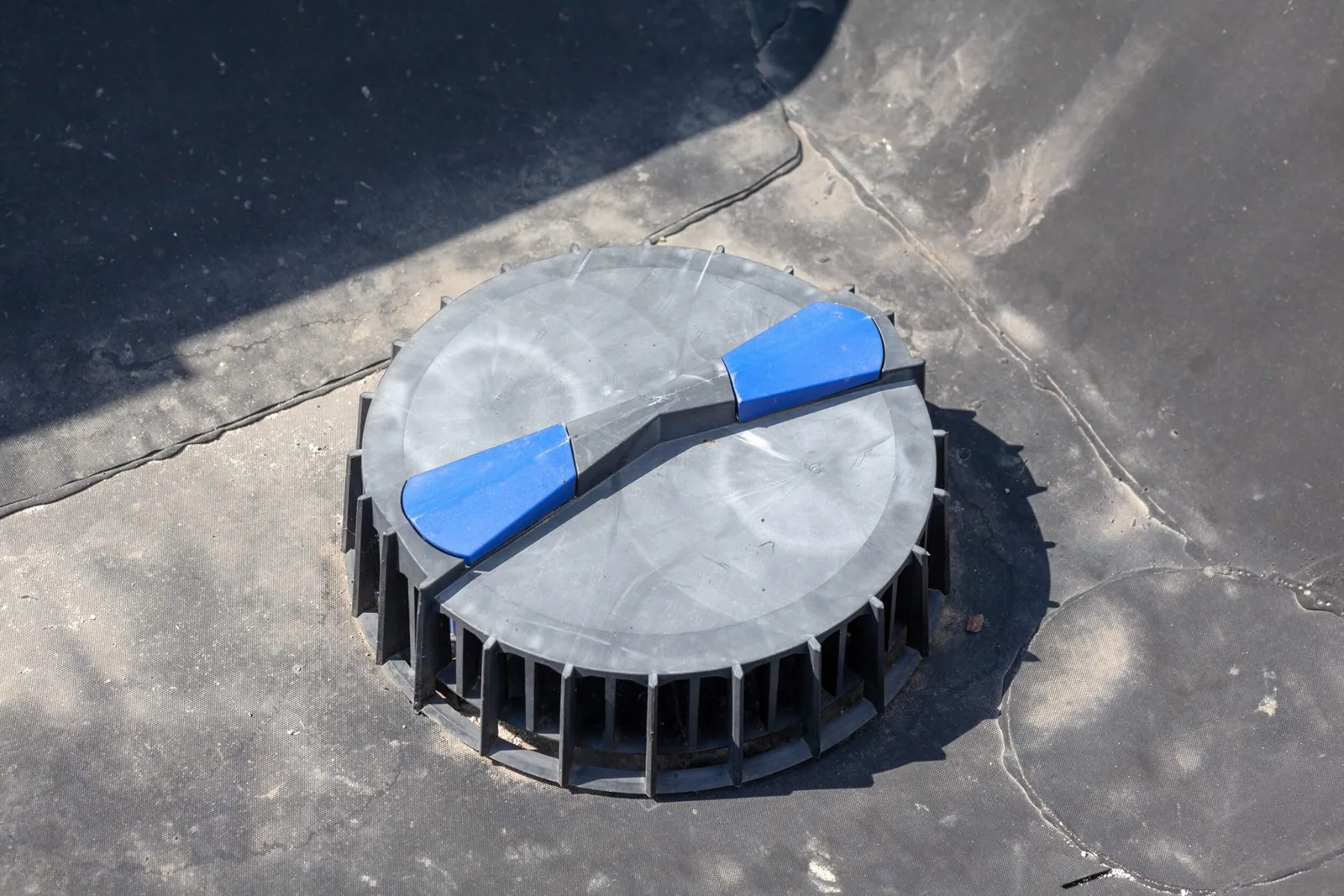
The roof membrane must transition securely to the drain bowl. We inspect the clamping ring or attachment detail, drain flashing, seams, strainers, and visible signs of movement. Debris under a strainer can obstruct flow, while a loose or corroded component may require a repair beyond cleaning. We describe what can be reached and whether the existing drain remains serviceable.
Water can enter around a drain even when the outlet is clear. The membrane may have separated from the bowl, a repair may not extend far enough, or the surrounding insulation may be wet. A surface seal should not cover a failed transition without restoring the connection. Where hidden moisture is suspected, a targeted moisture survey may help define a repair boundary.
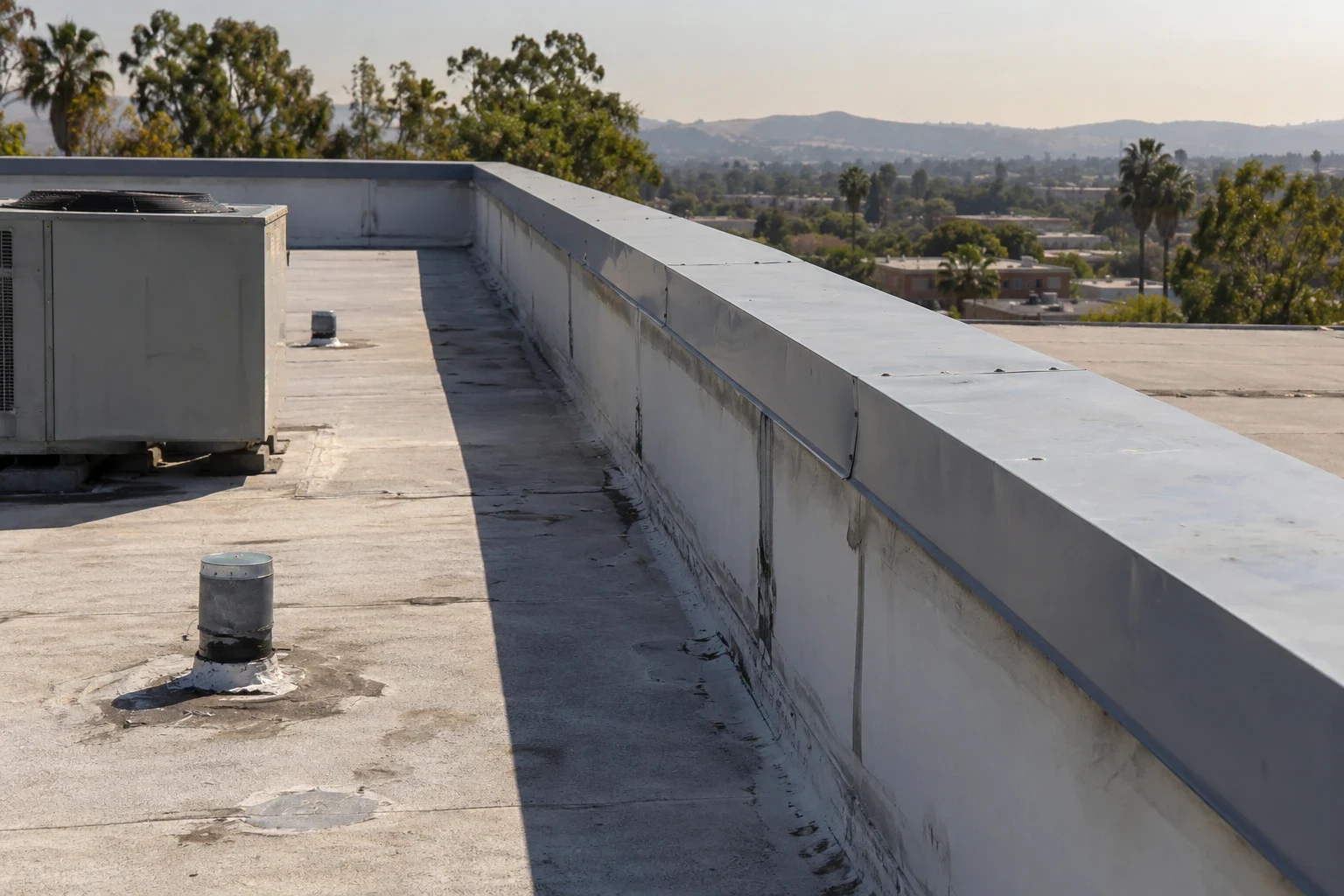
Scuppers and downspouts also need a clear path through the wall and away from the building. We inspect the membrane termination, opening, metal edge, and discharge route where accessible. If water exits against a wall, walkway, or another roof section, the owner may need to coordinate changes to the drainage destination as part of the project.
Which correction fits the condition?
When debris is the only issue, cleaning and documenting the outlet may resolve the immediate maintenance item. A damaged drain detail can require membrane removal and rebuilding around the bowl. A scupper repair may include the flashing and metal transition, not only new sealant at the visible edge. We define the work boundary and materials for the existing roof type.
If water repeatedly collects because the slope does not lead to the outlet, the correction may involve tapered insulation, crickets, drain modifications, or a designed reroof assembly. We review how a proposed correction affects curbs, parapets, door thresholds, and overflow paths. Adding material at a low spot without checking the full flow path can move the problem instead of resolving it.
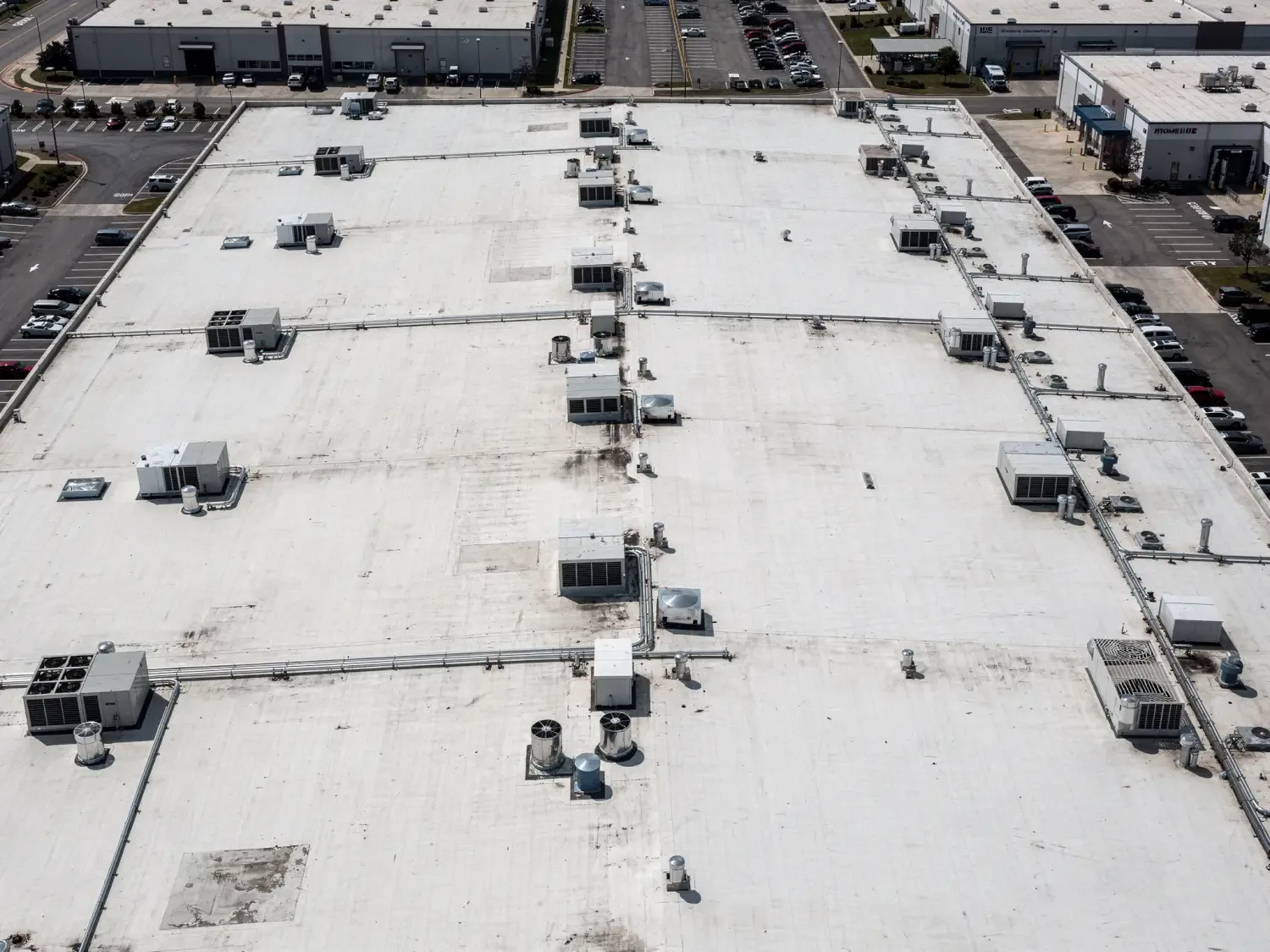
For large roofs near Airport Boulevard and U.S. 101, drainage zones may serve separate building bays or equipment areas. A facility at the Airport Industrial Park or South Main and Blanco Road should have its outlets mapped to roof sections so repair records remain clear. Each drain is checked against the actual building layout.
When should drain work be scheduled?
Before the cool-season rains, an owner can schedule a drain and scupper review to remove debris and address visible defects. After rain, a follow-up can show whether water drained as intended and whether new interior moisture appeared. The timing depends on the roof’s history, surrounding trees or construction, and how quickly debris can return.
Repairs need dry, suitable surfaces and materials. Salinas has frequent summer fog and low clouds in the valley, so an early surface can be damp even in a period with little rainfall. We check the membrane before applying a repair and use current conditions to determine when the work can be completed. If a temporary measure is needed, the owner receives a return plan.
Drain work can affect occupants if outlets discharge near entries or loading areas. We coordinate access and any temporary restrictions with the site contact. If the work requires interior protection or a drain shutdown, those steps should be agreed before the roof is opened.
How can the drainage record help later?
We record the drain or scupper location, condition, work performed, and any standing-water observations. Photographs should show the outlet and enough roof area to understand its relationship to the flow path. If the bowl or downspout could not be inspected, that limitation is recorded along with the next access needed.
A roof plan with outlet labels helps maintenance staff know which drains to check and where water should discharge. It also lets a later inspector compare the same area after cleaning or repair. For multi-building properties in Boronda or Prunedale, a consistent map keeps records from blending one roof’s drainage history with another.
If ponding continues, the report can recommend monitoring, a focused roof survey, or an engineering review depending on what is observed. A full roof inspection may identify related seams or low areas. We separate drainage work from any larger replacement or structural scope, so the owner can approve each decision on its evidence.
What belongs in routine drain maintenance?
A maintenance visit should remove debris that blocks flow, check strainers and accessible outlets, inspect visible flashing, and record ponding or water marks. It should also confirm that overflow paths remain open. The owner can set a schedule based on actual debris, roof use, and prior drainage problems rather than relying on a generic interval.
After roof repairs, equipment installation, or other trade work, the affected drains and nearby membrane deserve another look. A new curb, walkway, or conduit route can change how water reaches an outlet. We document those changes and recommend what should be checked at the next visit.
A roof maintenance plan can link drain findings with seam, flashing, and equipment records. If recurring ponding stems from broader roof geometry, the owner can compare drainage correction with a replacement plan. Routine cleaning is valuable, but it cannot fix an underlying slope or damaged drain detail.
Questions Owners Ask
Does a blocked drain explain all standing water?
It may explain a local buildup, but ponding can also reflect slope, deflection, a settled drain, or a damaged flow path. We inspect the outlet and surrounding roof area, then identify whether cleaning, repair, or a broader review is appropriate.
Can you repair the drain without replacing the roof?
Often, if the surrounding assembly is sound and the defect is localized. We inspect the drain bowl, membrane transition, and nearby insulation. Widespread moisture or failed surrounding material can change the scope and should be documented before work proceeds.
Should drains be checked before the rainy season?
A pre-rain review can clear debris and identify visible damage before repeated rainfall. The schedule should also reflect nearby construction, roof traffic, and prior ponding. A follow-up after rain can show whether the flow path is working as intended.
Can a scupper be moved to improve drainage?
Changing an outlet can affect the roof assembly, wall, overflow route, and water discharge below. We inspect the existing layout and define the needed design or building review before proposing a location change.
Related Roofing Work
Trace the flow before repairing the outlet
Share where water collects, which outlet serves the area, and any recent roof work. We will inspect the drain detail and surrounding flow path, then document an appropriate correction.
