PVC Roofing in Salinas, CA
Plan commercial PVC roofing systems in Salinas around exposure, welded seams, drainage, penetrations, and building operations and access.
Overview
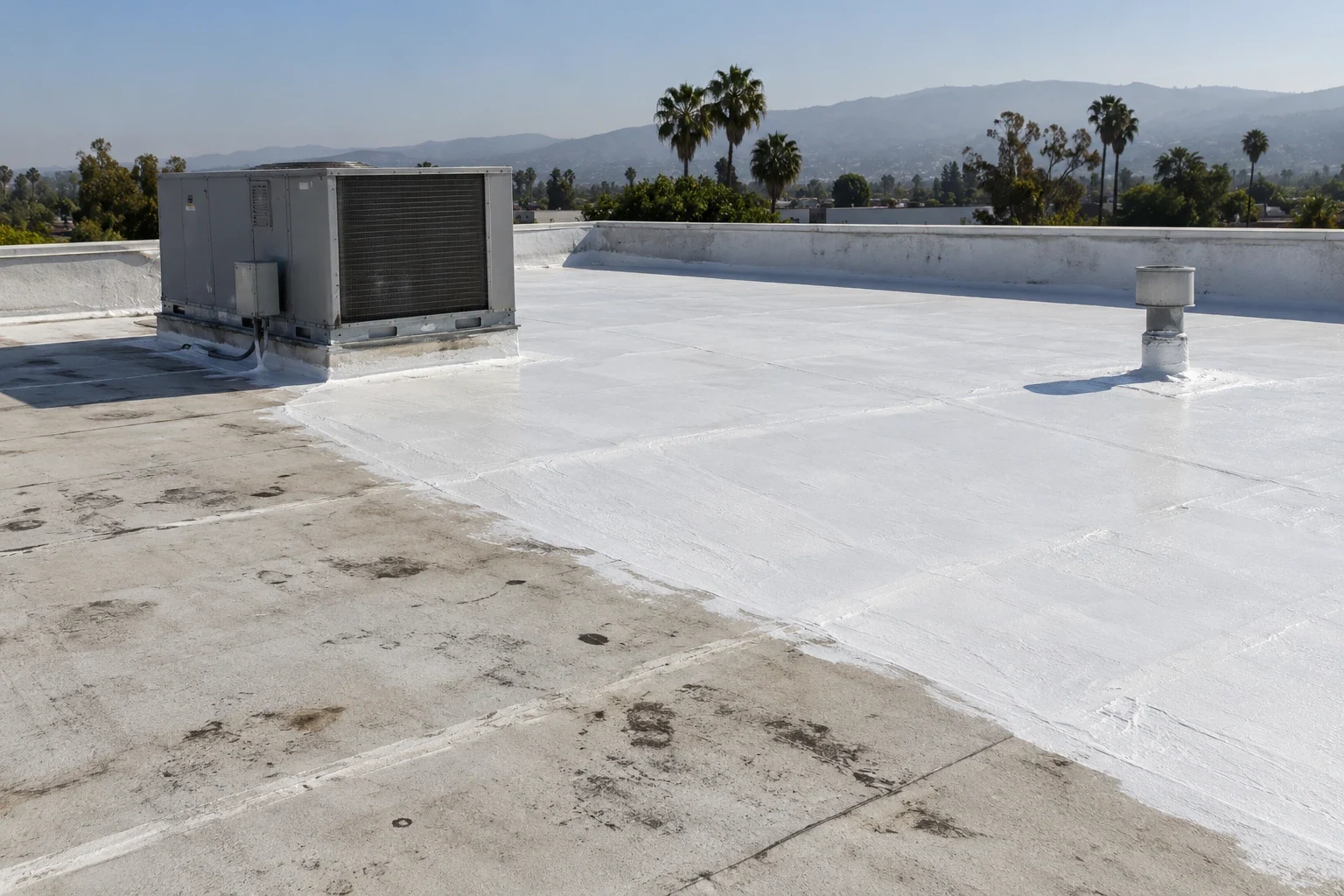
A PVC roof can suit a commercial building where the owner needs a heat-welded single-ply membrane and wants the assembly selected around the work happening below it. In Salinas, that might mean a warehouse, food-related facility, shop, or public building with rooftop equipment and regular service access. We first identify the existing deck, roof layers, drainage, penetrations, and operating constraints. Then we explain whether installation, repair, or another system makes sense for those conditions.
Summer fog and a long dry season contrast with most normal rainfall arriving in the cooler months. That local pattern can help plan access and installation windows, but it does not decide which membrane a roof needs. The assembly, exposure, project requirements, and details at curbs and edges drive the recommendation.
What does PVC bring to the assembly?
Polyvinyl chloride roofing is a thermoplastic single-ply membrane. Seams are heat-welded, and the material is available in formulations intended for different project conditions. For a restaurant, food-processing area, or other roof with exhaust discharge, the project team should identify what reaches the roof surface and confirm compatibility with the proposed membrane. We do not select a system from a building label alone; we consider the actual exposure, roof geometry, drainage, and manufacturer’s current technical requirements.
Membrane selection also needs to fit the deck, insulation, cover board, attachment method, perimeter design, and expected foot traffic. A roof supporting regular mechanical service needs a plan for walkway protection and safe routes. Compare the details with TPO roofing assemblies and KEE membrane systems when the project team is weighing thermoplastic options. Each system must be evaluated against the same roof conditions and scope.
What must be known before the work starts?
We record the roof’s existing system where it can be identified, record prior repairs, inspect attachment and edge conditions, and trace the drain paths. Soft or displaced areas, open laps, wet insulation, or corrosion at a deck connection can change the installation approach. If the building’s records do not identify the assembly, selective investigation may be needed before materials and tie-ins are finalized. The owner should understand which findings are confirmed and which remain concealed until removal.
A recover is considered only when the assembly below is stable and suitable to remain. We examine layer count, moisture conditions, perimeter height, drainage, and how new flashing can tie into the existing construction. If a tear-off is needed, the scope should state how open roof areas will be protected and how concealed damage will be documented for owner approval. An inspection and condition report can make those decisions more concrete before a bid or schedule is set.
Where do PVC roofs need careful detailing?
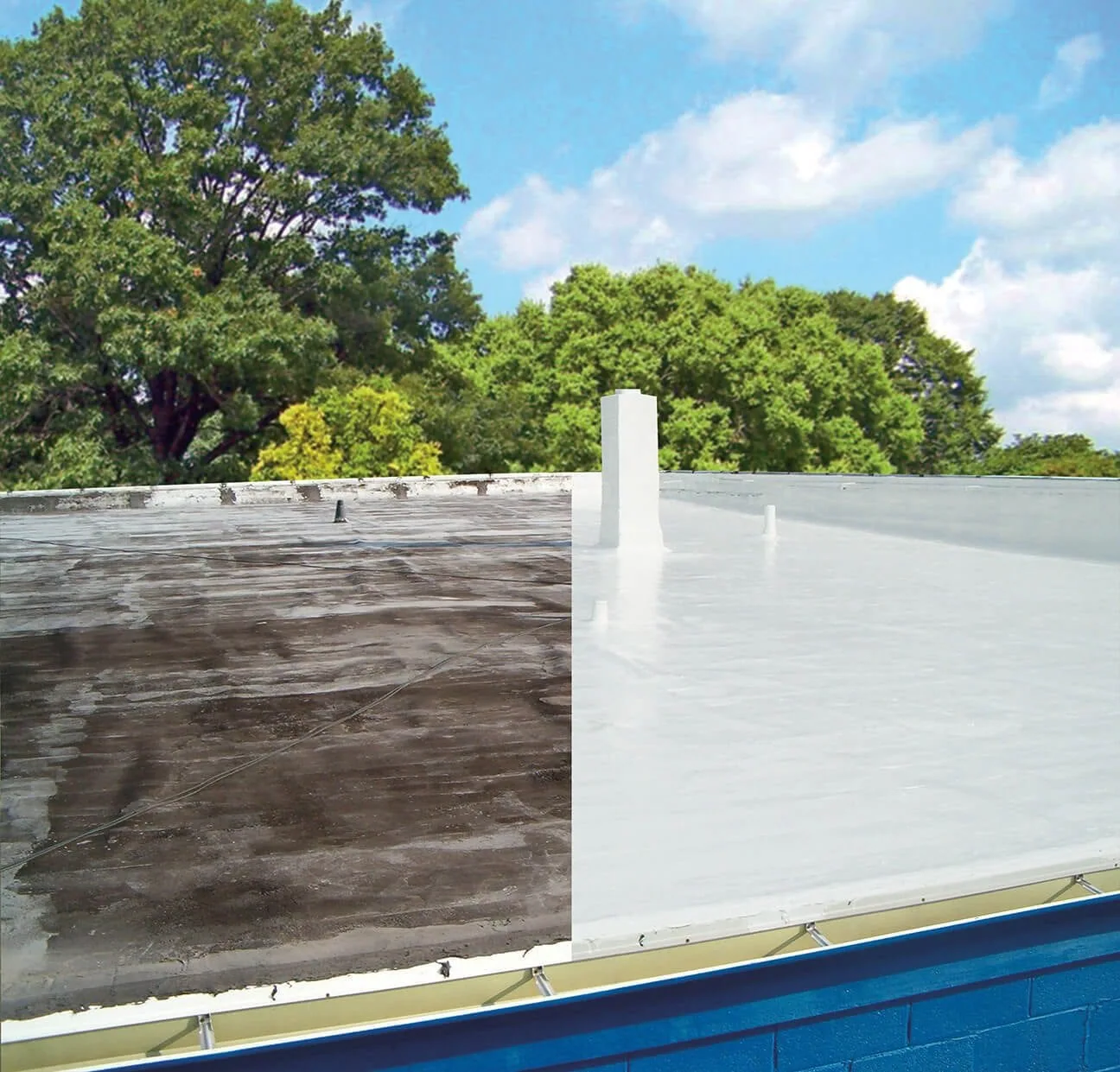
Field seams are only one part of the waterproofing. Corners, parapets, expansion joints, curbs, pipes, drains, and transitions to metal all need compatible details that carry the membrane up or into the connection. The surface must be clean and dry enough for a consistent weld. Crews make test welds as conditions change, then probe completed seams and correct defects while the work remains accessible. A clean field with a weak curb flashing is still a roof with a leak path.
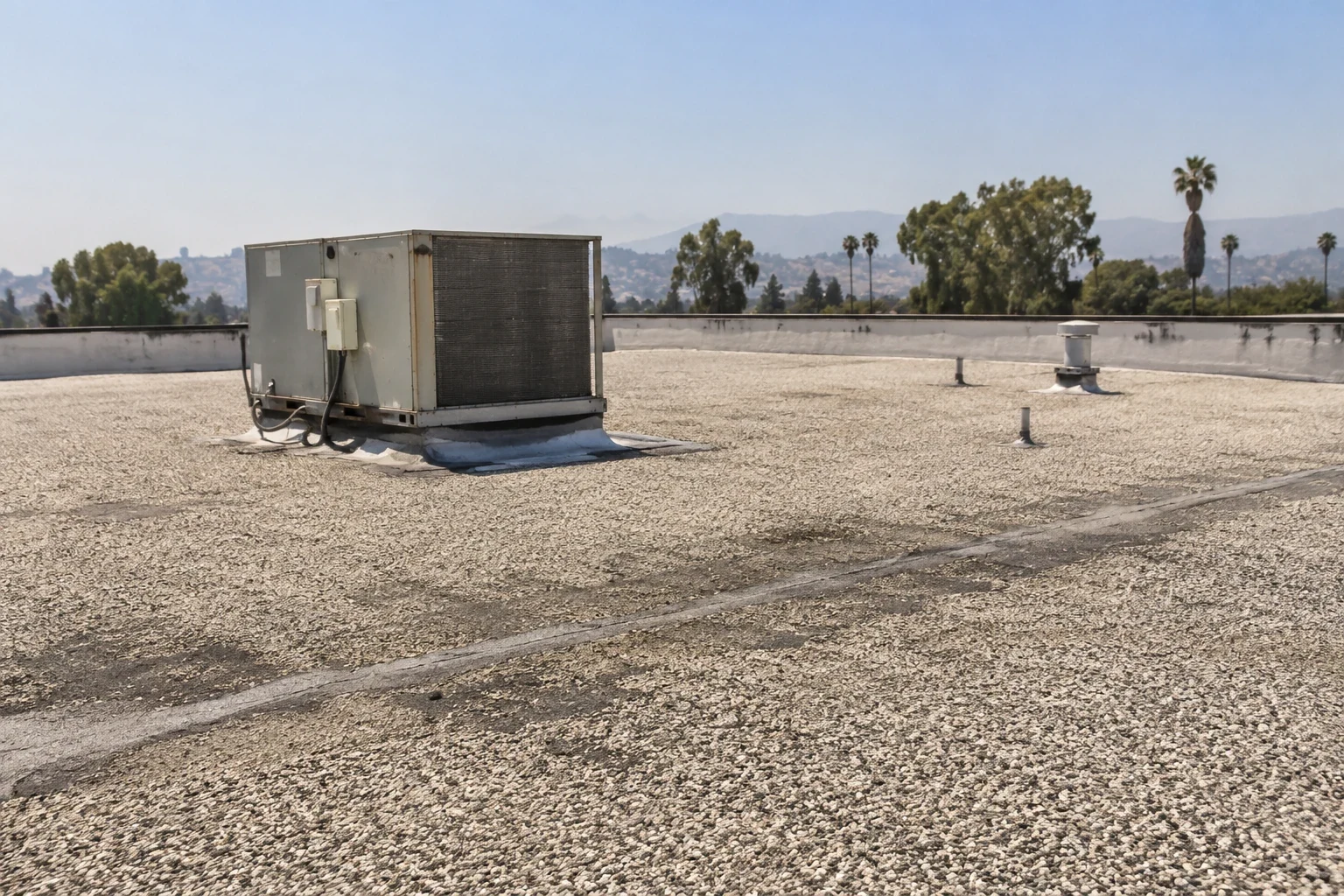
Equipment service is a recurring origin of roof traffic. A refrigeration technician or mechanical contractor may return to the same unit, so walkway placement and flashing access should be considered before the crew leaves. We coordinate curb repairs with the equipment schedule and document where roof work interfaces with another trade. If a past repair used incompatible material, we identify the boundary and remove what prevents a sound tie-in. Flashing around roof openings and drain and scupper details deserve the same assembly-level review.
How do drainage and insulation affect PVC?
A new membrane does not erase low areas, reverse deck deflection, or correct an undersized drain. We inspect where water travels and how it leaves the roof, including primary outlets, overflow provisions, scuppers, and areas where debris collects. The project should state whether it will adjust slope, rebuild drain bowls, or leave existing geometry in place. That distinction matters when an owner expects a membrane replacement to solve recurring ponding.
Insulation and cover board influence attachment, thermal behavior, and the surface’s resistance to maintenance traffic. Their selection must coordinate with the deck, roof height, edge metal, rooftop equipment, and applicable project review. The city’s local conditions identify Salinas Ag-Industrial Center and other work districts. At a building in Alisal and East Salinas, we confirm equipment access and roof-zone limits against the actual site plan. Those constraints shape where staging and service routes can fit. The planned Salinas Ag-Industrial Center and Salinas Business Park among commercial and industrial areas. For facilities in those districts, roof plans and equipment records help locate service routes and confirm where added thickness affects transitions. We tie the membrane into drains and walls only after the complete build-up is understood.
How can replacement fit an operating facility?
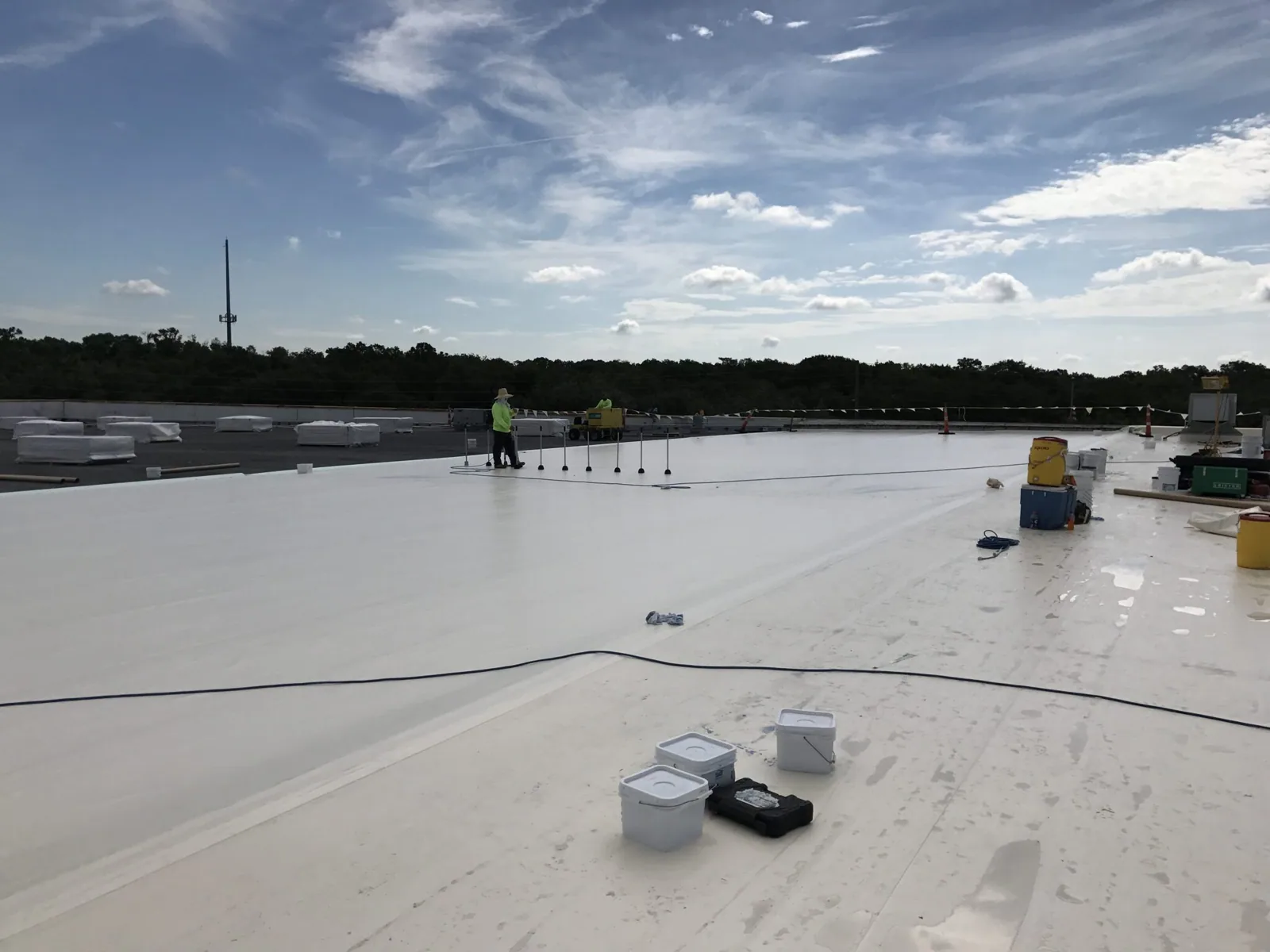
Before work begins, we review roof access, material delivery, staging, interior protection, and the areas below each planned work zone. An agricultural-support facility may have receiving and production windows that limit when crews can cross a loading area. A retail or office property may need tenant notices and clear pedestrian routes. We work with the property contact to identify constraints, set the sequence by roof section, and define who can approve changes when removal reveals hidden conditions.
Each shift needs a closeout plan for exposed edges and drains. The crew should leave the active area protected against a change in weather, secure materials, and tell the site contact which zones are complete. If the building stays occupied, the plan should state where noise or access restrictions may occur and when those restrictions end. Our occupied-building reroofing approach keeps those decisions in the same schedule as membrane installation rather than leaving them to the morning of the work.
When is a PVC roof repairable?
A puncture or failed weld can be repairable when sound material surrounds it and the area is accessible for proper preparation. A compatible patch must extend onto clean, secure membrane, and the repair should address nearby movement or an attachment problem that contributed to the failure. Coating or sealant over a failed weld is not a substitute for rebuilding the thermoplastic connection. We record the repair location and record any adjacent condition that merits monitoring.
Recurring leaks, brittle or damaged membrane across several roof zones, widespread wet insulation, or failing perimeter transitions may call for a larger scope. Maintenance can reveal whether defects remain isolated and help keep drains, flashings, and service paths in order. Our restoration review considers whether the existing assembly is suitable for renewal, while replacement planning compares a new assembly with continued repair. A recommendation should follow the condition record, not the product name.
Questions Owners Ask
Is PVC suitable for every commercial roof?
No membrane fits every exposure or assembly. We review the roof layers, deck, drainage, equipment, and any material exposure at the property, then compare PVC with other systems under the same project requirements.
Are PVC seams glued or welded?
PVC field seams are typically heat-welded. Clean surfaces, proper machine settings, test welds, and seam probing help confirm the connection. Flashings and transitions also need details compatible with the selected membrane.
Can PVC go over the current roof?
A recover may be possible when the existing assembly is stable, dry enough, and compatible with the new design. We inspect layer count, attachment, moisture evidence, edge height, and drainage before recommending it. If conditions fail that review, removal may be necessary.
What should happen around rooftop equipment?
The curb and flashing need to stay watertight while allowing future service. We coordinate the roof detail with equipment access, walkway protection, and the mechanical contractor’s schedule, then document the connection after the work.
Related Roofing Work
Choose the system from the roof conditions
Share available roof records, the leak history, rooftop equipment needs, and your operating schedule. We will inspect the assembly and explain the PVC scope alongside the conditions that affect it.