Emergency Commercial Roof Repair in Salinas, CA
Get emergency commercial roof repair in Salinas, CA, with safe dry-in work, interior protection, and a follow-up scope for permanent repairs.
Overview
A roof opening above a receiving bay changes the next few hours for everyone in the building. The immediate job is to protect people, inventory, equipment, and electrical systems while limiting further water entry. Our emergency service is available at any hour, including weekends and holidays. We first confirm what is happening below, how roof access can be made safely, and whether temporary control can start without interrupting a critical operation.
Salinas has a cool-season rainfall pattern, so a storm-period response may arrive while drains are carrying runoff and surfaces are wet. We set the short-term objective clearly: stabilize the affected area, manage water, and record what needs a permanent repair visit once the roof and site conditions allow.
What needs protection first?
Before anyone climbs, the facility contact should identify active water, electrical hazards, ceiling instability, and areas where people or stock must move. We confirm a safe access route and check whether wind, rain, darkness, or a slick roof surface makes immediate roof entry unsafe. If conditions prevent roof work, interior containment can still reduce damage while the next safe access window is arranged.
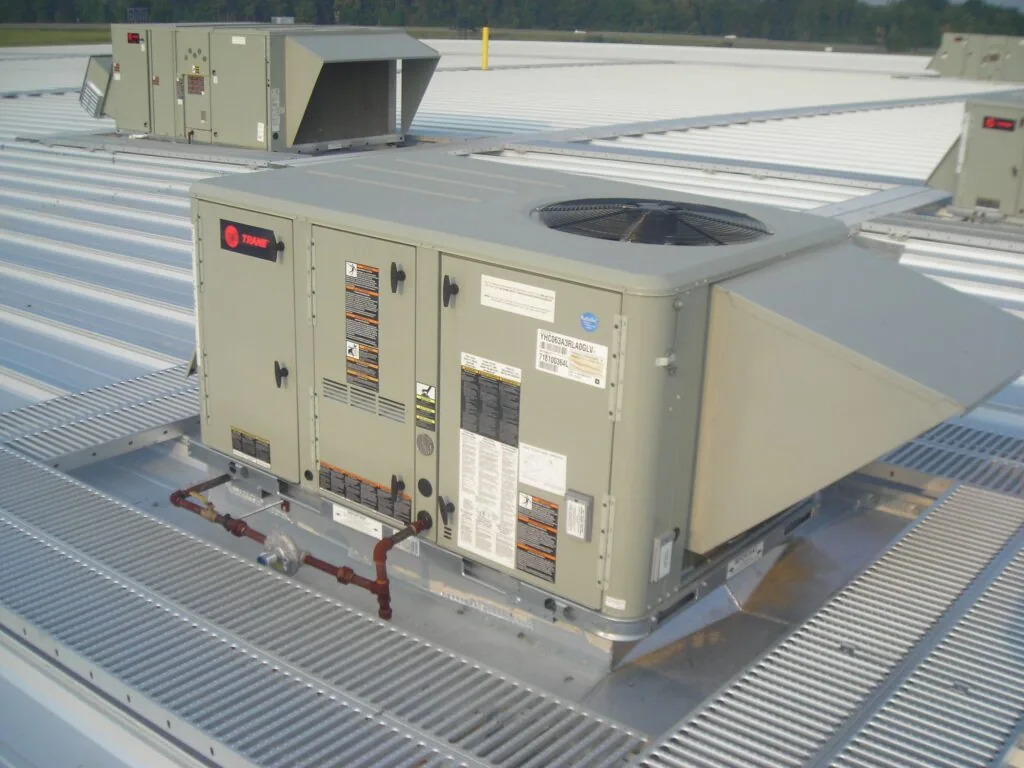
On arrival, we locate the reported interior area and determine whether water is still entering. A ceiling stain, dripping fixture, or wet wall may point toward a roof issue, but mechanical equipment and plumbing can also produce moisture. We compare the interior pattern with roof features above, including drains, wall transitions, curbs, skylights, and seams. That first pass narrows the likely origin and helps keep temporary materials focused on a real opening.
How can a temporary dry-in help?
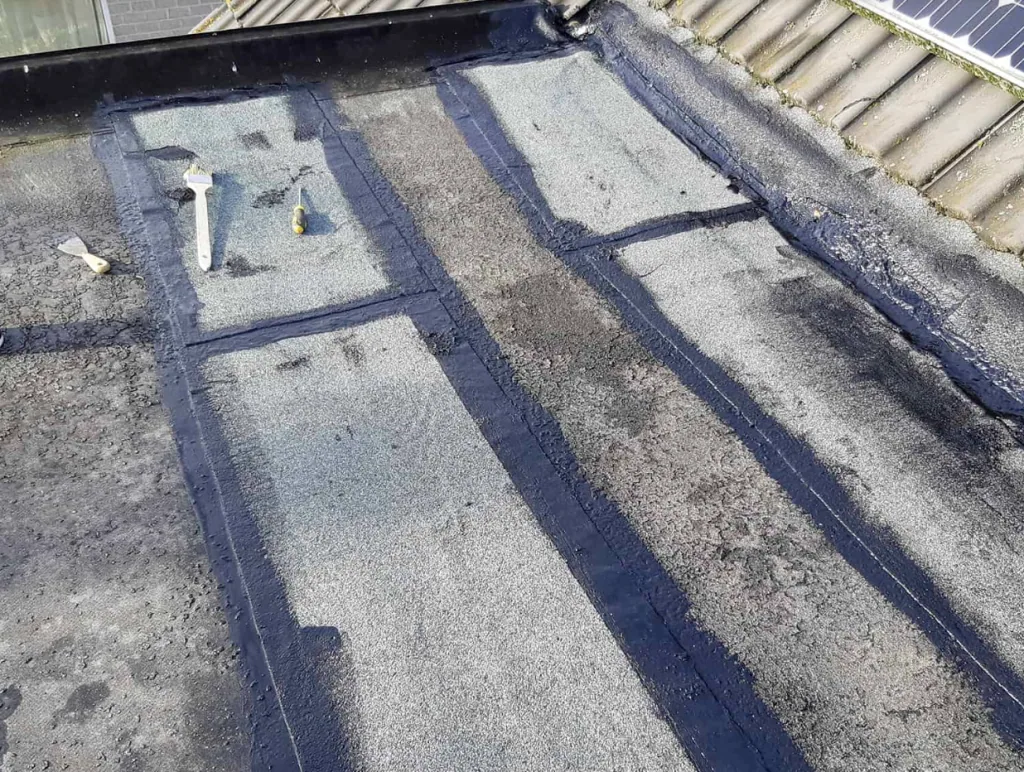
A temporary cover, secured tarp, or compatible emergency seal can limit water entry until a durable repair is practical. The right method depends on the membrane or roof surface, the size and location of the opening, current moisture, and expected weather. We inspect the perimeter, avoid covering drainage paths, and secure the temporary protection against movement. A loose cover can collect water, pull at an edge, or create a new hazard, so installation and follow-up both matter.
Temporary work has limits. It is meant to reduce immediate exposure, not certify that concealed insulation is dry or that the roof is restored. We mark the protected area, photograph the surrounding details, and tell the owner what conditions would require another visit. If rain continues or the opening lies near equipment, the protection may need monitoring from a safe position until permanent work begins.
Some products cannot be installed reliably on a wet, contaminated, or cold surface. When adhesion or welding conditions are not suitable, we explain the available temporary control and any remaining exposure. Once the surface can be prepared, we return to make a compatible repair, confirm the transition, and document whether additional inspection is needed. A clear handoff keeps a short-term measure from being mistaken for final restoration.

Can the response fit around active work?
Emergency work can affect deliveries, production, office access, or tenant activity. We agree on a contact, work zone, and route before staging material. If interior protection is needed, the facility team can help identify sensitive equipment, food-handling areas, stored goods, or locations that cannot be shut down. We then sequence access and cleanup to keep the disruption within the agreed boundary.
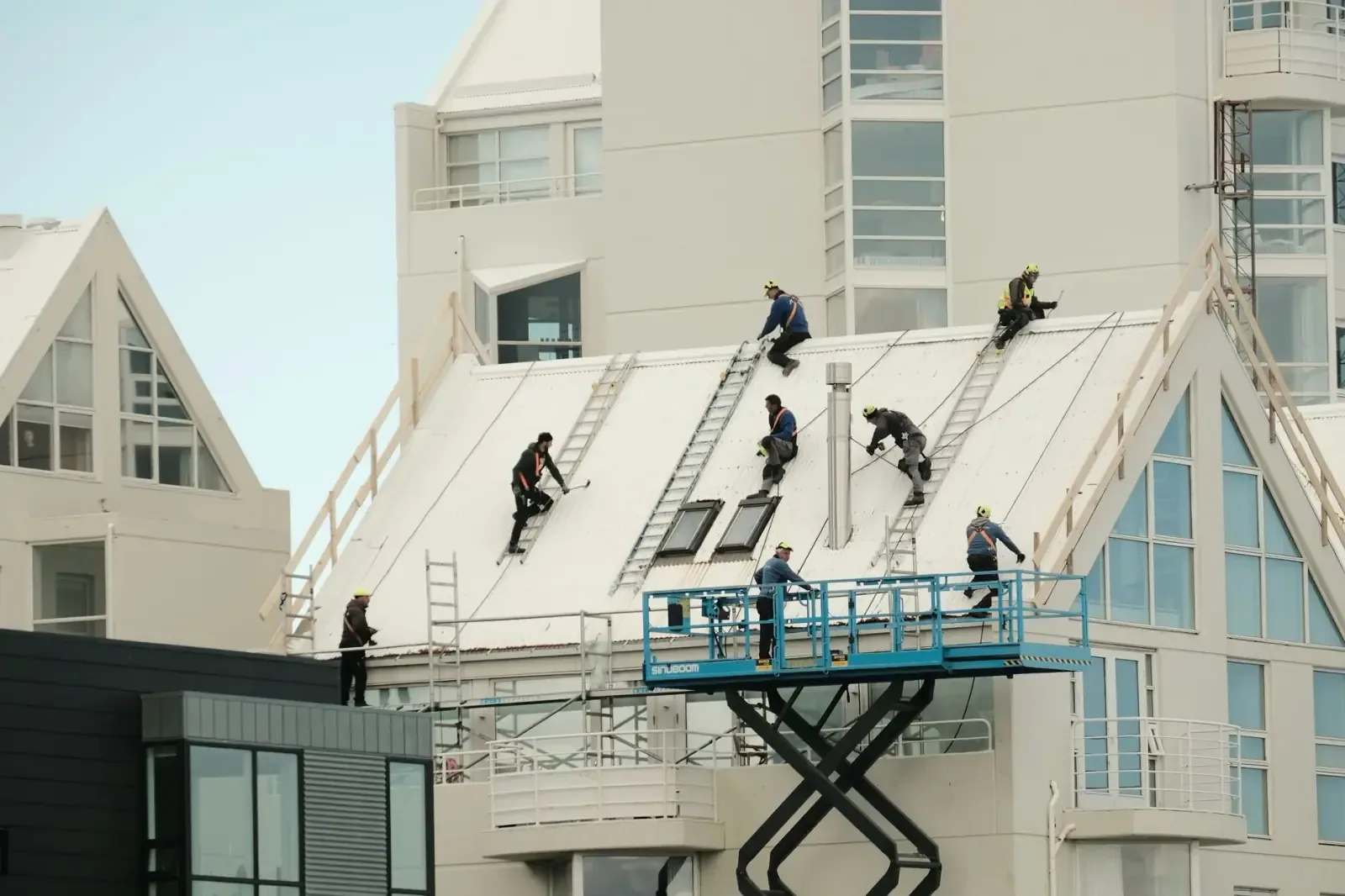
Roof access also depends on building controls. Ladders, hatches, fall protection, roof traffic, rooftop equipment, and active mechanical systems all need review. We clarify who can authorize isolation or shutdown if work is near powered equipment, and who can approve a scope change when concealed conditions appear. That conversation helps the owner make a fast decision without asking a crew to guess at facility requirements.
Industrial and business areas in Salinas run along Airport Boulevard near the industrial park, U.S. 101, Abbott Street, Alisal Street, and other arterials. These corridors support varied operations, but a site’s own hours and access rules govern the emergency plan. A packing line, office suite, and equipment service area should not receive the same work sequence simply because they are in the same district.
What do weather and roof details change?
The Salinas station’s long-term normals show most typical precipitation falls in the cool season, with very little from June through September. The Central Coast climate assessment also describes frequent summertime fog and low cloud cover in low-elevation valleys open to northwest winds. These patterns help explain why crews may encounter damp morning surfaces even during the dry season, while winter rain can test drainage and flashing over several hours. They do not replace the current forecast or a roof-specific inspection.
Before applying a repair, we check whether the surface is dry enough, whether wind permits safe handling, and whether water is still moving toward the opening. A membrane patch, flashing rebuild, or coating repair needs compatible preparation. If moisture remains in the assembly or the opening is too large for a safe temporary approach, the work may need to be staged rather than rushed. We tell the owner what can be stabilized now and what requires better conditions.
When does a short-term fix need a larger scope?
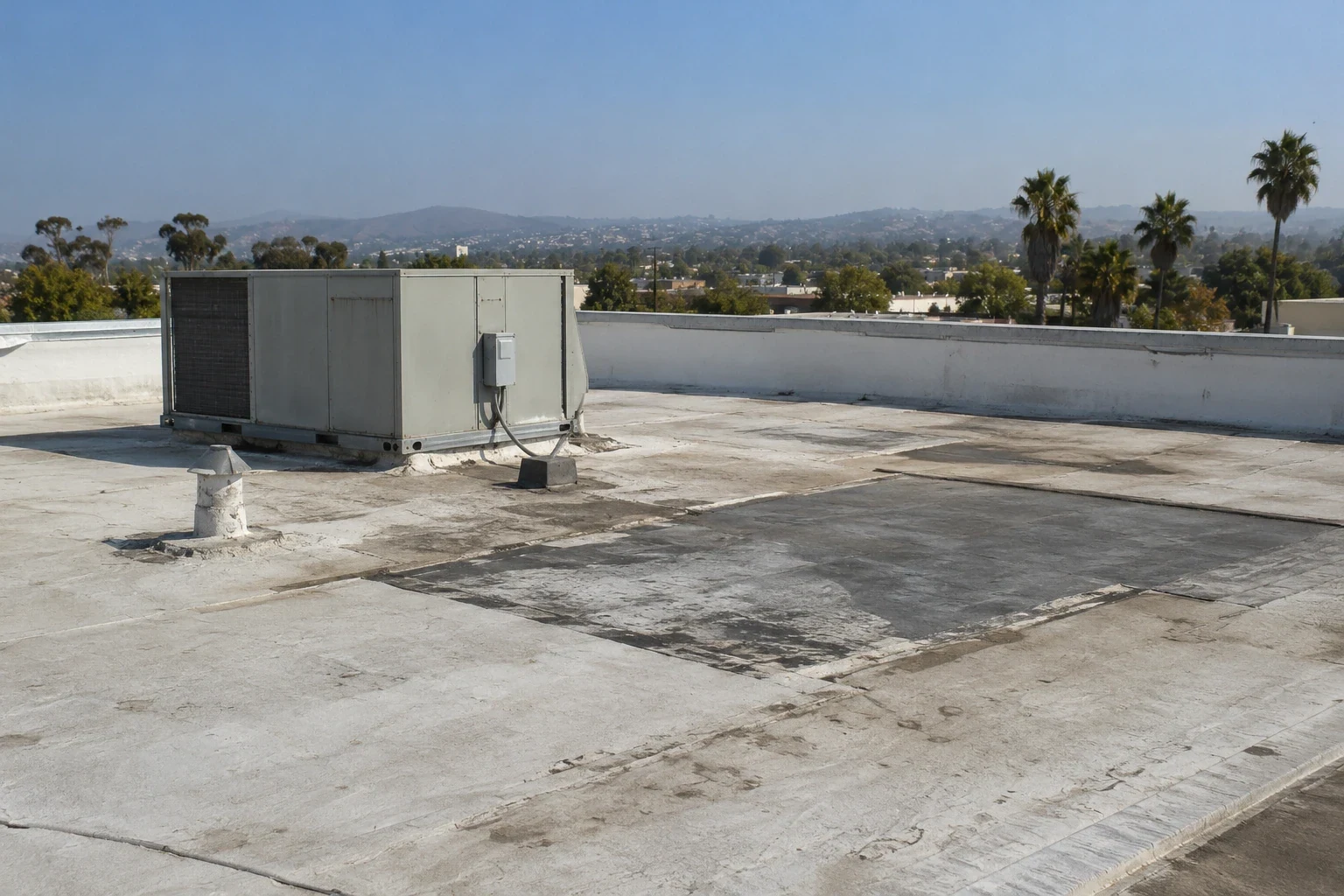
A temporary dry-in is followed by a closer look at the opening and nearby roof zones. If the defect is a discrete puncture or separated flashing edge, a compatible local repair may be enough. If water has traveled beneath the membrane, seams are opening across multiple areas, or the deck feels unstable, we document those signs and explain why additional investigation may be needed before closing the assembly.
At a modified bitumen roof, built-up system, TPO membrane or EPDM membrane, or standing-seam roof, permanent work must suit the material and detail. We identify the existing system where it can be confirmed, prepare a sound repair perimeter, and address the actual transition rather than relying on a surface bead alone. If we cannot confirm a detail without an opening, we describe the limit and request authorization before expanding the work.
A follow-up may include a full commercial roof inspection, a targeted moisture survey, or a broader repair estimate. When the system shows repeated failures or moisture across several roof zones, we can compare that repair path with replacement planning. The owner receives the findings and choices before any larger project proceeds.
What should the response record show?
Emergency records are most useful when another person can understand what happened without relying on memory. We record the call conditions, accessible roof areas, temporary protection installed, materials used, and any limits caused by weather or access. Photos show the broader roof location as well as the repaired detail. If the temporary work is not a permanent repair, the record says so plainly and gives the next recommended action.
For a building with several sections, the record can name the roof zone or equipment area using the customer’s own site labels. That supports a future maintenance schedule and helps compare recurring reports. It also makes it easier to distinguish a repeated opening from a new one after later weather. The record should not assign a cause unless visible evidence supports it.

Emergency response questions
These are the decisions that typically shape the first visit and the permanent scope.
Questions Owners Ask
Can you respond outside regular business hours?
Yes. Emergency commercial roof response is available around the clock, including weekends and holidays. The safe arrival and work method still depend on weather, roof access, and conditions inside the building. We confirm those details before choosing where to begin.
What should our staff do while waiting?
Move people and movable inventory away from active water, protect sensitive equipment if that can be done safely, and identify any electrical or ceiling hazard. Keep a facility contact available to direct access and explain areas that must remain clear. Do not send staff onto the roof.
Does a tarp mean the roof is repaired?
No. A tarp or dry-in limits exposure until a permanent repair can be made under suitable conditions. We document where it was placed, what it protects, and the remaining limits, then recommend a follow-up inspection or repair.
Will an emergency visit determine whether insurance covers the damage?
We can record visible roof conditions and the work completed. Coverage and cause are decisions for the policyholder and insurer. Keep the emergency record with your incident records and any weather information, and request further inspection if concealed damage remains possible.
Related Roofing Work
Stabilize the roof and plan the repair
Share the active leak location, site access details, and the operations that need protection. We will coordinate an emergency response and provide a clear record of the temporary work and recommended next step.