Modified Bitumen Roofing in Salinas, CA
Assess modified bitumen roofs in Salinas by ply condition, seams, flashing, drainage, and the building’s access and operating needs.
Overview
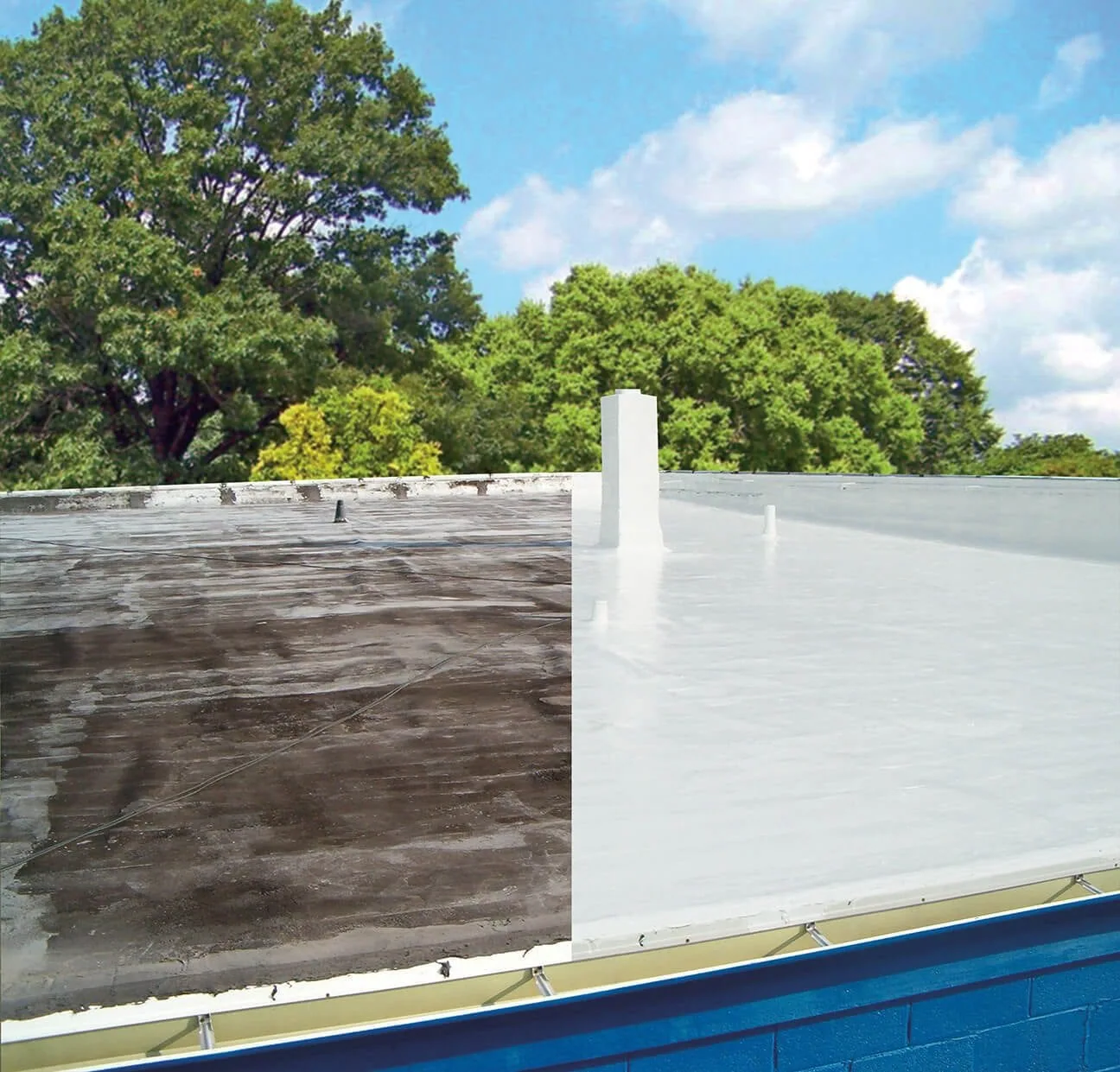
Modified bitumen is a reinforced asphalt roofing system built in one or more plies, with surfacing and attachment selected for the project. It can be repaired or renewed in stages, but only when the crew understands the existing layers, seams, flashings, and substrate. At a Salinas office, warehouse, or agricultural-support building, we inspect those details alongside the roof’s access, drainage, and service needs before recommending a scope.
Most normal rainfall in Salinas arrives during the cooler season, after a long dry stretch. That pattern puts drain readiness and exposed edges on the seasonal maintenance list, while current site conditions govern the work window. The roof’s actual condition, not its age or system label alone, determines whether a local repair, restoration, or replacement is appropriate.
How is modified bitumen assembled?
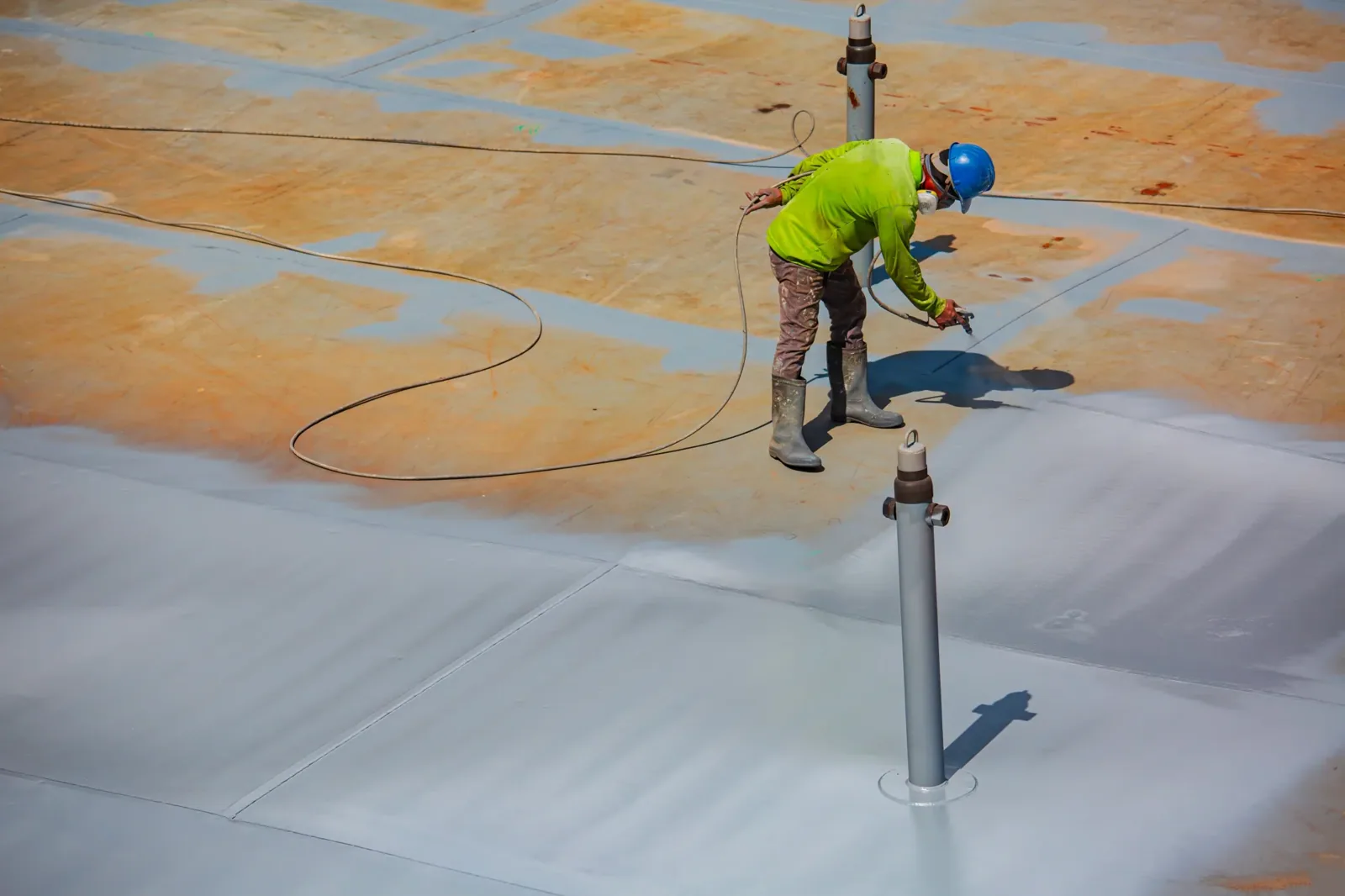
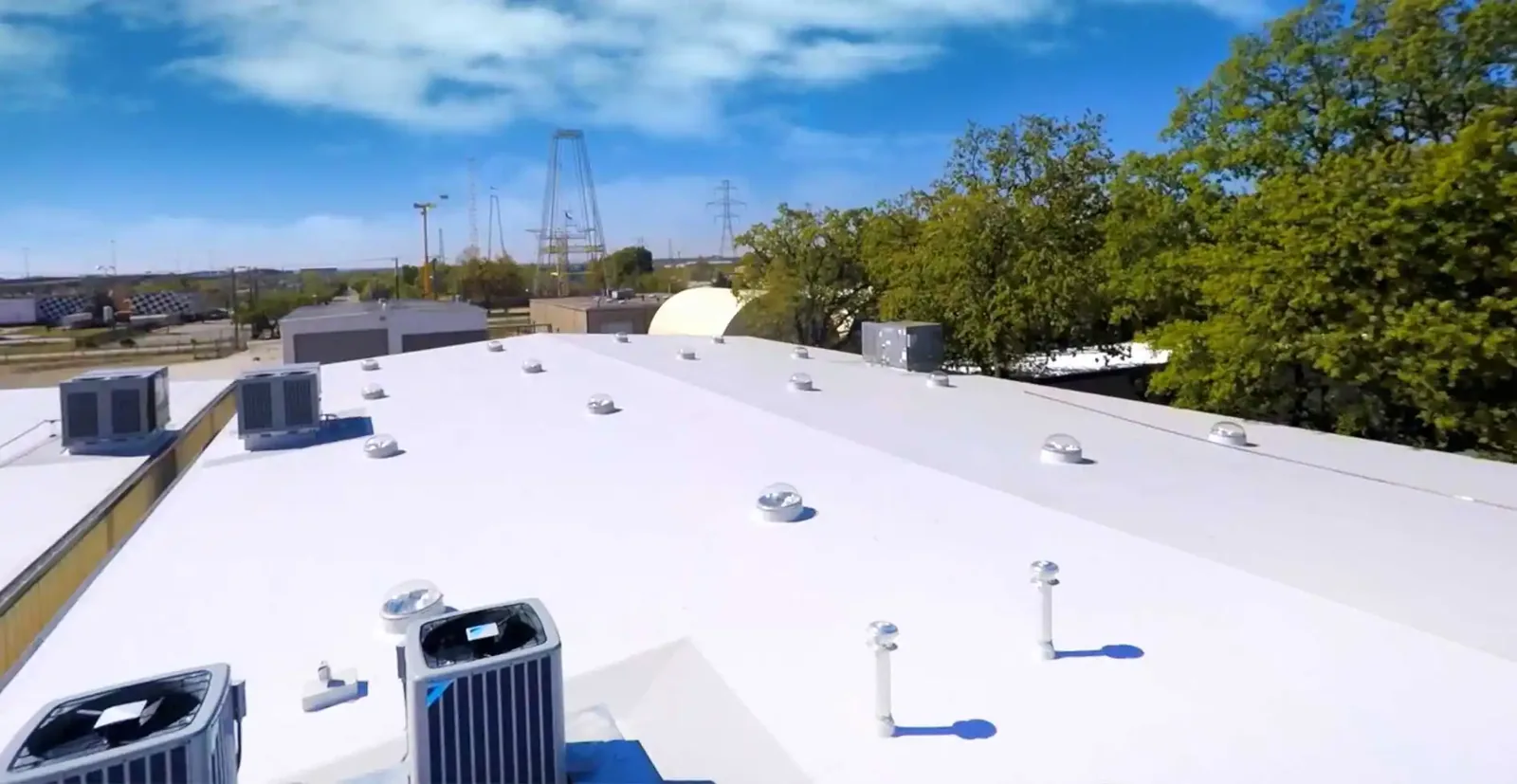
The system uses asphalt modified with polymers and reinforced with a carrier such as fiberglass or polyester. Depending on the product and design, plies may be installed with heat, cold-applied adhesive, or self-adhered methods. Surfacing may include mineral granules, a coating, or another specified finish. We identify the existing assembly and confirm the approved installation method before estimating the work. Torch application has particular fire-safety and site-control requirements, so it cannot be selected without reviewing the building and project constraints.
Each layer contributes to redundancy, attachment, and weather protection. The assembly ties into base flashings, parapets, curbs, drains, and edge metal; a sound field does not compensate for an open transition. We compare repair or replacement with built-up roof assemblies and single-ply membrane options where the owner is evaluating a different design. Deck, slope, equipment, and future maintenance access should inform the choice.
What condition evidence changes the scope?
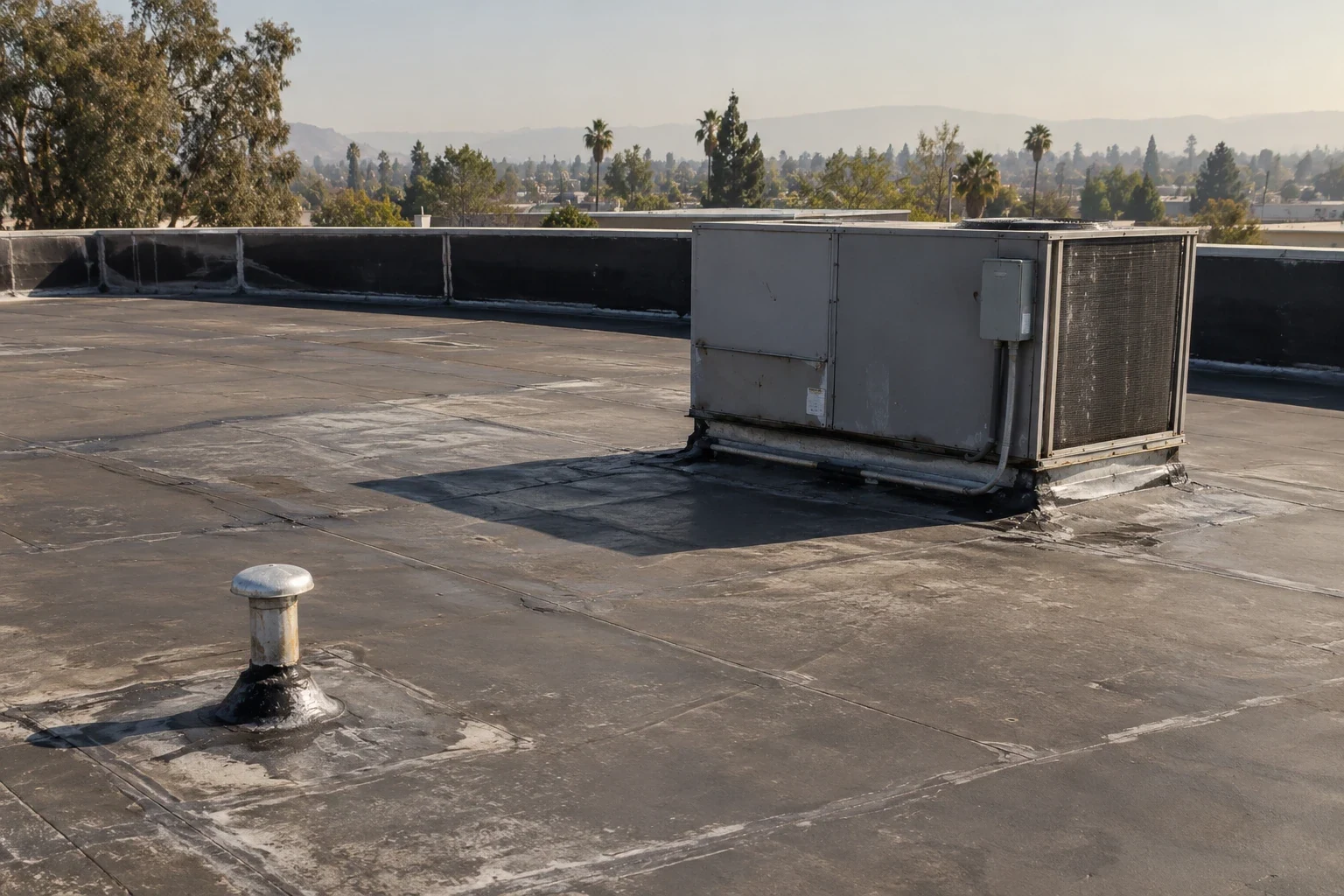
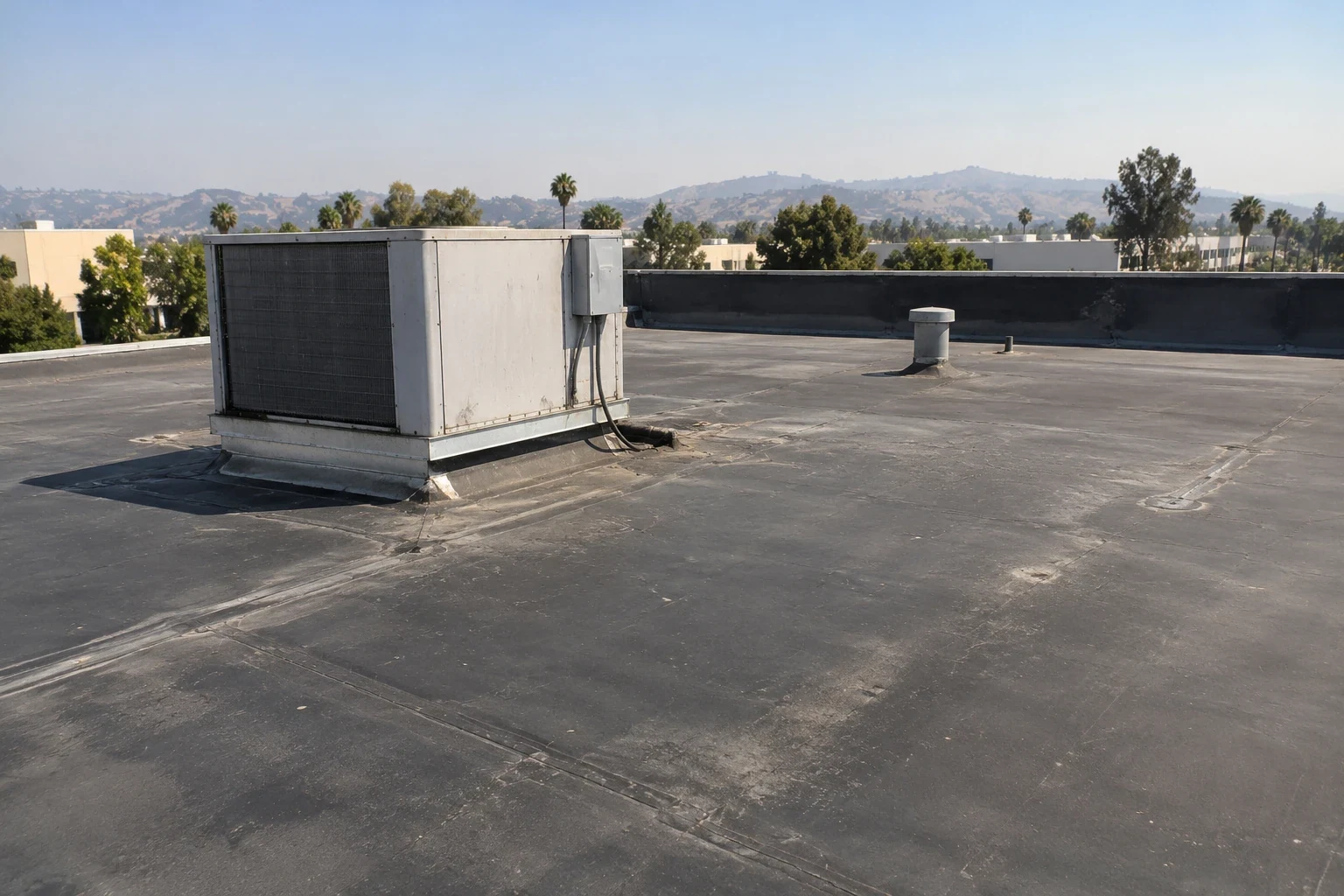
We look for splits, blisters, ridges, exposed reinforcement, loose granules, alligatoring, open laps, and repairs that have separated. Around curbs and walls, the inspection follows the base flashing and termination as well as the field membrane. At drains, we check the bowl and surrounding plies for cracks, bridging, and trapped debris. Soft areas or interior leak reports can point to moisture below the surface and call for closer evaluation before a recover is considered.
A modified-bitumen roof can have several repair layers, each hiding or redirecting the original defect. We map visible patches and record where they differ from the field system. An owner should know whether a recommendation addresses one opening or recurring failure across multiple zones. A written roof inspection can record the system, affected areas, and follow-up items; where concealed moisture may change the decision, moisture survey options can be reviewed with the inspection findings. We can also compare interior reports, roof photographs, and prior repair records to identify whether separate leak calls point to one area or several. That evidence helps the owner decide what to test next and what work can be priced with confidence. We label findings by roof zone so a later repair can be compared with the original condition record.
Which application method fits the building?
Heat-applied work needs an approved assembly, trained application, fire watch, and control of combustible materials and openings. Cold-applied systems avoid an open flame but still require ventilation, surface preparation, product compatibility, and restrictions while materials cure. Self-adhered products depend on a clean substrate and conditions that allow the bond to form. The selected method should match the design, weather window, roof access, and safety requirements at the property.
When the building remains occupied, staging and application must be coordinated with receiving, tenants, and the teams responsible for fire protection and mechanical equipment. We establish the work area and closeout steps before opening the roof. A manufacturer’s installation instructions govern the materials; the owner’s site rules govern access and coordination. Occupied-roof sequencing should also state who can stop or adjust work if conditions change during the shift.
Where do seams, edges, and drains need care?
Lap seams should be continuous and fully bonded or welded according to the assembly. A raised edge, open splice, or fishmouth can admit water and spread as the roof cycles through temperature changes. At inside and outside corners, the flashing needs reinforcement and a finished termination. Edges need secure attachment and a durable transition to adjacent walls or metal. We check these details together because water can travel beneath a surface and appear far from its entry point.
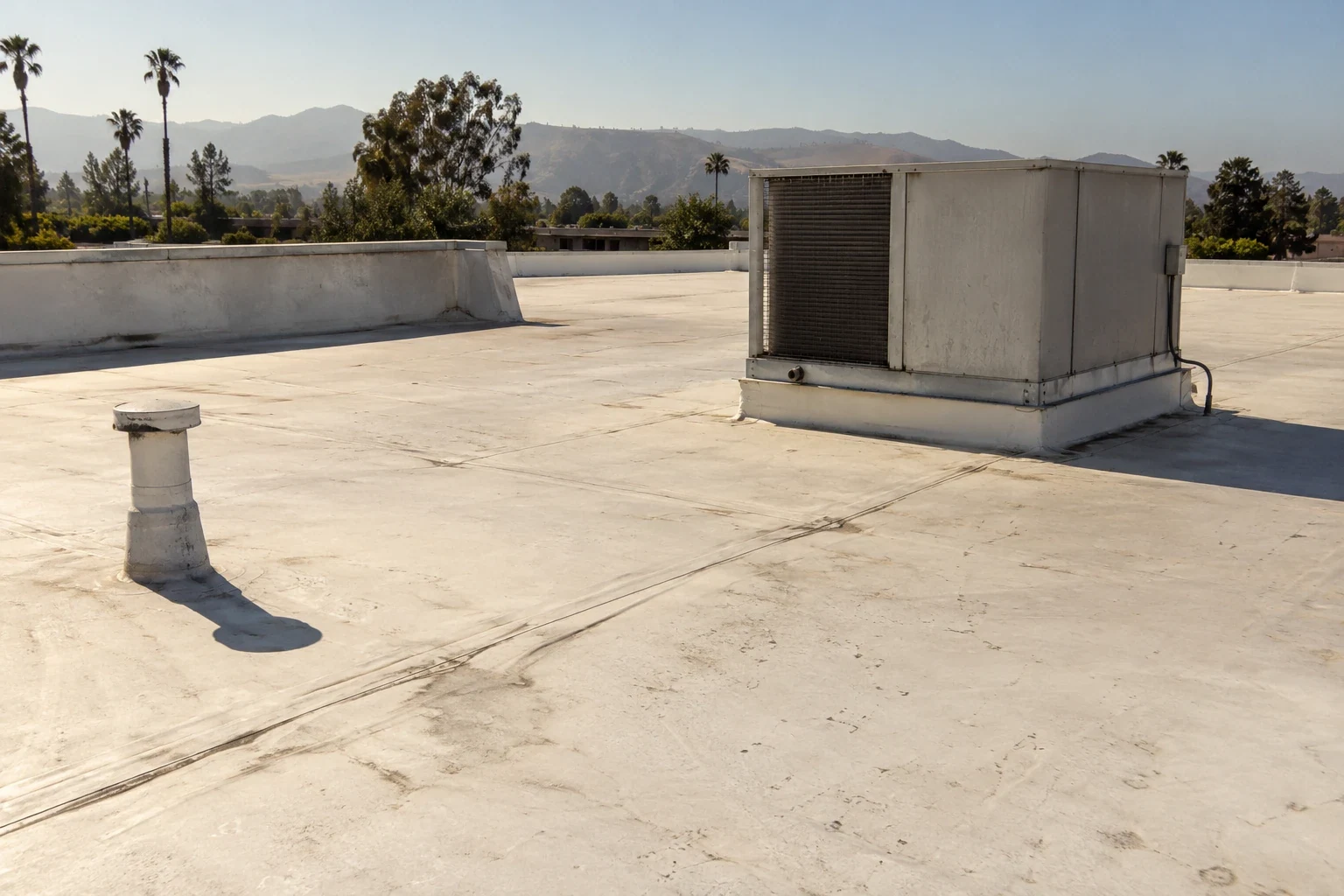
Drain bowls need a clean, correctly formed connection, without a membrane bridge that blocks flow. Scuppers and overflow paths should stay open, and the roof should direct water toward them. Salinas rain is seasonal, so owners can use the dry months to review outlets and repair details before prolonged wet weather. Drain and scupper repairs and edge metal work must reconnect with the bitumen system in a compatible way.
How should the work fit a Salinas property?
Salinas includes Alisal and East Salinas and the Salinas Business Park among commercial or industrial areas. Roof uses vary from office and retail space to distribution and agricultural-support operations. We confirm the actual site’s loading schedule, rooftop equipment, tenant access, and interior protection needs instead of assigning a roof condition based on its district.
A staged project can keep selected building areas in service while crews work through defined zones. The schedule should identify material staging, hoisting, noise, temporary closures, and the closeout of exposed edges at each shift. At Alisal and East Salinas, the building contact can help map service routes and loading activity; those operational facts determine where roof access can be maintained. Clear daily communication also lets the owner see which areas are complete and which still need protection.
When should an owner repair, restore, or replace?
A local repair can address a puncture or open lap where surrounding plies remain bonded and the substrate is sound. If water has spread below the surface, if the same flashing repeatedly separates, or if many zones show exposed reinforcement, a patch may not resolve the underlying problem. We explain the repair boundary and record what remains outside it. Where restoration is considered, the existing membrane must be dry, stable, and suitable to receive the specified system.
Maintenance records help show whether repairs remain isolated or begin to repeat. A visit can clear outlets, inspect seams and terminations, photograph changing conditions, and plan work before the next weather window. Our maintenance program organizes that record; a restoration evaluation or replacement assessment can then compare options if deterioration is widespread. We base the recommendation on the layers that remain serviceable and the building’s needs.
Questions Owners Ask
Is modified bitumen the same as built-up roofing?
Both use asphalt-based roofing, but modified bitumen uses polymer-modified sheets reinforced with a carrier, while built-up roofing combines multiple plies with bitumen and surfacing. We identify the actual roof before recommending repair materials.
Can modified bitumen be installed without a torch?
Yes, depending on the specified assembly. Cold-applied adhesive and self-adhered systems are options where the product and project conditions allow. Every method still needs proper preparation, protection, and installation controls.
Can a modified-bitumen roof be coated?
Potentially, when the existing surface is stable, dry, and compatible with the coating system. We inspect the seams, surfacing, flashings, and moisture condition first, then identify preparation or repair work required before coating.
How do you decide between repair and replacement?
We map the extent of failed seams, wet areas, deteriorated surfacing, and recurring leaks. A limited defect may support repair; repeated or widespread failure can call for a broader assembly review. The report explains the evidence behind the scope.
Related Roofing Work
Let the roof condition set the scope
Share the repair history, operating constraints, roof records, and areas where water has appeared. We will inspect the assembly and explain which repairs, restoration steps, or replacement options fit the findings.