
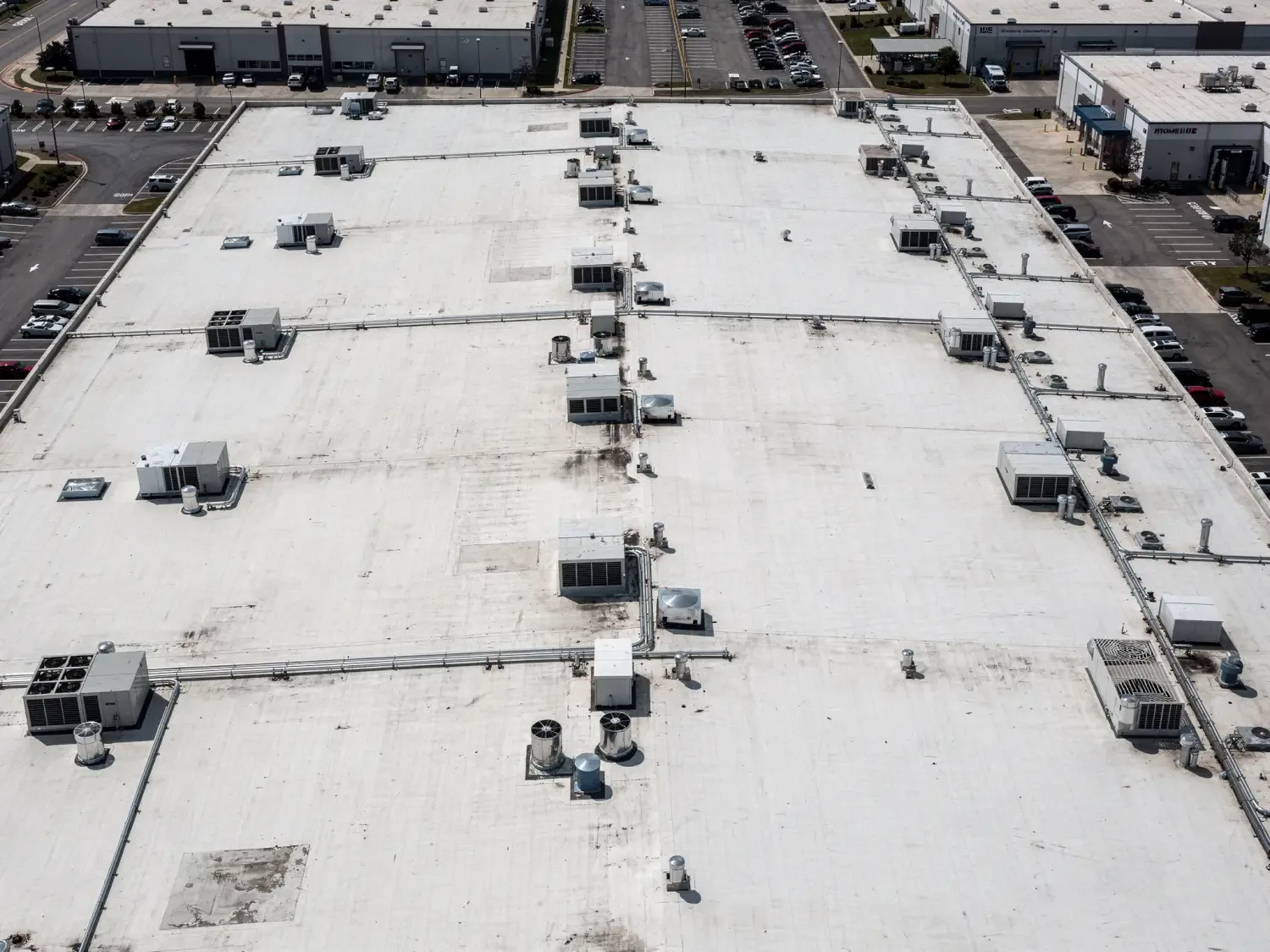
Commercial Roof Replacement in Salinas, CA
Plan commercial roof replacement in Salinas, CA around the existing assembly, wet insulation, access, drainage, and building operations.
Overview
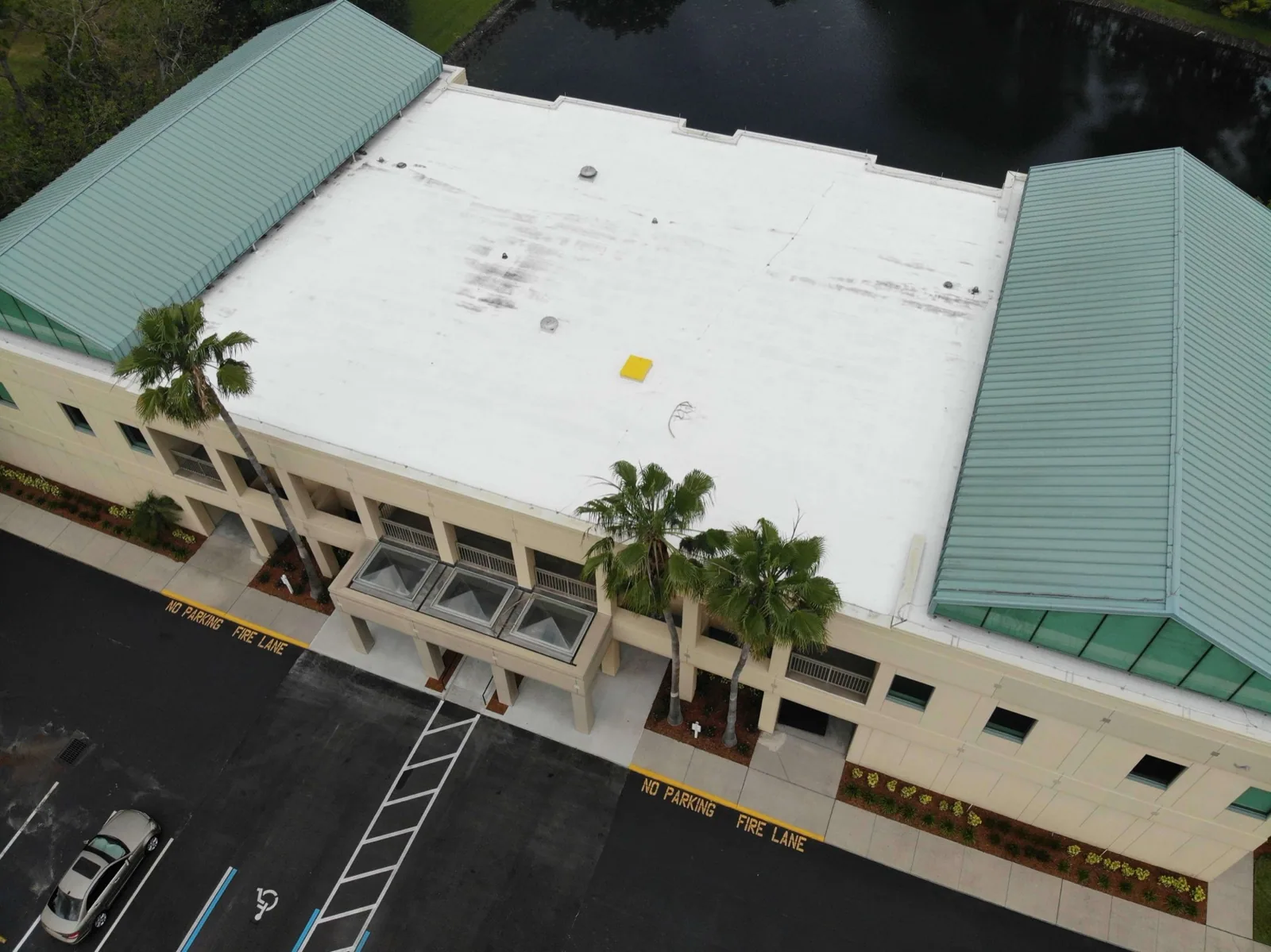
A distribution roof can stay in service for years with careful repairs, until leaks repeat across separate bays or the assembly no longer supports a dependable repair plan. Replacement is a capital decision, but it also changes access, drainage, insulation, and the daily use of the building. We inspect the current system, map the conditions that drive scope, and give the owner a sequence that can be compared with continued repair.
In Salinas, the same facility may face a long dry stretch followed by cool-season rain, with summer mornings influenced by fog and low cloud cover. Those patterns are useful for planning the work window. They do not determine whether a roof needs replacement. The decision comes from the roof’s actual condition, the building’s use, and the options that remain technically sound.
What evidence points toward replacement?
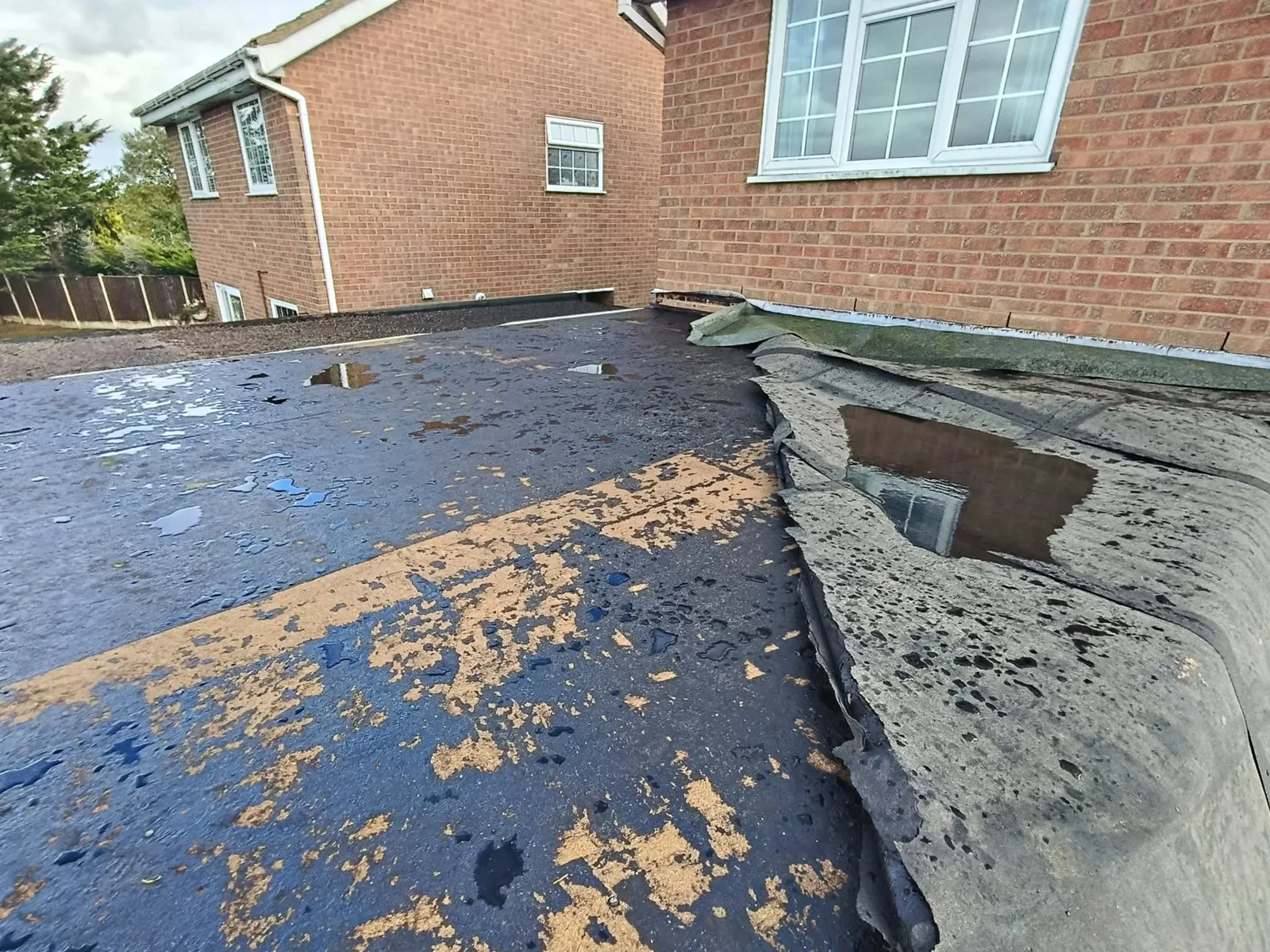
Repeated repairs do not automatically mean the whole roof has failed. We look at where the problems occur, how often the same detail reopens, whether repairs remain compatible with the existing membrane, and whether moisture has spread beyond a small area. A roof with isolated damage and sound surrounding materials may remain a repair candidate. A system with many failed seams, brittle or detached flashings, broad wet insulation, or an unstable deck may call for a wider plan.
A commercial roof inspection covers drains, scuppers, edge metal, penetrations, wall transitions, expansion joints, roof-to-wall terminations, and the visible field membrane. We record the condition of each roof zone and any restrictions that affect testing. Infrared imaging can help identify temperature patterns, while core samples can confirm the roof layers at selected points. Neither method replaces interpretation of the assembly and weather conditions.
Which replacement assembly fits the building?
The existing roof sets important constraints. A replacement may use a single-ply membrane, modified bitumen, built-up roofing, standing-seam metal, spray foam, or a coating where the existing assembly is suitable. Each option handles seams, penetrations, foot traffic, and maintenance differently. We explain those tradeoffs for the actual building rather than naming a system before its deck, slope, drainage, and roof use are understood.
Insulation and cover board affect more than energy performance. They influence fastening, fire performance, surface protection, and how water moves toward drains. A tapered assembly may improve drainage if the structure and drain locations allow it. A coating can be considered only when the underlying roof is sound enough and the surface can be prepared. If moisture is widespread or the assembly has lost integrity, covering it can conceal a problem instead of resolving it.
Owners comparing materials should also consider future rooftop work. Refrigeration lines, exhaust, solar equipment, and mechanical curbs can complicate access and detailing. The scope should show how transitions will be handled and who coordinates equipment changes. Our TPO roofing options and EPDM systems are examples of assemblies we can evaluate alongside other systems, subject to the building and project requirements.
How much of the existing roof comes off?
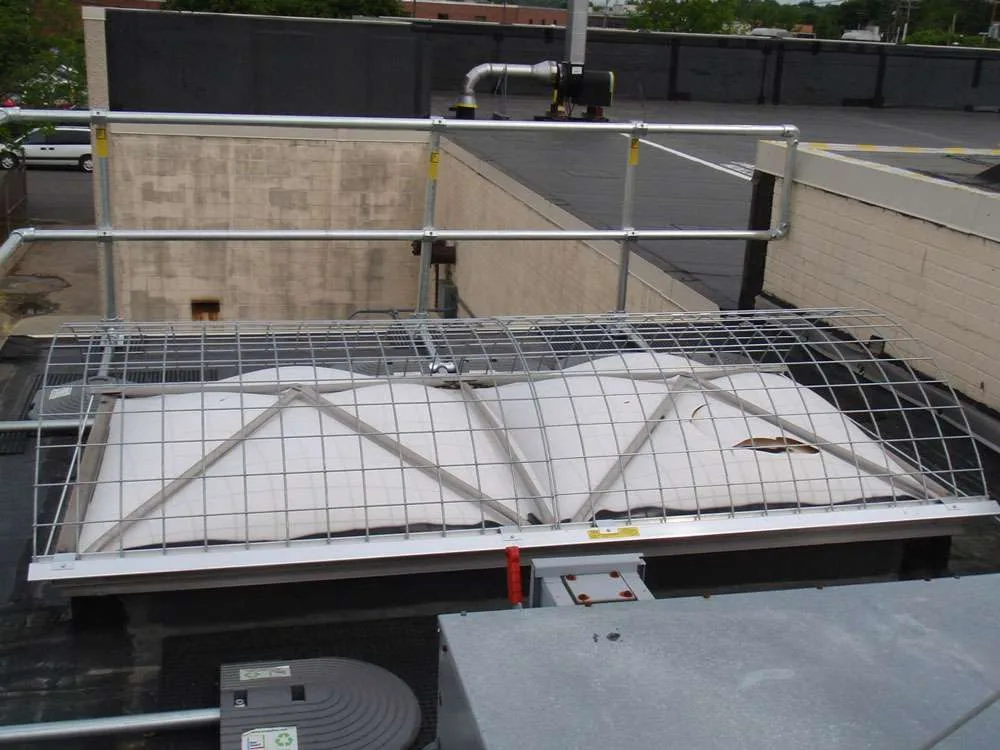
A tear-off removes the existing roof layers within the approved scope so concealed conditions can be assessed. That can expose wet insulation, deteriorated deck, incompatible repairs, or sound areas that remain suitable for the new assembly. The owner should know which conditions are included in the base scope, which would require approval, and how concealed repairs will be priced before work begins.
A recover may be considered where the existing roof is dry, stable, compatible, and allowed by the project requirements. It can reduce removal and disposal, but it does not solve saturated insulation or an unstable substrate. Core sampling and moisture mapping can help define the boundary. If results vary by roof area, a phased replacement or selective tear-off may give the owner more control than treating every section alike.
How can work continue below the roof?
Replacement means demolition, material movement, noise, and temporary exposure. On an occupied warehouse or agricultural-support building, the plan should identify delivery paths, loading areas, sensitive equipment, and any hours when work cannot occur. We divide the roof into phases when that helps limit open exposure or keep an operation running. The owner’s site contact can coordinate tenants, maintenance staff, and receiving so the roof sequence matches the actual workday. A property in Boronda or Castroville still needs a phase plan based on its own access and operation.
The Airport Industrial Park near Salinas and nearby areas along U.S. 101 include warehousing, distribution, packaging, and agricultural-support uses. A roof project in that setting may involve forklifts, refrigeration, rooftop exhaust, or product-protection requirements. We confirm the specific building conditions instead of assuming every property in the corridor works the same way. The schedule should state how materials reach the roof, where debris leaves the site, and what protection is needed below active work.
Weather planning remains part of each phase. Salinas averages relatively little precipitation during summer, but a dry-season schedule still needs a forecast review and a secure end-of-shift condition. During cool-season rain, temporary dry-in and daily exposure limits become especially important. We identify the portion of roof that can be opened and closed safely in each work period, then adjust if surface conditions or wind change.
What changes the project scope?
Cost and duration depend on the roof area, number of layers, removal needs, deck condition, insulation, drainage correction, perimeter details, equipment coordination, access, and disposal. Added work may appear after tear-off when the crew can see the deck and insulation. A sound estimate describes the known scope and gives a clear approval process for concealed conditions, instead of implying every roof will open exactly as expected.
Permits and code review are project-specific. Salinas adopted the 2025 California Building Standards Code effective January 1, 2026. The applicable requirements depend on the proposed work, existing construction, energy provisions, and local review. We identify scope details that may affect permitting and coordinate with the owner so the design and application can be confirmed with the City before construction starts.
Timing also reflects procurement, crew sequence, tenant notice, equipment shutdowns, and the chosen weather window. If a building has recurring leaks but the replacement date is months away, a defined interim repair plan can limit exposure while the owner completes design and approvals. A separate roof recover evaluation can establish whether retaining any existing layers is a realistic option.
What should be in the replacement record?
Closeout should give the facility team a useful baseline for future care. We document installed materials, roof zones, repaired deck areas, drain and penetration details, and photographs of concealed work where available. The owner should also receive the approved scope, manufacturer product information, warranty documents applicable to the project, and a maintenance recommendation tied to the actual system. We do not imply a specific warranty term before project requirements are confirmed.
A replacement record can be grouped by section and linked to equipment or interior areas that have reported leaks. That structure helps a property manager distinguish future maintenance from a new failure. At multi-building properties, consistent labels make it easier to compare the same roof zones from year to year without confusing one section’s history with another.
Questions Owners Ask
Does recurring leakage mean the entire roof must be replaced?
Not by itself. The distribution of failures, repair history, wet insulation, deck condition, and remaining sound areas determine whether localized repair or replacement is reasonable. We map those findings by roof zone and explain what additional testing would change the recommendation.
Can a commercial building stay open during replacement?
Often, when access, protection, and phase boundaries are planned around the operation. The roof area opened each day, material route, noise, shutdowns, and interior safeguards all matter. We coordinate with the facility contact and state where interruptions or restricted access are necessary.
When is a recover preferable to a tear-off?
A recover may fit when the existing assembly is dry, stable, compatible, and permitted by project requirements. Core samples and other inspection findings help establish that condition. Wet insulation, an unsound deck, excessive layers, or recurring concealed failure can make removal the more reliable scope.
What happens if the crew finds deck damage?
The project documents should identify how concealed conditions are reported, priced, and approved. We photograph the exposed area, describe the repair needed, and obtain direction before adding work outside the authorized scope, except where immediate protection is required to secure the building.
Related Roofing Work
Plan a replacement from the roof evidence
Arrange a roof evaluation to compare repair, recover, and replacement options. We will document the assembly, operating constraints, and scope decisions that affect the project.
