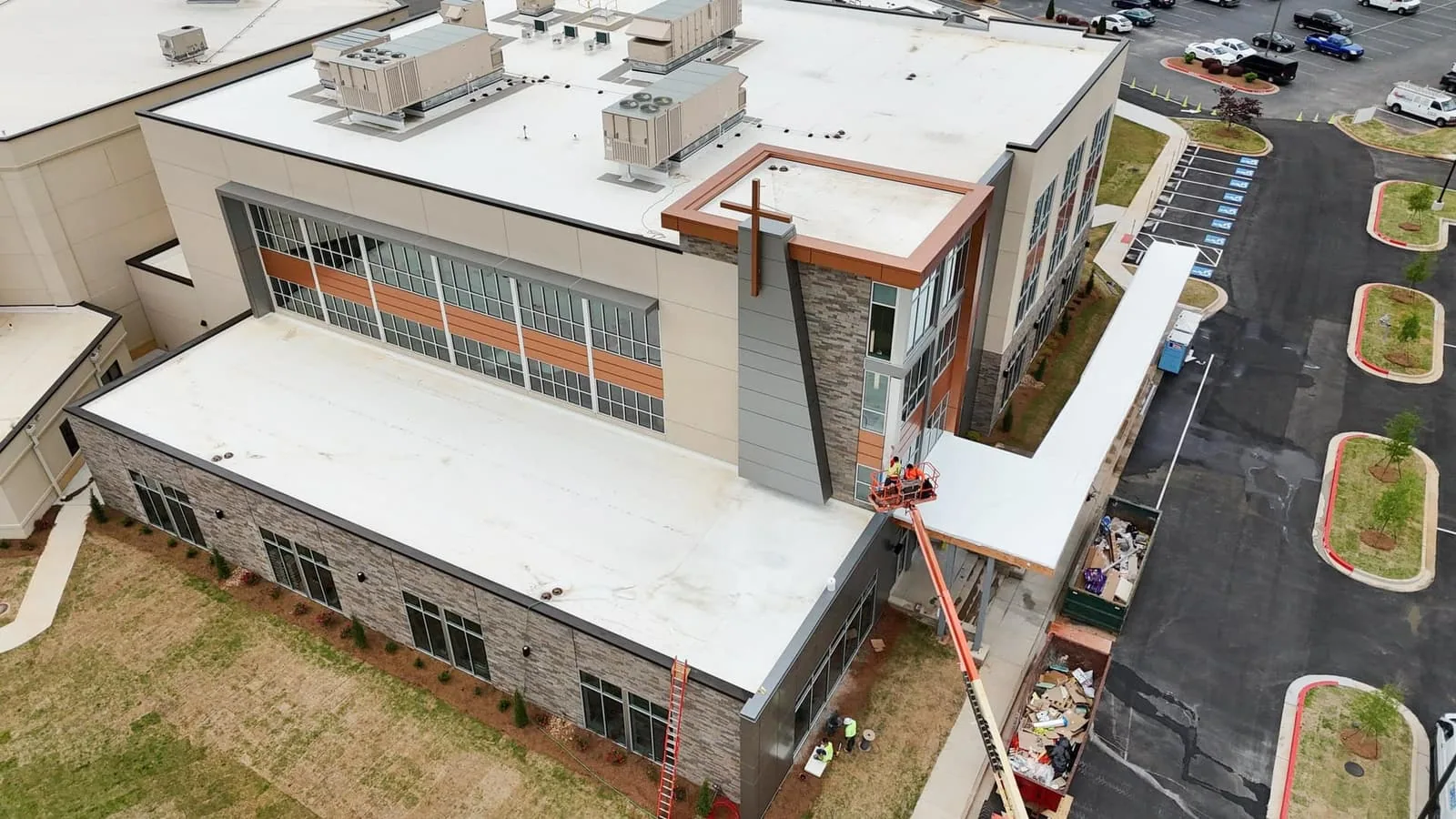
Commercial Roofing in Alisal and East Salinas, CA
Roof inspection and repair for Alisal and East Salinas commercial properties in Salinas, with building-specific drainage and access planning.
Overview
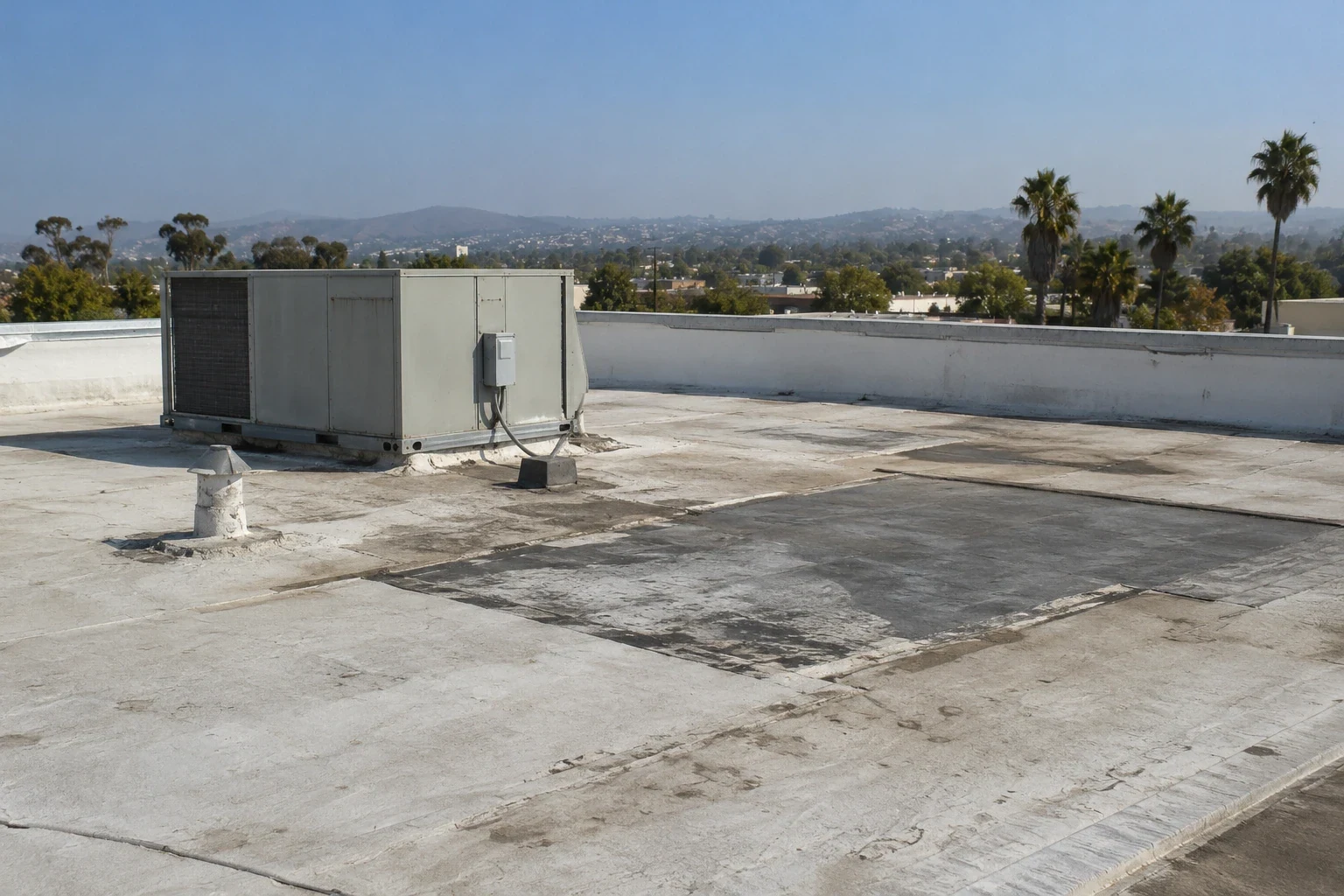
A commercial building in Alisal and East Salinas may need roof work planned around the people, goods or equipment below. We identify the assembly, map visible conditions, check drainage and transitions, and connect those findings to an interior report before recommending work. A commercial roof inspection gives the owner a record tied to the property rather than an assumption based on the neighborhood.
Alisal and East Salinas include retail, service, light-industrial, and manufacturing properties. A portfolio may span several uses, so we confirm each building’s operating hours, roof access, and installed assembly before setting the inspection or repair scope.
How should a facilities team set up a roof visit?
Confirm who authorizes access, how the crew reaches the roof, whether an escort is required, and which rooms or operating periods need protection. Identify delivery, vehicle and customer paths that must stay open. Before a visit, confirm the current check-in point, delivery route, escort needs, and any customer or loading path that must remain open.
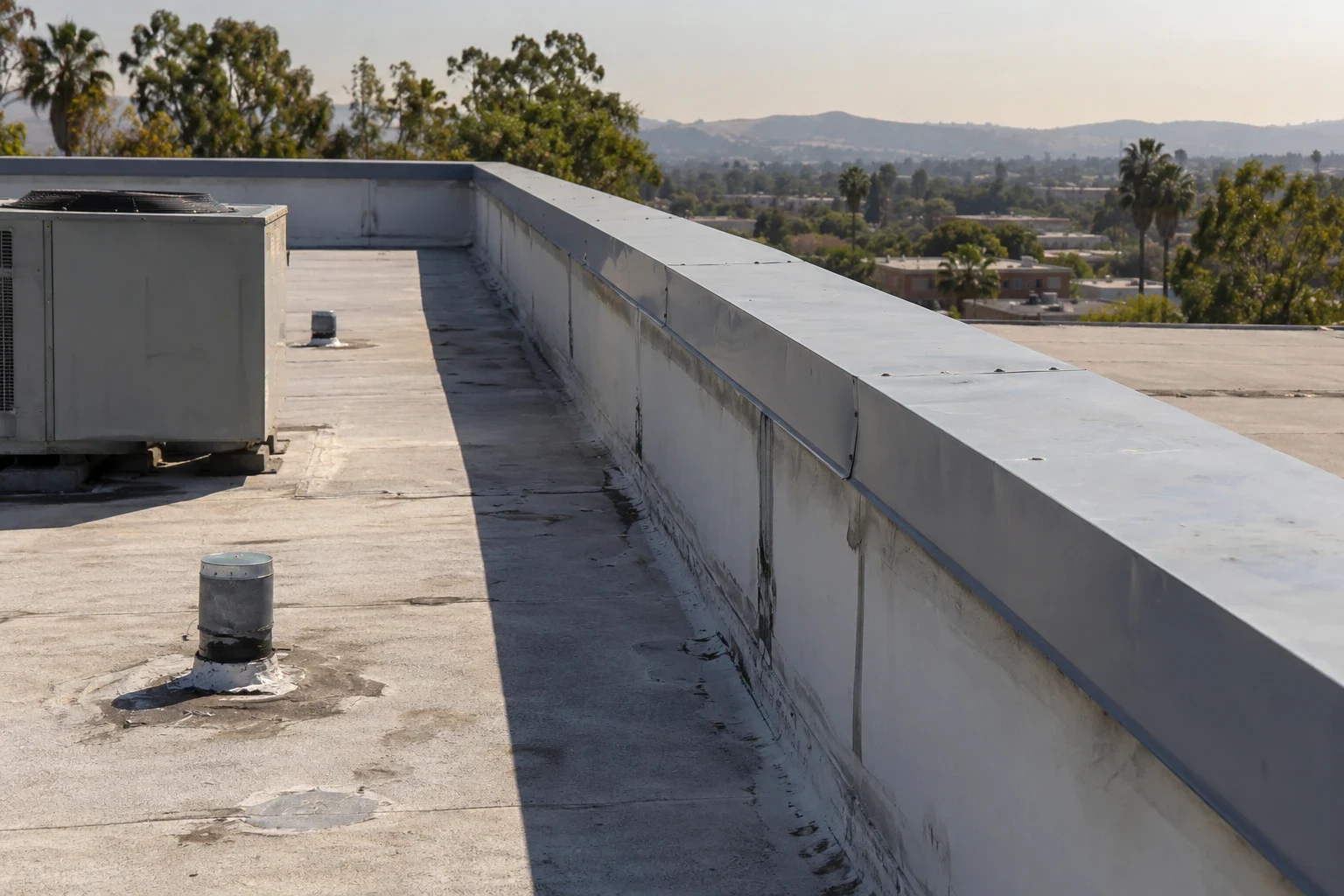
On a first walk, we record the roof sections that can be reached and the areas that need separate access. We identify visible drains, scuppers, edge conditions, seams, curbs, penetrations and previous repair lines as applicable to the installed system. A roof plan, equipment list and recent leak log make the inspection more efficient. If there is no current drawing, labeled photographs and a simple zone sketch can provide a working reference for later repair and maintenance records.
Facilities in Chinatown, Salinas or the East Alisal and East Market area may share portfolio oversight, but their inspection findings should remain separate. The report should identify the building and roof zone, describe what was visible, record limitations, and list any follow-up needed. That prevents a maintenance history from one property being mistakenly applied to another.
What roof conditions deserve a closer look?
Water entry is often reported indoors before the roof origin is known. Record the room, date, weather context, whether water is still present and any recent work on rooftop equipment. Then compare the report with the roof layout. A stain can appear away from the opening because water moves along a deck, framing or service route. We inspect the closest roof details and connected transitions before defining the repair area.
Drainage is one part of that review. We look for obstructed outlets, damaged drain bowls, loose or deteriorated flashing, debris at low areas and evidence that water is not moving toward a discharge point. We also check seams, penetrations and edge transitions near a reported leak. A drain or scupper repair should address a confirmed component issue and preserve the path water needs to reach the outlet. If the report points to a curb, wall or seam, the scope should account for that detail as well.
Where the roof has multiple patches or the same leak returns, the owner may need a broader diagnosis. We record whether surrounding material is sound, whether the substrate appears affected and whether accessible evidence supports a localized repair. If concealed moisture is a concern, further testing may help define the boundary before a larger scope is priced. The resulting recommendation should distinguish confirmed damage from areas that have not been opened or tested.
Before cool-season rain, inspect drains, scuppers, seams, and flashing; after storms, check for blocked outlets or new interior leaks. Owners can check drains, seams and flashing before that period, then set maintenance from the roof’s present condition. A preventive maintenance visit can log findings by zone; active water entry still needs a repair plan.

When does a repair make sense over replacement?
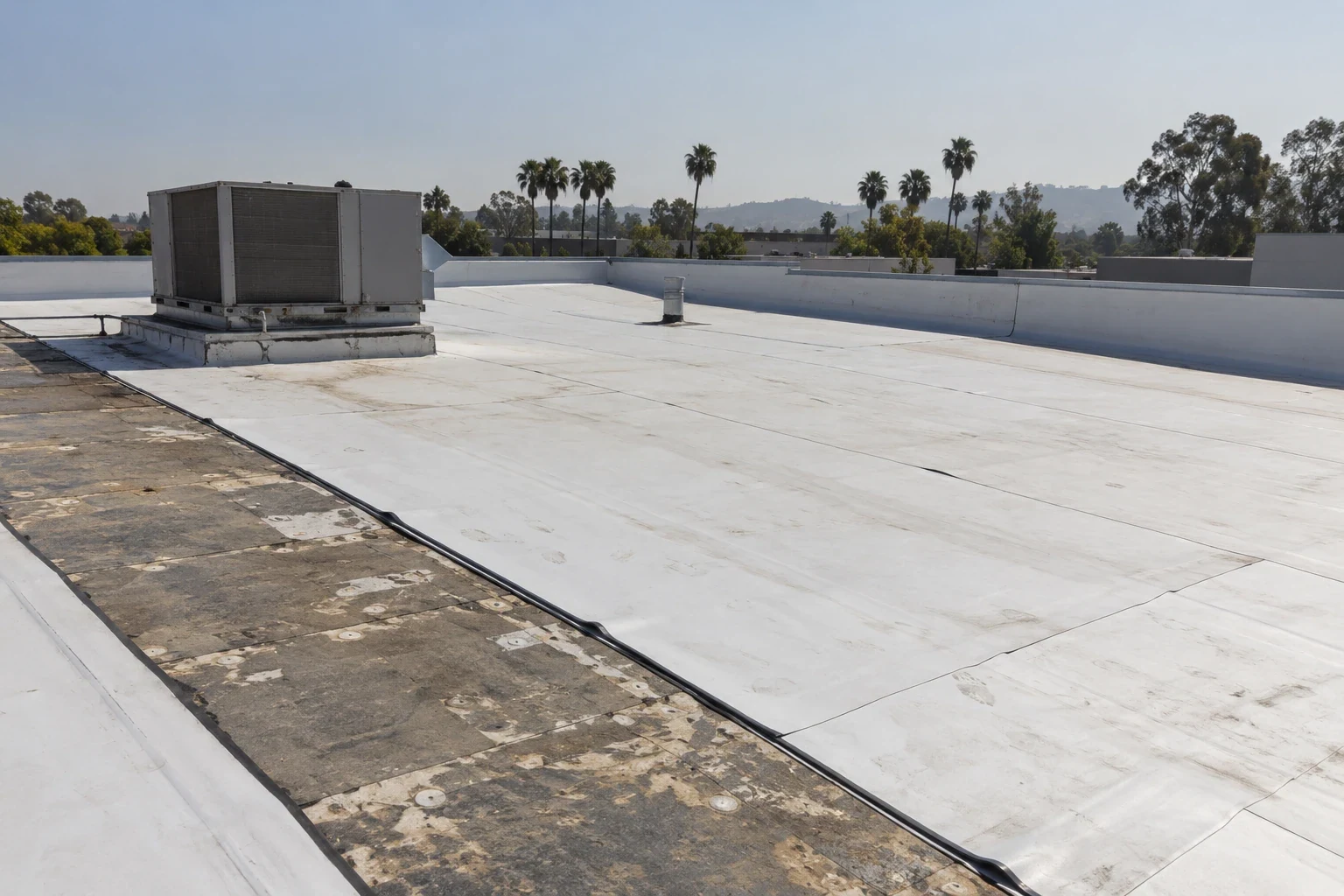
A repair is worth considering when the leak origin is identifiable, the surrounding assembly can accept a compatible repair, and the affected area is limited enough that the work resolves the problem without hiding a wider condition. We describe the repair boundary, preparation, materials and related details such as insulation or flashing. A commercial roof repair scope should also state what will be checked at completion and what condition would trigger additional work.
Replacement deserves comparison when the roof has widespread deterioration, repeated leaks in separate zones, wet or damaged substrate, failing transitions, or repairs that no longer provide a reliable service path. The inspection should show the observations behind that recommendation. We can compare a defined repair with replacement planning when both are technically supportable, recording differences in disruption, remaining uncertainty, likely sequencing and the work included in each option. A property owner should be able to see which assumptions change the price.
For buildings that remain open during work, sequence by roof zone and make each closeout step explicit. Confirm occupant notices, interior protection, equipment access and any shutdown needs before mobilization. An occupied-building reroofing plan can set a work boundary and define how the roof will be protected if the schedule or weather changes. Keep one contact responsible for decisions about access and scope so field questions do not leave the work area exposed.
Price and duration vary with area, removal needs, assembly, substrate, penetrations, perimeter details, disposal, access and work hours. Explain any allowance for concealed conditions so owners can compare equivalent scopes.
How can roof records support the next budget cycle?
Keep the inspection, photographs, repair invoices, warranty documents, leak log and roof plan together by property and zone. A closeout record should identify the work performed, materials used, limits on access, remaining recommendations and the next review date. If an observation needs testing, mark it as unresolved rather than carrying it forward as confirmed damage. This gives managers a usable base for prioritizing the next maintenance or capital decision.
Regional facilities may compare conditions across Alisal/Airport East, East Alisal/East Market and North Main Street, but each property needs its own condition record. The Hartnell Alisal Campus’s agriculture and industry programs add community context for the area, not a proxy for the systems or operations at a nearby commercial roof. Keep portfolio planning broad and field recommendations specific to the building inspected.
When reporting a new leak, share the building, interior room, first observed time, current status and access contact. If safe, protect movable contents and keep people clear of wet electrical equipment. Do not assume the origin is directly overhead or apply a temporary seal to an unknown assembly. The crew can use the report and roof history to focus its inspection, then explain what was confirmed and what remains uncertain before pricing a permanent repair.
Before approving work, confirm the roof area, preparation, method, included transitions, protection, cleanup and testing. Name who will approve scope changes if concealed conditions appear, and retain those decisions with the closeout record.
Questions Owners Ask
How do you assess a roof at an East Salinas property?
We identify the installed assembly, inspect drainage and transitions, and compare visible conditions with the owner’s leak and repair history before recommending work.
What should I send before scheduling an inspection?
Share the property contact, access instructions, roof plan if available, leak history and any operating hours that affect the work. Those details help us prepare for the visit and identify areas needing an escort or separate coordination.
Can the inspection identify where a ceiling leak started?
It can compare interior evidence with roof zones and nearby details, but water may travel before becoming visible. The report should distinguish the likely origin from any area that needs additional testing.
Should we schedule drainage work before the rainy season?
Most precipitation in Salinas falls during the cool season. A condition review before that period can identify drainage or flashing work, while the actual schedule should account for current roof conditions and forecasts.
What affects the cost of a commercial roof repair?
The repair area, roof assembly, access, substrate condition, number of transitions and need for testing all matter. A useful proposal states the included work and the concealed conditions that could change the scope.
Related Roofing Work
Discuss a commercial roof in Alisal or East Salinas
Share the property location, access needs and any roof or leak records. We will review the building-specific condition and outline the next practical step.