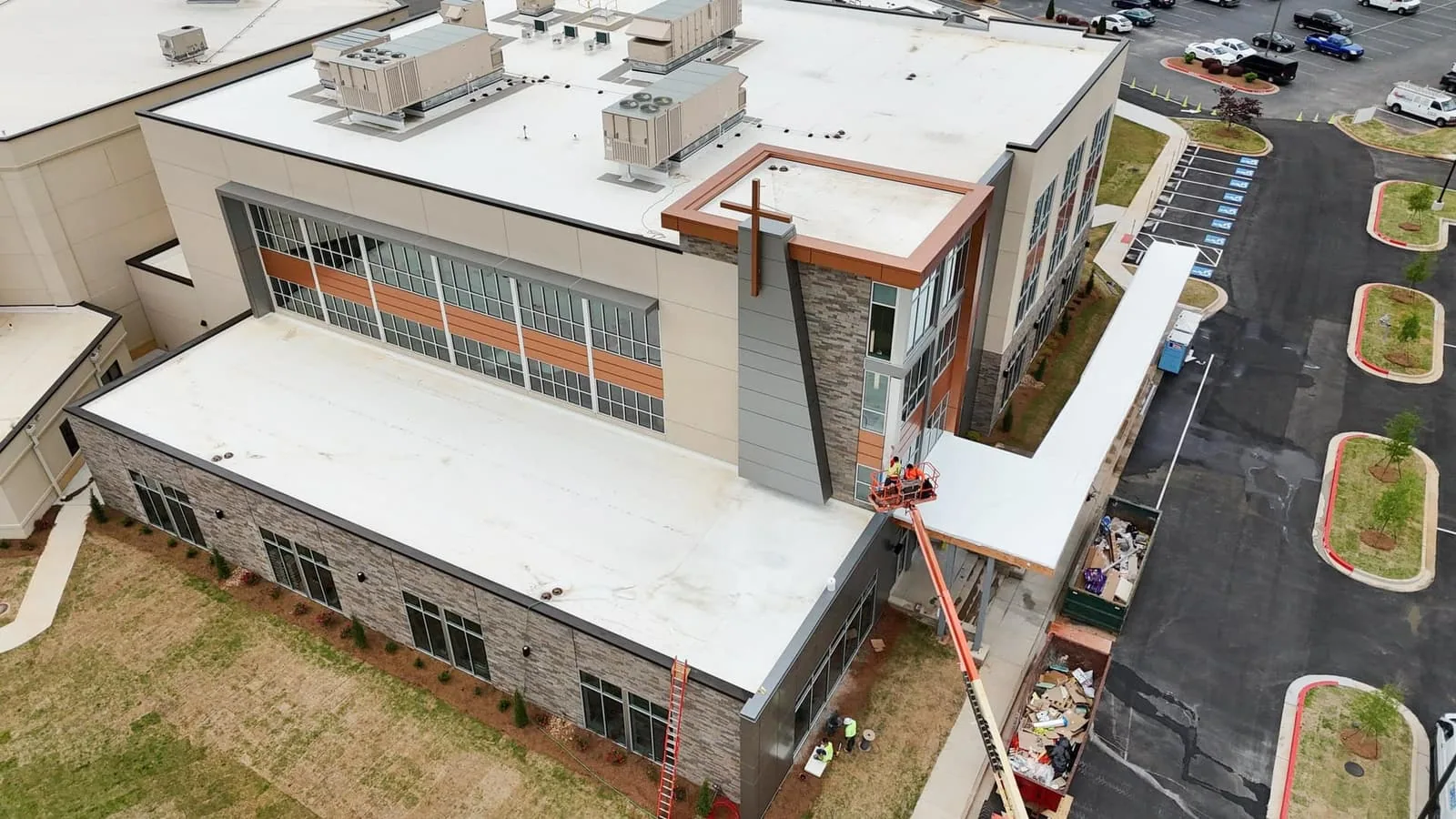
Commercial Roofing in Chinatown, Salinas, CA
Commercial roof inspection, repair and replacement planning for Chinatown properties in Salinas, with drainage and tenant coordination.
Overview
A storefront or mixed-use building in Chinatown may need roof work timed to its operating hours. A leak above the business needs a diagnosis tied to the installed assembly. We document accessible areas, drainage, edges, penetrations and the interior report before recommending repair or further investigation. A commercial roof inspection gives ownership a clear record before approving work.
Salinas identifies Chinatown as an opportunity area and has a Chinatown Revitalization Plan within its Visión Salinas planning work. this is coordinated neighborhood planning near the central road and rail corridors, with Chinatown considered alongside Downtown rather than as a separate municipality. Those facts provide a planning frame; they do not establish the age, use, structure or roof system of any individual property. The first step remains confirming what is installed and how the building is used.
What does neighborhood planning change for a roof scope?
A planning area can help ownership organize work across nearby properties, but roof recommendations still need to be made building by building. A portfolio manager may have one roof plan for a property near Chinatown and another for a building in Downtown Salinas. We keep the inspection record attached to the correct address and roof zone, then separate confirmed conditions from questions that need access, testing or drawings to resolve.
City planning places Chinatown near central road and rail corridors. Before mobilization, the site representative should confirm entry points, loading, tenant hours, deliveries and any active street work. The property contact can confirm roof access, delivery routes, and staging limits before the inspection.
For a property with multiple roof sections, number them on a plan or photo set. Record the leak location and timing, recent rain or equipment work, and any temporary repair. If adjacent buildings share ownership, document each separately before comparing priorities.
Which roof details belong in the first inspection?
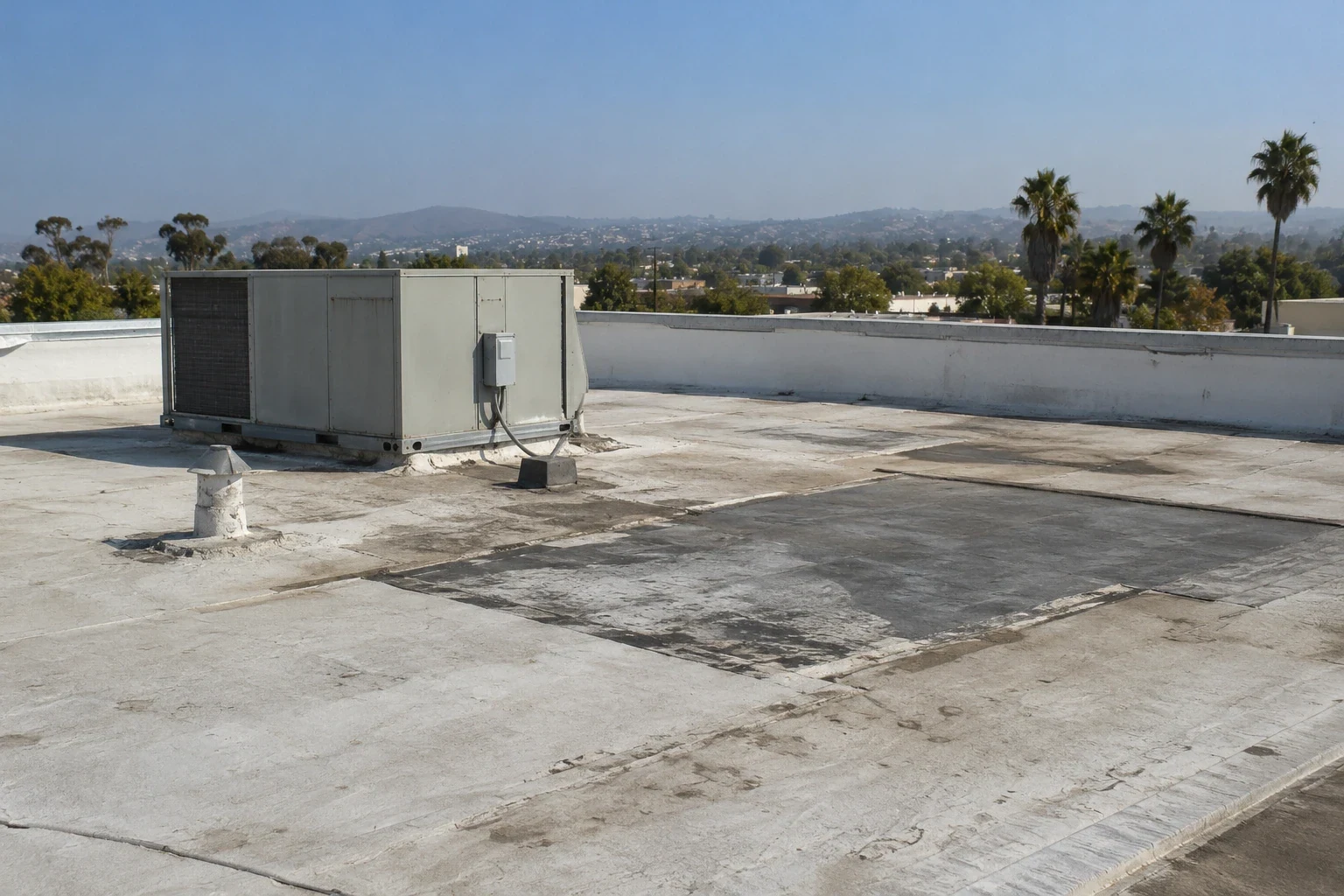
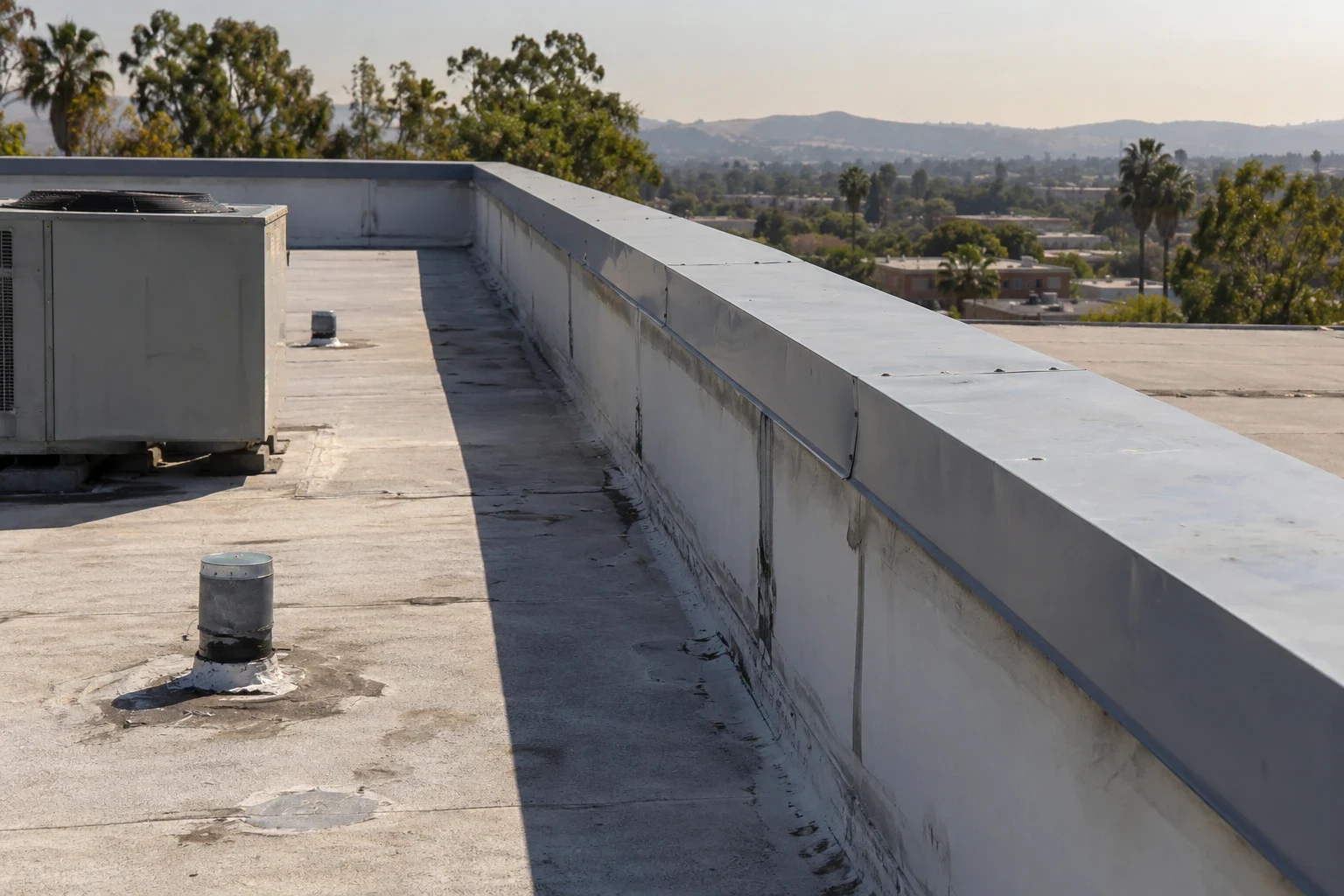
We begin by identifying the assembly and the limits of safe access. On a low-slope roof, the review may include membrane seams, laps, patches, penetrations, drains, scuppers, perimeter edges and transitions between roof sections. On metal, the checks may include panel joints, fasteners, closures, penetrations and changes in plane. These are inspection points, not a claim that any one system is present in Chinatown. If the construction records identify a different assembly, the scope follows the installed system.
Drainage review traces water toward an outlet. We record debris, standing water, drain condition, nearby seams and material transitions. A drain and scupper repair fits a defect at that component; water entering beside a curb or wall may require work at that interface. The report states what was accessible, found and still uncertain.
Interior evidence can narrow the search without pinpointing the roof opening. Water may travel along a deck or service route. We compare the room and timing with the roof plan before defining a repair boundary. Where the origin remains unclear, a moisture survey may help direct further investigation when site conditions and the assembly make that method suitable.
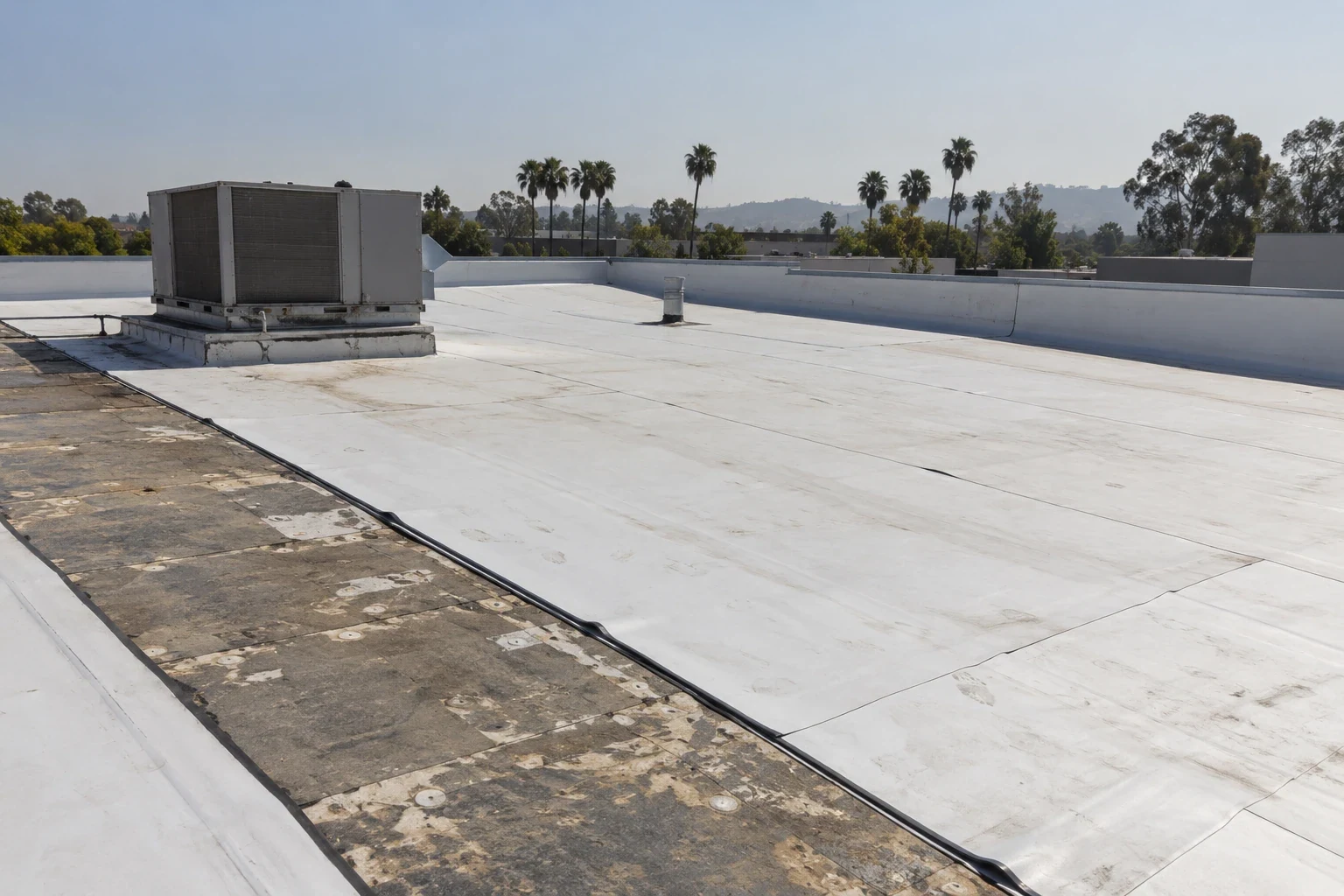
For a repair, we distinguish a localized defect from surrounding deterioration. A commercial roof repair may be a sensible option when the substrate and adjacent materials remain serviceable and the leak origin can be isolated. If several repairs recur, moisture extends beyond the visible area or the assembly is near the end of its useful service, we explain what additional inspection is needed before comparing replacement options.

How can a crew work above an active business?
Before scheduling, confirm the person who can authorize access, any roof hatch or ladder rules, hours when noise is restricted, areas that must remain open and the best contact if conditions change. If customers, residents or employees use the space below, the work plan should identify overhead protection, material movement and any short-term access limits. A clear schedule matters for even a small repair because a roof opening, lift or delivery can affect how people enter and use the building.
For a limited repair, the crew can define the work area, protect the opening during the repair and confirm that the roof is closed at the end of the visit. For a larger project, we set out the sequence by roof zone and specify how each area will be secured before moving on. The owner should know which part of the building may be affected, what notice occupants receive and what conditions would change the planned work. An occupied-building reroofing plan can organize these steps without assuming that every property has the same schedule.
Cost and duration depend on the measured roof area, assembly, tear-off needs, insulation and deck condition, edge and penetration details, access equipment, disposal and the hours available for work. A proposal should show which observations support the price and which concealed conditions could change it. If testing is recommended, name the uncertainty it will resolve and whether the finding could change the proposed scope. That makes bids easier to compare than a single unexplained total.
The Salinas NOAA record places most yearly rain in the cooler months. Before setting a repair date, check whether each roof area can be closed within the forecast window, and specify temporary protection if conditions interrupt the crew.
What should ownership retain after the roof visit?
Keep plans, labeled photographs, leak history, repair invoices and warranty documents by property and roof section. The closeout should state work performed, materials, weather limits, inaccessible areas and next steps. For a portfolio that includes Chinatown and the Alisal and East Salinas area, separate files prevent a finding at one property from being carried over as if it described another.
If a new leak appears, report the affected room, date and time, current water entry, nearby equipment or work, and any safe steps already taken to protect contents. Avoid opening ceilings or entering wet electrical areas. Send the roof access contact and any relevant plan or previous repair record so the inspection can focus on the correct section. A prompt report helps set the order of investigation; it does not establish the cause before the roof is checked.
For capital planning, rank work by condition, leak history, operational risk and diagnostic certainty. Separate active water control from preventive repairs and replacement planning. If more than one path fits, state the tradeoffs and remaining inspection needs. The planning designation can aid coordination; technical decisions must follow each building’s assembly and condition.
When an owner has a clear scope, a preventive roof maintenance visit can establish a repeatable record of drainage, seams, flashings and prior repairs. Set the next review interval around roof condition, warranty terms, seasonal exposure and the building’s operating needs. The goal is a current, usable roof record that helps the facilities team decide what to fix and when.
Questions Owners Ask
How do you identify the roof system on a Chinatown property?
We inspect the installed assembly, drainage, flashing, and visible condition at the building before recommending a repair or replacement approach.
What information helps locate a leak above a business?
Share the room, date and time, whether water is still entering, and any recent roof or equipment work. A roof plan and access contact help us compare the report with nearby roof zones and details.
Can a Chinatown roof repair be completed while tenants are open?
Work can often fit tenant hours after confirming access, noise, material movement and protection below. The scope should identify restrictions and how the roof will be closed.
When should an owner request more than a surface patch?
Consider further investigation when the leak returns, several interior areas are affected, moisture extends beyond a visible opening or the surrounding assembly appears compromised. The inspection record should explain what supports a broader scope.
How does Salinas weather affect roof repair timing?
The local 1991 to 2020 record concentrates rainfall in cooler months. Use the forecast for the work window and specify how an exposed area will be covered if the sequence pauses.
Related Roofing Work
Plan a commercial roof inspection in Chinatown
Describe the Chinatown property, how staff can provide roof access, and the issue to review. We will follow with a building-specific recommendation.