Commercial Roofing in South Main and Blanco, Salinas, CA
Roof inspections and commercial repairs near the South Main and Blanco gateways in Salinas, planned around each property's access and operations.
Overview
A commercial building near South Main and Blanco needs a roof plan that respects its access route and operating hours. South Main and Blanco connect commercial properties with busy local routes. Confirm the current entry, delivery windows, and staging limits with the facilities contact before a roof visit. The City has also assessed traffic volumes on these arterials. That context helps with coordination, but the crew still needs site-specific instructions for deliveries and staging.
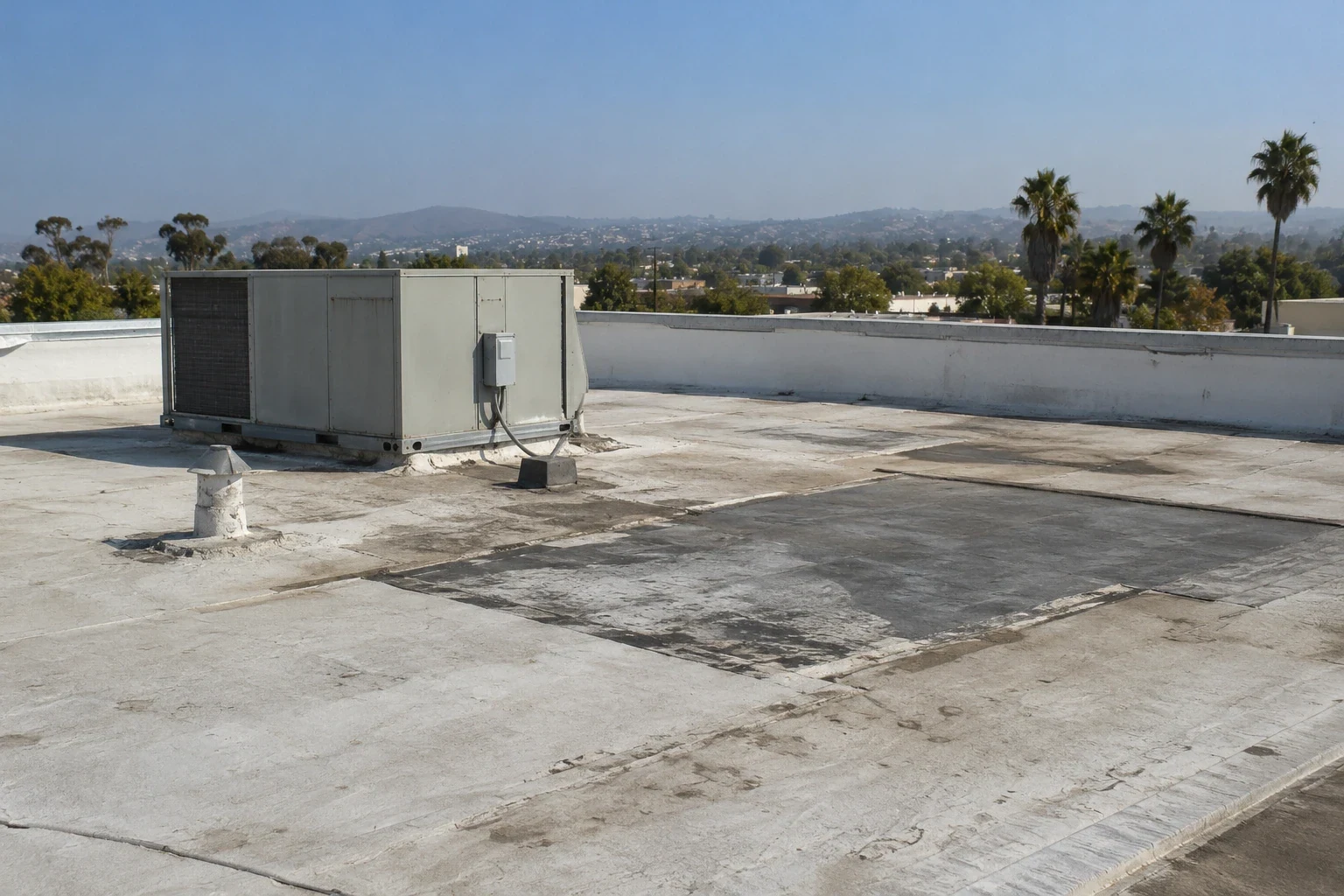
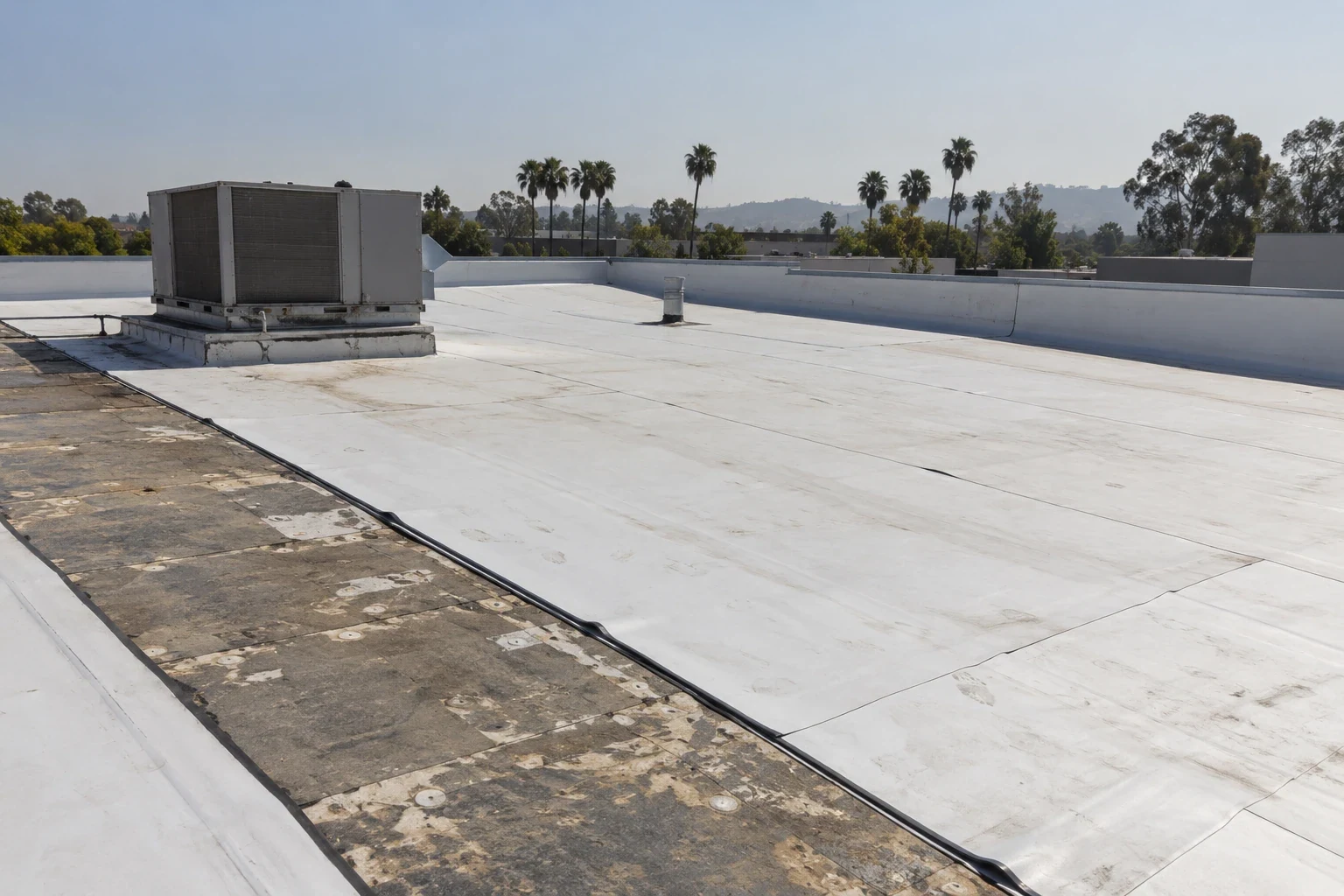
We start with the installed roof system and the building’s reported condition. The inspection documents the accessible sections, drainage, seams, edges, penetrations, equipment supports and earlier repairs that apply to that system. It then connects roof observations to leak reports and operational needs. A commercial roof inspection can help an owner decide whether to isolate a repair, investigate further or build a replacement scope.
How should traffic and property access be coordinated?
Confirm the project contact, authorized entrance, roof-access method and any escort requirement before scheduling. Ask about customer and staff routes, loading areas, delivery windows, parking controls and hours when noise or lift activity must be limited. If equipment will occupy a shared drive or approach, the property representative should review the proposed location and obtain any needed approvals. A traffic study reflects conditions when prepared; confirm current site arrangements before work.
Where a portfolio includes a site near South Main and Blanco and another in Downtown Salinas, save access directions and restrictions separately. A map pin is not a complete site plan. The crew needs to know where to check in, where to keep materials, which roof section is first, and how to reach the decision-maker if the work uncovers a condition beyond the scope.
Before cutting, fastening or moving rooftop equipment, confirm which systems need to stay in service and who can authorize a shutdown. A roof zone over an occupied suite may require interior protection; a zone near a loading area may need a different sequence to keep operations moving. We describe the affected area and expected limits so the facilities contact can notify occupants and adjust access before a crew arrives.
Record each roof section in a plan or dated photographs. Mark the access point, visible drains, edge conditions and penetrations, then associate each reported leak with the corresponding interior space if known. Those records make it easier to compare later inspections and reduce the chance that a repaired detail will be confused with another area on the same roof.
What should an inspection establish before a repair?
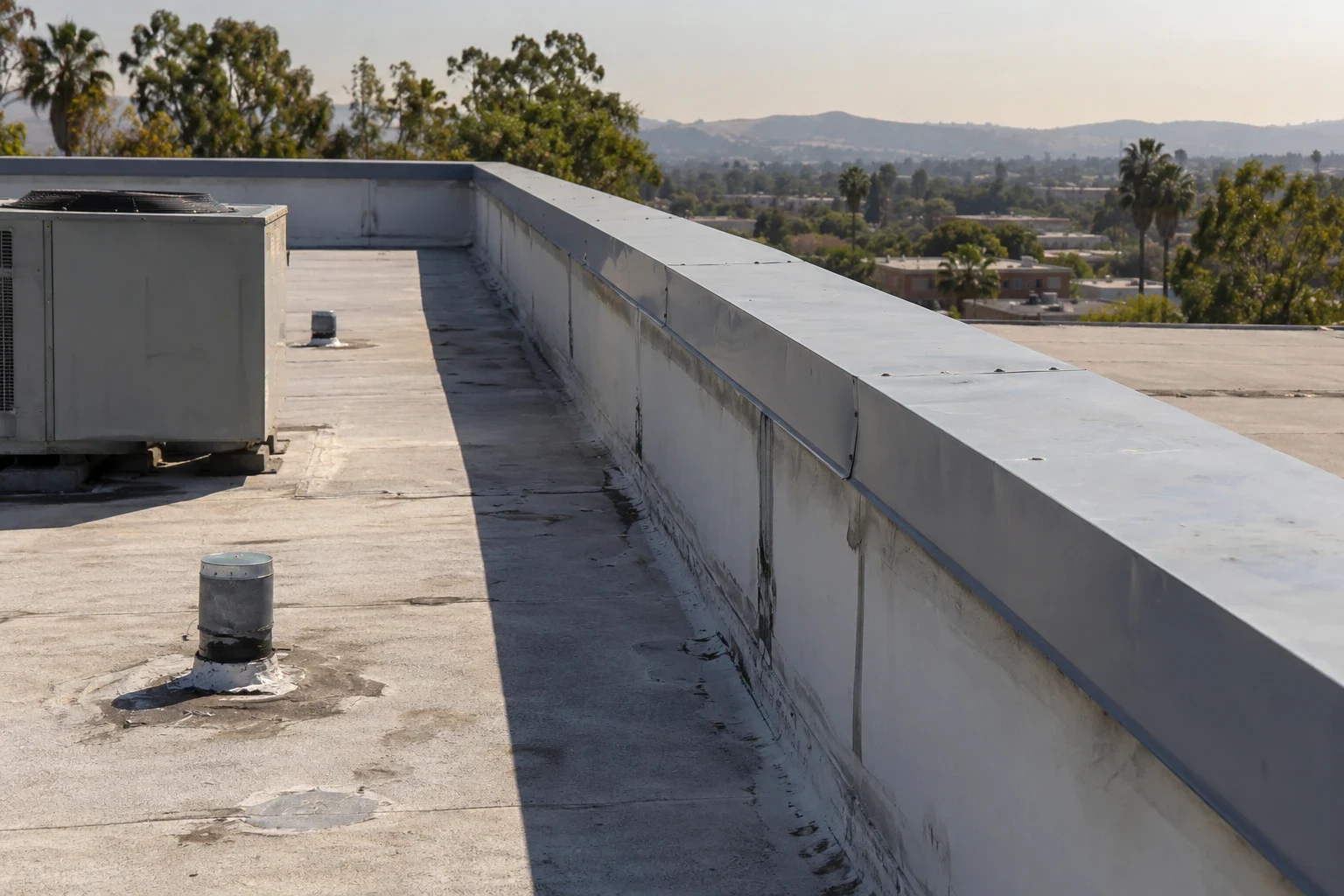
First identify the roof assembly and any areas that could not be reached. The method differs across membranes, built-up systems and metal; a proposal should not assume the material based on a building’s use or location. We check visible laps, seams, flashings, curbs, penetrations, perimeter details and prior patches as appropriate. Where roof plans or warranty records are available, compare them with field conditions and record discrepancies.
Next, trace the water path. Inspect the relevant interior area, ask when entry occurs and compare the report with nearby roof details. Water can travel along a deck or framing before appearing at the ceiling. We look at outlets and surrounding low areas, but a blocked drain is not automatically the cause of every leak. If water enters beside a curb, seam or wall, the repair should address the supported origin and any connected detail that affects it.
A commercial leak repair can be appropriate where inspection supports a defined, limited defect and the surrounding materials remain sound. If multiple zones show moisture, a previous patch has not held, or the deck condition is uncertain, request a more complete investigation before narrowing the price. The report should distinguish visible damage, suspected conditions and areas not tested.
Salinas station climate normals place most annual rain in the cool season. Before that period, owners can check whether outlets are open and whether exposed transitions need attention. Check current conditions and roof-surface moisture before scheduling work that depends on a dry application window. The work window should reflect the current weather outlook, the roof’s condition and the amount of time required to close the repair safely.

How can the work area stay controlled?
Write the repair scope around a defined roof zone and the details included. It should state preparation, material compatibility, transitions to be rebuilt, debris handling, protection below and the method for confirming that the area is closed. For replacement, identify the assumed removal or recover approach, insulation, perimeter and penetration work, tie-ins and any deck repairs that are included or excluded.
Where the building stays open, divide larger work into manageable sections and agree on a daily closeout standard. The property contact should know whether access, equipment or tenant activity will be interrupted and what notice is needed. An occupied-building reroofing plan can cover temporary protection and sequencing. It should also describe what happens if weather or concealed damage pauses the project before the current area is complete.
Price and duration depend on roof area, removal needs, substrate and insulation condition, transitions, access equipment, material selection, disposal and work-hour limits. A proposal is easier to review when it shows quantities and states how concealed conditions are handled. If additional testing could change the recommendation, name the question it addresses and the decisions that will follow from the result.
Owners considering a limited fix and a broader capital project should compare scopes with the same assumptions. A repair may be less disruptive when the defect is isolated and the surrounding roof can support it. Replacement may be more appropriate when failures are distributed or the assembly’s condition makes repeated patching unreliable. The inspection should explain evidence for either path rather than infer the answer from the road or planning designation.
What records help prevent repeat diagnosis?
File the roof plan, inspection findings, photos, leak dates, invoices and warranty information under the property and roof zone. Record what work was completed, what could not be inspected, and which condition needs follow-up. If a leak returns, append the new report to the earlier history. The team can then assess whether the same detail failed again or a different pathway is involved.
For facilities comparing this corridor with North Main Street or the East Alisal and East Market area, use one portfolio list for timing and budget while preserving property-level evidence. Local road conditions can affect roof-work coordination. They do not replace a condition report for the roof under review.
At the end of a service visit, confirm the repair boundary, photos of the completed detail, any material or warranty documentation and next steps. Ask the contractor to identify whether drains, access routes and surrounding surfaces were left clear. If an issue remains open, assign a contact and target date so that the recommendation does not disappear between maintenance cycles.
A consistent record allows the owner to compare a later inspection against a known baseline. It also helps facilities staff answer practical questions: which section was repaired, what was observed nearby, what remains uncertain and what should be checked before the next wet season. Keep that information concise and attached to the correct property.
Questions Owners Ask
What commercial properties do you serve near South Main and Blanco?
We serve commercial properties across the surrounding area. The property location and installed roof assembly guide the inspection and work scope.
What access details should be ready before an estimate?
Share the check-in point, roof access method, operating hours, delivery limits, staging constraints and contact authorized to approve work. Those details can affect sequencing and equipment needs.
What information helps trace a leak near South Main and Blanco?
Send the time, interior room, prior repair and roof plan. We compare the report with its roof zone, then inspect nearby seams, drains and transitions. record delivery or operating limits so access can be planned without unapproved staging.
When is a targeted leak repair reasonable?
It is more supportable when the origin is identifiable, the work boundary is clear and adjacent roof materials remain suitable. Widespread moisture or repeated failures may call for further diagnosis.
Can roof work be staged while a business remains open?
Often, with a defined sequence, access plan and protection requirements. Confirm occupant notice, equipment needs and daily dry-in expectations before mobilization.
Related Roofing Work
Plan roofing work near South Main and Blanco
Tell us where the property is, how the building operates and what roof issue needs attention. We will review the site-specific condition and coordinate an appropriate next step.