Commercial Roofing for School Districts in Salinas, CA
Plan school roof repairs and renewal in Salinas around student safety, classroom protection, campus access, and district approval records.
Overview
Students returning to class can find water affecting a classroom, food service area, office, or electrical room. District staff need to know which building and roof zone are involved before they can choose a repair window. In Salinas, agriculture and public services are part of the local economy, and Hartnell College's Alisal Campus includes education and construction programs. We inspect the actual roof assembly and connect findings to the rooms and schedules below.
A useful district record identifies the reported leak, visible roof conditions, access limits, and work that can be scheduled during a break. We check seams, edges, drains, curbs, and transitions, then show which item needs repair, testing, or continued observation. A commercial roof inspection gives facilities staff a condition record for review with site administrators and the people who approve work.

Which roof areas should facilities staff prioritize?
A stain in a classroom ceiling tells facilities where water appeared, not necessarily where it entered. We compare the room location with the roof above, checking drains, seams, flashing, skylights, and equipment curbs. If the water path may cross a concealed layer, we mark the limits of what the visit established and identify what access or testing could narrow the repair area. The record can distinguish an active leak from an older mark that needs monitoring.
Different school spaces create different consequences. Water above a library collection, kitchen, computer room, or occupied classroom calls for a different interior-protection plan than a leak above a storage area. We work with the site contact to identify rooms that must stay available, where furniture or equipment needs covering, and how staff will route students away from the work zone. For active water entry, we can respond day or night, including on a holiday.
Rainfall in Salinas is concentrated in the cooler months, while summer precipitation is very limited. Districts can use the dry season to review drains and flashing before the next wet period, but a calendar does not establish the condition of an individual roof. We record what is visible on each building and can arrange a targeted moisture survey when concealed wet insulation could change the decision.
How can repairs fit the school calendar?
Campus access needs a work sequence that protects students, staff, visitors, and the crew. Before mobilization, we confirm entry points, vehicle routes, lift placement, delivery timing, roof access, and the rooms below the work area. A district may have different calendars for instruction, food service, summer programs, and building use; we coordinate with each facility contact instead of treating a school break as an automatic access window.
When a roof section is opened, the plan identifies temporary weather protection and a daily closeout point. Phasing can keep the work boundary clear and let a building remain in use when the roof area and interior below can be safely separated. The scope should state which areas are affected, when noise or odors may occur, and who approves a change if concealed damage appears. Occupied-building reroof planning can set those handoffs before materials arrive.
Routes near Downtown Salinas may involve active public-facing uses and infill activity, while East Salinas includes mapped opportunity areas around Alisal and East Market. Those planning facts help orient the district's regional portfolio, yet each campus needs a property-specific traffic and access check. We can coordinate a visit at a school serving the Alisal area around its own entrance and operating rules.
When should a district compare repair with renewal?
A localized seam split, damaged flashing, or puncture can be repaired when the surrounding membrane and substrate accept a sound tie-in. We identify the assembly, show the repair boundary, and record whether adjacent details need attention. If several rooms report leaks over separate zones, or inspection finds broad deterioration or wet insulation, a single patch may leave the district without a clear view of the larger condition. The next step may include more testing before a budget request is prepared.
Replacement, recovery, and coating work each depend on the existing layers, drainage, deck condition, and compatible materials. We compare what each option requires, including tear-off, equipment moves, edge details, and access during the school year. A preventive roof maintenance visit can address debris, outlet condition, and visible flashing before those items contribute to an interior report. Maintenance is recorded separately from a repair that restores a failed roof detail.
For an addition or reroof that changes structural or fire assemblies, Ordinance 2690 sets Salinas code requirements, with its adopted state building standards edition effective January 1, 2026. We identify the proposed assembly and affected areas so district staff can confirm project-specific permit needs with the City. A district can compare its record with public agency roof planning when approvals and permit review shape the work sequence.
What should a district receive after the roof review?
Facilities staff need findings they can compare across buildings without assuming every campus has the same roof. We organize photos by building and roof zone, describe the visible condition, list reported interior effects, and record any area that was inaccessible. Each recommended action should point to a specific detail and say whether the work is ready to scope or needs another inspection. That gives administrators a basis for matching urgency to room use and approval timing.
A condition record can also support communications with principals, maintenance staff, and finance. We separate active water entry, repairs that protect the assembly, routine maintenance, and items that merit follow-up. A written roof condition report preserves the observed details and photographs for a later comparison. If several district buildings share a portfolio review, a multi-property roof record illustrates how each asset can keep its own access records and history.
How can facilities start with the right campus?
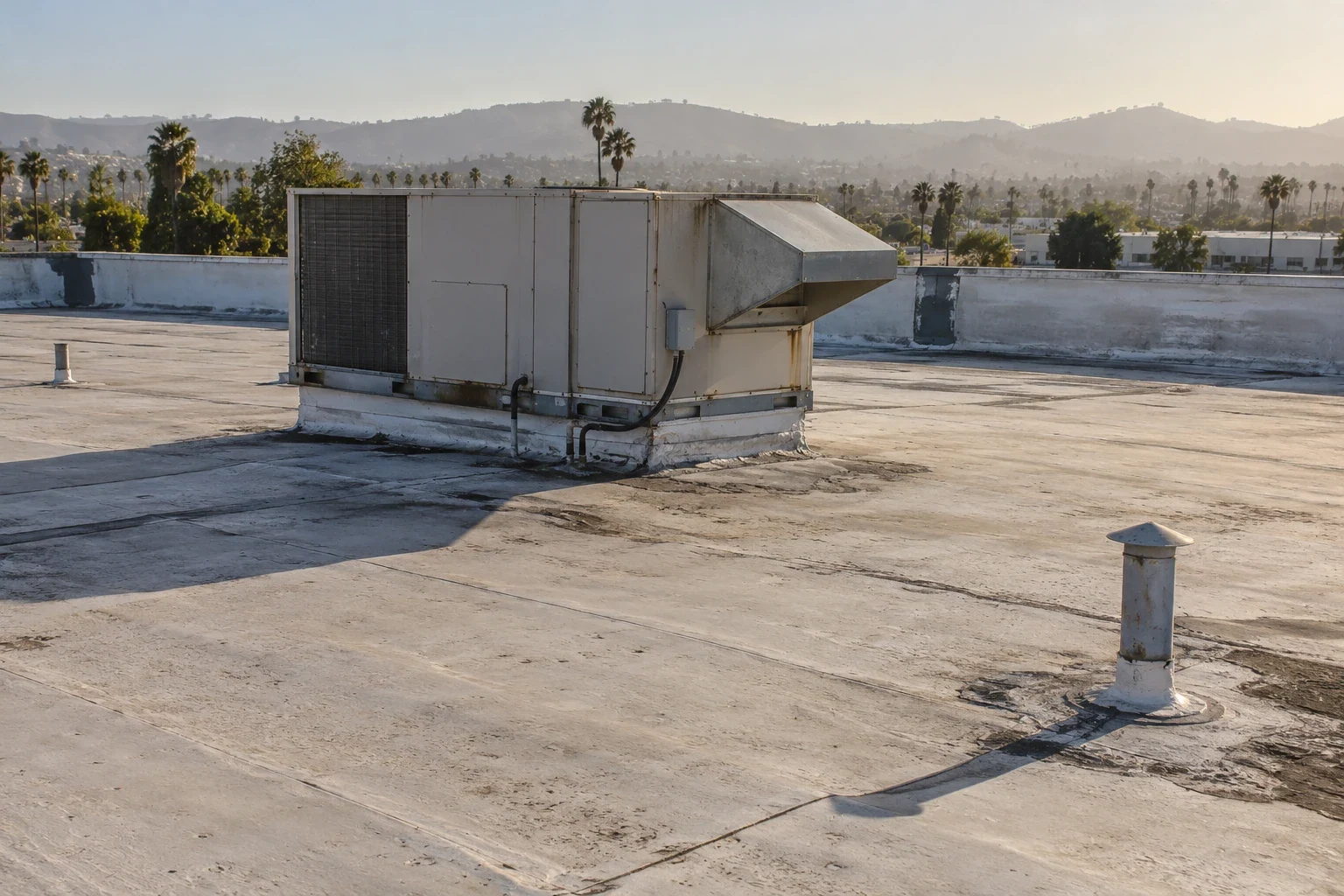
Start with buildings that have an active leak, a repeated repair, or an upcoming renewal decision. Share the facility contact, roof history, room affected, available drawings, and dates when access is possible. We can review one campus or several, while keeping the findings and recommended actions separate by building. For school roofing near the Salinas Business Park area, the same review process begins with the property, its actual roof details, and the access route available to the crew.
The visit can include roof observation, interior leak tracing, photographs, and a discussion of which additional test would affect the scope. If a repair can be completed within a defined window, we state the work boundary and closeout plan. For wider deterioration, the district receives options that describe the surface preparation, phasing, and coordination needs rather than a generic replacement recommendation.
Arrange a roof review with the facilities lead who can confirm room access and campus rules. We will document conditions by roof zone, identify immediate protection, and give the district a prioritized record for its next maintenance or capital decision.
Questions Owners Ask
Can repairs happen while students are in class?
The affected roof zone, rooms below, and safe separation determine whether that is practical. We review access, sound and odor concerns, lift routes, and interior protection with the site contact. The scope identifies any area that needs to be vacant and the work window required before scheduling.
What should staff record when a ceiling leak appears?
record the room, date, whether water is active, and any equipment or materials at risk. We compare that report with roof details above and record where the path may continue. A ceiling location helps direct the inspection, while the roof findings establish the repair boundary.
Can a summer break be used for a full replacement?
A break may provide a useful work window, but roof condition, scope, delivery access, and project approvals still govern the schedule. We identify what can be phased, how each exposed section will be closed daily, and whether concealed conditions could extend the work.
How are several school buildings prioritized?
We list active leaks and exposure first, then separate repairable details, maintenance items, and areas requiring more investigation. Photos and locations stay tied to each building so district staff can compare decisions without treating one roof as evidence about another.
Does a roof review include the interior?
When access is available, we compare reported interior symptoms with roof conditions and document protection needs. An interior check helps trace water movement, while the roof inspection identifies the membrane, flashing, drainage, or penetration detail to address.
Related Roofing Work
Plan roof work around the school calendar
Arrange a Salinas roof review around student schedules, campus access, and district approval. We will document each roof zone, identify immediate protection needs, and organize repair choices by priority.