Commercial Roofing for Real Estate Investors in Salinas, CA
Plan commercial roof repairs and capital work for Salinas investment properties with clear condition records, phased options, and operating schedules.
Overview
An investment property earns its keep through occupied space, reliable operations, and a capital plan that holds together across the portfolio. In Salinas, that may mean an industrial building near Airport Boulevard, a retail property along North Main Street, or a mixed-use asset closer to Downtown. The roof decision starts with the assembly and its condition, then connects findings to leases, tenant access, and the next ownership milestone.
We inspect by roof zone and record membrane or panel conditions, drainage, penetrations, edges, and interior leak evidence. That record helps compare assets without assuming similar buildings need the same scope.
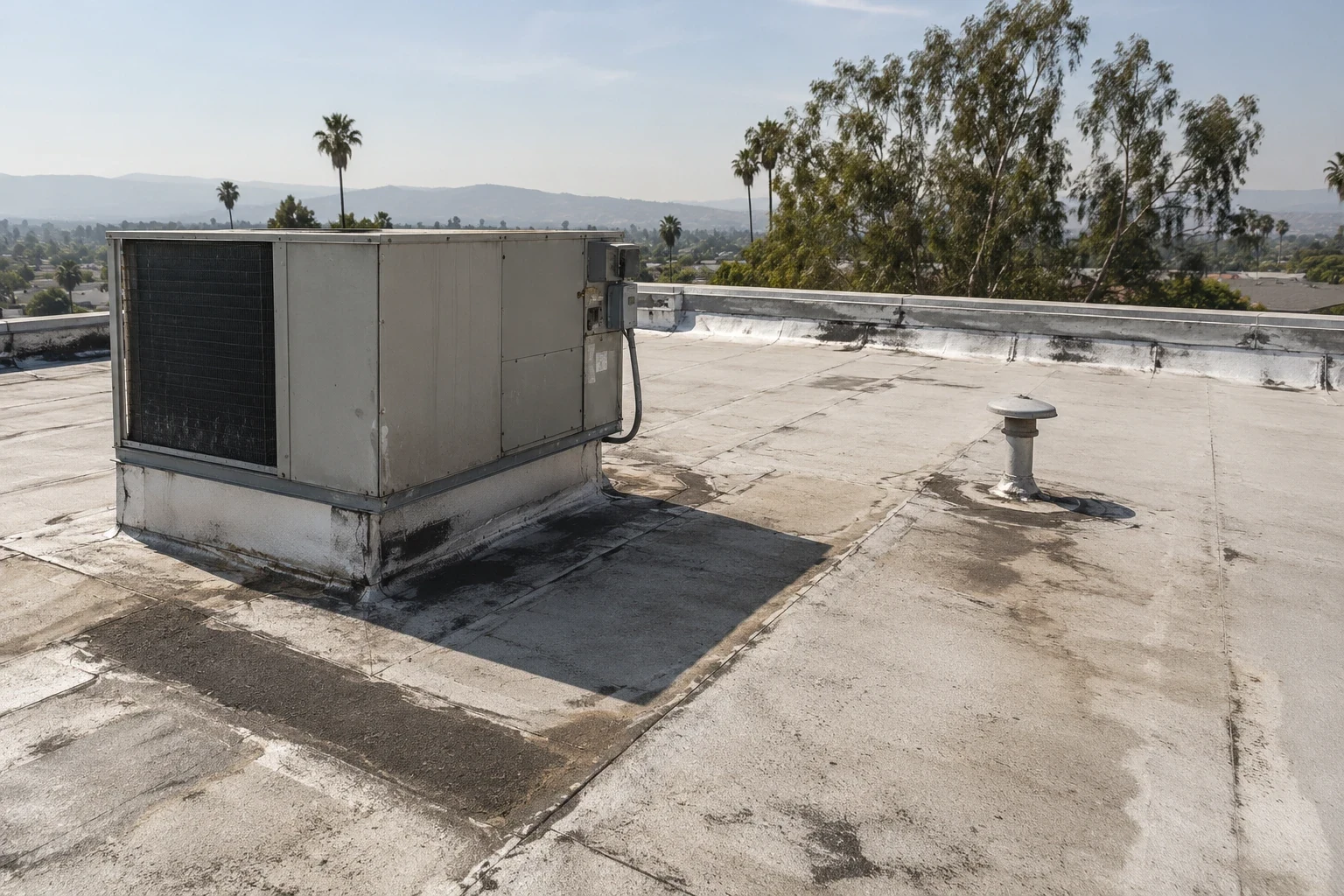
Which roof information belongs in the asset file?
A useful asset file connects an observed condition to a roof area, photograph, and next action. It identifies the assembly where confirmed, records inaccessible areas, and separates active leak evidence from maintenance. That gives acquisitions, property management, and facilities a shared record for repair requests or capital review. See how multi-building property managers can use the same roof-zone discipline across occupied assets.
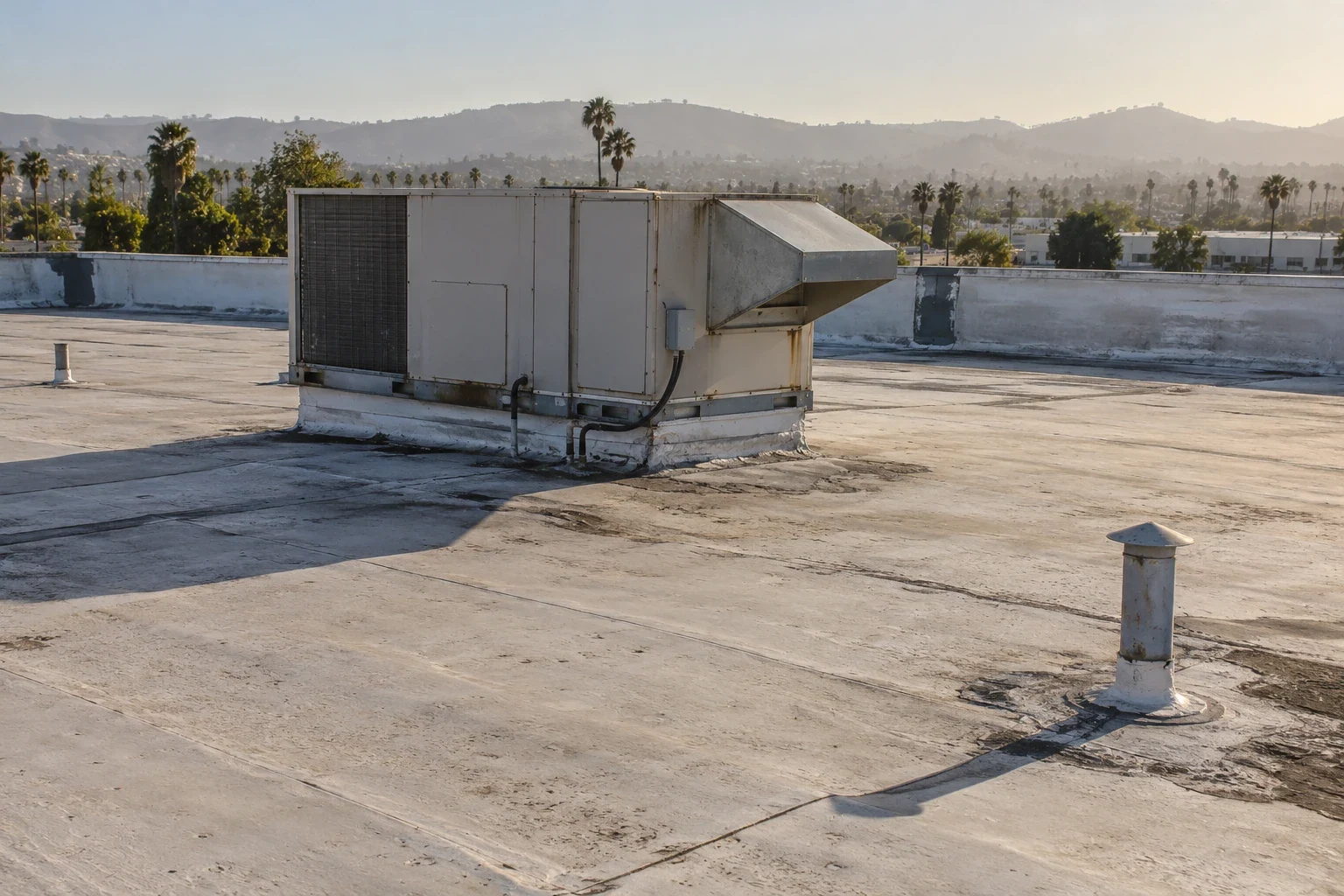
Where service calls exist but roof history is unclear, we inspect visible seams, flashings, drains, curbs, perimeter metal, and areas tied to interior reports. A roof inspection records those conditions. If concealed moisture could change the repair boundary, a targeted moisture survey can show where further testing may help.
For owners with several Salinas properties, consistent labels matter. Each building and roof section gets its own location, condition, urgency, and next decision, so records remain useful in a budget or transaction file.
How can the roof plan support a purchase or budget?
Acquisition and annual budgeting call for different detail. Before closing, a buyer may need visible conditions, likely near-term work, and questions requiring testing. For an owned asset, compare repair, restoration, recover, and replacement against the assembly, insulation, deck, drainage, and available construction window.
Salinas receives most normal rainfall during the cooler season, while summer is drier. That makes outlet condition and pre-rain planning useful file items, but it does not establish that a roof is ready. We check drains, low areas, overflow paths, and transitions. A maintenance program tracks these details and identifies repairs to price before a leak affects occupied space.
Local defects with sound surrounding materials may suit repair. Recurring leaks, broad deterioration, wet insulation, or repeatedly failing patches can point to larger work. A capital plan should explain why an option fits current evidence, what remains uncertain, and which finding could change the recommendation. It should distinguish a planning allowance from a priced scope.
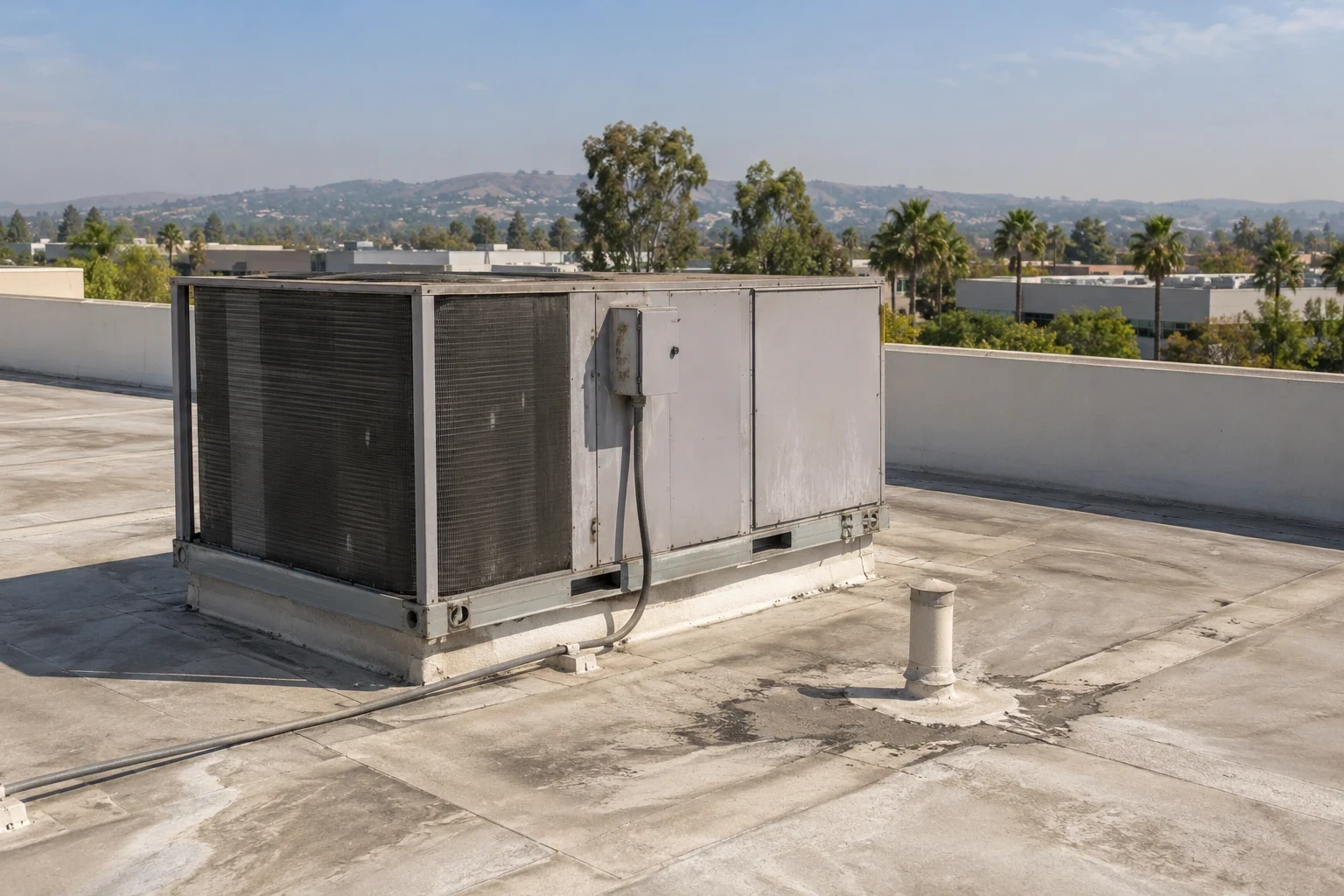
What has to be coordinated with tenants?
A roof scope can affect receiving, parking, mechanical service, office access, or work below. Before mobilization, we confirm lift locations, entrances that must stay open, and protection below. The property manager identifies lease-sensitive hours, loading windows, and contacts authorized to approve sequence changes.
Phased work can keep unaffected areas operating while a roof zone is opened, repaired, or replaced. Each phase needs a dry-in plan, staging area, and end-of-shift closure procedure. If removal exposes wet insulation or damaged deck, work may pause while the owner reviews the cost and schedule effect. Occupied-building reroofing planning should set those decision points before production and tenant notices begin.
For industrial assets near the Salinas Ag-Industrial Center or Salinas Business Park, truck movement may be as important as roof access. Planned uses include warehousing, logistics, packaging, and ag-industrial operations. We coordinate the work area with the facility contact and protect the building's active operations.
When does a patch stop being the practical answer?
A patch can work when the failed detail is identifiable and nearby materials accept a compatible repair. Open seams, punctures, displaced flashing, or one failed drain connection may be corrected without disturbing the full assembly. We record the repair area so later leak reports can be compared with it.
Consider broader work when leaks recur across zones, the membrane is brittle or loose, or moisture extends beyond the original repair. We assess the layers, likely water path, and whether a recover would preserve or conceal a problem. A recover option needs support from the existing roof and project requirements. Replacement may address tear-off, deck review, insulation, edges, and phasing together.
As of January 1, 2026, Salinas applies its current California Title 24 building standards edition to applicable permits. Work that changes structural or fire assemblies may require review against current requirements and a project-specific permit path. We describe roof conditions and scope assumptions; confirm code and permit questions with the City before design or construction is finalized.
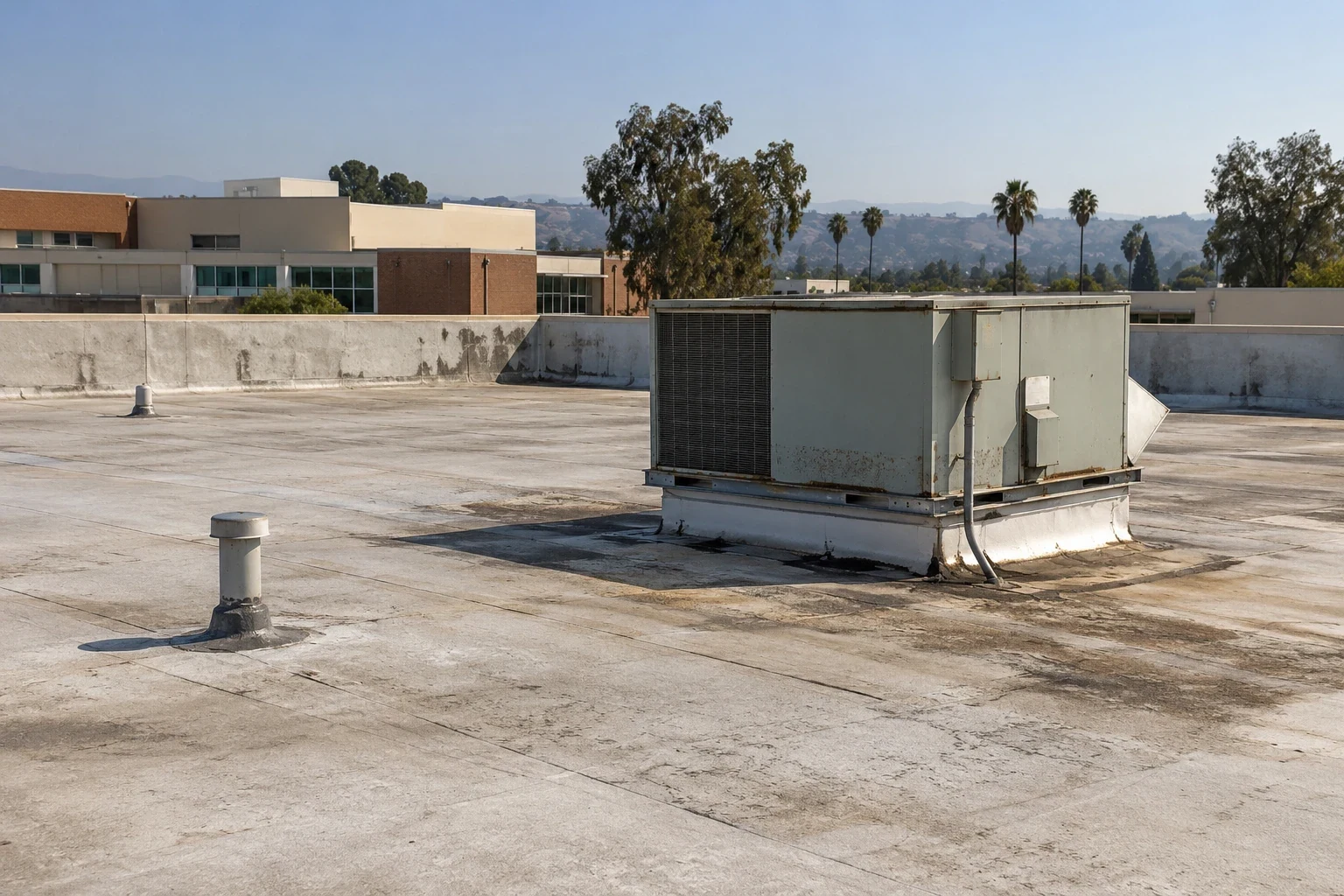
How should local conditions affect timing?
Salinas has cool-season rainfall and a summertime marine layer. Damp mornings can affect roof-surface conditions and some applications; breezes can change safe access and material handling. We schedule around the actual forecast, surface, and product requirements.
Airport Industrial Park, the Valley Center Corridor, and the Highway 68 Gateway have different access routes and neighboring uses. We record the assembly, drains, equipment, and operating limits for each asset. A corridor name can orient a portfolio record; it does not establish roof type or condition.
Standing-seam or retrofit metal needs a different review from a single-ply membrane. We identify the system before selecting repairs and check surface condition before proposing a coating. Owners can compare metal roof details with the observed assembly, not treat a portfolio label as a specification. In the planned industrial areas, manufacturing operators may need roofing scheduled around equipment service, receiving, and production windows. That coordination belongs in lease notices and the capital schedule, especially when roof access overlaps a tenant's normal workday. We confirm the site's actual limits before setting the sequence.
What should ownership receive after the work?
A completed repair or capital project should leave a useful record. We organize work by building and roof zone, identify materials and repaired details, and record concealed conditions that changed the approved scope. The handoff can include permitted photographs, inspection findings, maintenance items, and open questions.
Before a sale, refinance, or operations transfer, service history and priorities belong together. It keeps service history and priorities together. That gives the next decision-maker a clearer starting point than invoices without roof locations or condition records.
Questions Owners Ask
Can you provide one roof summary across several Salinas properties?
Yes. We can inspect each property separately, use consistent roof-zone labels, and summarize condition, urgency, and next action across the portfolio. Each asset keeps its own findings so a shared summary does not blur differences in construction or use.
What should an investor request before closing on a building?
Start with roof access, available repair history, leak reports, and any prior condition records. We can inspect accessible areas, document visible issues, and identify questions that require testing or opening. The buyer should use that scope with the rest of the property's due diligence.
How do you protect rent-producing operations during roof work?
The work plan identifies active roof zones, staging, access limits, protection below, and the tenant contacts who can approve changes. We phase work where practical and close each exposed area against weather before leaving the site.
Can a roof condition report estimate replacement timing?
A report can describe observed wear, leak history, moisture findings, and repairs that may be needed. Those conditions help frame a capital discussion, but concealed layers and project requirements can change the scope. We state what was inspected and where further testing could improve the decision.
Does a summer dry period mean maintenance can wait?
A dry stretch can provide a scheduling window, but it does not clear blocked drains, open flashings, or damaged seams. We inspect the roof itself and prioritize items that could admit water when cooler-season rain returns.
Related Roofing Work
Put the roof condition into the asset plan
Share the property list, available roof records, and upcoming tenant or transaction dates. We will inspect the applicable roof areas and organize findings into practical repair, maintenance, and capital decisions.