Standing Seam Metal Roofing in Salinas, CA
Plan standing seam commercial metal roofing in Salinas around panel movement, clips, underlayment, drainage, and building operations.
Overview
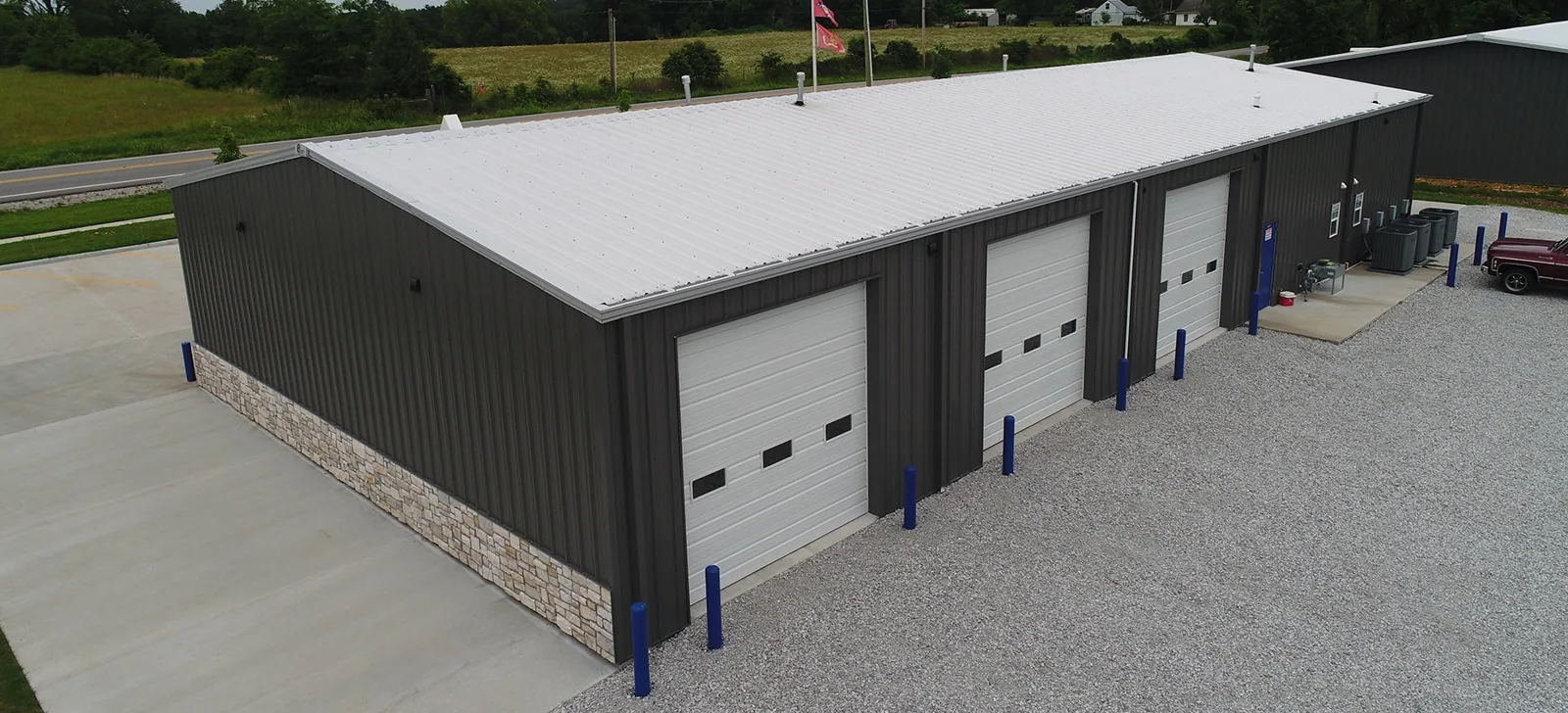
Standing seam metal roofing uses raised panel seams to move water across the roof while allowing the panels to expand and shrink. A commercial installation depends on the full assembly: deck, underlayment, clips, seams, edge conditions, and penetrations. In Salinas, we assess those elements around the building’s exposure and use, whether the roof covers an office, warehouse, or agricultural-support facility.
The local pattern of cool-season rainfall and dry summer months can help with project timing, but it does not identify corrosion or a failed seam. We inspect the actual panels, fasteners or clips, transitions, and drainage before discussing repair or replacement. That gives the owner a work plan tied to the roof rather than the material name alone.
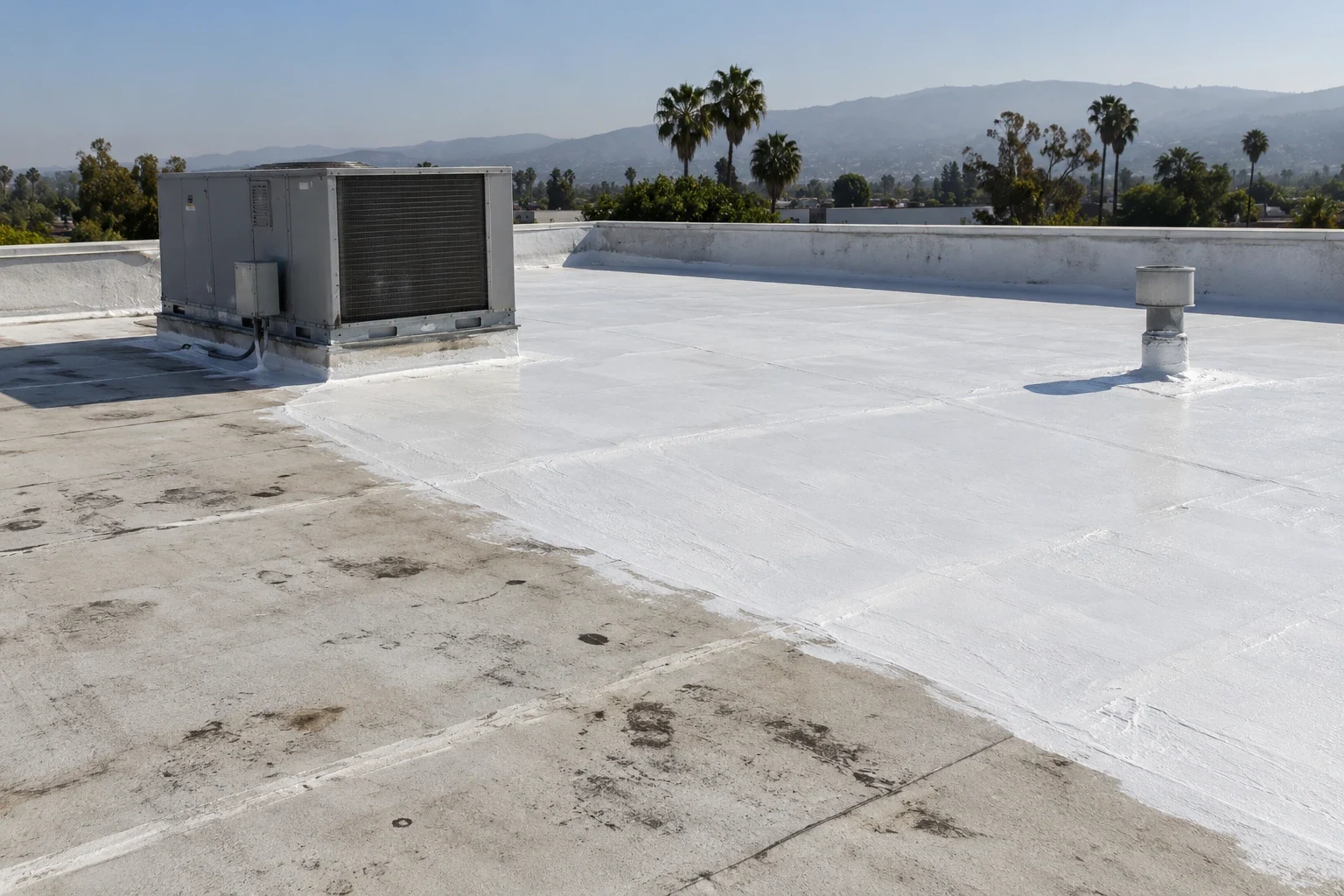
How do raised seams manage water?
Panels are joined at raised seams, which reduce the number of horizontal joints exposed to water. Depending on the system, clips hold the panels while allowing movement along their length. Panel gauge, seam height, clip spacing, substrate, and wind design all affect the assembly. These specifications must match the project and the building structure. A panel profile that looks similar from the ground may use a different clip or seam detail and cannot be assumed compatible with existing material.
We review roof drawings where available and inspect representative details in the field. Owners considering a different metal approach can compare metal roof retrofit assemblies or a low-slope membrane such as TPO. The choice depends on slope, existing framing, drainage, thermal movement, and how rooftop equipment connects to the surface. The panel system is only one part of a weather-tight roof.
What happens as panels expand and shrink?
Metal changes length with temperature. A standing seam system accommodates that movement through clips, sliding connections, and details designed for the panel run. If a panel is locked by an incorrect fastener, an obstructed clip, or a poorly placed penetration, movement can stress the seams and open a leak path. We look for oil-canning, distorted ribs, loose terminations, backed-out fasteners, and sealant applied where a sliding detail should remain free to move.
Long panel runs, roof transitions, and changes in direction need particular attention. Repairs should restore the movement mechanism instead of simply tightening the panel in place. At a building with rooftop mechanical equipment, the flashing detail must stay secure without preventing panel movement. We coordinate with other trades where an opening or support has been added after installation. The repair record should identify the connection changed and any nearby panel condition that warrants follow-up.
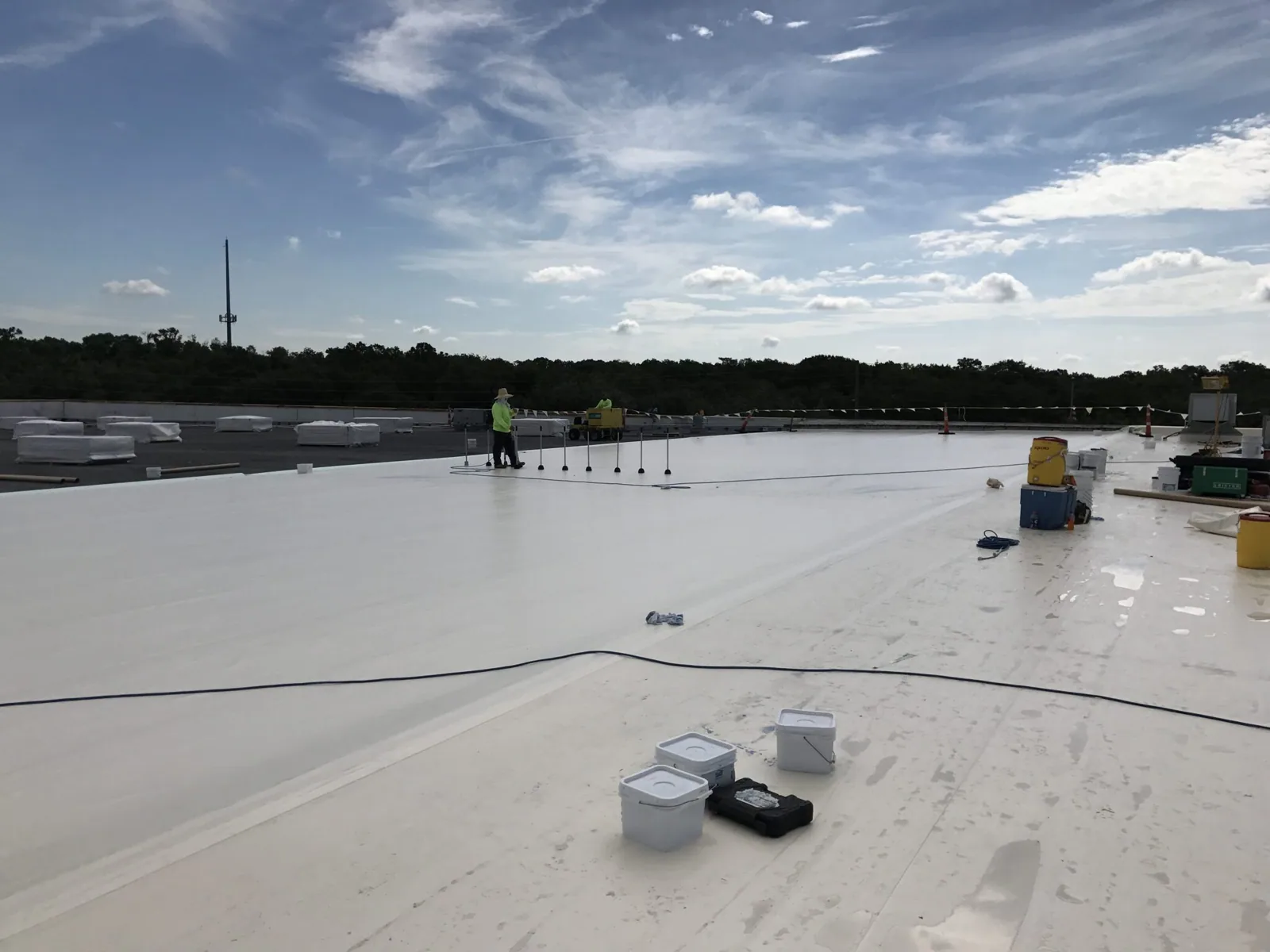
Why do underlayment and condensation matter?
The metal panels form the exposed weather surface, but underlayment and the space below them also affect performance. Water vapor from inside can condense on cooler surfaces when the roof assembly lacks an appropriate thermal and vapor strategy. The design may require insulation, ventilation, a vapor retarder, or separation layers based on the building use and climate control. We do not assume that a leak-like stain is caused by panel failure; we review interior conditions and the assembly path as well.
Underlayment can protect the deck during construction and provide a drainage plane, but its product and placement must fit the metal system. Fasteners, clips, and flashings penetrate or interrupt those layers. When a roof is opened, we confirm which materials exist and whether they are dry and intact. An inspection with roof-zone photos gives the owner a clearer record of visible conditions, while moisture investigation may help answer specific questions where the assembly allows.
Where do leaks develop on metal roofs?
Penetrations, valleys, parapet transitions, ridge caps, eaves, and gutters interrupt the panel field. Each needs a flashing compatible with the panel profile and its movement. Sealant is a maintenance material, not a substitute for a properly formed metal connection. We examine laps, closures, trim, fasteners, and the substrate around an opening, then distinguish a failed joint from water entering farther upslope.
In a business or industrial building, service traffic can damage panels and coatings around equipment. Repeated access routes should be identified and protected, and any new pipe or curb opening needs to be planned before it is cut. If an opening is leaking, roof penetration flashing should reconnect the metal profile and underlayment. Perimeter metal and gutter work should carry water off the roof without backing it under the panel edge.
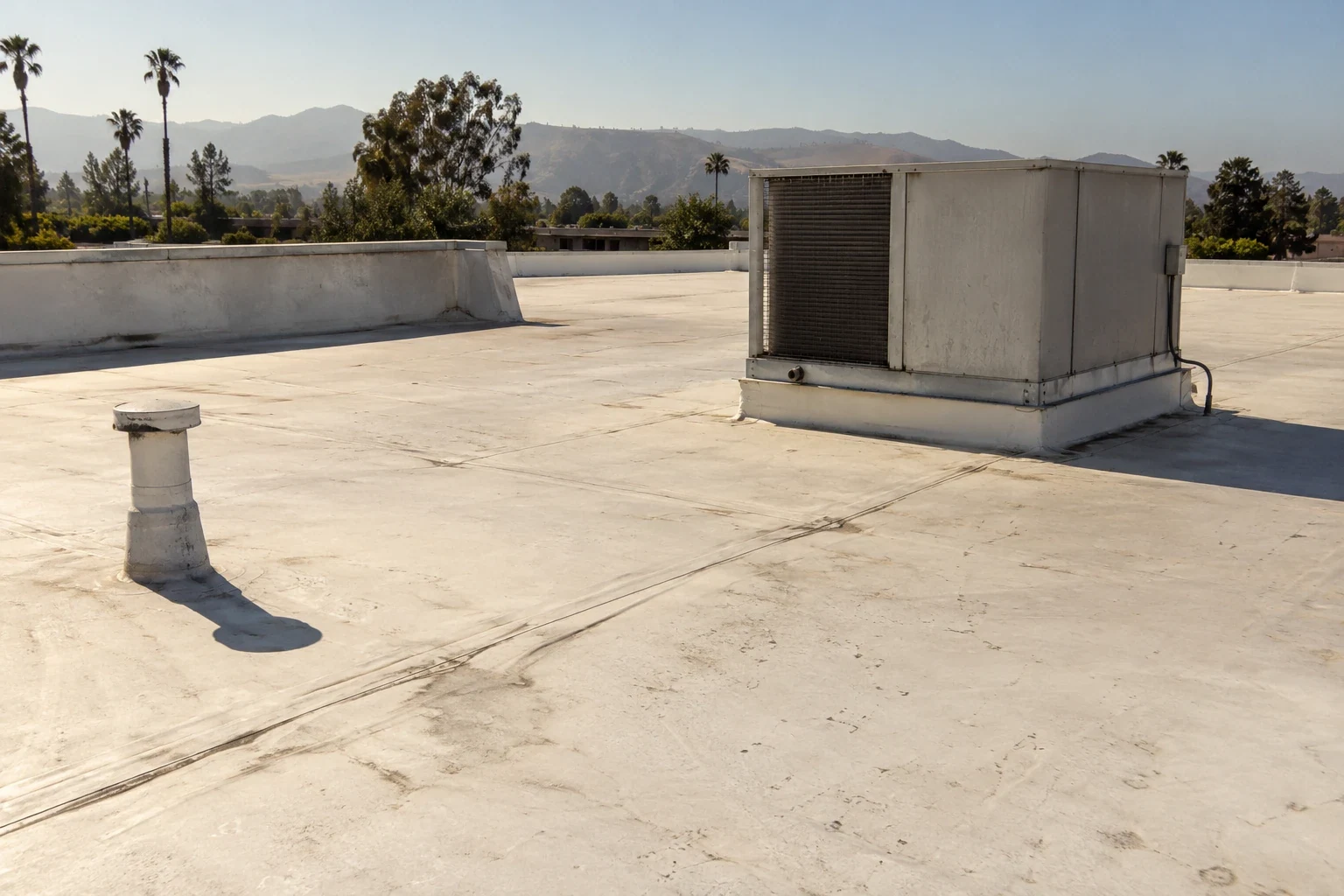
How should the work fit a Salinas building?
Salinas includes commercial and industrial areas such as Alisal and East Salinas and Salinas Business Park. Those names provide context for the types of properties in the market, but each site has its own roof framing, equipment, access, and operating schedule. We review those conditions directly. A warehouse may need a clear loading approach during panel deliveries, while an office can have different restrictions around noise and entry.
For a project in Salinas Business Park, the owner and contractor should map lift locations, pedestrian routes, interior protection, and where removed panels can be handled. The same review applies to any occupied facility: identify when roof sections can be opened, how the area will be made weather-tight at shift end, and who approves concealed-deck repairs. Occupied-building roof sequencing can keep access expectations visible through each phase. The daily plan should also identify when panel edges are protected, how removed material leaves the site, and what weather protection remains in place. These details help the facilities contact answer staff questions and keep deliveries moving during the work.
Can a standing seam roof be repaired?
Many defects can be repaired when the panels and supporting structure remain sound. A repair may reset a loose connection, rebuild a flashing, replace damaged trim, or restore an approved seam detail. The method depends on the panel profile, coating, substrate, and movement requirements. A repair should leave adjacent panels free to move and maintain the intended drainage path. We inspect beyond the visible leak, because water may travel along a panel rib or underlayment before entering the building. A repair plan should state what is being replaced and what existing material stays in service. We record that boundary in the closeout records.
Broad corrosion, repeated seam separation, damaged clips, or widespread panel distortion can indicate that spot repairs will not correct the assembly. Maintenance can include checking fasteners, seams, gutters, penetrations, and finishes after other trades access the roof. Preventive roof maintenance keeps findings organized, while replacement planning can compare repair with a new panel system. If a metal coating is considered, the surface and attachment must be evaluated first.
Questions Owners Ask
Can standing seam panels leak at the seams?
Yes. A seam can be damaged, incorrectly formed, obstructed, or stressed by panel movement. We inspect the seam profile and surrounding attachment before deciding whether to reset, replace, or rebuild the detail.
Do standing seam roofs use exposed fasteners?
Many standing seam systems use concealed clips, although trim and accessory details may include exposed fasteners. The actual system and repair requirements depend on the installed profile and manufacturer’s details.
Can equipment be added to a standing seam roof?
Equipment and supports need attachments designed for the panel system and structural framing. A new opening or clamp should preserve movement and avoid damaging the weather surface. We coordinate the roofing detail with the equipment plan.
How can we tell whether a metal roof needs replacement?
We review corrosion, seam condition, panel distortion, clips, flashing, deck, and repeat leak history. Localized detail failures may be repairable; widespread material or attachment problems can require a complete assembly evaluation.
Related Roofing Work
Inspect the panels, clips, and roof details
Share panel information, leak locations, equipment plans, and access restrictions. We will inspect the metal assembly and explain repairs or replacement options that fit the building.