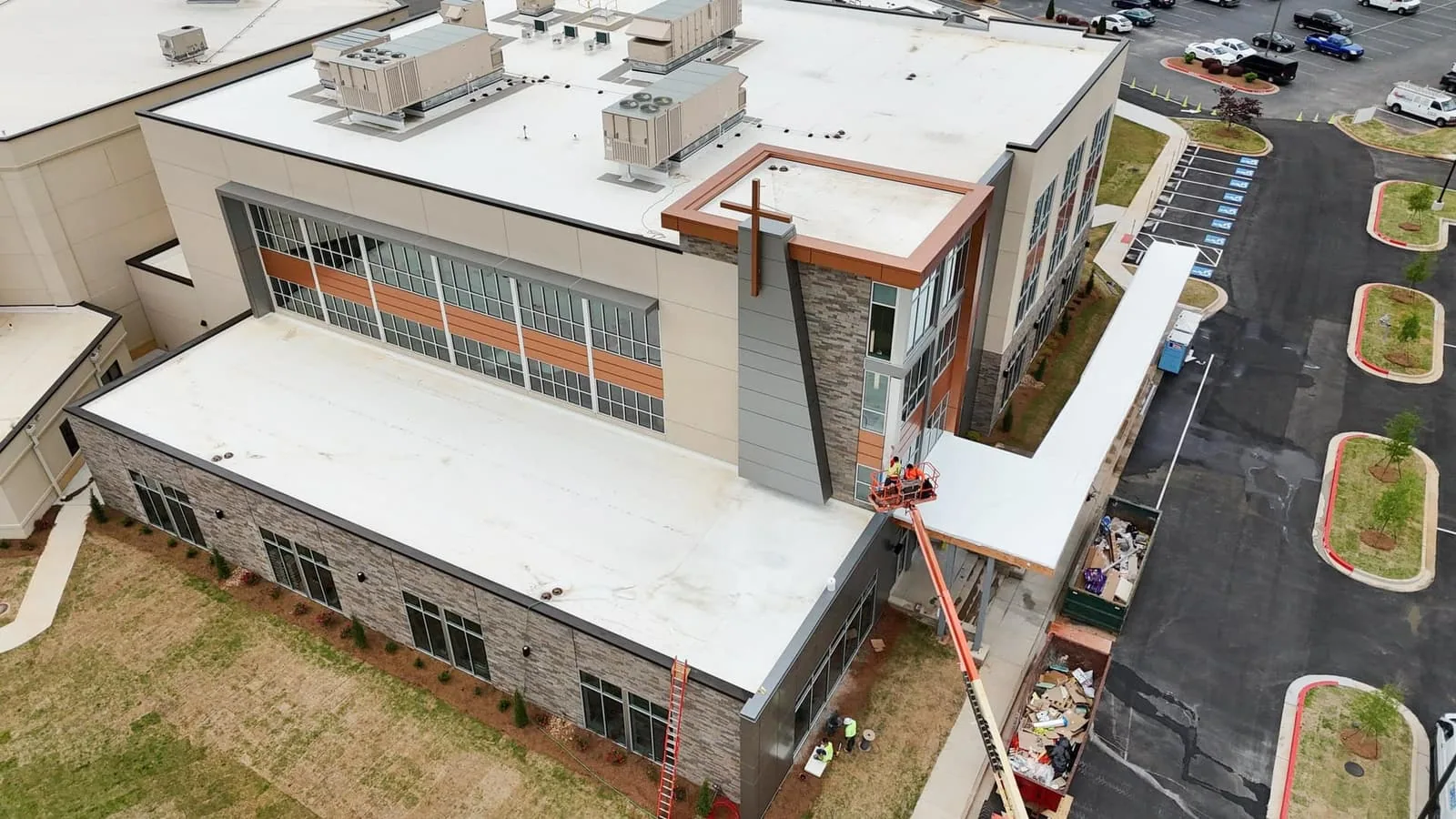
Commercial Roofing in East Alisal and East Market, Salinas, CA
Commercial roof inspections and repairs for East Alisal and East Market properties in Salinas, with building-specific access and scope planning.
Overview
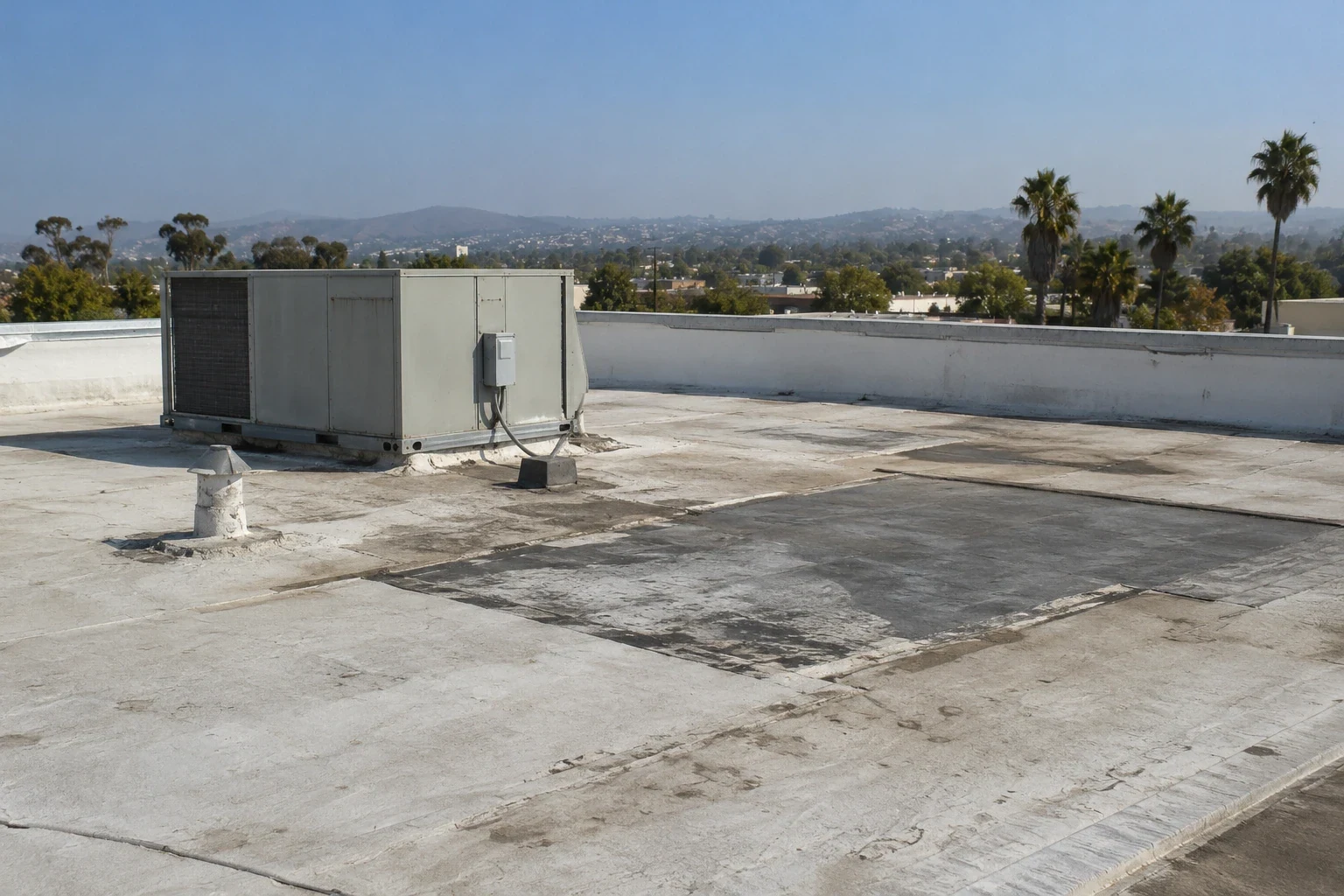
For a commercial building in East Alisal or East Market, a useful roof recommendation starts with observed conditions and the way the site operates. East Alisal and East Market form a commercial and employment area near their namesake streets. We confirm each property’s access and operating limits before work. For roof work, confirm the current loading route, check-in location, and hours that must stay clear. Those operating details help set a visit and staging sequence for each property.
We inspect the installed assembly, drainage, edges, seams, penetrations and prior repair areas that apply to the roof, then compare those findings with the owner’s leak reports and maintenance history. For an active facility, the inspection plan should also account for access, equipment and occupied areas below. A commercial roof inspection can establish what is visible, what needs testing and which next step is supported.
How should a manager coordinate work across the district?
Begin with property-level instructions: the person authorizing access, the roof entry method, the work hours available, areas that need protection and any equipment that must remain in service. Confirm material delivery and staging with the site contact rather than assuming that a nearby street or parking area can be used. Transportation analysis helps describe the studied corridor; current traffic, tenant access and site restrictions should be checked for the planned work date.
Where ownership has sites across Alisal and East Salinas or South Main and Blanco, keep access records attached to the correct building. Roof heights, hatches, loading, customer hours and decision-makers may differ. The service-area designation gives a geographic frame, while each work order needs its own roof-zone map, authorization and protection plan.
Before the first visit, gather the current roof plan if available, previous inspection and repair reports, warranty records, rooftop equipment information and a list of known interior leaks. Mark any work that has taken place since the last inspection. If the drawings do not match the installed assembly, record the difference for confirmation. A labeled photo set can provide a practical record when no reliable plan exists.
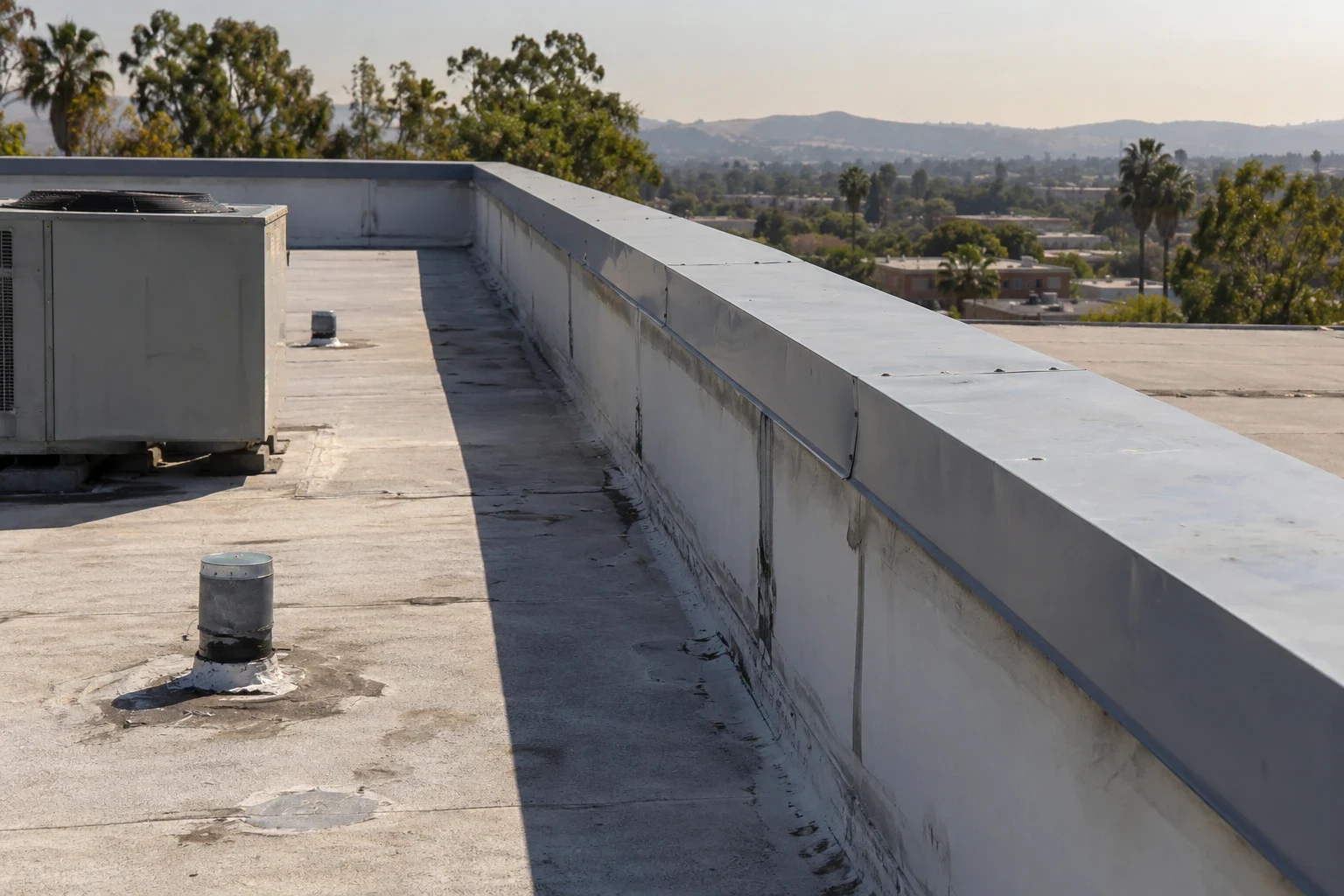
During the walk, identify which sections are accessible and which require a different method or escort. record drains, scuppers, edges, joints and penetrations only where they are present. Record the visible condition rather than assuming the entire roof is alike. A clear observation states the roof area, the feature checked, evidence of a problem and any limitation that prevented a complete review.
What evidence helps locate water entry?
Ask the person reporting a leak to identify the room or area, when water first appeared, whether entry is continuing and what conditions preceded it. Recent rain, rooftop service, construction activity or a change in equipment operation may help establish timing. Keep that report with the property record. A ceiling stain alone cannot show whether the origin is a seam, drain, flashing detail, equipment opening or an entirely different path.
On the roof, follow the likely water route and inspect nearby details. Check whether outlets are clear, whether flashing is intact, and whether seams, penetrations or transitions show evidence consistent with the report. Water can move along a deck, framing or service route before it becomes visible inside. We use the roof layout and accessible evidence to describe a likely origin while identifying anything that remains uncertain.
A drain and scupper review should consider the outlet and the connected membrane or flashing. If the problem is at a curb, wall or seam, cleaning a drain alone will not correct the confirmed defect. A leak repair is a reasonable next step when the opening is located and nearby materials can accept the repair. If moisture appears in several zones or returns after work, further diagnosis can help define the appropriate boundary.
Before the wet months, test drainage paths and check whether earlier repairs held after rain. Recheck affected zones following storms. Review drainage and past leak areas before that seasonal shift, then schedule from current roof and forecast conditions. Each repair decision follows the observed roof detail and the conditions at that property.

Which scope can fit the building’s operating needs?
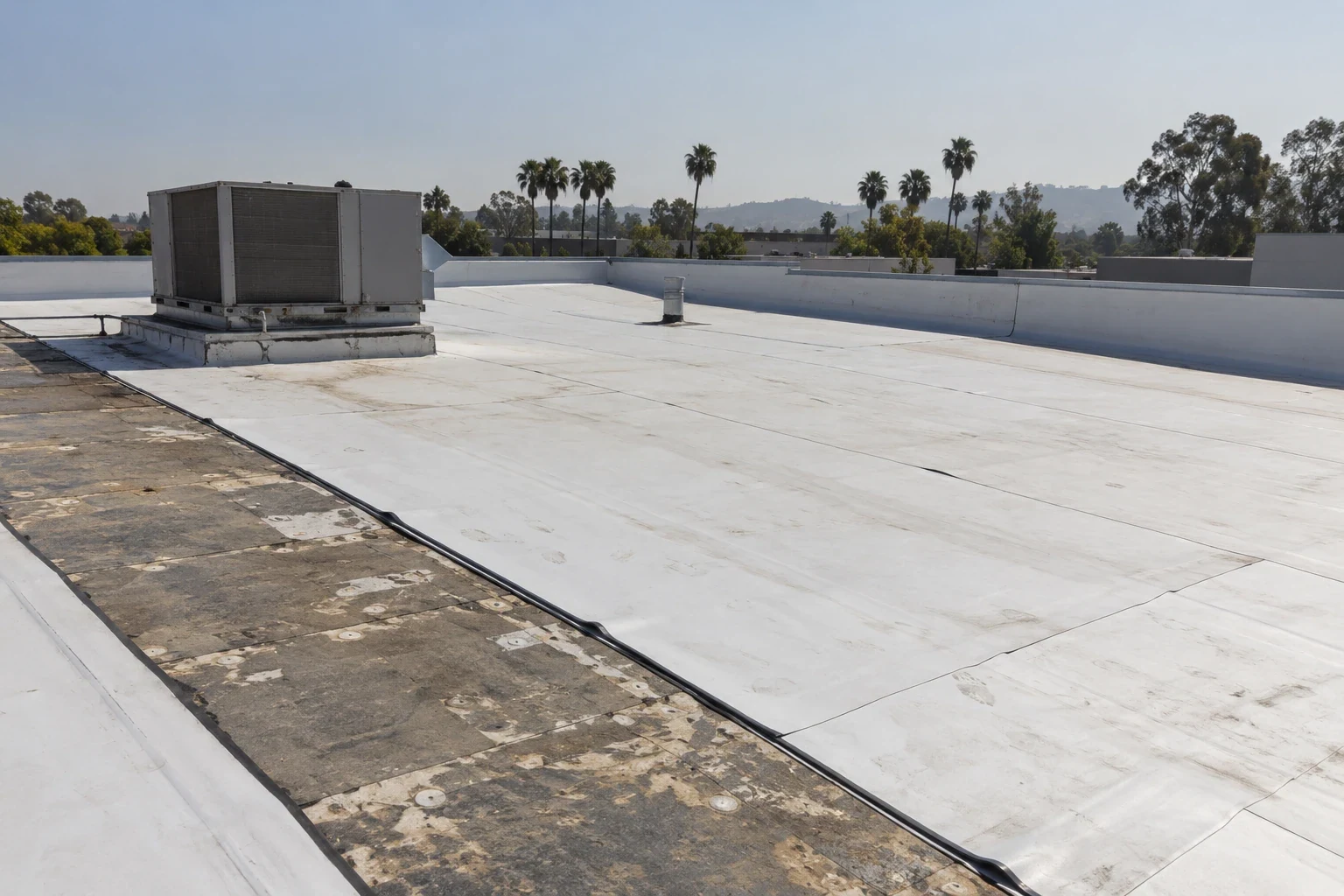
For a repair, define the roof zone, preparation, compatible materials, detail work and completion check. State whether insulation, deck, flashing or adjacent seams are included. If a condition outside the defined area appears during the work, document it and explain the cost or schedule effect before expanding the scope. That allows ownership to make an informed decision without confusing an observed defect with unverified conditions elsewhere.
A larger project should show the assumed removal or recover method, roof area, insulation and cover board, perimeter details, penetrations, drains, tie-ins and cleanup. record which operations will continue below, what temporary protection is planned and whether any equipment shutdown is required. An occupied-building reroofing sequence should set daily closure expectations and identify who receives updates if weather or substrate conditions change the order.
Price and duration depend on the system, measured area, tear-off needs, substrate, insulation, number of transitions, access, disposal and working hours. A scope should make those assumptions easy to compare. If testing is proposed, state the uncertainty and what choice its result would inform. When replacement is not supported yet, describe the repair path and any monitoring needs clearly.
For a portfolio budget, separate immediate water control from maintenance and capital work. A repair history can help identify repeat locations, but one property’s results should not be transferred to a different roof. An inspection report that includes photos, condition, access limits and priority gives the owner a defensible basis for comparing jobs across East Alisal, Chinatown and the North Main Street area.
How can the roof history stay useful over time?
File inspection findings, date-stamped photographs, leak reports, repair invoices, material records and warranties by property and roof zone. After work, add what was completed, what conditions were not accessible, any repair limits and the next recommended review. If a report says testing is needed, preserve it as an open item until the result is available. This keeps future maintenance decisions tied to evidence rather than memory.
For recurring maintenance, a preventive roof maintenance plan can revisit drainage, seams, flashings and prior repairs at a practical interval. The review schedule should reflect condition, warranty terms, exposure and business operations. A maintenance visit records changes and small corrective work.
When reporting new water entry, share the time, indoor location, current status, and any relevant previous repair. Keep people clear of wet electrical equipment and do not enter unsafe areas. The roof contact can then arrange access and compare the event with earlier observations. A prompt, complete report helps prioritize inspection while leaving the cause to be confirmed in the field.
District planning can help coordinate project timing. The roof record should state which property and section were checked, what was found, what work was approved and what remains open.
Questions Owners Ask
How does East Alisal and East Market fit into a Salinas roof program?
East Alisal and East Market are commercial and employment areas within Salinas. We schedule around each building’s access rules and keep roof recommendations specific to the property.
What should be ready before a roof inspection?
Provide an access contact, operating restrictions, leak history, roof plan if available and relevant repair or warranty records. Let us know which equipment or occupied areas require coordination.
Can the location of a ceiling stain identify the roof defect?
Not by itself. Water can travel before it reaches the interior. We compare the report with roof zones and nearby details, then state what the inspection supports and what remains unknown.
When should a manager ask for additional moisture testing?
Consider it when reports span multiple roof zones, a repair has not resolved the issue or concealed conditions may affect the scope. The inspection should explain what question the test will answer.
What should a roof repair proposal include?
It should identify the repair area, preparation, materials, related transitions, protection, closeout and any exclusions. Ask how concealed damage or a changed condition will be documented and approved.
Related Roofing Work
Request a roof review in East Alisal or East Market
Share the property location, roof access details and any leak or maintenance history. We will assess the building-specific conditions and outline an appropriate next step.