

Office Building Roofing in Salinas, CA
Plan office building roofing in Salinas around tenant comfort, roof access, drainage, rooftop equipment, and interior protection needs.

Overview
An office roof has to protect occupied rooms while keeping entrances, tenant schedules, and rooftop equipment in service. A leak can affect ceiling systems, lighting, work areas, and records even when the roof opening is small. We inspect the roof assembly, drainage, penetrations, and interior reports, then plan repair or replacement around the building’s access and operating hours.
Salinas includes office and commercial districts alongside agricultural, warehouse, and industrial uses. The city’s climate pattern can inform a seasonal maintenance calendar, but it does not tell us which detail is failing on a particular property. We document the building’s actual roof condition and the needs of the people who use the space below it.

How does occupancy affect roofing work?
Office tenants may need quiet areas, clear entrances, working lights, and predictable access. Before roofing begins, we identify which rooms sit below the work and whether they need protection from dust, noise, vibration, or water. The owner or property manager can help schedule loud preparation outside meetings or other sensitive periods. A zone map shows which parts of the roof are active and when restrictions are expected to end. For tenant-facing work, the manager can identify meeting hours, rooms with sensitive equipment, and routes that must remain clear. We include these constraints in the daily plan so the crew knows where to stage and who to contact before moving into the next area.
Roofing work can be phased while an office remains open if access, interior protection, and weather exposure are planned. We confirm who will communicate changes to tenants and who can approve added repairs if removal uncovers wet insulation or damaged deck. Medical office roofing adds specific sensitivity to clinical areas; a hospital roof plan may require broader coordination with critical departments. Each property still needs its own protection sequence.
What should an office roof inspection cover?
We examine seams, flashings, drains, curbs, skylights, rooftop units, and perimeter metal. Interior reports help direct the inspection, but water can travel before it reaches a ceiling tile or wall. We compare the location and timing of a stain with the roof layout, recent weather, plumbing, and equipment service. The report distinguishes the likely origin from conditions that still require testing.
Water near a light, electrical room, or tenant workstation needs prompt coordination below as well as a roof repair. We can protect the area while arranging safe roof access, then rebuild the defective detail with compatible material. A documented inspection maps findings by roof area; leak repair addresses a confirmed opening. Owners receive a clear record of the repair boundary and any adjacent issue that needs monitoring.
How should rooftop equipment be handled?
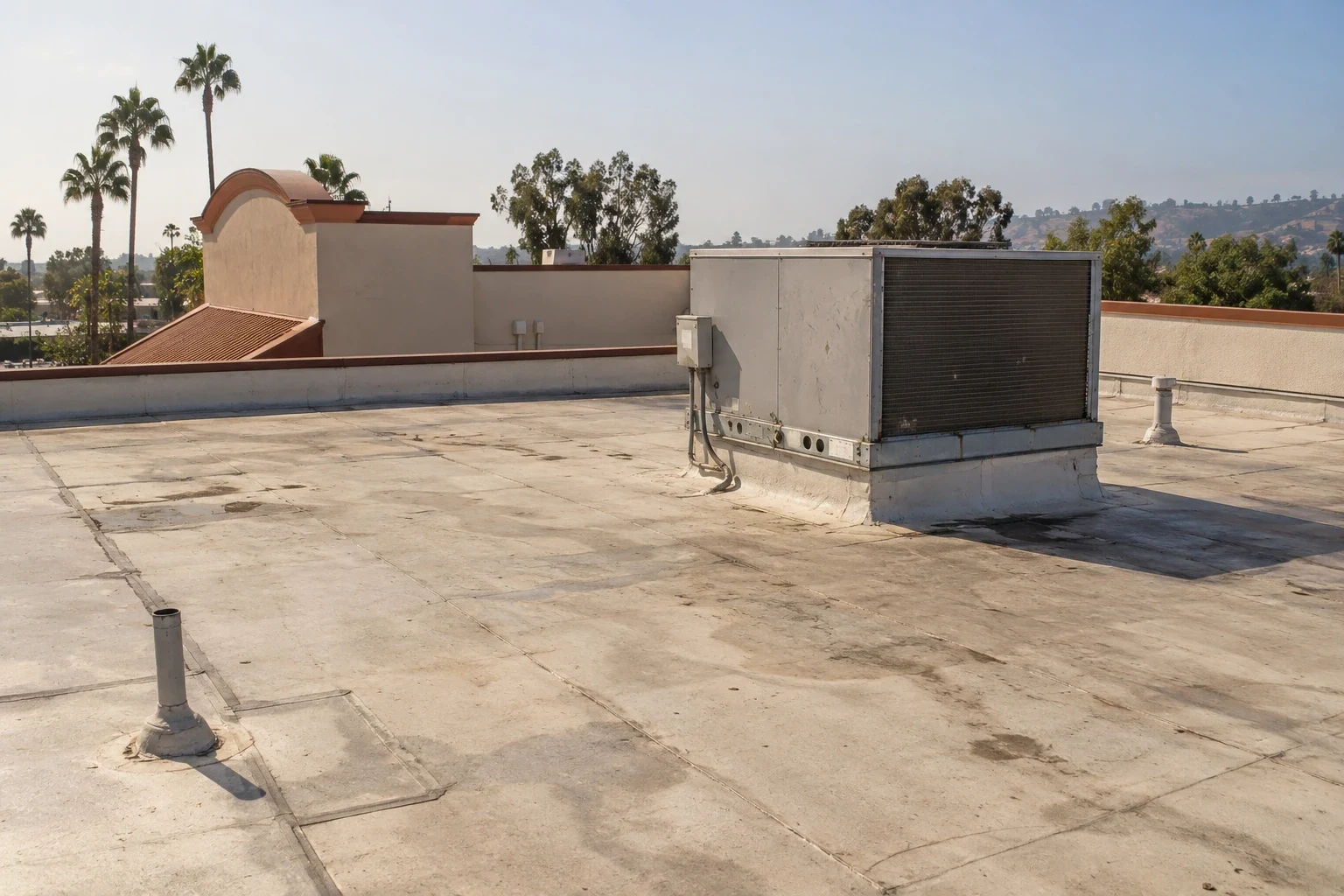
Office roofs commonly carry HVAC units, exhaust, vents, conduits, and communications equipment. The roof surface around each curb should remain accessible for service, and flashing must connect to the actual membrane or panel system. We inspect for loose corners, cracked sealant, unsealed supports, and damage from maintenance visits. If a unit is being replaced, the roof team should review the new curb height and opening before the equipment is set.
Roof work can require a shutdown or a temporary operating change, depending on the affected unit and area. We coordinate with the property contact and mechanical contractor so an open curb is not left unprotected and a new flashing is not disturbed by later work. If the unit serves a conference room, network closet, or other sensitive space, the building team can identify allowable shutdown windows. We record who authorizes that change and how the roof opening is secured if work pauses. That control protects both the mechanical connection and the occupied room below. We include it in the access plan. Equipment curb repairs and skylight and penetration details should use materials compatible with the roof system and preserve maintenance access.
Why do roof drains matter to tenants?
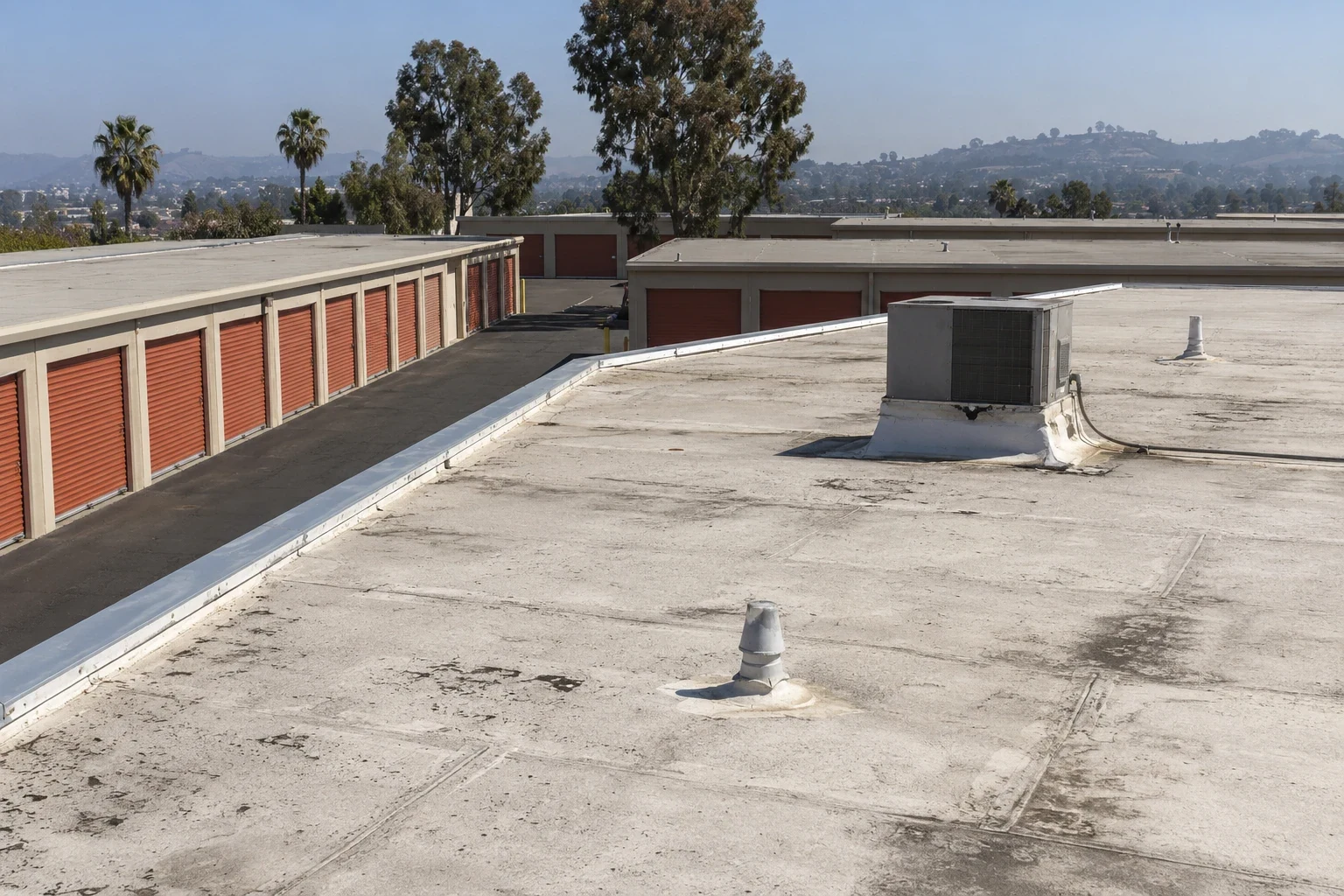
Blocked or leaking drains can send water into occupied space, especially when an office roof has low areas or long paths to an outlet. We inspect strainers, drain bowls, scuppers, overflow routes, and the surrounding membrane. If water persists after an outlet is clear, the cause may be slope, deck movement, or insulation layout. The project needs to state whether it includes drainage changes or only repairs the existing roof surface.
Salinas’ normal precipitation is concentrated in the cooler season, so property managers can use the dry period to review outlets and recurring leak details. The climate does not prove a drain is working. We check the roof’s contributing zones and record conditions near equipment and parapets. Drain and scupper service should restore a clear path for water and a secure tie-in to the roof membrane.
How does location shape the work sequence?
Office properties around downtown Salinas or North Main Street can have different parking, roof access, tenant traffic, and staging conditions. We confirm those details with the property manager rather than assuming the same access plan works for every building. The crew needs a designated route for materials and tools, and tenants need notice if entrances or shared areas will change.
For a building in Alisal or East Salinas, the site may have different service access or equipment arrangements than an office closer to downtown. The owner should identify roof hatches, keys, escort requirements, and the areas where ladders or lifts are allowed. We schedule noisy or disruptive steps with the tenant calendar and keep a contact available for same-day adjustments. A simple notice should say where work occurs and what occupants need to expect.
When should office owners repair or replace?
A localized leak or flashing defect can often be repaired when surrounding material is sound. Repeated leaks in multiple tenant areas, widespread wet insulation, failed seams, or deteriorated edge details may point to a broader issue. We document the evidence, identify what additional testing would change the decision, and compare a repair plan with replacement. The scope should state how the work protects occupants and restores each affected area. If a repair requires ceiling access or temporary interior protection, the property team should know when those measures are installed and removed.
Preventive maintenance can identify loose flashings and drainage problems before they affect tenants. The property’s roof record should include photos, repair locations, and the condition left outside each repair boundary. Maintenance visits keep that history current, while a replacement assessment helps the owner compare continued repair with a new assembly. The decision should include access, noise, and tenant-protection needs along with roof condition.
Questions Owners Ask
Can an office remain open during roof repairs?
Often, with a work-zone plan that accounts for access, noise, protection below, and weather. We coordinate with the property manager so tenants know which areas are affected and when normal access resumes.
What should tenants do if water appears inside?
Move sensitive equipment or records if safe, report the location and time, and protect the area from further exposure. We inspect the roof and adjacent details to find the entry point and document the repair.
Can HVAC stay on during reroofing?
That depends on which units and intakes are affected by the work. We coordinate operating changes with the property team and mechanical contractor and protect openings while curbs or flashings are repaired.
How can property managers reduce roof disruptions?
Share tenant calendars, access rules, sensitive rooms, and equipment service schedules before work starts. A phased plan can sequence noisy tasks and preserve entrances and occupied areas where conditions allow.
Related Roofing Work
Protect tenants while the roof work moves
Share tenant schedules, leak reports, equipment locations, and roof access rules. We will inspect the building and plan work around occupied areas and property operations.
