Commercial Rooftop Equipment Curb and Support Repair in Salinas, CA
Repair commercial rooftop equipment curbs and supports in Salinas, CA with attention to flashing, movement, drainage, and service access.
Overview
A rooftop unit can run correctly while water enters at the curb beneath it. The roof connection needs to move with the equipment, shed water, and remain accessible for service. We inspect the curb, flashing, supports, fasteners, and nearby membrane, then coordinate a repair plan with the facility team and any mechanical contractor who needs access.
Commercial buildings in Salinas include warehousing, agricultural processing, distribution, offices, and retail uses, each with different equipment layouts. A curb repair has to match the roof assembly and the service schedule below it. We document what the roof requires without assuming the unit’s age, condition, or operating needs from its location alone.
Where does the roof meet the equipment?
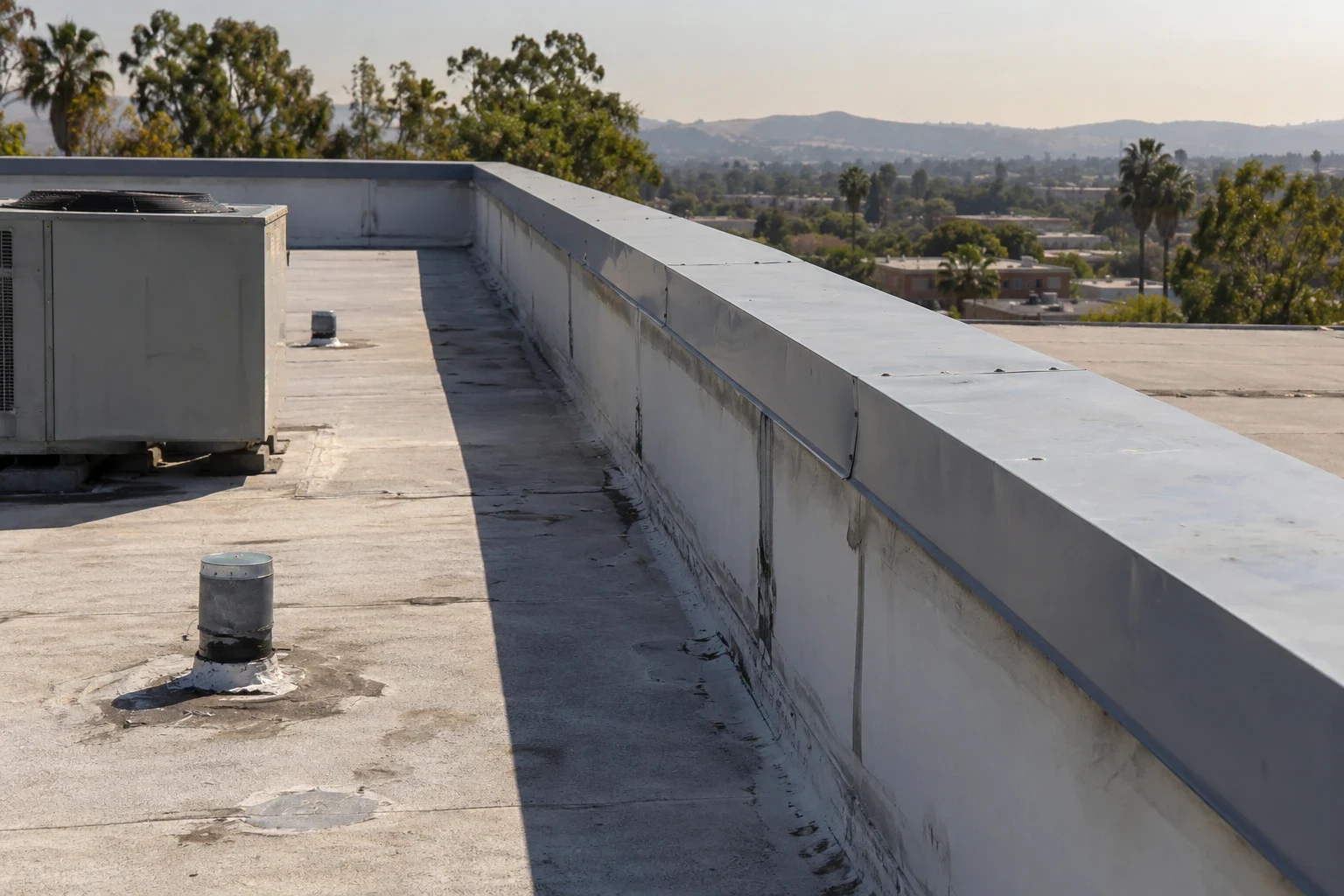
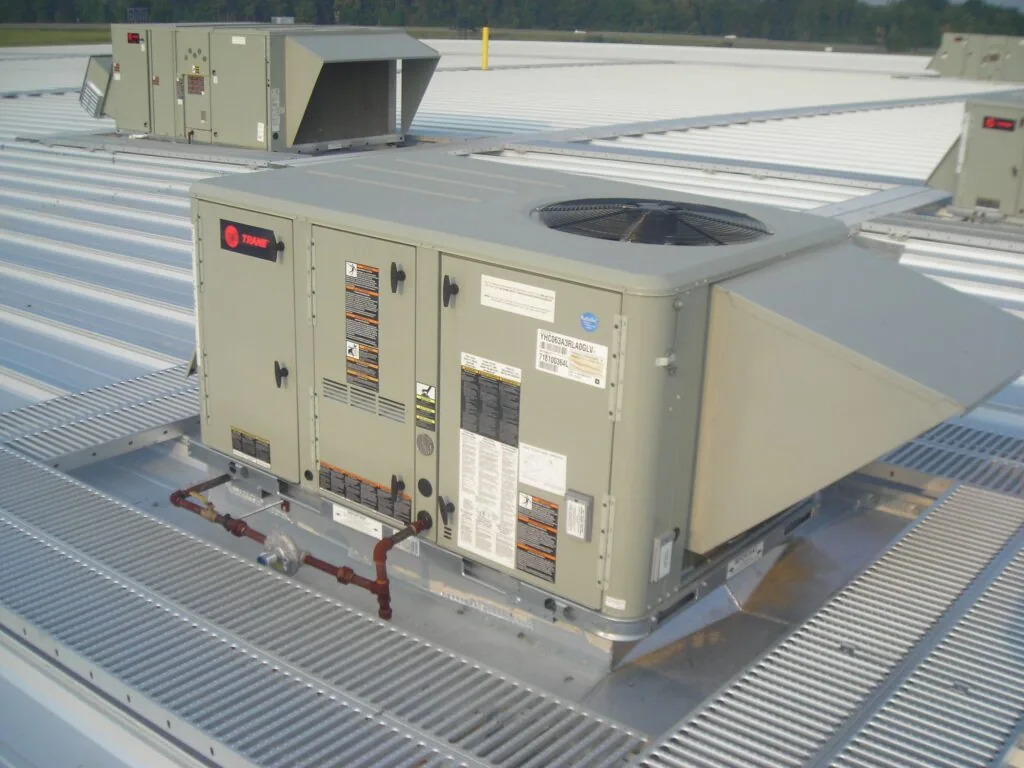
We inspect the membrane turn-up, curb corners, counterflashing, fasteners, support rails, conduit, pipe penetrations, and nearby roof seams. A split at a corner can admit water even when the field membrane appears sound. A loose curb or support may move under equipment vibration or service loads, stressing the flashing over time. We record what is visible and identify when an opening is needed to confirm concealed support.
Rooftop equipment may have been installed after the roof. A new curb can interrupt the membrane, while abandoned supports or old lines can leave penetrations behind. We review available work records and look for patches or transitions that indicate earlier changes. Any inactive opening should be checked for a complete roof repair rather than left beneath a unit or walkway.
Drainage around equipment matters too. A curb can block the flow path or collect debris on its uphill side. We inspect nearby drains and scuppers and record whether water stands at the base. If the area repeatedly ponds, a drainage review may be needed with the curb work.
Who should coordinate equipment access?
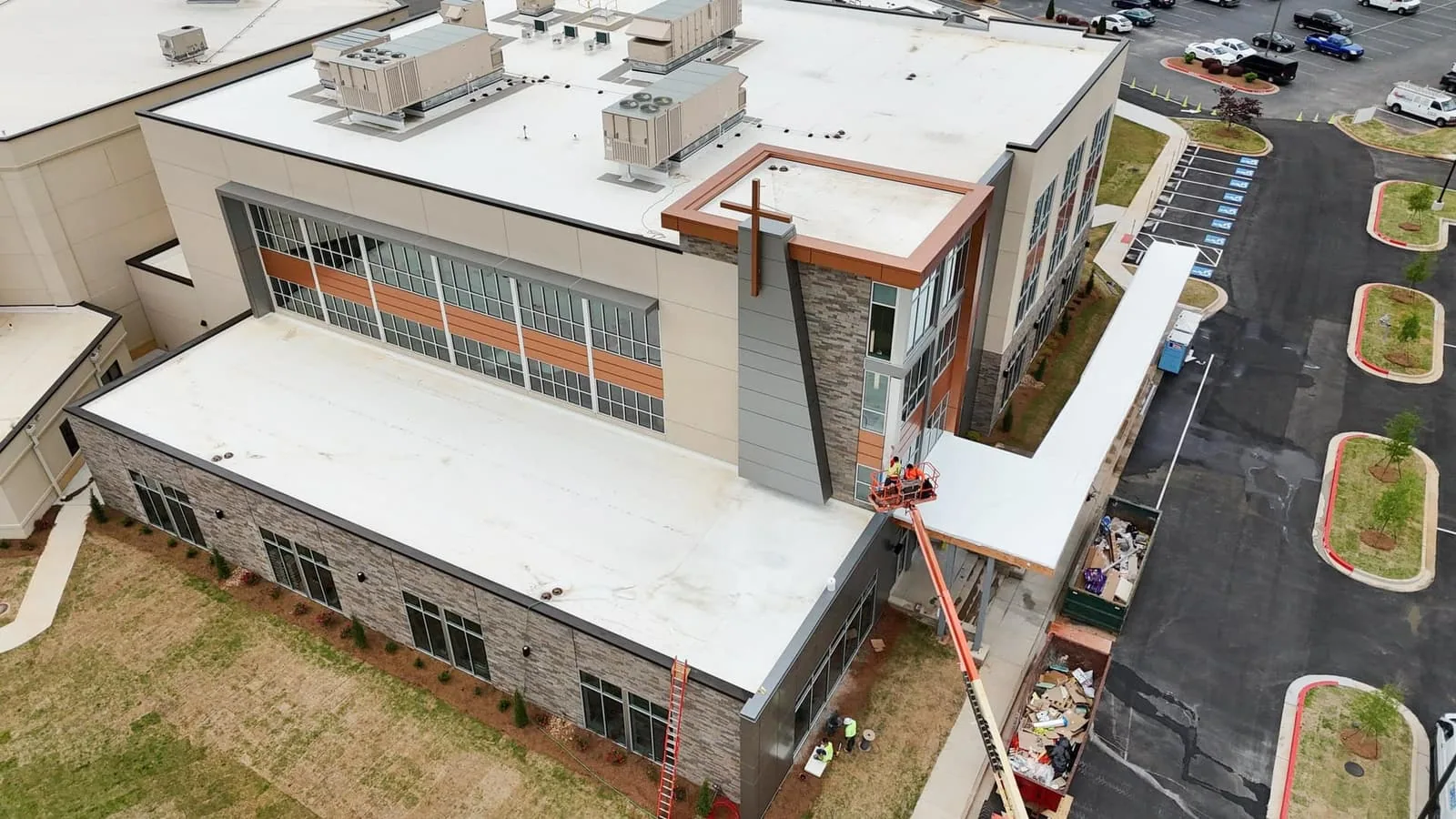
The facility contact and mechanical contractor should agree on shutdowns, disconnects, lifting, and return-to-service responsibilities before roof work begins. We coordinate the membrane and flashing scope, while the equipment owner confirms when a unit can be isolated or moved. If the unit must remain in place, the roof plan should state how the crew will reach all sides of the curb safely.
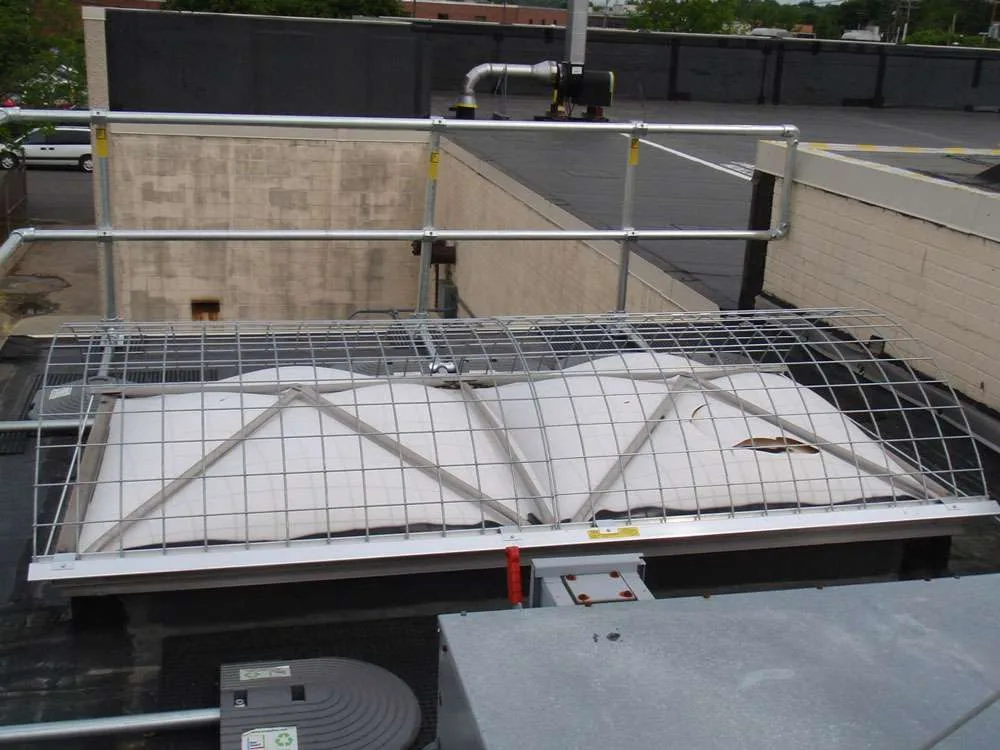
Access paths may include roof hatches, ladders, lifts, or crane picks. We confirm clearances, fall protection, staging, and where removed materials can be placed. A property manager should also identify tenant areas, receiving lanes, and spaces below the work that need protection. The work sequence can then keep access available for maintenance while keeping the roof closed before the crew leaves.
In the Airport Industrial Park and Salinas Ag-Industrial Center, commercial and industrial uses include warehouse, packaging, distribution, and agriculture-support activity. The equipment and service windows differ by facility. We schedule with the actual site contact and mechanical team instead of assuming a standard shutdown time for every building in the area.
What repair restores the curb detail?
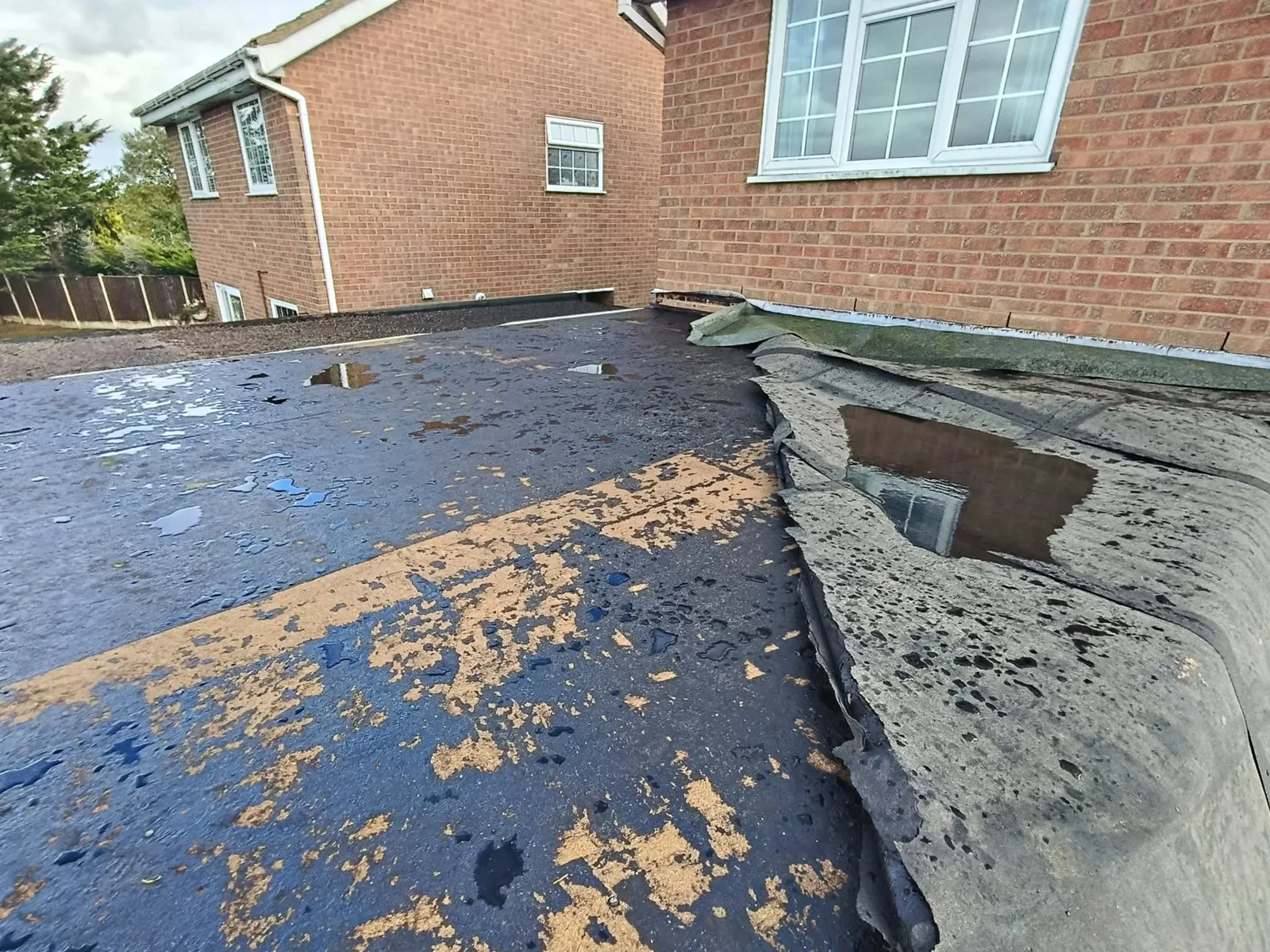
A repair may require replacing a split flashing, rebuilding a curb corner, securing loose metal, sealing an abandoned penetration, or adding a compatible transition to the roof membrane. The selected method depends on membrane type, curb material, substrate, and whether equipment movement is expected. A surface bead may not solve a loose curb or a flashing that has separated below its top edge.
We prepare the surface, remove failed material where needed, and connect the repair to sound membrane. On single-ply systems, the new flashing must be compatible and properly welded or adhered. On modified bitumen or metal roofs, the detail follows the existing assembly and its movement needs. We document the repair boundary and state what concealed conditions remain unknown.
If the equipment must be raised or moved, that work may require a separate mechanical scope and a coordinated schedule. We define who disconnects and resets the unit, who restores utilities, and who confirms it is operating afterward. A roof proposal should not imply that mechanical work is included unless the scope clearly says so.
When can curb work proceed?
Roof repairs need a stable, dry work surface and a safe access window. Salinas receives most normal rainfall in the cool season, while frequent summer fog and low clouds can leave surfaces damp in the morning. We check the surface before applying adhesives, sealants, or membrane flashing and adjust the schedule to the selected product’s requirements.
Wind matters when removing metal, handling flashing sheets, or working near roof edges. Rain can require a temporary cover if the curb or membrane is opened. The work plan identifies what can be exposed safely in a shift, how the area will be closed, and what happens if conditions change before permanent repair is complete.
Where the unit supports refrigeration, ventilation, or process equipment, the facility team can identify hours when service interruption is least disruptive. We coordinate material delivery and access around that schedule. If a repair reveals wet insulation or a damaged deck, the owner receives the evidence and approval request before the scope expands.
How should repeated curb leaks be evaluated?
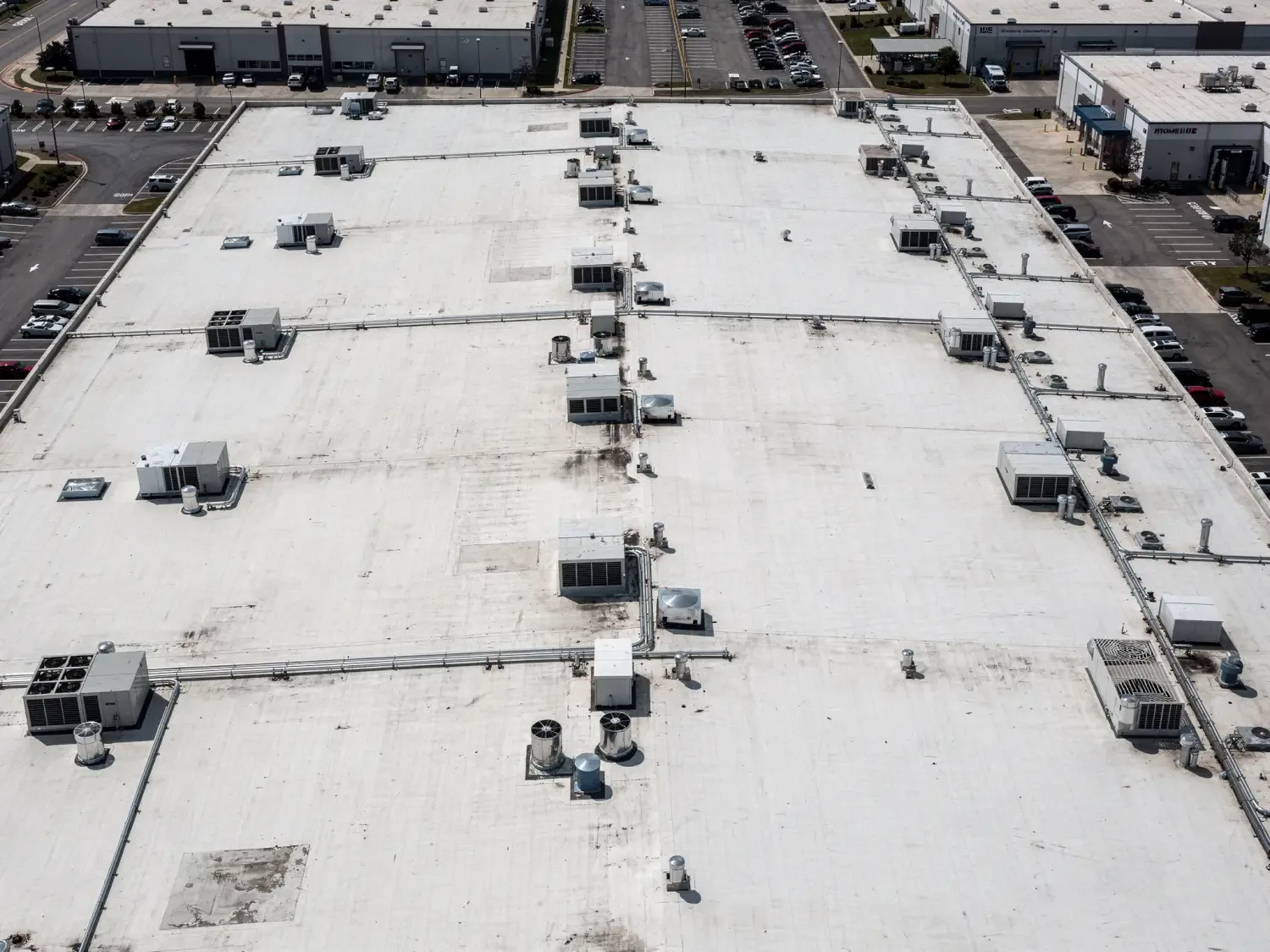
A repeated leak may come from the same flashing, nearby seams, water ponding, or a path hidden under the membrane. We compare the repair history with current roof and interior findings. If the suspected water has spread beyond the curb, a moisture survey or selective opening may help identify the repair boundary.
A broader roof inspection can map other curbs, supports, drains, and roof zones before the owner authorizes multiple repairs. The report separates confirmed defects from details that should be monitored. If the assembly has widespread deterioration, the owner can compare repair with a replacement assessment.
One leak should not be used to label all rooftop equipment as a origin of failure. We identify the unit or support by the facility’s own label and show the exact roof detail involved. That keeps the repair record useful for mechanical staff and future roofing work.
How does the work fit the site?
Equipment placement and building operations vary across the market. A warehouse near Airport Industrial Park may have multiple service routes and loading areas; a property in Alisal and East Salinas may have a different tenant mix. We confirm each building’s roof plan, access controls, and work-hour requirements before scheduling.
The facility contact should identify any roof area where food safety, sensitive inventory, or active production changes the repair method. Interior protection, odors, noise, and falling debris may need additional controls. If the unit sits above a critical room, we agree on a temporary shutdown or relocation only with the people authorized to make that decision.
Closeout records can identify the unit, curb, roof zone, repair materials, photos, and mechanical coordination completed. The owner can use those records when planning future equipment replacement or a roof maintenance visit. A clear record also shows which penetrations remain outside the approved repair.
Questions Owners Ask
Can you repair flashing without moving the rooftop unit?
Often, if all sides of the curb are accessible and the repair can be completed safely. We inspect clearances and the curb attachment first. If equipment movement is needed, we coordinate that scope with the mechanical contractor and identify responsibilities before work begins.
Could equipment vibration cause a curb leak?
Movement can stress flashing or fasteners, but inspection must establish what is happening at the specific detail. We check the curb, supports, seams, and evidence of movement, then describe the repair method and any mechanical coordination needed.
What if the equipment must be replaced soon?
The roof and mechanical schedules should be coordinated so a new curb or line does not leave an open membrane transition. We can define the roof connection and repair boundary while the equipment team plans removal, installation, and startup.
Can the work happen while the building is operating?
The sequence often can be planned around operations, but it depends on access, equipment shutdown, weather, and the area below. We agree on the work zone and service window with the facility contact before opening the roof.
Related Roofing Work
Coordinate the curb and roof connection
Share the equipment type, leak history, roof access rules, and mechanical service schedule. We will inspect the curb and define the roof-side repair with your facility contact.