Commercial Roofing in Airport Industrial Park, Salinas, CA
Commercial roof inspections, drainage repairs and replacement planning in Salinas Airport Industrial Park, with access and work zones set for each property.
Overview
Industrial property roofing depends on where crews can enter, stage materials, and reach each roof zone. Airport Industrial Park sits beside Salinas Municipal Airport, with access from U.S. 101 and Airport Boulevard. A roof review tracks seams, drainage, curbs, penetrations, and edge transitions by zone so operations can keep each affected area clear during repair. We also confirm lift placement, loading access, equipment shutdown needs, and end-of-shift protection before the crew mobilizes.
Cool-season rain, summer fog, and low cloud cover make drain paths, damp surfaces, and safe access worth checking against the work window. A commercial roof inspection records visible conditions by area so ownership can distinguish active water entry from planned maintenance.
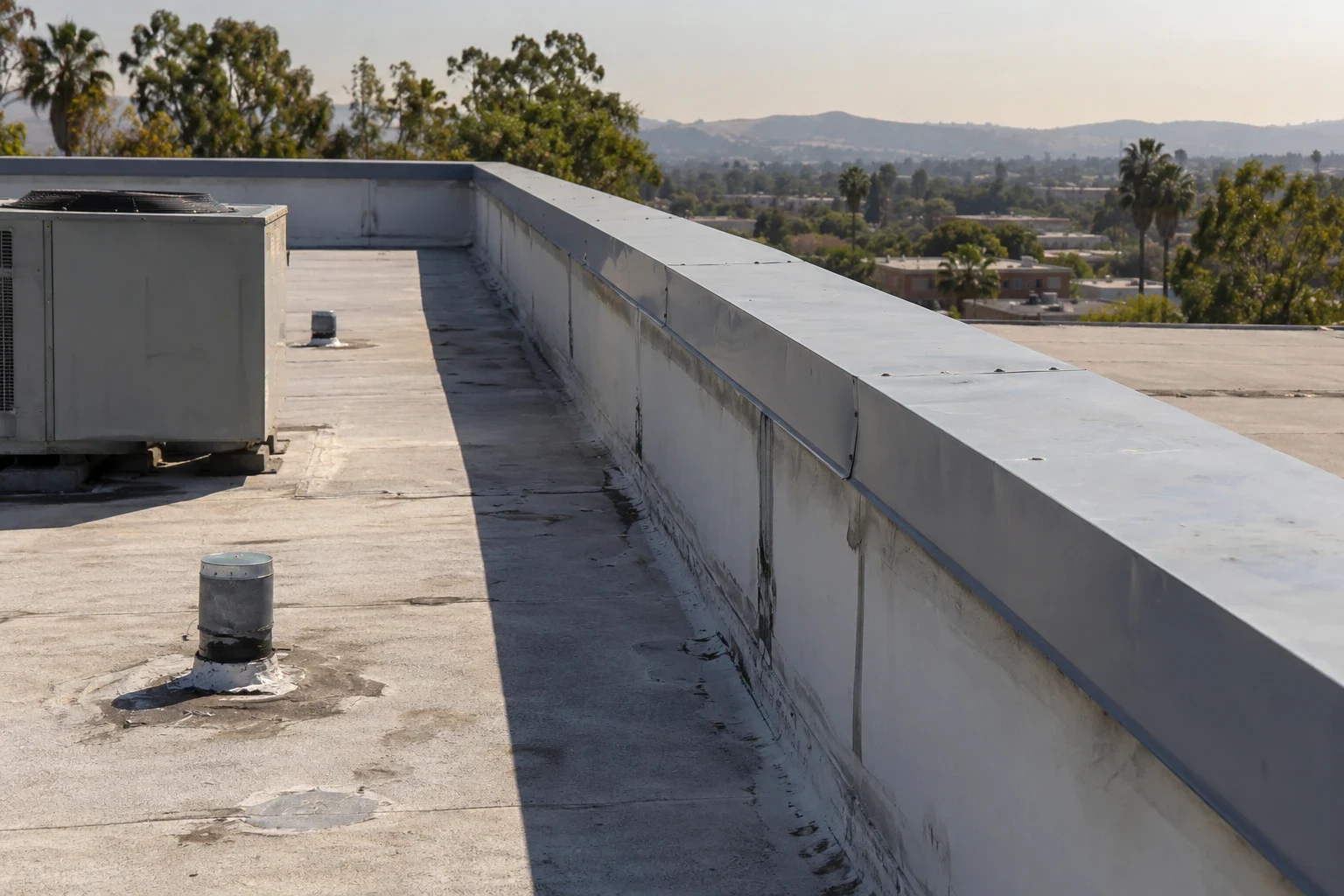
What should an industrial roof review include?
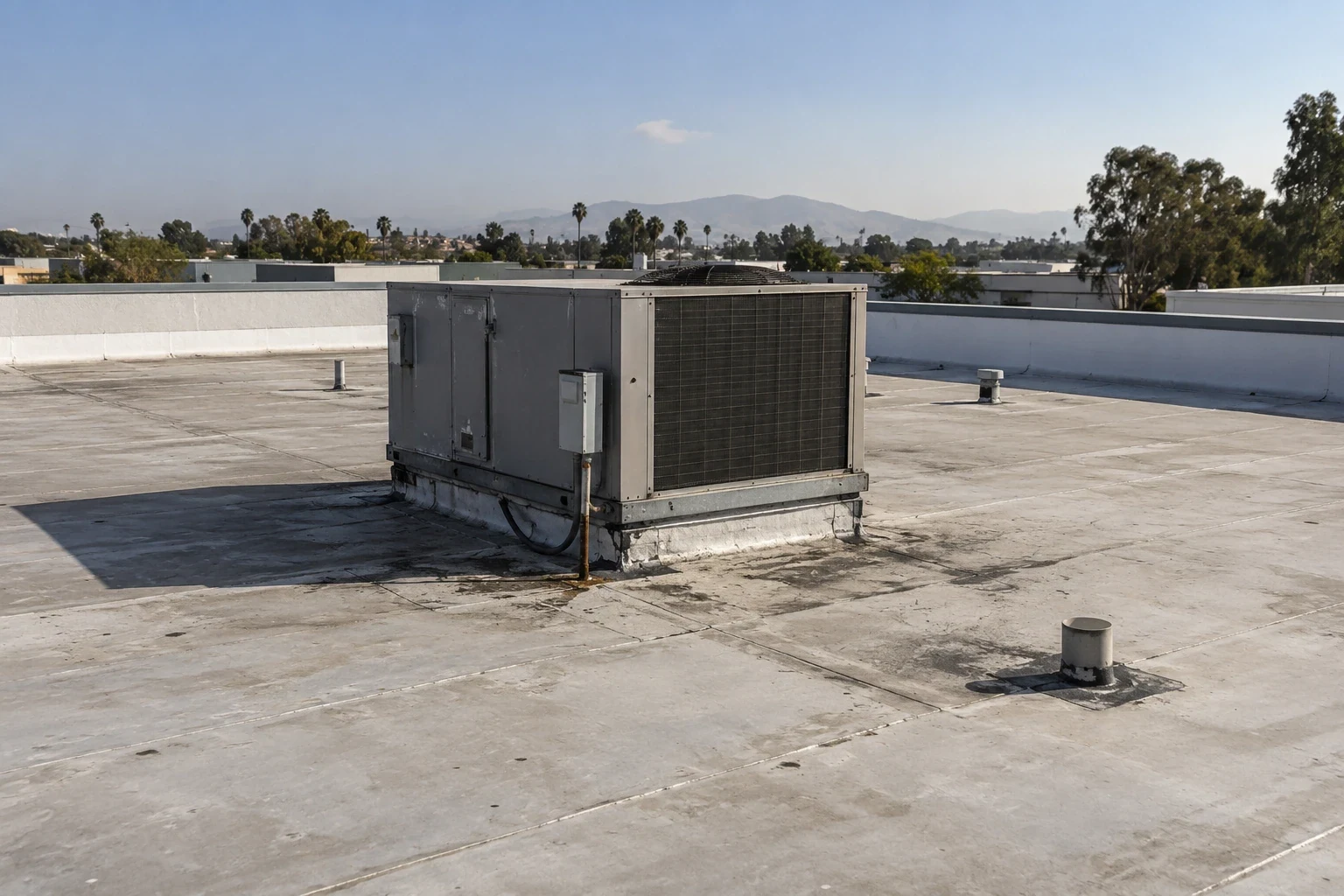
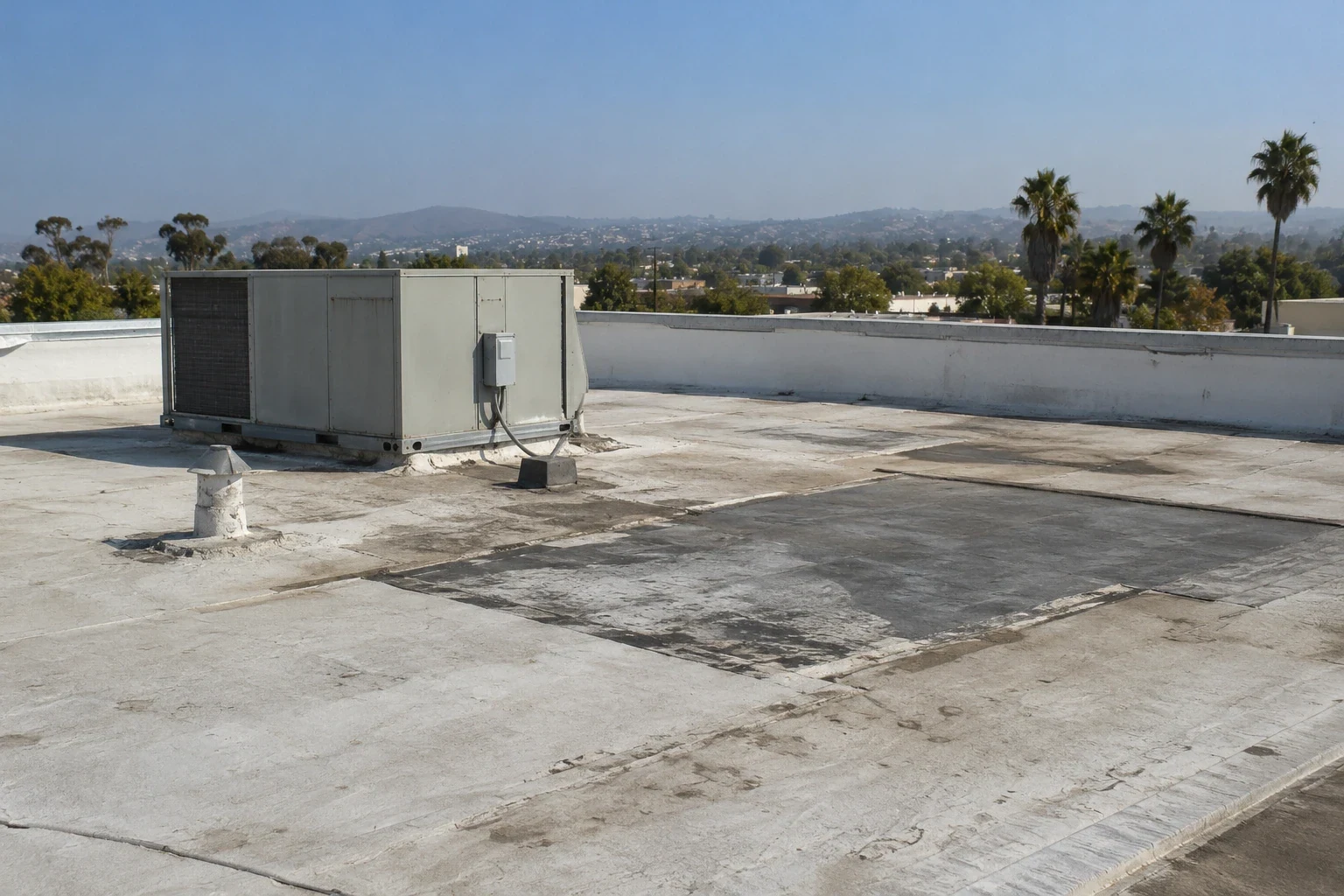
We confirm the installed system where it can be identified, then inspect seams, panel joints, flashing, equipment curbs, drains, edges, and transitions. If prior work left multiple materials or patches, we map those sections separately. The owner’s leak history and use of equipment below the roof help focus the first walk on the details that could affect operations.
U.S. 101 and Airport Boulevard serve this industrial area. Nearby Salinas Business Park and Salinas Ag-Industrial Center include logistics, warehousing, distribution, packaging, and manufacturing activity. For a portfolio that also includes Salinas Business Park or the Salinas Ag-Industrial Center, each building still needs its own roof record and access plan.
How should drainage and concealed moisture be checked?
Winter rain makes the route from roof surface to outlet an important inspection detail. We check whether drains or scuppers are clear, inspect membrane or flashing around them, and record any water that remains after a storm. A clogged outlet and a failed seam can happen in the same zone, so we look at both rather than treating standing water as the only problem. Interior leak reports add useful location and timing, but water can travel before it shows indoors.
If the visible roof does not explain the report, we can consider an infrared moisture survey to map candidate zones for follow-up when this roof and the weather fit the method. We tie any reading to a roof zone and to a specific next step, such as selective opening or comparing the affected area with the repair boundary. If a drain connection or scupper needs work, drain and scupper service can address the outlet and surrounding details in one defined scope.
Foggy mornings in the Salinas Valley can affect surface condition and the timing of some roof tasks. We check the roof at the property before inspection or material preparation.

When should ownership compare repair and replacement?
A local defect can remain a repair question when adjacent membrane or metal is sound and the work can connect to stable material. We look at the opening, nearby seams, penetrations, and any prior patch to define how far the repair should reach. If reports repeat across separate roof zones, if wet insulation may extend beyond the opening, or if edges cannot be secured, a patch may leave important conditions untouched. The recommendation should say what evidence led to that conclusion.
A broader project review considers layer count, deck and insulation condition, drain elevations, edge height, rooftop equipment, and tie-ins to adjoining areas. A recover retains existing materials beneath a new assembly, so moisture and attachment should be understood before that option is priced. A commercial roof repair scope can identify the failed detail, adjacent membrane, and tie-in that need attention; a commercial roof replacement evaluation compares renewal where the condition record supports a larger scope.
Cost and timing follow those choices: removal, materials, roof zones, flashing transitions, equipment protection, access equipment, and the time needed to phase work around operations. We show these decisions in the scope instead of presenting a single roof-area figure without its assumptions.
How can roof work fit an industrial schedule?
Material staging, vehicle access, roof hatches, and equipment shutdowns can shape the sequence. The facilities contact can identify receiving periods, restricted zones, check-in requirements, and any process that must remain active. We use that information to map which roof area can be opened and closed during each phase, where interior protection is needed, and whether another trade must be present at a curb or penetration.
Each property supplies its own delivery route and staging limits. If access rules change during a project, record who can approve a change and how the crew will secure the roof before leaving. An occupied-building roof plan can lay out area limits, notice, protection, and daily closeout for work above active operations.
For an urgent leak, emergency response is available at any hour, including weekends and holidays. We first need the site contact, safe roof access, and the affected area so temporary water control can be considered alongside a permanent repair plan.
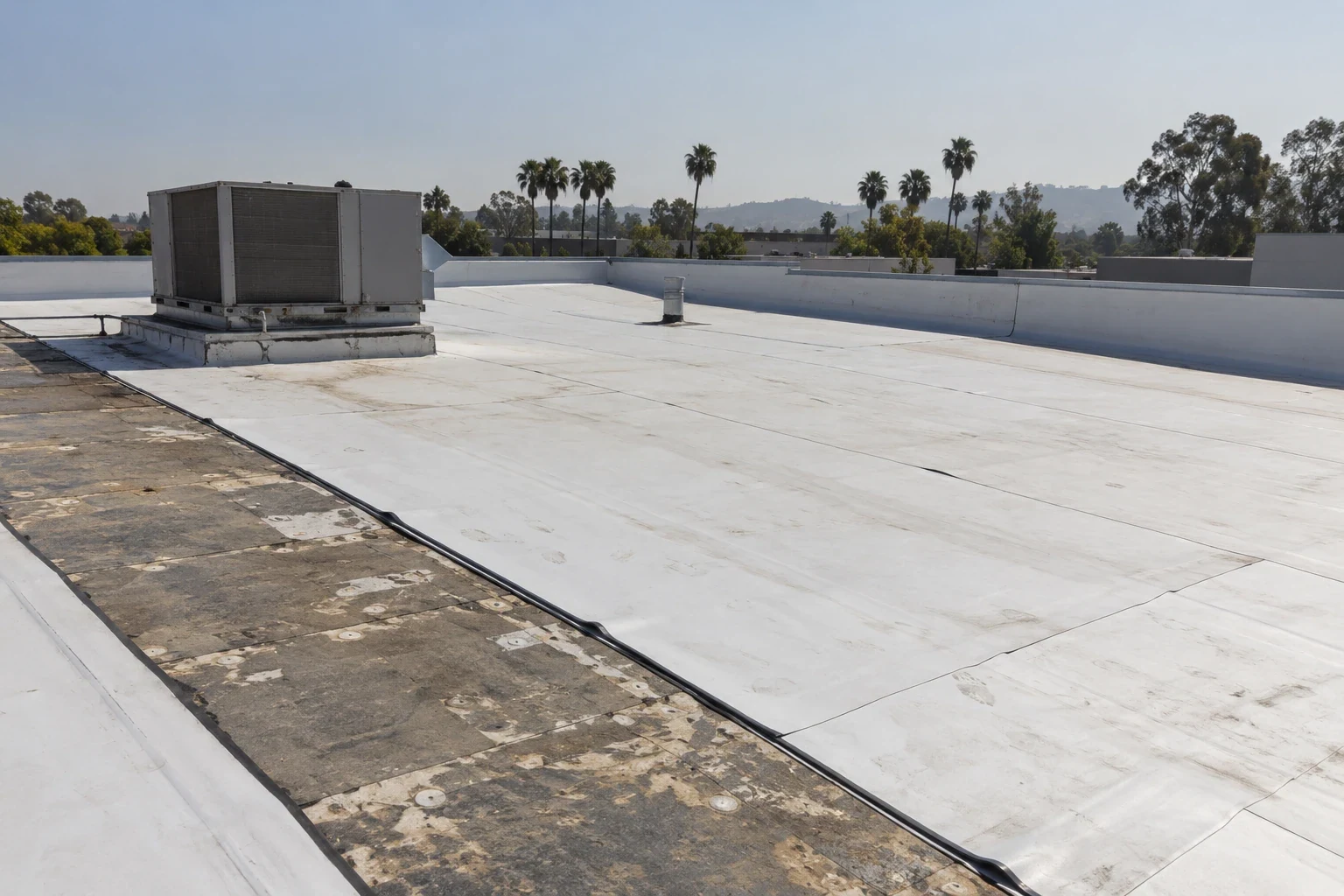
Which records help manage the roof after work?
Keep roof plans, photographs, repair details, leak dates, and inspection findings together by building and zone. A useful record states what was visible, what work was completed, and which questions remain open. If insulation or deck condition was not established, include the test or opening that would resolve it and explain whether the answer could change the scope. That helps an owner carry a real decision forward instead of repeating an inspection without a clear purpose.
Industrial property teams can use a roof condition report to sort active leaks, maintenance items, and follow-up testing. A scheduled maintenance visit can revisit drains, flashing, fasteners, and equipment curbs during an agreed access window. Findings for a property in Airport Industrial Park should stay distinct from any other building along the Airport Boulevard or U.S. 101 network.
When the report offers more than one path, show the repair boundary beside any recover or replacement alternative. Ownership can then compare work scope, access needs, and timing while keeping the areas that were not addressed visible for the next review.
Before mobilization, ownership can share roof plans, prior repair records, drain locations, and equipment restrictions. We identify the inspection limits and list any area not reached, so a later visit can be scheduled without treating an inaccessible zone as cleared. For phased work, the record should also state which areas were opened, closed, or left for follow-up.
Questions Owners Ask
Can you document an inspection for a multi-building portfolio?
Yes. We can organize findings by property, roof zone, and observed condition, then identify access limits and recommended follow-up. Separate records help ownership compare sites without combining different roof histories.
What should we provide before an inspection in the industrial park?
Share the building location, roof plans if available, leak history, entry contact, and any receiving or equipment limits. We can then focus the walk on the roof zones and details tied to the reported condition.
How do Salinas weather patterns affect roof work?
Cool-season rainfall makes outlets and flashing worth checking before wet weather. Summer fog and low cloud cover can leave surfaces damp, so we confirm current conditions before inspection or material preparation.
Can a single drain or seam problem be repaired without a full reroof?
A limited repair may suit a localized failure with sound material around it. We inspect adjacent details and record any moisture or deterioration that could change the boundary before recommending that scope.
How do you schedule work around industrial operations?
We coordinate entry, staging, receiving hours, equipment access, and interior protection with the site contact. For larger work, the proposed sequence identifies active roof zones and how each phase will be closed securely.
Related Roofing Work
Plan an Airport Industrial Park roof review
Send the property location, access contact, known roof history, and any operating restrictions. We will document visible conditions and outline the next repair or renewal decision by roof area.