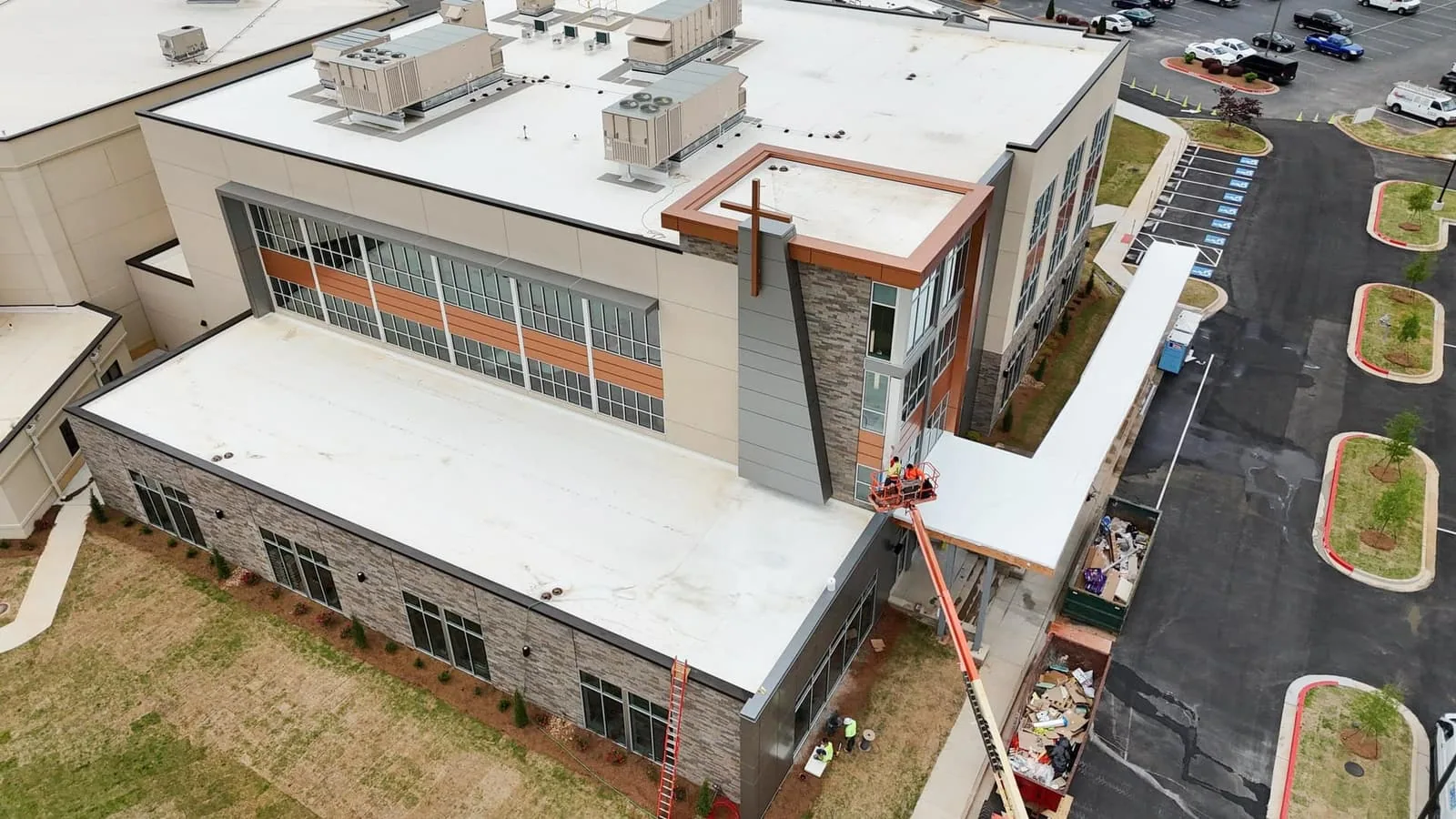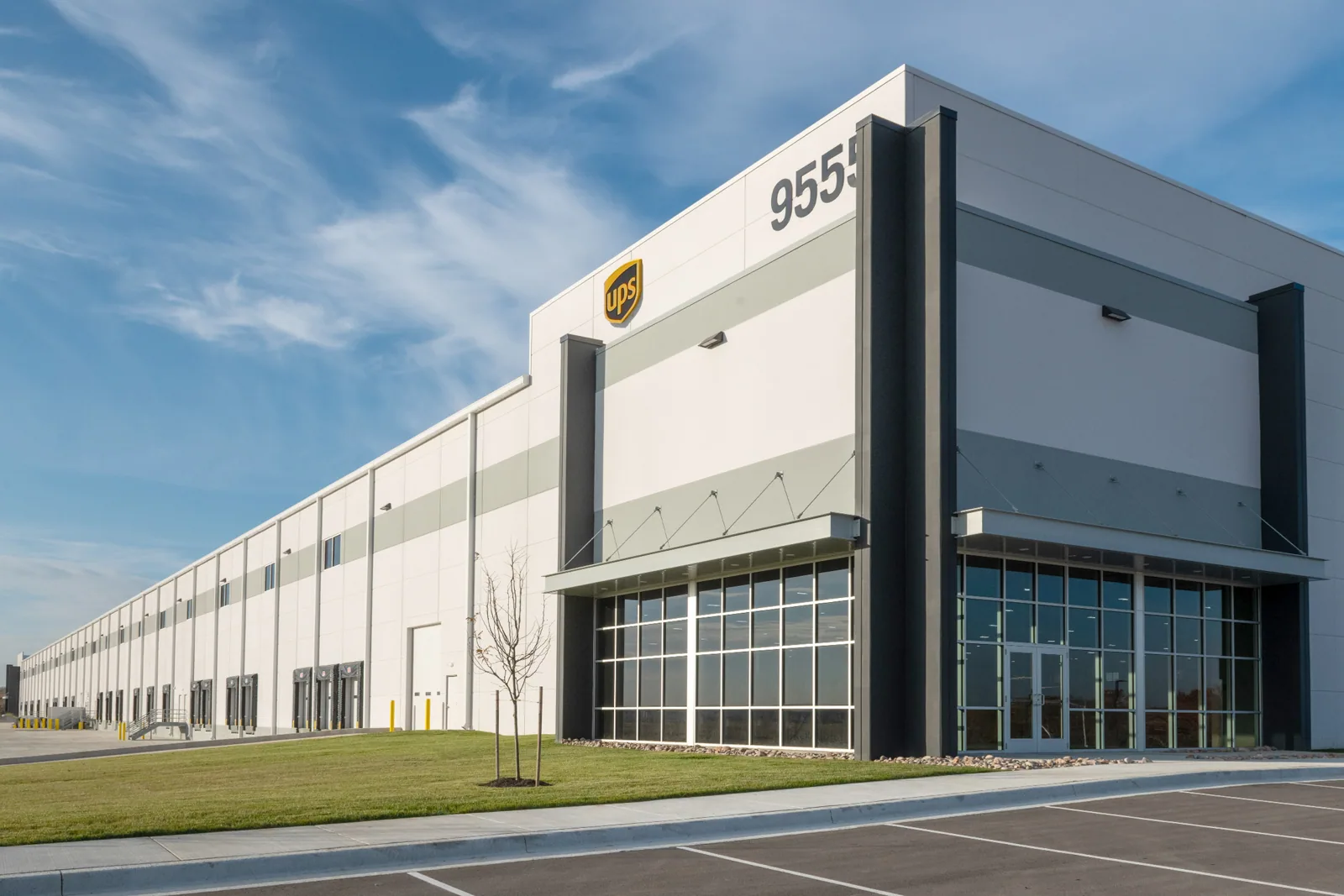
Commercial Roofing at Salinas Ag-Industrial Center, CA
Commercial roofing for Salinas ag-industrial properties. Plan inspections and repairs around process equipment, drainage, roof access and production schedules.
Overview
An agricultural processing or support building has roof details tied to equipment, receiving, and daily production. Salinas Ag-Industrial Center lies near Abbott Street and Harris Road. Those local conditions identify a district; they do not describe an individual tenant, building, or roof. We start with the assembly in place, visible conditions, and operational limits that affect inspection and repair.
Monterey County’s agricultural-industrial regulations allow product collection, packaging, distribution, processing, and equipment services where the district applies. That range helps explain why roof schedules can differ between properties, but it does not establish a specific facility’s use. We confirm operations and access with the property contact, then map findings by roof zone. A commercial roof inspection can separate active leaks from maintenance needs before a larger scope is considered.
Which roof details deserve attention around process areas?
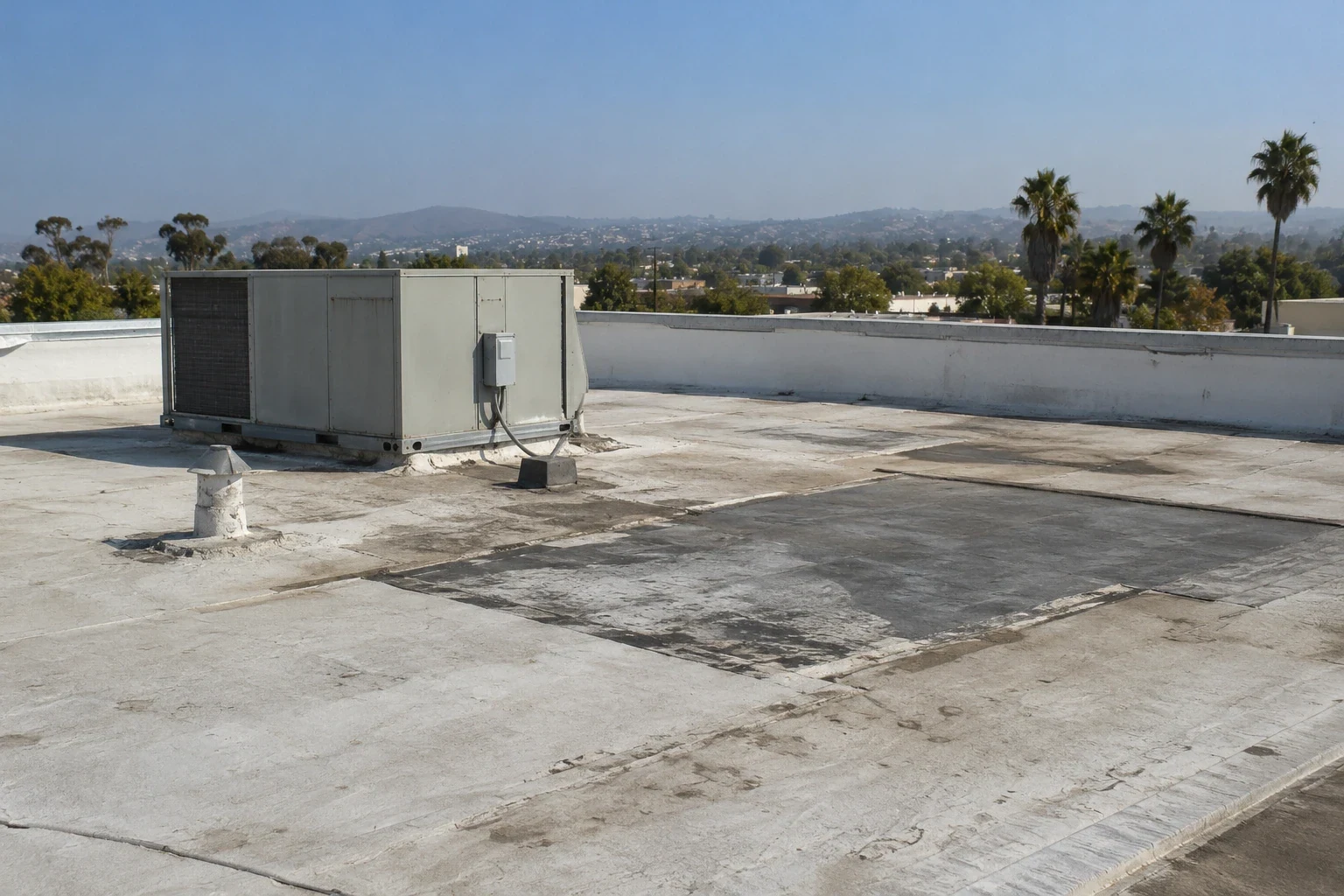
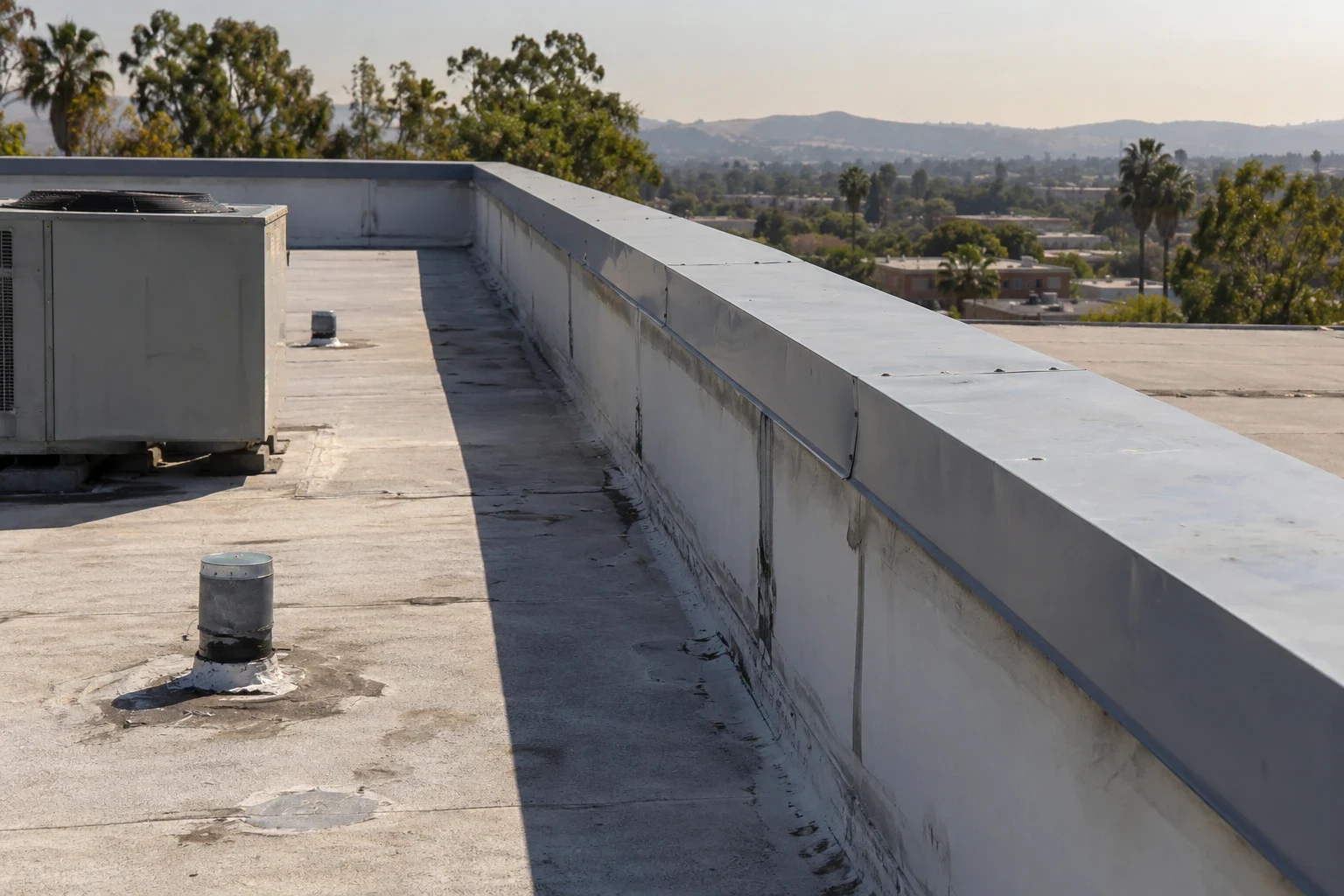
Equipment curbs, exhaust points, pipes, drains, and rooftop service paths interrupt the roof surface and deserve a close look. We inspect membrane seams or panel joints around those details, along with flashing height, edge metal, and areas where service traffic may affect the assembly. A leak inside a processing or storage area can originate elsewhere, so we compare the reported location with the roof layout and drainage direction rather than treating the ceiling stain as a precise map.
The Ag-Industrial Center is near Abbott Street and Harris Road. Those references orient the conversation without standing in for a site walk. We do not infer a building’s use, roof age, or material from its district. If a low-slope membrane is present, we inspect its seams and terminations before discussing TPO roofing or PVC roofing for repair or future planning. The installed assembly and owner’s objectives set the relevant comparison.
How do you assess water movement and leaks?
Drain paths, scuppers, gutters, and low areas matter during winter rain, but a useful roof review depends on observations from the actual building. We check visible outlets for restrictions, then inspect nearby seams, penetrations, wall transitions, and edge details. Where standing water is observed, we record the location and extent. Roof slope and drain capacity require checking the building, drainage path, and outlets directly.
Leak timing, the room where water appears, recent roof work, and equipment schedules help focus a visit. Water can move beneath a roof layer before becoming visible indoors. We identify what the inspection confirmed and what remains uncertain. For a reported leak near a curb or equipment penetration, an infrared moisture survey can help check whether moisture extends beyond the visible detail. Compare its mapped area with the leak location, adjacent seams, and equipment-service history before setting repair limits. A roof-drain and scupper review can address the visible water path, outlets, and discharge details without presuming that drainage is the only origin.

How can roof work fit the production schedule?
Receiving windows, sanitation routines, active equipment, and worker paths can shape crew entry and material movement. Before work starts, the site contact can identify check-in rules, restricted zones, roof access, loading activity, and interior protection needs. A sequence divided by roof zone can keep the active work area clear, if weather and the roof assembly allow a watertight close between visits. We confirm which operations must continue and which temporary restrictions require advance notice.
Abbott Street and Harris Road help orient the district; current gate and staging instructions come from each property. We agree where a vehicle may stage, what access must stay open, and who receives schedule updates. A preventive roof maintenance visit can fit an agreed access window. A commercial roof replacement needs a deeper phasing conversation when production continues, including equipment transitions, daily closeout, and how incomplete work is protected.
When is a localized repair appropriate?
A repair may be reasonable when a defined failure is limited and the surrounding roof assembly remains serviceable. We examine adjacent seams, visible insulation or deck clues, previous patches, and whether the leak has returned at the same detail. If several zones are affected or concealed wet material may extend beyond the opening, testing can help compare a targeted repair with a broader scope. We state the evidence that supports the recommendation instead of presenting a patch as a durable answer without checking nearby conditions.
A proposal should identify the observed area, repair method, access assumptions, and conditions that could change the scope after work begins. For process or storage spaces, confirm what equipment protection and interior coordination are included. The owner should know whether photographs, a water test, or a written completion record are part of the job. Commercial roof repair addresses a defined condition; a roof replacement evaluation compares broader options when inspection findings and repair history support it.
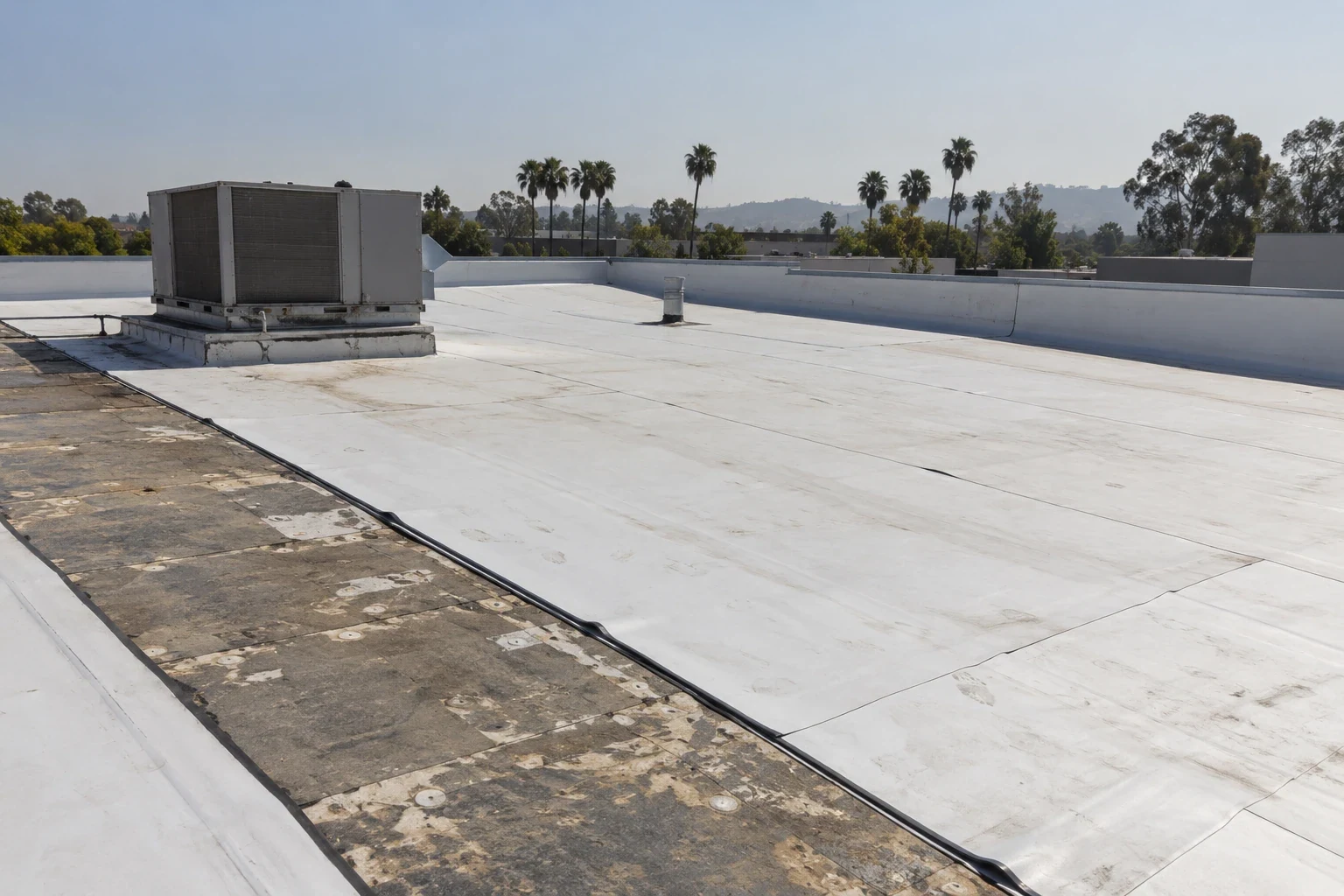
What should remain in the building record?
Keep roof plans, inspection reports, repair invoices, leak dates, and photographs together by building and roof zone. A useful report says where the crew inspected, what was visible, which items were repaired, and what needs a return visit. It also records access limits that prevented a complete view. Separate completed work from recommendations so a later manager can tell which items remain open rather than relying on an old proposal as proof that repairs occurred.
For a busy facility, an inspection plan should identify whether the visit is visual only or includes testing, interior access, or review of prior repairs. Confirm who can authorize each step and whether production equipment needs to be shut down or protected. When an inspection uncovers a detail that cannot be evaluated safely during the first visit, record the limitation and schedule a specific follow-up rather than leaving a broad, open-ended recommendation.
Owners can use the written findings to separate urgent water entry from work that can be planned. A recommendation should name the roof area, explain the observed condition, and state what action would confirm a suspected concealed problem. If a repair is deferred, record how the area will be monitored and what change should trigger another call. This gives operations and ownership a practical record for deciding timing without implying that every listed condition requires immediate replacement.
Teams managing properties in Salinas Business Park or the Valley Center Corridor can coordinate vendor windows while maintaining a separate condition history for each building. A roof condition report can organize priorities for a capital review without treating one site’s findings as representative of another. Schedule a follow-up around the production calendar and focus it on unresolved details, access limits, and changes since the prior inspection.
Questions Owners Ask
How do you prepare an inspection in the Salinas Ag-Industrial Center?
The owner or facilities contact arranges safe access. We inspect the building’s assembly, drainage, and current condition before defining the scope.
Can roof work be planned around processing or receiving?
Yes. We coordinate entry, staging, restricted areas, notice, and work sequence with the site contact. The schedule depends on roof access, weather, and facility operations.
What should we provide before investigating a leak?
Share the leak timing and interior location, roof plans if available, repair records, and access restrictions. We compare the symptom with visible roof details and explain whether further testing is needed.
How do you identify the roof material at an ag-industrial building?
We inspect the installed assembly and compare visible details with available property records. Age, condition, and repair history are confirmed at the building.
What findings justify a broader project at an ag-industrial building?
A single failure around a curb or seam can remain a repair question if adjacent layers are suitable. Compare broader renewal when leak reports cover multiple roof zones, inspection finds widespread deterioration, or testing shows moisture near process equipment or receiving areas.
Related Roofing Work
Review an ag-industrial roof by production zone
Arrange a site visit around receiving, equipment access, and current leak reports. We will connect findings to the roof areas operations can make available.