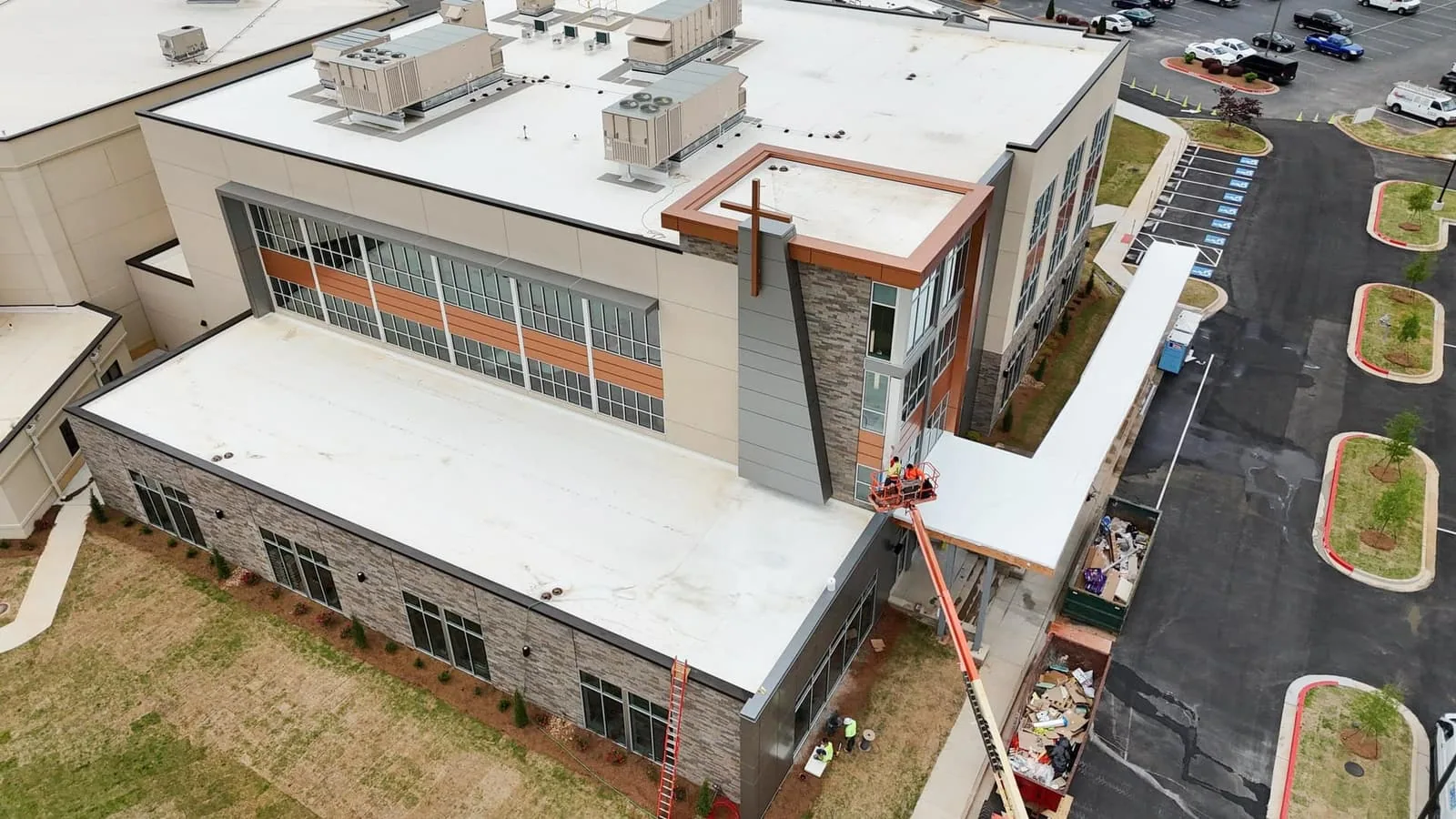
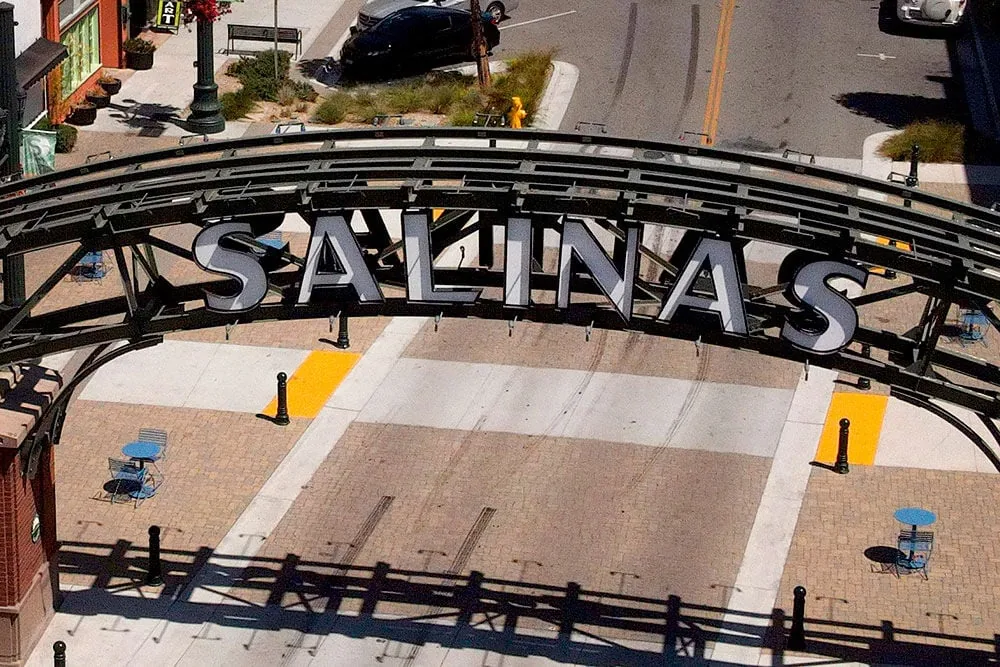
Commercial Roofing in Valley Center Corridor, Salinas
Commercial roofing in Salinas’s Valley Center Corridor. Plan inspections, repairs and replacement around roof access, drainage, tenants and project phasing.
Overview
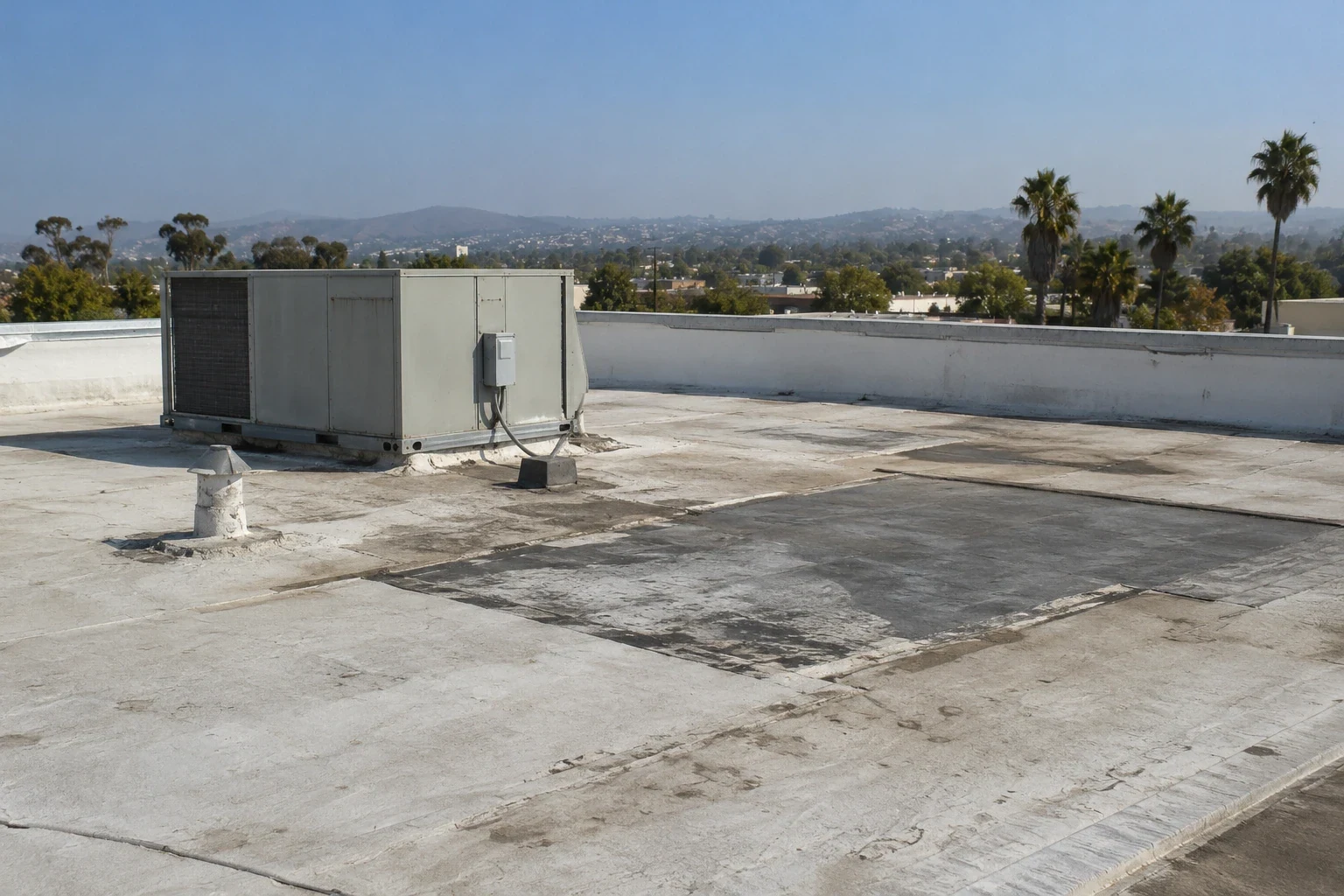
A commercial property in the Valley Center Corridor needs a roof plan based on its own use, assembly, and access rules. Valley Center Corridor is one of Salinas’s commercial and employment areas, with nearby commercial, industrial, and mixed-use properties. Roof assemblies and site operations vary by building, so we confirm the accessible system, drainage layout, penetrations, edges, and transitions before defining a scope.
We identify the roof surface, drainage layout, penetrations, edges, and transitions that can be inspected safely. The owner’s maintenance history and leak reports help direct a closer look. A commercial roof inspection can organize findings into active concerns, maintenance items, and questions that need testing before a repair or replacement decision.
What roof details matter across commercial uses?
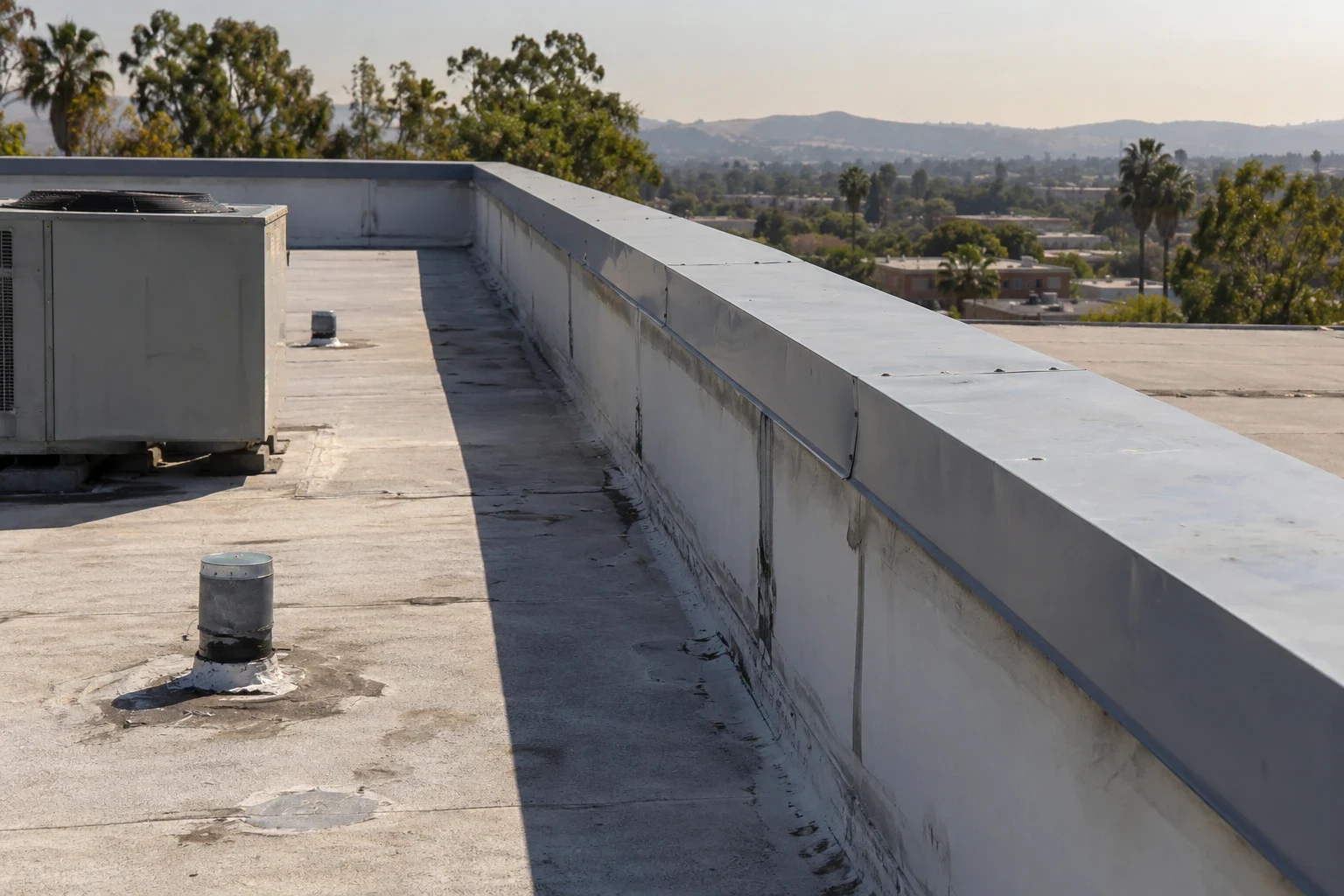
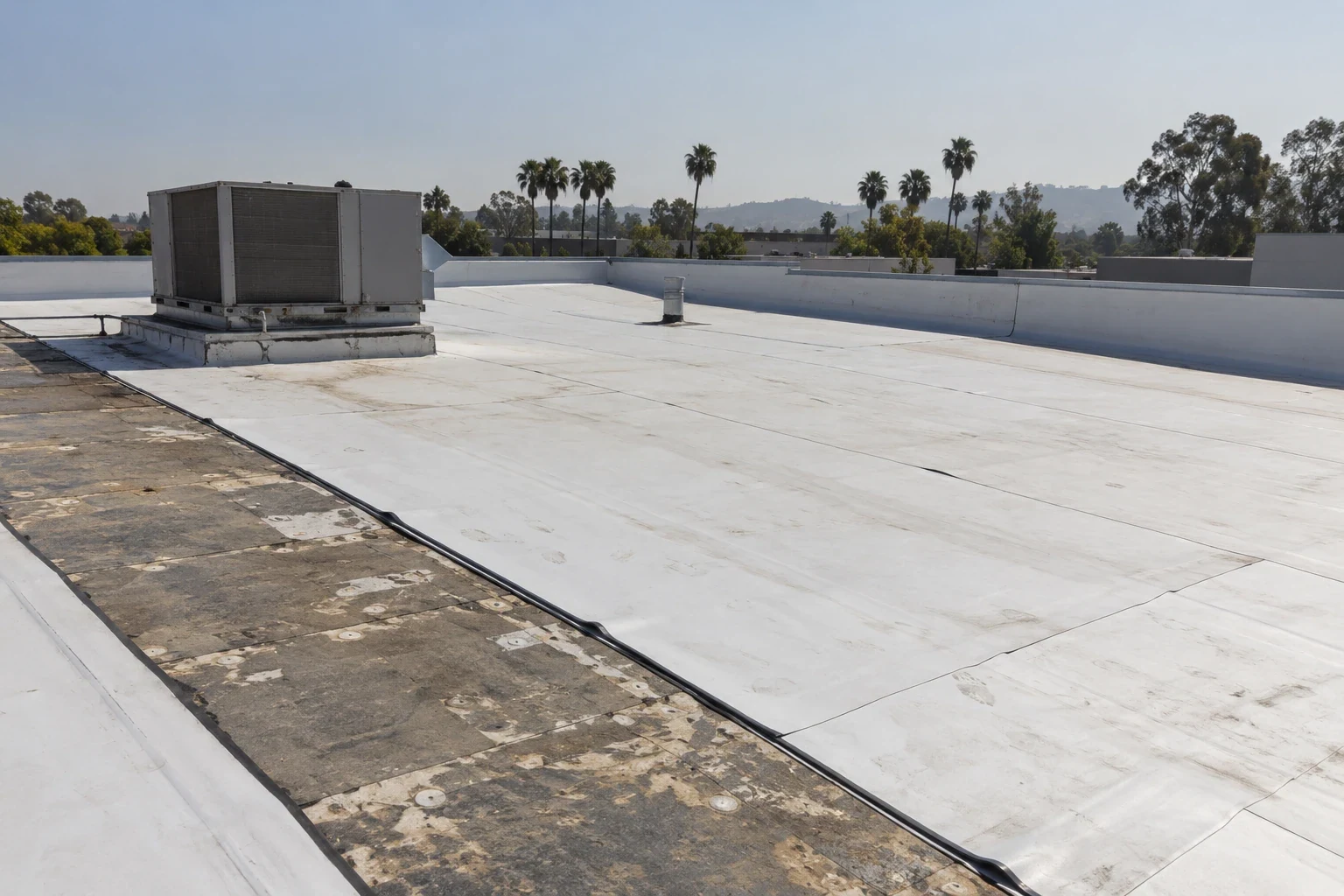
Properties in a commercial corridor can have different rooftop demands. We confirm the building’s use and roof details before recommending work. One roof may have packaged equipment, skylights, exhausts, or service walkways, while another has few penetrations. We check flashing around each interruption, seams or panel joints, and visible wear in areas where service traffic crosses the roof. The record ties each finding to an inspectable detail.
If the roof contains several systems or additions, record the boundaries between them. A change in deck, membrane, slope, or flashing detail can affect how water moves and which repair materials are appropriate. The owner can share prior reroofing documents when available; field conditions still need to be checked before a new scope is finalized.
A property portfolio may include different districts such as East Alisal and East Market. We keep roof records by building because adjacent sites can have different designs, ages, and conditions. Where a low-slope membrane is installed, we can assess seams and terminations and discuss TPO roofing or modified bitumen roofing only if the assembly and owner’s objectives make those systems relevant.
How do inspection findings guide repair?
Water can enter at a seam, curb, drain, wall transition, or edge and show up indoors somewhere else. We compare leak timing and interior location with the roof layout to investigate the likely path. records should identify the roof areas reached and whether equipment, stored materials, or access restrictions limited the view. A wet ceiling tile shows where water emerged; it does not, by itself, locate a roof opening.
We inspect drains and discharge paths for visible blockages, then examine nearby membrane, flashing, and penetrations. If moisture could extend below the surface, an infrared moisture survey may help focus further assessment. A commercial roof leak repair can address a localized confirmed condition, while repeated reports or broad deterioration call for a wider evaluation. Recommendations follow observations from the property rather than a general claim about the corridor.

How do you coordinate access and tenants?
Before a visit, the property contact can confirm who authorizes roof access, where crews check in, which areas stay occupied, and when tenant activity peaks. This reduces avoidable conflicts around ladders, hatches, parking, and staging. If the inspection includes interior checks, agree on rooms and escort needs in advance so the visit can stay focused. A work schedule should account for building hours and notice requirements.
For repairs or reroofing, define which roof zone is active and how materials will move through the property. Explain where occupants may notice noise or temporary restrictions, and when each area will reopen. Occupied-building reroofing can account for phasing and interior protection when a building remains in use. A drone roof inspection may document hard-to-reach surfaces where site and flight conditions permit, but it cannot replace close inspection of details that need hands-on review.
How should owners compare a repair with a larger project?
A defined defect may be repaired when nearby seams, flashing, attachment, and roof layers remain suitable. When leaks return in several locations, patches accumulate, or moisture may be concealed, targeted testing can clarify how much of the assembly is involved. We describe both observations and unknowns so an estimate is not mistaken for a complete diagnosis. Scope can change if opening the roof reveals conditions that were not visible during the initial review.
A clear proposal identifies the affected area, repair method, preparation, protection, and cleanup. It should state any condition that could change cost or timing and how the owner will approve additional work. For a larger project, compare phasing, tear-off, access, rooftop equipment transitions, and interior coordination. Commercial roof repair addresses a defined scope; a commercial roof replacement review fits a system-level decision supported by condition and repair history.
What belongs in a useful roof history?
Keep inspection reports, dated photographs, leak logs, repair invoices, and roof plans in a property record. Link each finding to a roof zone or identifiable detail, then record whether it was repaired, deferred, or needs further investigation. Include the date and access limits. This lets the next facilities contact understand the history without assuming an older photo reflects the current surface or that every recommendation was completed.
When reviewing bids, compare the exact roof area and work included, not just the repair label. Ask how the contractor will prepare the surface, protect adjacent equipment, handle debris, and confirm that the repaired area is watertight. If the scope relies on assumptions about insulation, decking, or concealed flashing, those assumptions should be clear, along with the process for getting approval if field conditions differ.
A repeat visit can confirm whether a repaired detail remains stable and whether deferred maintenance has changed. Keep the same roof-zone labels in inspection records, work orders, and photographs so a later team can follow the history. If a property changes tenants or use, update access rules and equipment information before crews return. That small coordination step keeps the next inspection tied to current building operations rather than an outdated site contact or plan.
Owners with assets in the Salinas Ag-Industrial Center or North Main Street area can coordinate vendor windows while keeping separate roof records. A roof condition report can help rank active water entry against planned capital work. For a Valley Center Corridor building, schedule a return visit around operating hours and revisit unresolved recommendations when access or weather constraints change. Before closing a work order, retain photographs of the completed area and a short description of the repair. This makes later comparisons more useful and gives ownership a clear starting point if a leak returns.
Keep the latest condition record with the property file.
For a multi-tenant property, assign each reported leak and repair to a roof zone rather than grouping separate symptoms under one work order. Ask the tenant contact to record when water appeared, what room was affected, and whether equipment or ceiling protection is needed. The inspection can then compare each report with the closest seams, drains, curbs, and wall transitions before setting the repair boundary.
Questions Owners Ask
What roof details should be confirmed before selecting a repair material?
We inspect the accessible assembly and review available building records before recommending repair or replacement materials.
What information helps select a compatible repair material?
The accessible assembly and nearby seams, curbs, drains, and wall transitions guide the material choice. We also review available property records and identify any detail that needs further access.
What should we do if leaks appear in multiple rooms?
Record dates and interior locations, share repair history and roof plans, and arrange an inspection. Water may travel before appearing indoors, so the review compares symptoms with roof details and may recommend more testing.
Can work be scheduled around tenants?
We coordinate access, check-in, staging, work zones, protection, and notice with the property contact. The sequence depends on building use and project scope.
What findings support a replacement evaluation?
Repeated leaks, broad deterioration, or moisture beyond a local repair area may justify wider assessment. We explain observations and uncertainties before comparing repair and replacement options.
Related Roofing Work
Plan a commercial roof review in Valley Center Corridor
Choose an access window with the property contact and share the building schedule. We will document the conditions observed and identify the next inspection or project step.