Built-Up Roofing in Salinas, CA
Inspect and plan built-up commercial roofing in Salinas by ply condition, surfacing, flashing, drainage, and facility operating needs locally.
Overview
Built-up roofing uses multiple plies of bitumen and reinforcing fabric to create a low-slope roof assembly. Its condition depends on the bond between layers, the surfacing above them, and the details that carry the system to drains, walls, and equipment. In Salinas, we inspect those conditions on the actual building before recommending repair, restoration, or replacement. A warehouse roof and a small office roof can have different access and repair demands even when both use the same system.
Cool-season rainfall and a long dry period provide a useful calendar for drain checks and planned maintenance. The climate does not show whether a specific roof is sound. We look at the plies, surfacing, transitions, water movement, and any history of interior leaks or repeated repairs.
What makes up a built-up roof?
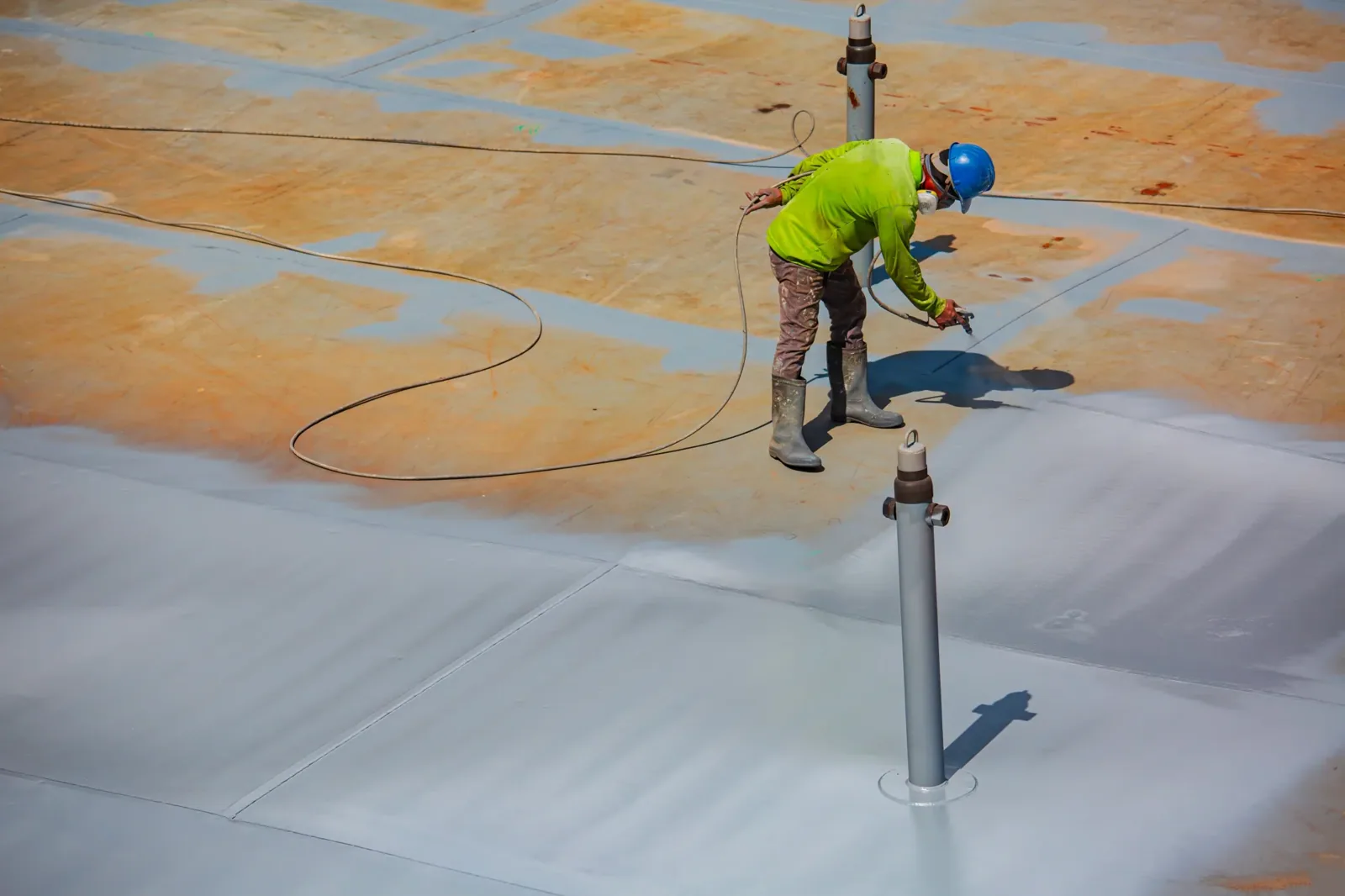
Built-up roofs generally combine alternating layers of bitumen and reinforcing felt, finished with aggregate, a coating, or another specified surface. The number and type of plies, fastening or adhesion method, and compatibility with the substrate vary by project. The system’s redundancy can be useful, but added layers also make concealed conditions harder to inspect without selective openings. We identify what is present before proposing a repair that might cover earlier deterioration.
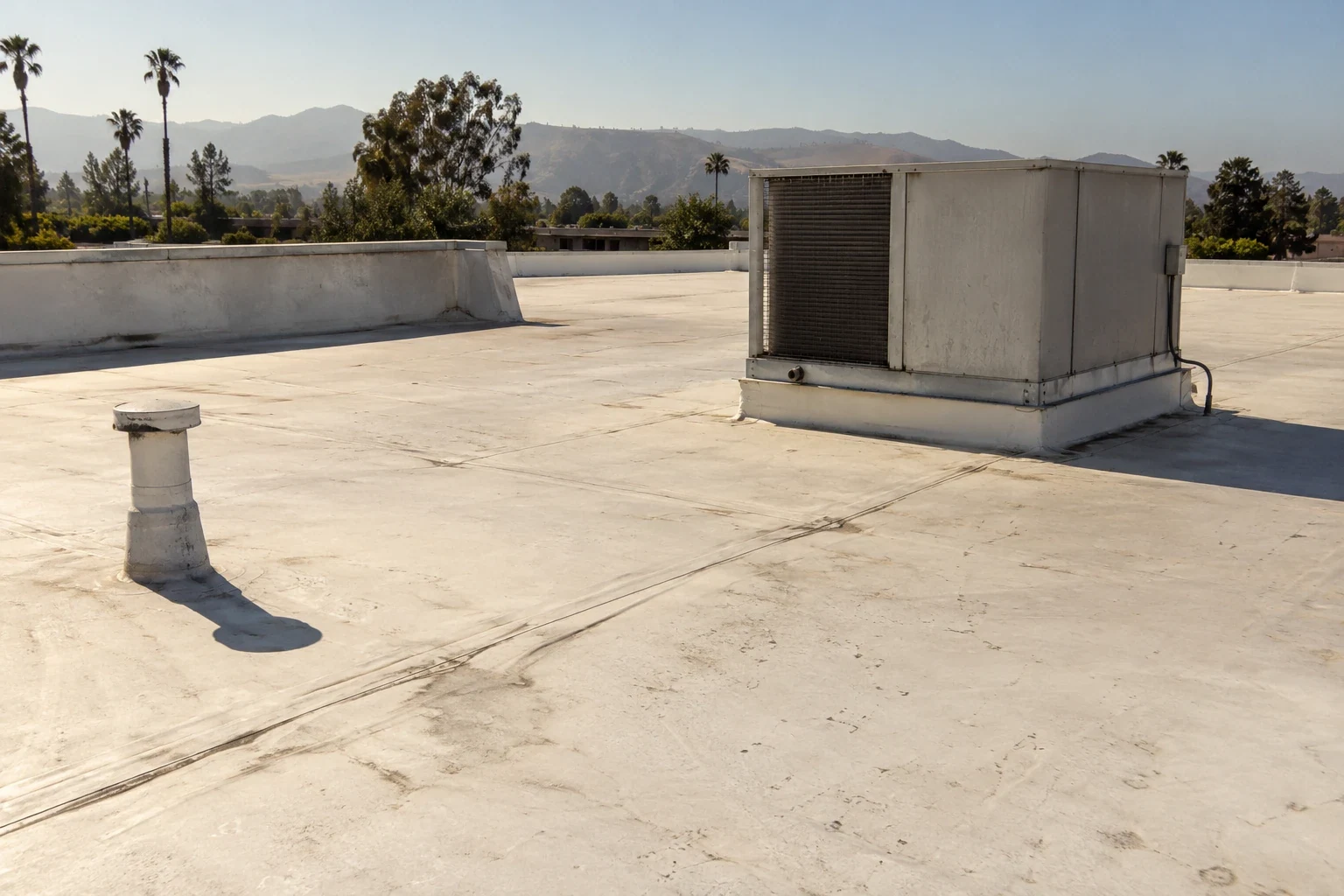
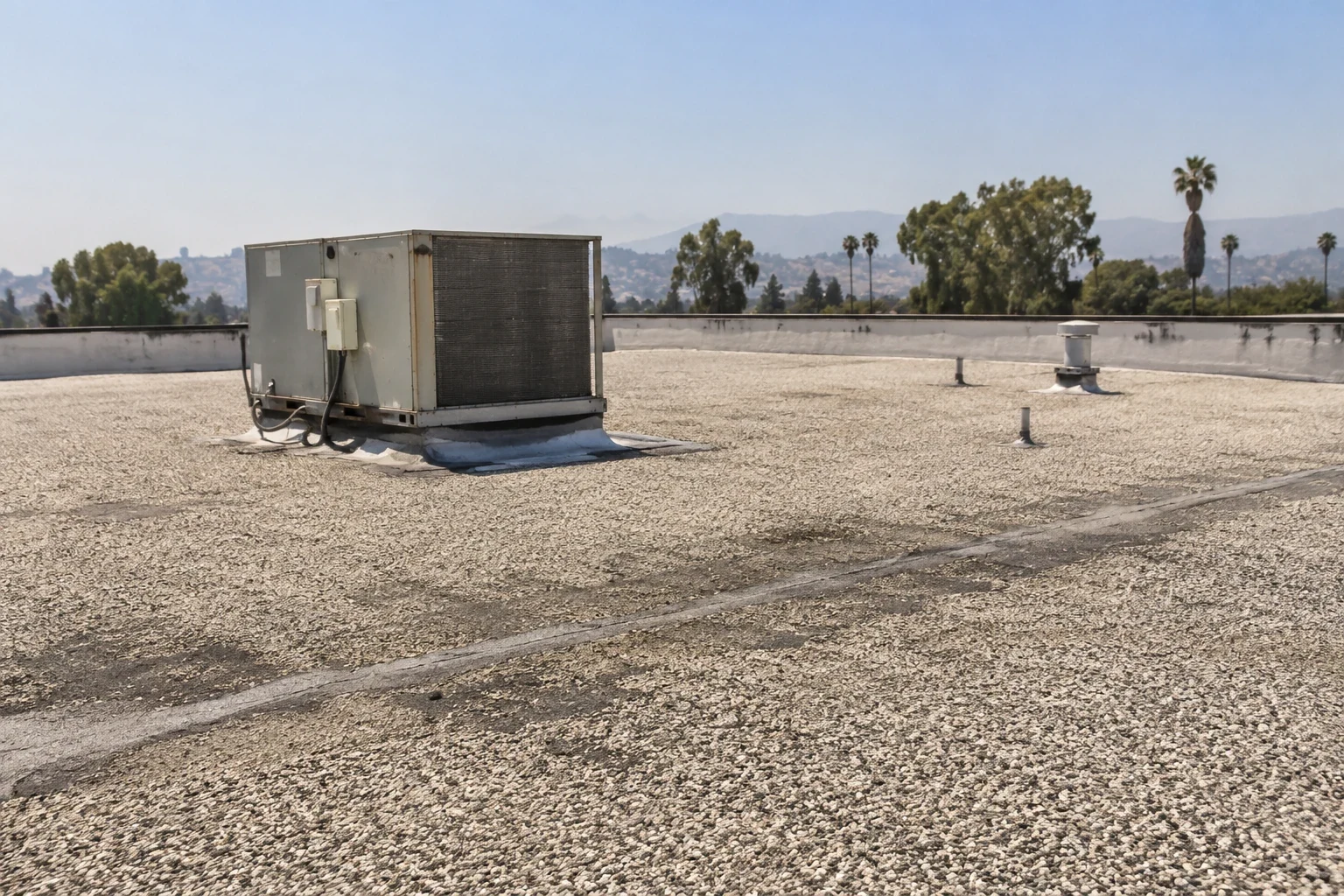
Surfacing protects the bitumen and affects how roof access is managed. Loose gravel can shift around drains and equipment, while a smooth surface may show cracks or open seams more clearly. We explain the roof type and visible condition in plain terms, then compare with modified-bitumen construction and TPO membrane assemblies if the owner is evaluating a sheet-based asphalt system. That comparison should include weight, attachment, repair method, and existing deck capacity where those questions affect the project.
What failures should the inspection find?
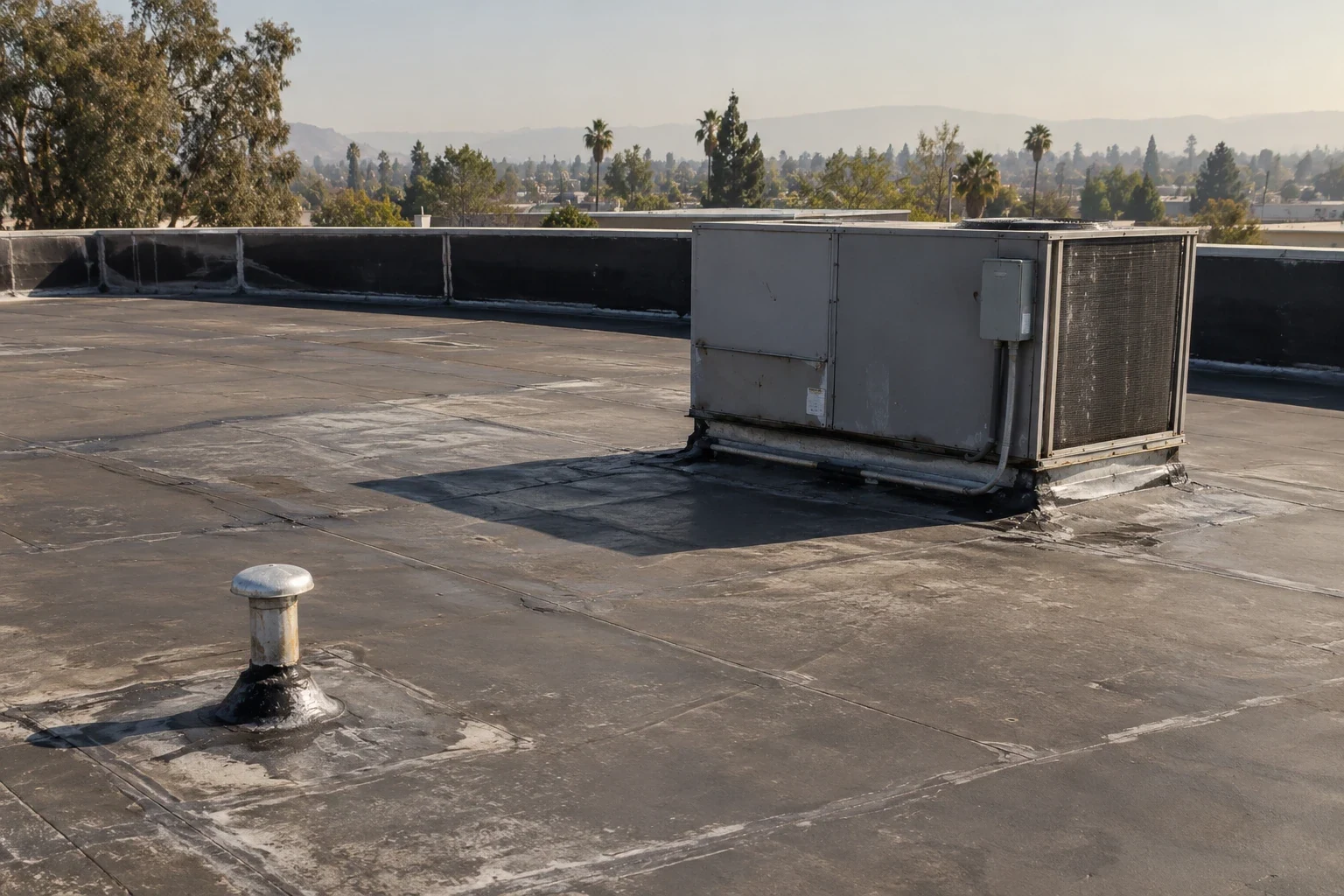
We inspect for blisters, splits, ridges, exposed felt, loose aggregate, open laps, and cracks in the bitumen. Blisters can reflect trapped air or moisture, but the surface alone does not reveal their full extent. At parapets and curbs, the base flashing may separate or crack where the roof moves. Around drains, surfacing can conceal the bowl, and debris may block the flow. We examine how each condition relates to the layer beneath it before choosing a repair boundary.
Interior leak locations help direct the inspection but do not necessarily line up with the opening in the roof. Water can travel along the deck or between plies before it appears indoors. We compare leak reports with roof slopes, penetrations, past repairs, and signs of moisture. A leak repair assessment can identify immediate entry points; a broader condition inspection helps determine whether separate defects are related.
How should a built-up roof be repaired?
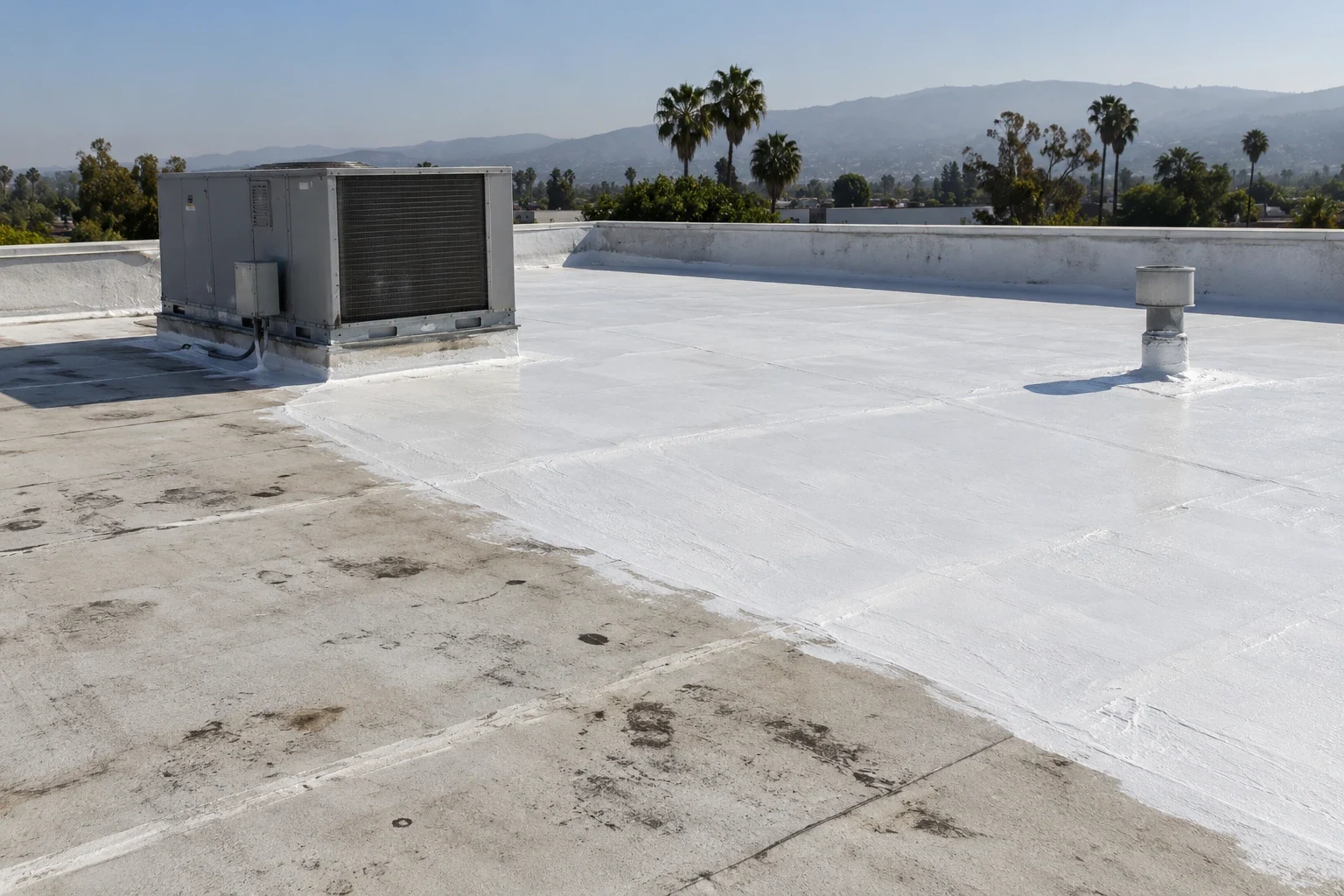
A repair starts with removing loose surfacing and exposing enough of the area to reach sound material. The replacement plies and bitumen must be compatible with the existing assembly, and the patch needs a secure edge that will not admit water. If moisture or deteriorated insulation extends beyond the visible defect, the work may need to expand or include a controlled opening. We document any change in scope and seek the owner’s direction before proceeding beyond the agreed boundary.
Cracks and open seams near a wall, curb, or drain require rebuilding the transition, not simply coating over its edge. A patch that bridges a moving joint can split again. If the surface is gravel-surfaced, removing and restoring aggregate is part of the repair sequence. We protect the building below and set a work window around access and material curing. For a persistent opening, commercial roof repair should include the origin, selected materials, and any condition that remains for monitoring.
How do surfacing and drainage affect water flow?
Aggregate can hide small splits and make it harder to see where runoff moves. At each inspection, we clear a practical view around drains, scuppers, and overflow paths, then check the membrane tie-in and the surrounding plies. Ponding may relate to debris, displaced surfacing, insulation layout, deck movement, or roof slope. Recoating a low area does not change its geometry. The scope should say whether it rebuilds slope or simply repairs the existing surface.
Salinas’s normal rain is concentrated in the cool season. Owners can use the dry stretch to review drain bowls, scupper openings, parapet flashings, and places where gravel gathers. We record what can be seen and whether water behavior needs follow-up after a storm. Drain and scupper repairs should maintain a clear path off the roof, while restoration work must be compatible with the existing surfacing and assembly.
What changes when the building stays open?
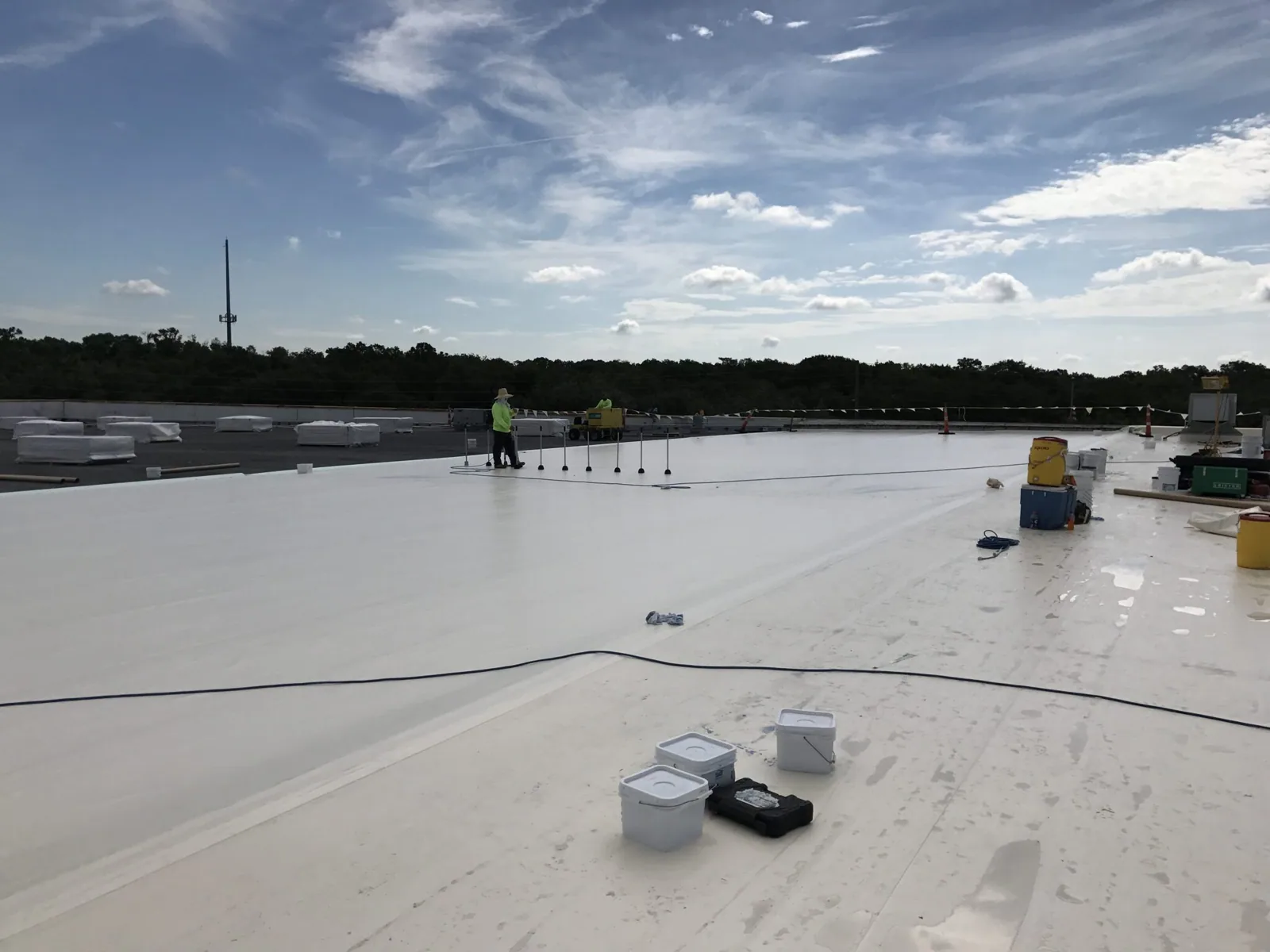
Built-up work can involve material staging, surface preparation, odors, noise, and protection of occupied areas. The owner and contractor should establish where materials can be hoisted, whether access routes cross loading activity, and which interior areas need additional protection. Any heat or adhesive method requires site-specific safety planning. We review fire controls, ventilation, equipment shutdowns, and the building’s rules before scheduling the work.
Salinas commercial and industrial areas include the Salinas Ag-Industrial Center and Salinas Business Park. The name of a district does not define an individual property’s roof or workflow, so we confirm receiving hours, tenant needs, and equipment access with the facility contact. A project in Salinas Business Park still needs its own zone map and daily closeout plan. The facility contact can identify delivery peaks, sensitive interiors, and the work areas that need protection. We confirm those priorities before materials are staged so the installation sequence reflects the property’s real operating day. Those details can change staging or the order of work. Occupied-building coordination can sequence roof sections so interior operations and temporary protection stay visible to the owner.
When should the owner consider replacement?
A few localized splits or flashing defects can often be repaired when the surrounding plies remain bonded and dry. Several leak zones, widespread exposed felt, recurring open seams, saturated insulation, or a deck that needs attention can move the decision toward removal. We explain which layers appear serviceable and where selective testing could change the conclusion. If replacement proceeds, the scope should identify tear-off, deck inspection, new insulation and cover board, drainage adjustments, and tie-ins.
Maintenance extends the usefulness of a condition record by recording changes over time. A visit can inspect drains, surface cracks, blisters, flashings, and repairs made by other trades. Preventive maintenance helps owners plan work before the next wet season; a replacement review can compare continued repairs with a new assembly. The plan should explain its limits and identify the next decision point.
Questions Owners Ask
How should we confirm BUR layers before planning a recover?
Compare available roof records with visible edges and transitions. If layer count affects weight, compatibility, or recover eligibility, selective openings may be needed to confirm concealed construction before pricing the work.
What should be checked before coating an aggregate-surfaced BUR?
Check whether aggregate is secure, the surface is dry, and seams, blisters, and wet areas have been addressed. The coating must be compatible with the prepared surface; it does not correct concealed moisture or unstable roof layers.
Why does water appear far from the roof defect?
Water can move along the deck or between roof layers before it reaches the interior. We compare the leak report with slopes, penetrations, drains, and earlier repairs to find the likely entry area.
Can crews work on a built-up roof while we operate?
Work can be sequenced by section when access, staging, odors, fire controls, and protection below are planned. We review the facility schedule and identify any shutdowns or restricted areas before setting the work sequence.
Related Roofing Work
Find out what the roof layers can still do
Provide roof records, leak locations, prior repair history, and any operational restrictions. We will inspect the built-up system and explain where repair is reasonable and where broader work may be needed.