EPDM Roofing in Salinas, CA
Assess EPDM commercial roofing in Salinas by membrane condition, seam and flashing details, drainage, and building operating needs.
Overview
EPDM is a flexible rubber membrane used on many low-slope commercial roofs. On a Salinas property, the useful question is not whether the system is familiar; it is whether the existing assembly, repair history, drainage, and roof traffic support keeping or installing it. We inspect the membrane and its connections, then match the recommendation to the building’s use, from a small office to an agricultural-support or distribution facility.
Most precipitation in Salinas falls during the cooler season, while summer is much drier and can include extended fog and low cloud cover. The pattern helps frame roof access and drainage reviews, but it does not diagnose EPDM condition. Seams, flashing, attachment, and the layers below tell us what work the roof needs.
How does EPDM work on a commercial roof?
EPDM is an elastomeric membrane installed in sheets and joined at seams with compatible tapes, primers, or adhesives, depending on the system and application. The material can accommodate movement, but that flexibility does not remove the need for secure attachment and careful detailing. Sheet layout, seam placement, perimeter restraint, and flashing design should reflect the roof shape and exposure. We identify the existing EPDM formulation and repair method where possible before specifying a tie-in.
On a broad roof, the installer plans sheet size and orientation around drains, curbs, skylights, expansion joints, and staging routes. The seams should not create unnecessary intersections at busy equipment zones. Where owner priorities include a thermoplastic membrane instead, we compare the assembly with TPO systems or PVC systems. The comparison includes attachment, detail materials, expected service access, and the condition of the roof that will remain.
What signs matter during an EPDM review?
We inspect seams for loose edges, adhesive failure, contamination, fishmouths, or separation at a transition. The field membrane may also show punctures, cuts, shrinkage, or areas pulled away from a curb or parapet. At drains and scuppers, we look for an intact connection and a path that allows water to move off the roof. A repair that addresses only the visible symptom can fail again if the adjoining sheet is still moving or the substrate is wet.
Previous repair material matters. Tape, primer, sealant, and patch stock must be compatible with the existing membrane and prepared according to the system requirements. We record whether a repair appears to be holding and whether neighboring details show similar wear. For buildings in Alisal and East Salinas, roof traffic tied to production or service routes can be relevant to the inspection; we confirm those patterns with the property team instead of assuming them from the neighborhood.
How does attachment change the scope?
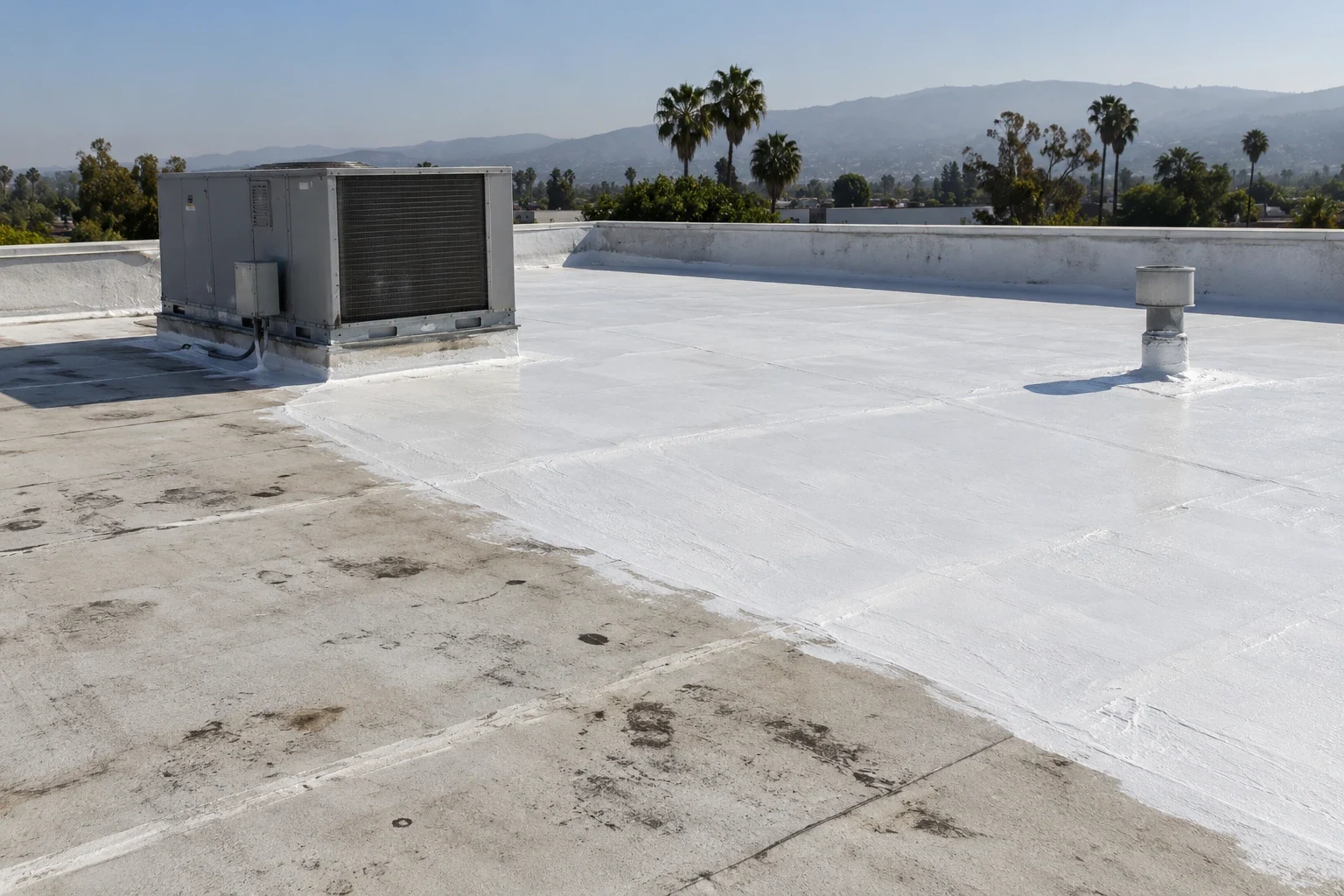
EPDM may be mechanically attached, adhered, or ballasted, depending on the design and building. Each approach creates different requirements at the deck, perimeter, penetrations, and structural connections. We document what is visible and look for loose plates, gaps, displaced ballast, or edge conditions that suggest a problem. Wind resistance depends on the complete tested assembly and project requirements, not on membrane type alone. Any proposed change should account for the deck and existing construction.
A recover also raises questions about the old roof’s attachment and condition. The additional layer must not conceal active moisture or unstable material, and the new perimeter needs enough height and a sound connection. If roof records are incomplete, selective openings can help confirm the layers before a final scope. Our inspection report distinguishes what we saw from what may be revealed during removal. Where moisture location could alter the work, an infrared survey can be considered alongside physical confirmation.
Where do flashings and transitions need attention?
EPDM details are shaped by the way the sheet meets a vertical surface or opening. Parapets, walls, curbs, pipes, drains, and edge metal each need a secure termination and a water-shedding transition. A loose corner or open lap can admit water, while an overly tight detail may be strained as the roof moves. We examine the membrane, substrate, termination bar or edge, and adjoining construction together before deciding whether a detail can be repaired locally.
Rooftop units often draw repeat visits from mechanical trades. A technician may move tools or replace components near the curb, so walkway locations and flashing protection need to be clear. We coordinate roof work around those access requirements and identify who is responsible for disconnecting or protecting equipment. When a curb detail is involved, equipment curb and support repairs should reconnect the roofing to the actual opening rather than rely on a surface bead. Drains and edge metal also need to match the membrane system.
What should the roof do with winter rain?
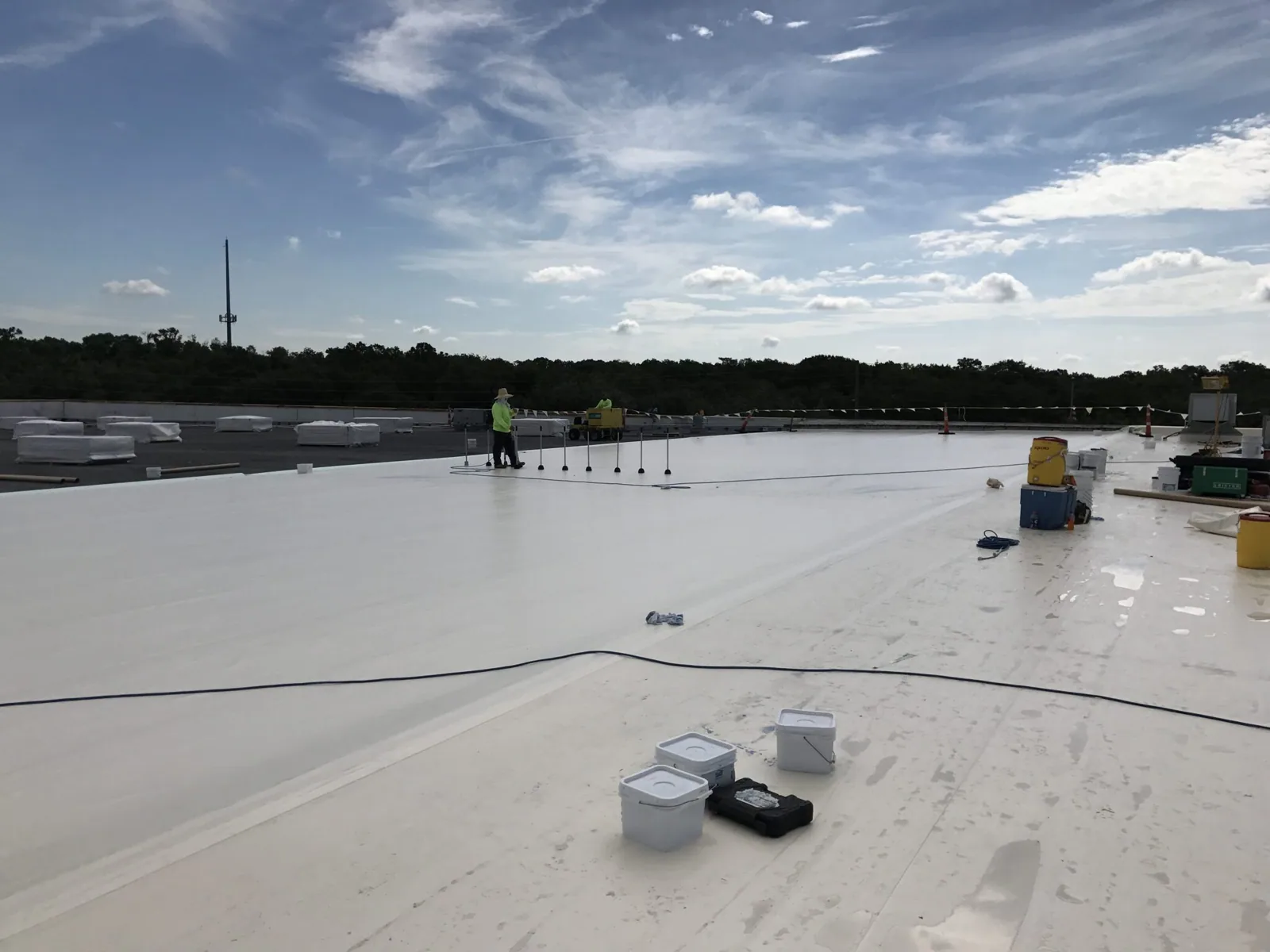
EPDM forms the water-shedding layer, but drainage depends on slope, drain placement, scuppers, and the structure beneath it. We map low spots and outlets, inspect strainers and surrounding membrane, and record whether water appears to pond after normal drainage time. If a project renews the field without changing the geometry, the owner should know that before work starts. Where slope correction is being considered, the design has to coordinate insulation layout, roof height, edge metal, and equipment transitions.
The City of Salinas receives most of its normal rainfall during the cooler part of the year, so drain condition and repair timing deserve attention before that period. Rainfall context does not establish the performance of a particular roof. The inspection records how the roof behaves at its outlets and which details could let water enter. Drain and scupper work may address a blocked or failed connection, while recurring ponding may require a broader roof review.
How can the owner keep a repair history useful?
A simple roof log records the date, roof zone, observed defect, repair material, and any condition that still needs watching. That record is useful when leaks recur or when another trade has worked around equipment. We recommend that maintenance visits check seams, flashings, drains, perimeter restraint, and service paths, with photographs that can be compared at the next visit. A report should separate the completed repair from conditions that need monitoring or further testing.
If defects remain isolated, compatible repair can preserve the roof while the owner plans capital work. When seams fail across multiple zones, the membrane has pulled back from edges, or moisture is widespread below it, the assembly may no longer support an economical repair sequence. Our preventive maintenance service keeps findings organized, and a replacement assessment can compare repair and renewal scope. The recommendation should reflect the roof’s condition and operating requirements.
Questions Owners Ask
Can EPDM be repaired instead of replaced?
Often, when the defect is limited and the surrounding membrane and substrate remain sound. We confirm the existing material, prepare the repair area, and use compatible products. Repeated seam or flashing failures across separate zones can justify a wider evaluation.
How are EPDM seams repaired?
The method depends on the installed system and the seam’s condition. A repair may require cleaning, primer, seam tape, or a compatible patch with properly prepared margins. We inspect the adjoining sheet so a new patch does not bridge over movement or wet material.
Can EPDM be installed over an old roof?
A recover is possible only if the existing roof is suitable to remain. We review moisture, attachment, layers, drainage, and perimeter height, then explain whether the new assembly can be secured and flashed correctly.
What should be checked after mechanical work on the roof?
Inspect the route, equipment curb, nearby seams, and any area where tools or replacement parts were staged. We document disturbed details and repair them with compatible materials before water reaches the assembly.
Related Roofing Work
Review the assembly before choosing a repair
Tell us what the roof has been doing, which areas have been repaired, and how the building uses its roof. We will inspect the membrane and details, then explain the practical options.