
Commercial Roof Maintenance in Salinas, CA
Plan commercial roof maintenance in Salinas, CA with drain, seam, flashing, and equipment checks recorded by roof area and priority.
Overview
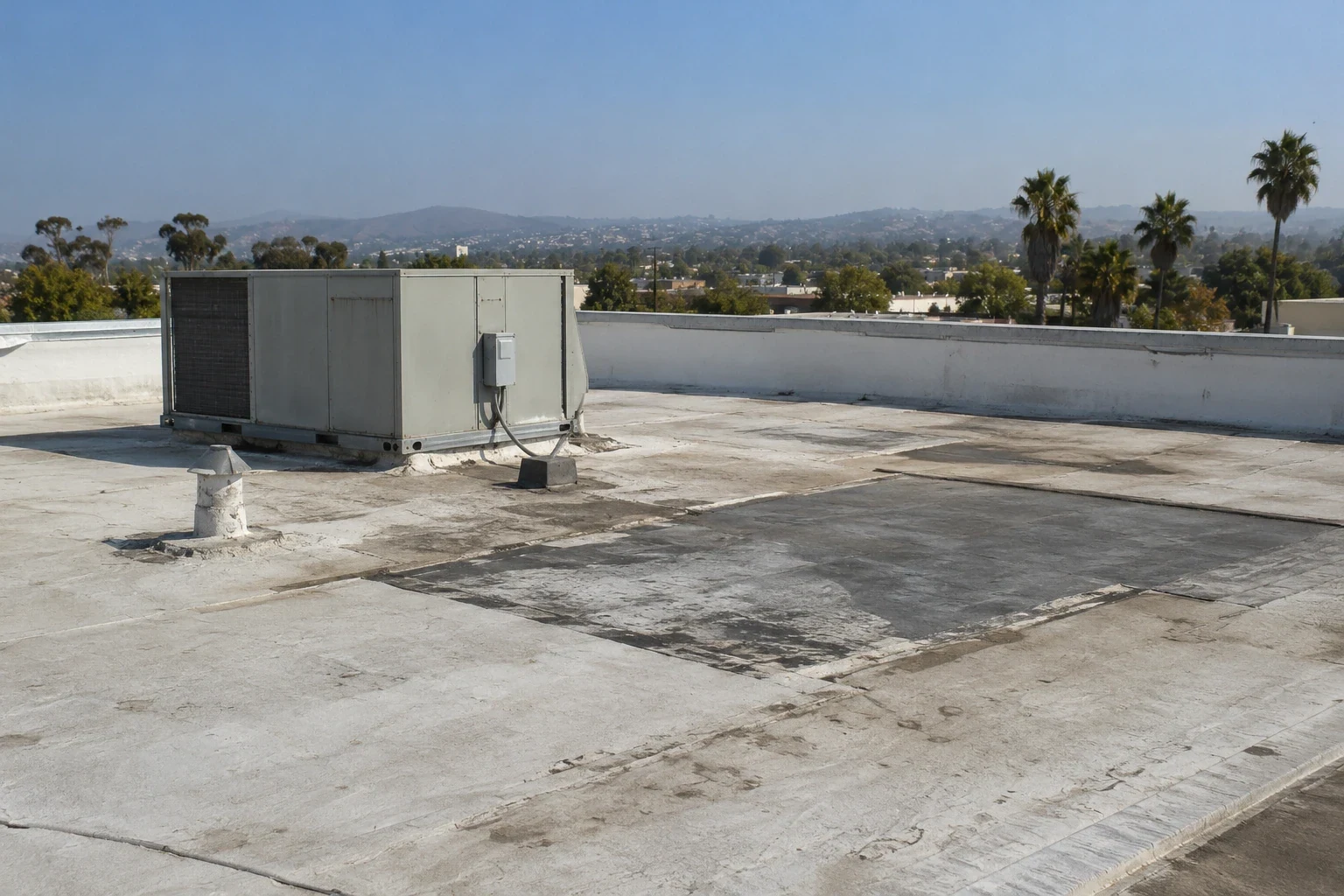
A scheduled roof visit can keep small defects from becoming interruptions inside the building. For a Salinas facility, maintenance should follow the roof’s assembly, drainage, equipment layout, and repair history. We inspect the details that move water, record conditions by roof zone, and separate work that needs prompt attention from items that can be planned for a later visit.
Most normal precipitation in Salinas falls during the cooler season, while the summer months are typically much drier. That gives an owner useful timing context, but a maintenance schedule should reflect the actual roof and site. A damp morning, an obstructed drain, or a newly serviced rooftop unit can change what deserves attention on a particular visit.
What should each visit check?
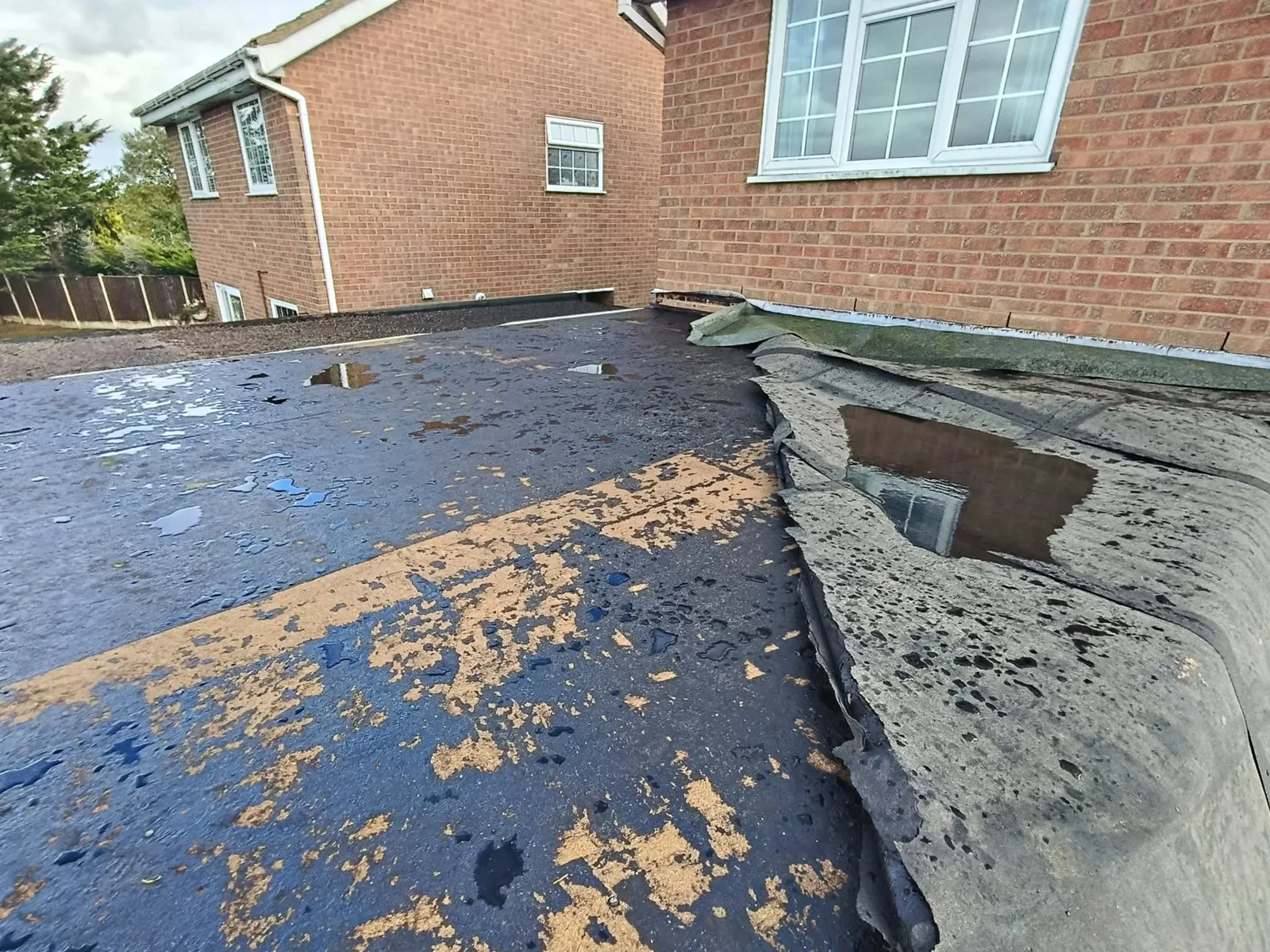
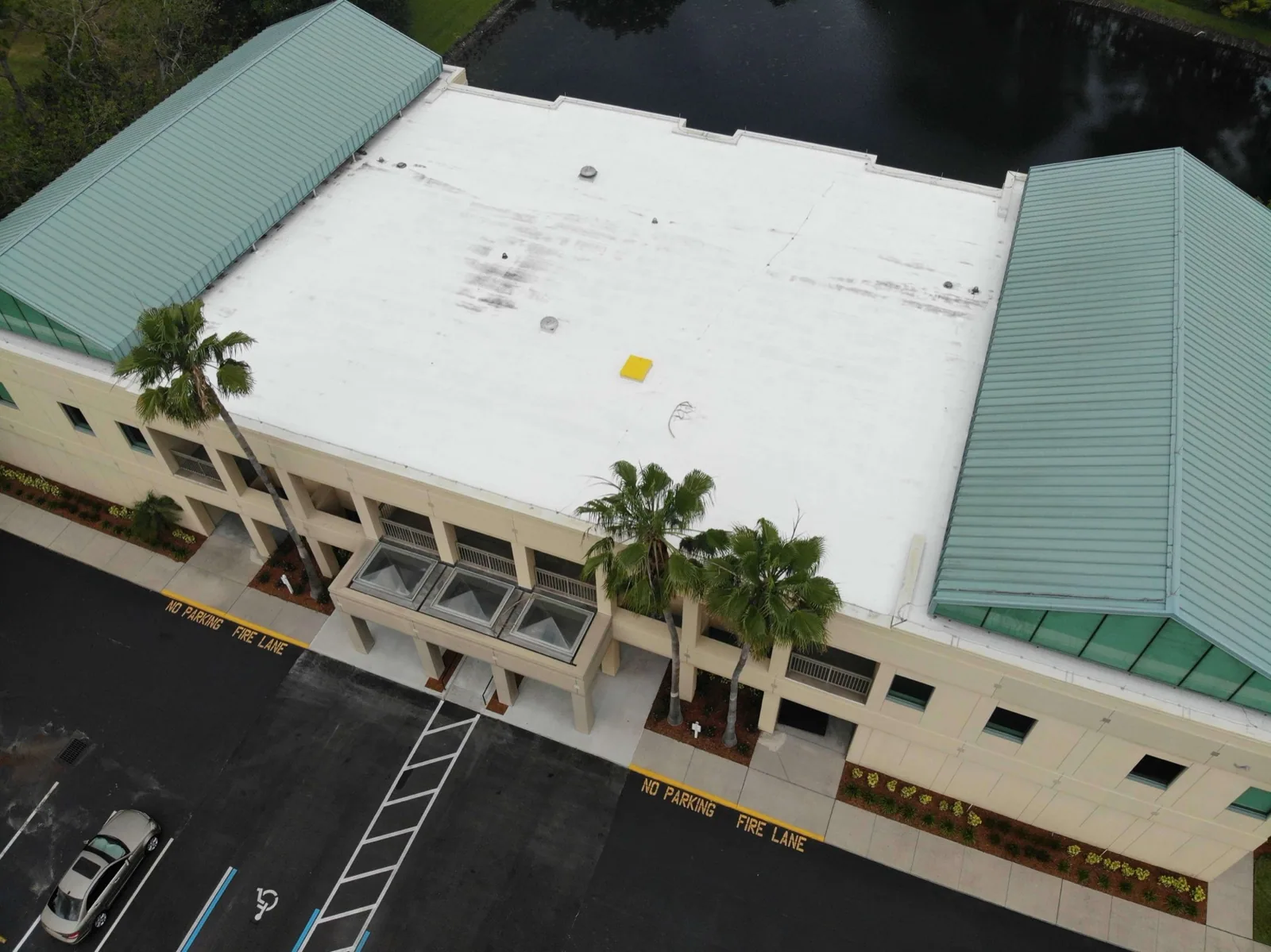
We review field seams and laps, membrane transitions, wall flashings, penetrations, expansion joints, edge metal, coping, drains, scuppers, gutters, and visible sealant. We look for loose material, punctures, open laps, debris, standing water, or repairs whose edges have lifted. The records identify where each item is located and what action would address it.
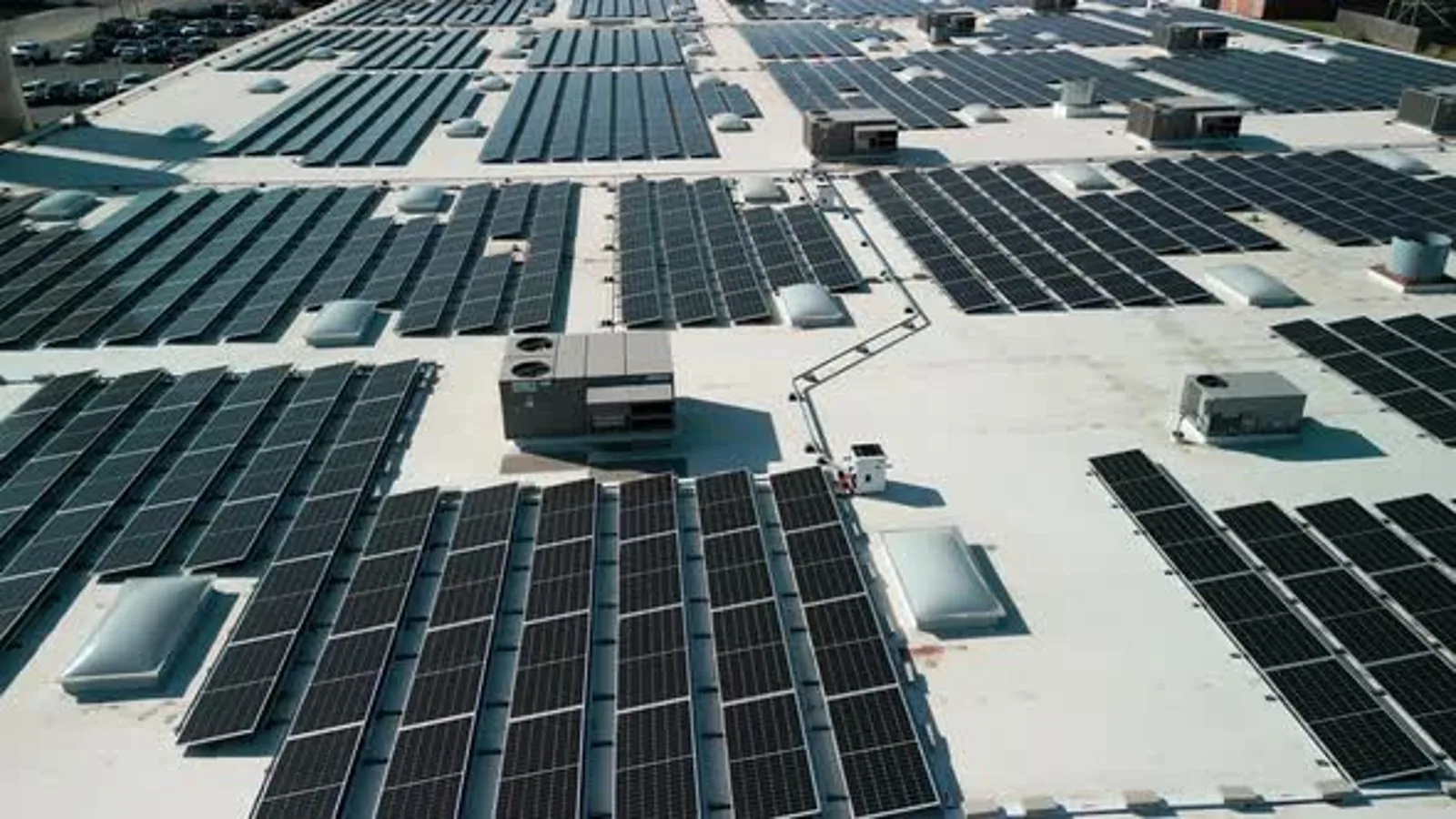
Rooftop equipment needs its own checklist. Curbs, supports, conduit, refrigerant lines, exhaust, and service paths can affect the roof membrane or direct water toward a vulnerable transition. We record changes made by other trades and any area where equipment access has damaged a walkway or flashing. If a repair requires mechanical coordination, the owner can schedule it with the right contact rather than discovering the conflict during a leak call.
Interior observations can complement the roof walk. We compare any reported staining or active moisture with the corresponding roof zone, while keeping plumbing and condensation in the set of possible causes. When the visible condition does not explain the report, we recommend a focused inspection or moisture survey instead of adding speculative repairs to the maintenance list.
How should the calendar reflect Salinas weather?
A review before the cool-season rains can identify open flashing, debris at drains, and vulnerable patches before repeated precipitation tests them. After a significant rain period, a follow-up can check the areas that ponded or leaked. During the dry summer, owners may schedule repairs or coating work, but early fog and low cloud cover can leave surfaces damp. Product requirements and surface checks still govern application.
The Central Coast climate assessment describes frequent summer fog and low clouds in low-elevation valleys open to northwest winds, including the Salinas Valley. That context can affect the morning work window, especially where a repair depends on a dry membrane. It does not mean every roof remains wet or that a visible defect is caused by fog. We record the observed surface condition and schedule work accordingly.
Seasonal checks should also include changes made since the prior visit. New HVAC equipment, solar supports, service penetrations, tenant work, or roof access can introduce fresh details to monitor. The maintenance log records where those changes occurred and whether a trade repaired the membrane, so a future inspection can focus on the new interfaces.

Which items need attention first?
A maintenance report should separate active leakage and open details from normal aging or routine cleaning. A displaced flashing above an occupied room may need faster action than scuffed surfacing around a service path. An obstructed drain can raise the risk during rain, while a surface mark without an opening may simply need a photograph and comparison at the next visit.
For each finding, we record its roof area, condition, photo, and recommended response. If the repair is straightforward, the owner can request a defined repair scope. If concealed moisture or deck condition matters, the report can identify a targeted survey or further inspection. The reason for escalation should be clear, so the facility team can match the action to the risk and available budget.
At large properties, a simple priority order helps different teams work from the same record. We can distinguish items that protect active operations, prevent water entry, maintain drainage, and support longer-term planning. We do not treat a long list of observations as a reason to replace a roof; replacement should follow evidence about the assembly and the remaining repair options.
Can maintenance happen around operations?
Maintenance can often be planned without closing a building, but access and task details matter. A visit near a loading door may need a marked ground zone. A repair close to refrigeration or exhaust may need an equipment contact. We confirm roof access, roof-hatch procedures, fall protection, tenant notice, and any indoor area that needs protection before the crew arrives.
The industrial and business areas near Airport Boulevard and U.S. 101 include warehousing, distribution, packaging, and agricultural-support operations. A facility in the Airport Industrial Park may need maintenance coordinated with receiving, while a building in Alisal and East Salinas may have different tenant or equipment constraints. The property’s own schedule sets the work window.
For facilities with food handling or temperature-controlled storage, we discuss where material staging and debris control can occur. Roof access should not cross an unapproved area or block a required path. If maintenance finds a condition that requires opening the roof, the owner receives the proposed work boundary and any temporary protection needed before we proceed.
What should the log preserve?
A useful log lets the next person locate a finding. It includes visit date, roof zone, condition, photographs, work completed, and follow-up responsibility. We record areas that could not be reached and any repair or equipment work reported by the facility team. records should be specific enough to compare the same drain, seam, or curb at a later visit.
For a multi-building property, consistent naming prevents one roof’s history from being mistaken for another. We can use the facility’s building labels and map them to photos. The owner can then track recurring work, surface changes, and drain conditions without relying on an email thread or memory alone.
Where a future capital decision may be needed, the log preserves the observations that led there. A condition inspection can examine unresolved concerns, and a replacement assessment can compare them with a larger project. That record helps the owner decide when a repair program no longer fits the roof.
How often should a maintenance plan be revisited?
Visit frequency depends on roof condition, history of leakage, building use, equipment work, and the owner’s exposure tolerance. A stable roof may need a different schedule from one with open repairs or recently replaced sections. The plan should state what is checked, which conditions trigger an unscheduled visit, and how the team reports a concern between visits.
After repairs, a follow-up can confirm that the detail remains stable and that nearby drainage is clear. After equipment installation, a focused inspection can check new penetrations. The maintenance plan should change when the building changes, not remain fixed while new rooftop work accumulates.
For a property near Salinas Ag-Industrial Center or Castroville, we tailor the visit to the building’s roof layers and daily use. Local agricultural activity is context; it does not prove a particular roof sees more traffic or has a specific system. The owner’s repair records and current roof condition set the priorities.
Questions Owners Ask
What should a maintenance report tell the facilities team?
It should identify roof zones reached, visible changes since the prior visit, drainage and flashing conditions, and recommended repairs or tests. Record access limits and separate urgent water-entry concerns from work that can be budgeted for a later window.
Should we schedule maintenance before the rainy season?
A pre-rain visit can identify open details and drainage obstructions before repeated precipitation. The timing should reflect the roof’s recent condition and any repairs or equipment changes, with a follow-up after weather when a specific area needs observation.
Will maintenance prevent every leak?
No inspection can eliminate the possibility of a new failure or concealed condition. A consistent record can identify visible changes earlier and help the facility team respond with a defined repair before water affects building operations.
Can maintenance be combined with minor repairs?
Yes, when the repair method, materials, weather, and approved scope allow it. We identify the findings first, then distinguish included maintenance work from repairs requiring separate approval or additional testing.
Related Roofing Work
Set a maintenance schedule around the roof
Share roof plans, leak history, equipment changes, and operating constraints. We will build a documented visit plan that prioritizes the conditions affecting the property.