Commercial Roof Leak Repair in Salinas, CA
Trace commercial roof leaks in Salinas, CA with a documented inspection, targeted repairs, and a response planned around building operations.

Overview
A wet ceiling in an Alisal food-service building can sit several roof bays away from the opening that admitted the water. In Salinas, a leak review has to account for the roof assembly, equipment penetrations, drainage path, and the hours when receiving or production can pause. We trace the route during a commercial roof inspection, identify what can be reached safely, and record the repair choices so an owner can decide what needs attention now and what belongs in planned maintenance.
Salinas receives most of its normal precipitation during the cool season, while summer days are typically much drier. That pattern helps with scheduling, but a dry roof on inspection day does not explain an earlier leak. We inspect the reported interior area and the roof details that could feed it, then distinguish an active opening from condensation, plumbing, or another origin before recommending roof work.
Where can water travel before it appears?
Water can move along a membrane, insulation facer, deck flute, conduit, or framing member before it reaches a ceiling tile. A stain therefore identifies where moisture became visible, not necessarily where the roof failed. We start by recording the interior symptom, the time it appears, and any recent rain or equipment activity. On the roof, we compare that account with seams, transitions, curbs, drains and scuppers, wall flashings, and prior repair edges.
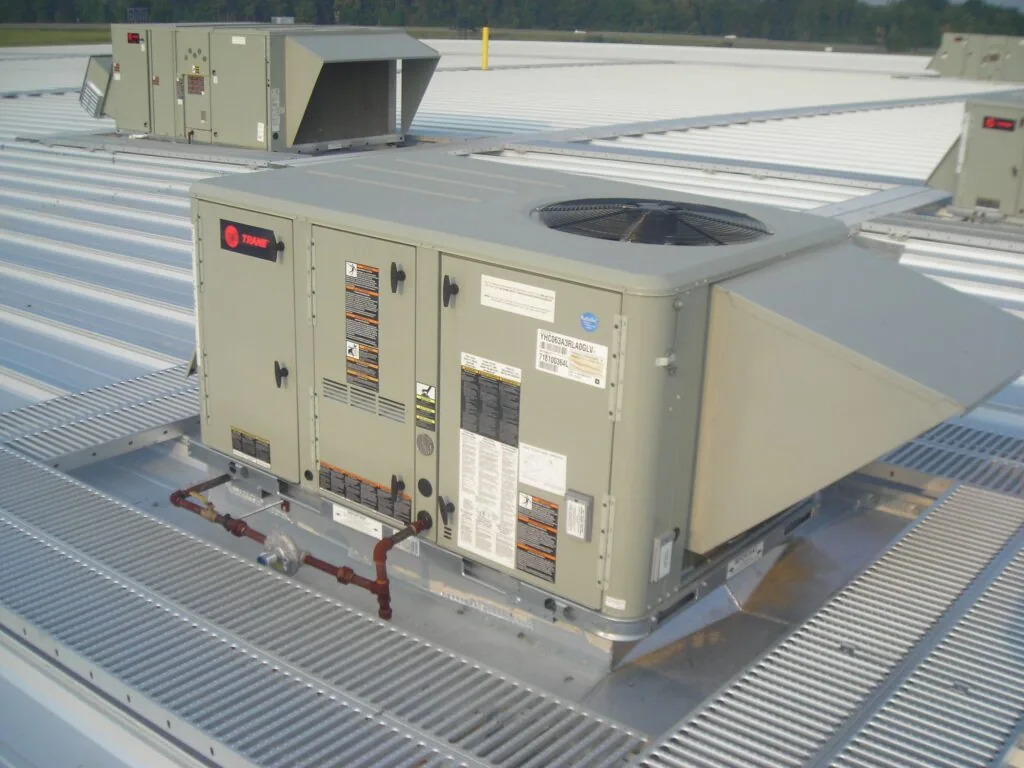
A curb can look intact from above while a split at the lower corner lets water beneath a counterflashing. We photograph the relevant details and follow plausible water paths instead of treating the nearest dark mark as a confirmed leak opening.
What does the building do beneath the roof?
Commercial roofs carry more than weather exposure. Refrigeration lines, exhaust, electrical conduit, roof drains, and service walkways create different details and traffic patterns. At an agricultural-support or packing operation, interruptions near receiving and cooling equipment can have practical consequences. Industrial and employment areas near Airport Boulevard and U.S. 101 serve agricultural processing, packaging, warehousing, and distribution. Those nearby uses describe the district, not the condition of a particular roof, so we confirm each building's equipment and access before choosing a repair.
A maintenance record can also show whether this condition is new. A moisture report can have more than one possible cause. Cool morning air, interior humidity, uninsulated piping, and roof leakage can leave similar marks in different locations. Salinas sits within a coastal valley where summer fog and low clouds are common, but a regional climate pattern cannot diagnose a specific stain. We compare indoor conditions, pipe routes, roof layers, and recent weather history to decide whether a roof opening is likely and whether a targeted moisture survey would reduce uncertainty.

Which repair fits the evidence?
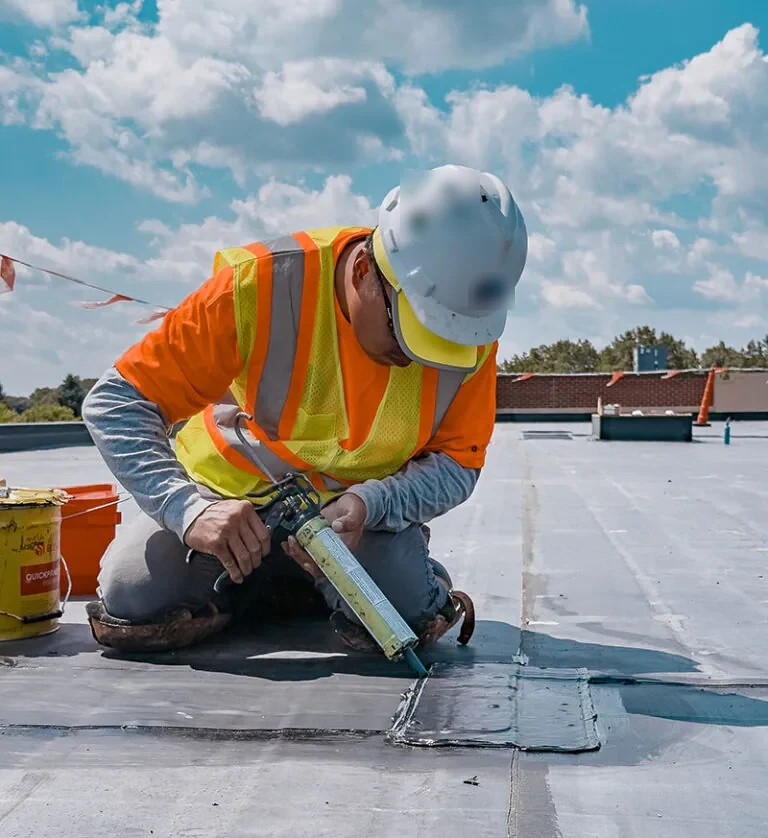
A repair starts with compatible materials and sound edges. On a TPO roof, that may mean cleaning and preparing the surface before making a welded or adhered patch that extends beyond the damaged area. At a pipe, curb, or wall, the correct fix may involve rebuilding a flashing transition instead of laying a flat patch over a moving joint. On modified bitumen or built-up roofing, the preparation and repair method differ. We confirm the existing assembly before selecting materials, whether it is a single-ply membrane, modified bitumen, or another commercial roof system.
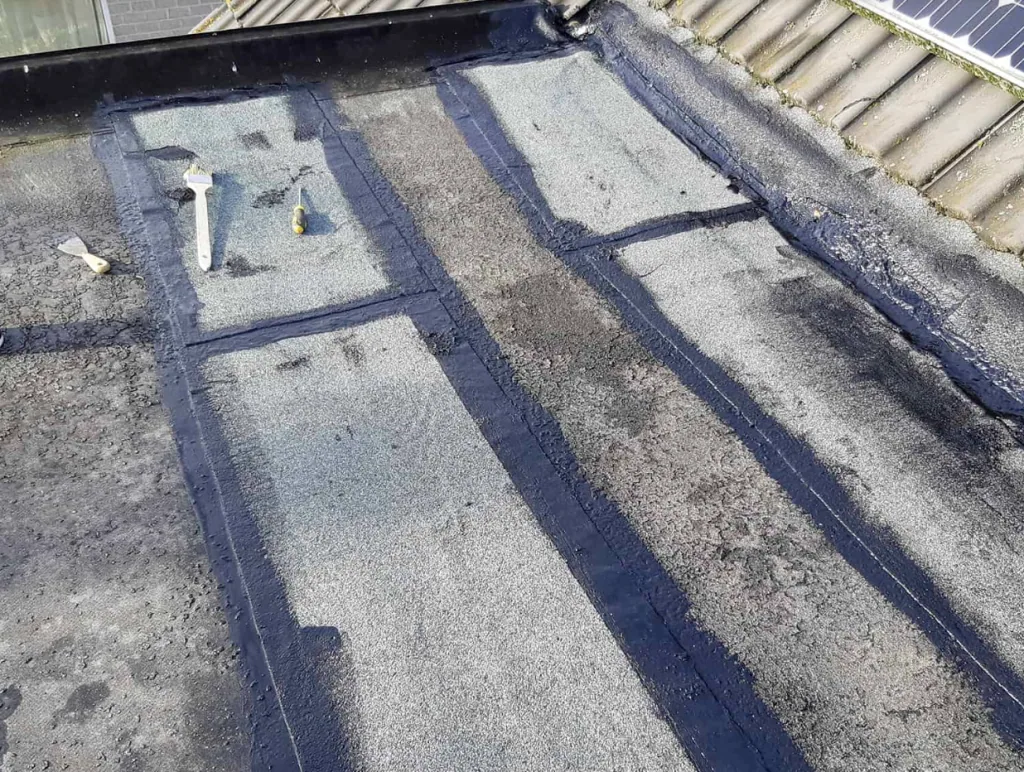
Prior repairs deserve close attention. An old patch can remain sound, or it can conceal trapped moisture, incompatible coating, a loose edge, or movement at the original detail. We document what can be seen and whether a small opening or core sample is warranted. A localized repair should not be represented as a system-wide solution when the inspection finds widespread seam separation, recurring ponding, or deterioration in multiple roof areas that may point toward replacement planning.
Where the origin remains uncertain, the next step can be staged. We may correct a visible defect, monitor a clearly marked interior area through the next rain, or propose a focused moisture survey to map concealed wet insulation. A written scope should separate the immediate leak stop from optional investigative work, list the limitations of each, and explain what finding would change the recommendation. That gives the owner a decision path instead of an open-ended repair allowance.
How should the repair fit the operating day?
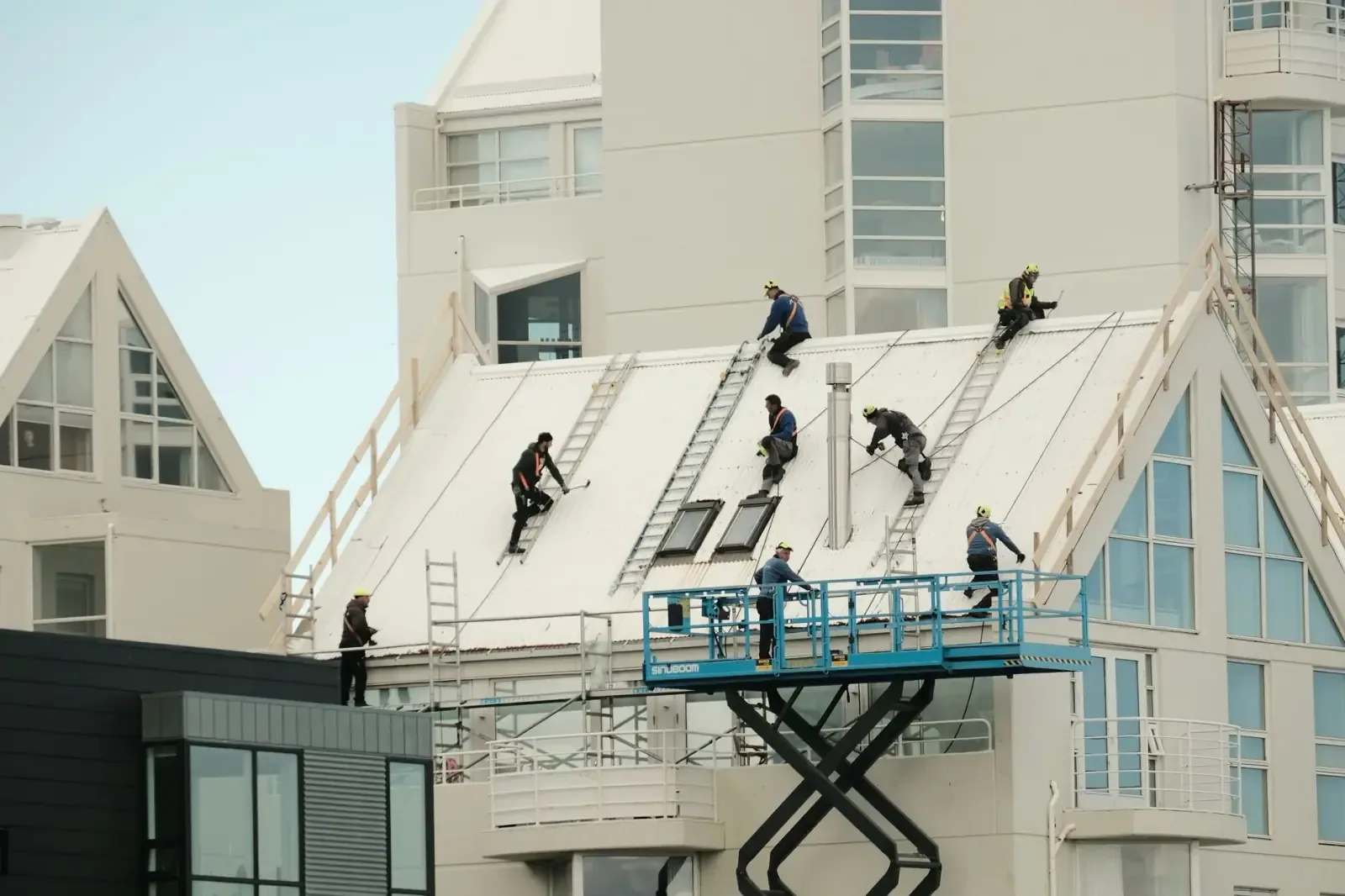
Start with access rules and the activity below the work area. A repair near an intake, loading door, or food-production zone may require isolation, temporary protection, or a different work window. We coordinate roof access, ladder or lift placement, material movement, and any planned interior entry with the property contact. If the building has multiple tenants, we identify which areas need notice and which can remain open.
Weather also affects the sequence. June through September is typically very dry in Salinas, but the project still needs a current forecast and a surface-condition check. Moisture, dew, or wind can change how a repair product is applied and how long it must remain undisturbed. We set a workable window, protect an exposed repair if conditions shift, and tell the owner what must be checked before the roof is returned to normal use.
Repairs that require hot work, adhesives, or removal of wet materials need controls appropriate to the specific roof and building. Before mobilizing, we confirm the repair limits, safe access, fire precautions where applicable, and the person authorized to approve concealed-condition changes. A clear sequence helps the facility team keep deliveries and maintenance activity moving while the roof crew completes the defined work area. For a larger job, we can also compare a repair with an occupied-building reroof plan.
What should the owner receive afterward?
A useful closeout ties the repair to the observed condition. We record the affected roof zone, visible defect, repair materials, completed detail, and any adjacent areas that were not included. Photos should show enough context to locate the work later, not just a close view of new sealant. If the inspection found another concern, the record should identify it separately with a priority and recommended next step.
For a larger facility, the record can be organized by roof section, equipment cluster, or drainage area so a future inspector can compare like with like. That is valuable at buildings in the Airport Industrial Park and Salinas Ag-Industrial Center, where industrial, agricultural-support, storage, and distribution uses are part of the surrounding land-use mix. It does not imply that any named property has a particular roof or a known defect; the documentation belongs to the customer’s own building and inspection.
If a claim may be involved, date-stamped photographs, weather information provided by the owner, invoices, and a clear description of observed damage can help preserve a factual file. We separate direct observations from possible causes and from work completed. The owner can then decide whether to request further evaluation, submit a claim, or proceed with maintenance without presenting an assumption as a finding.
Questions an owner may weigh
These answers address the first repair decisions.
Questions Owners Ask
Can the ceiling stain tell us where the roof is open?
It provides a starting point, not a confirmed roof location. Water can follow the deck or framing before reaching the interior. We compare the reported area with roof details above it and nearby water paths, then document the evidence before selecting a repair.
What if the leak is not active when the inspection happens?
A dry visit can still identify vulnerable seams, flashing, drainage details, or prior repairs. We record what is visible and may recommend monitoring a marked interior area or a focused moisture survey if concealed wet material remains a concern.
Will a patch solve a leak around rooftop equipment?
The equipment curb and its transitions need to be inspected as a complete detail. If the opening is limited to a repairable flashing edge, a targeted fix may be appropriate. Movement, wet insulation, or multiple failing layers can change the scope, so we explain those findings before expanding work.
Can we schedule the repair around receiving or production?
Yes. The workable sequence depends on roof access, the repair material, weather, and the area below the work. We coordinate the access window and protection requirements with the facility contact, then identify any condition that would require pausing or adjusting the repair.
Related Roofing Work
Get a documented leak review
Tell us where moisture appears, what the building needs to keep operating, and when roof access is available. We will inspect the relevant details and provide a repair recommendation tied to observed conditions.