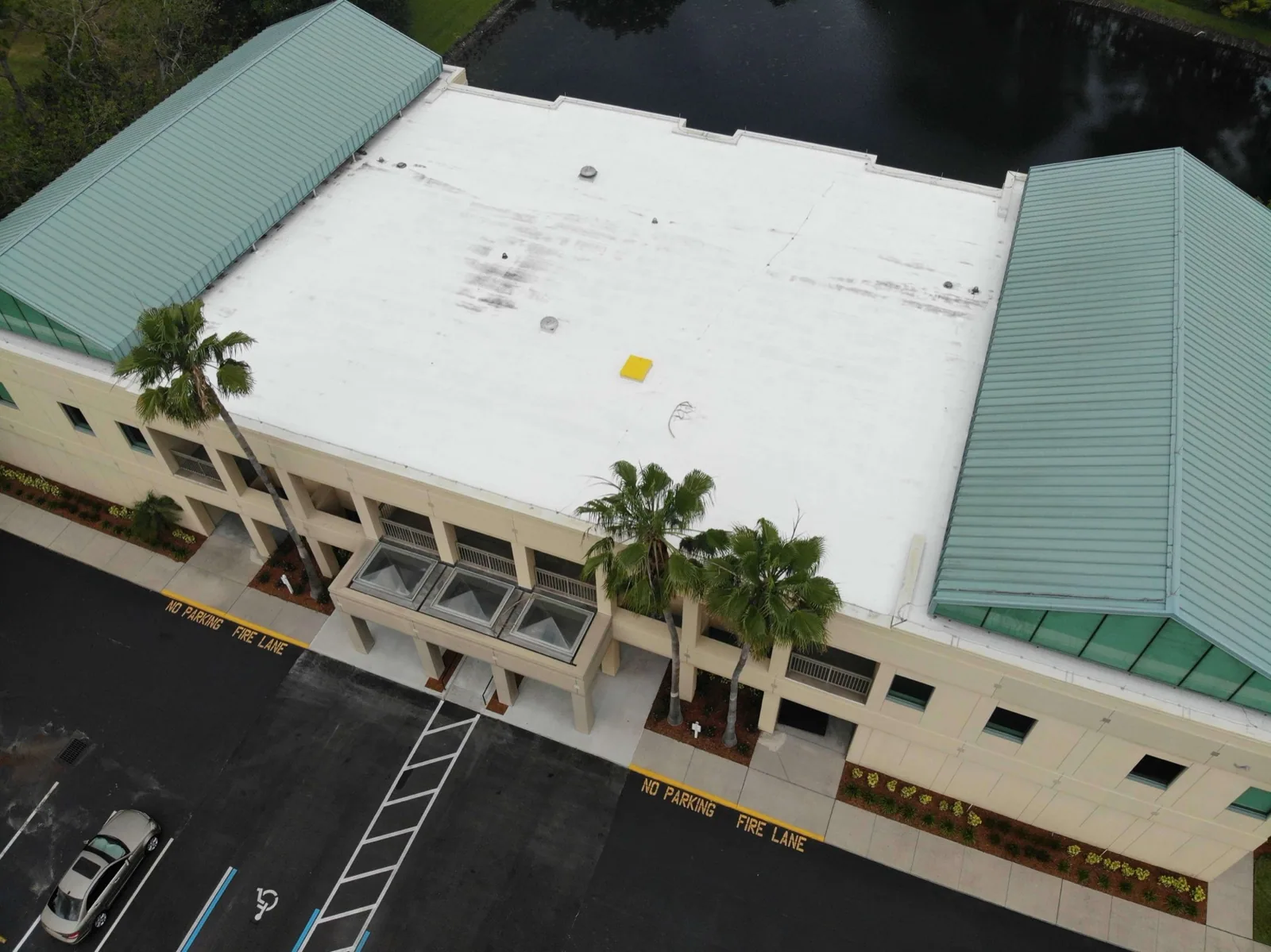
Commercial Roof Recover in Salinas, CA
Evaluate a commercial roof recover in Salinas, CA by checking moisture, assembly limits, drainage, attachment, and future service access.

Overview
A second roof layer can be a practical way to renew a building, but only when the existing assembly can support it. Before recommending a recover in Salinas, a roof inspection checks for trapped moisture, loose layers, unstable deck areas, drainage problems, and details that would be buried. The owner needs to know what remains under the new surface and what conditions would make a tear-off the better choice.
Recover decisions are especially consequential at warehouses and agricultural-support buildings, where rooftop equipment and operating schedules can make future access difficult. We document the current assembly, test areas where needed, and compare the recover scope with removal and replacement. The goal is to choose a system that addresses the evidence while leaving the property team with a maintainable roof.
Is the existing assembly a sound base?
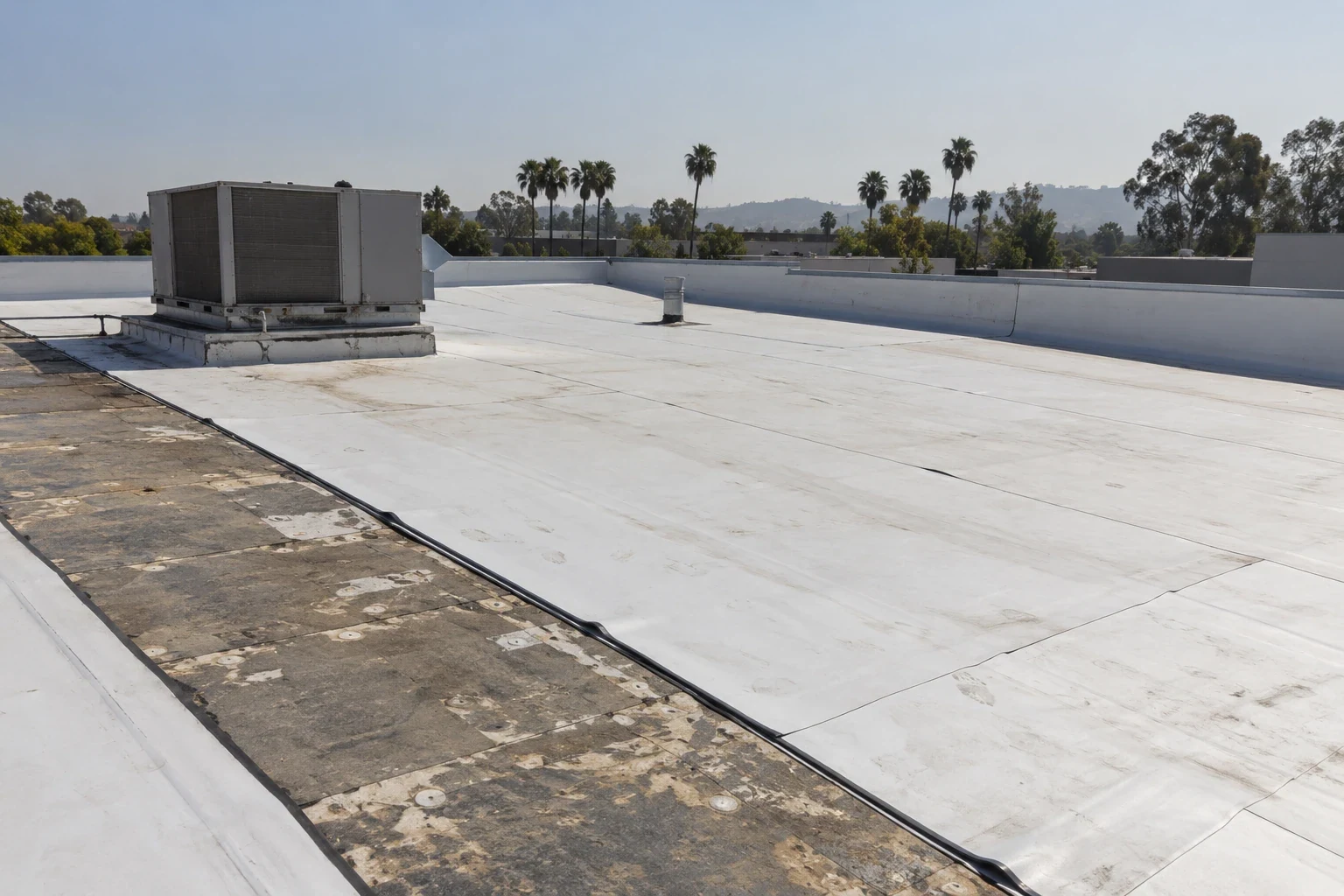
A recover begins with what cannot be seen from the parking lot. We inspect the surface and review repair history, roof plans, leak records, and available maintenance records. A targeted moisture survey using core cuts or other investigation may confirm the number of layers, insulation condition, and deck at selected points. If the roof has wet insulation, delamination, loose material, or repeated failures that extend below the membrane, adding a new layer can trap the problem.
Sampling must represent the roof’s different zones. A dry core near one hatch does not prove that a distant drain area is dry. We choose locations based on reported leakage, ponding, equipment clusters, and visible defects, then explain what the findings do and do not establish. If test results conflict with surface observations, additional samples may be a better investment than proceeding on an assumption.
How many layers can remain?
Existing layers add weight, height, and complexity at edges, drains, equipment curbs, and roof-to-wall transitions. The number of permitted layers depends on the actual assembly, code provisions, structural capacity, and the proposed work. We confirm these constraints before the estimate becomes a construction commitment. If the new surface raises drainage points or covers a flashing termination, the design must address that change instead of leaving a concealed weak edge.
Recover may avoid some removal and disposal, but it does not eliminate preparation. Existing blisters, failed patches, loose coatings, open seams, and unstable flashings need appropriate correction before the new system goes down. The substrate must accept the selected attachment method. For a TPO membrane or EPDM system, we specify mechanical fastening or adhesive for the assembly and explain what may change if hidden deck conditions appear.
Owners can compare a recover with a tear-off through the areas each option exposes, the new insulation and membrane scope, and the future details the facility team will maintain. A recover can be appropriate where the old system remains dry and stable. Where repeated leakage points to widespread concealed deterioration, removal may provide a clearer base and reduce the risk of burying a condition that returns later.
Will drains and edges still work?
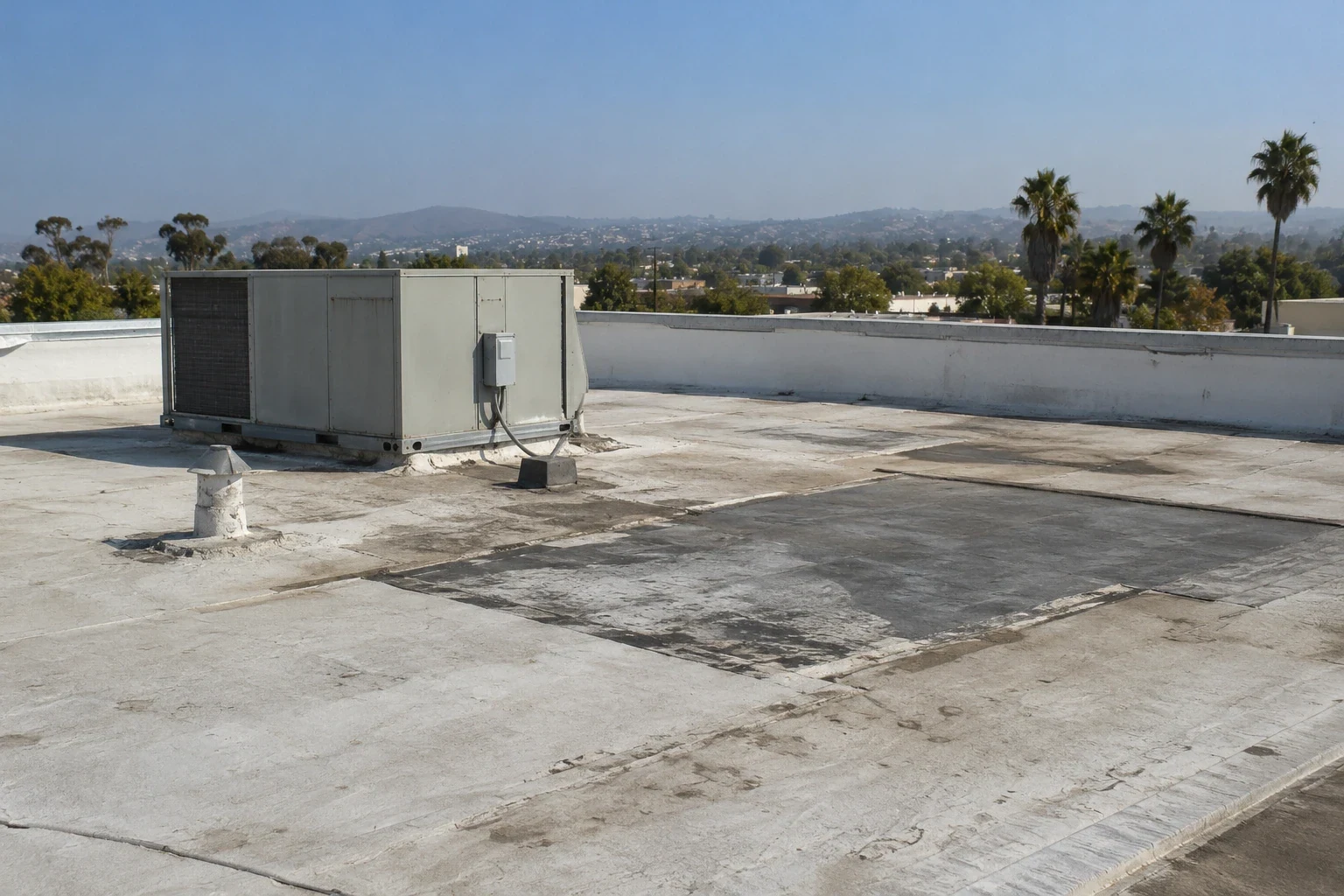
Added thickness changes roof geometry. Drain bowls, scuppers, overflow routes, parapet terminations, expansion joints, and equipment curbs may need extension or rebuilding. We check drain access and flow, old patches, and remaining flashing height. Roof transitions need to remain watertight after the finished elevation changes.
Drainage correction can require tapered insulation or local crickets that move water toward existing outlets. The roof plan should distinguish intended drainage improvements from areas where structural slope or drain placement limits a full correction. A recover cannot promise that every low spot disappears. It can, however, define the intended flow paths and show how the selected detail handles water around the roof features.
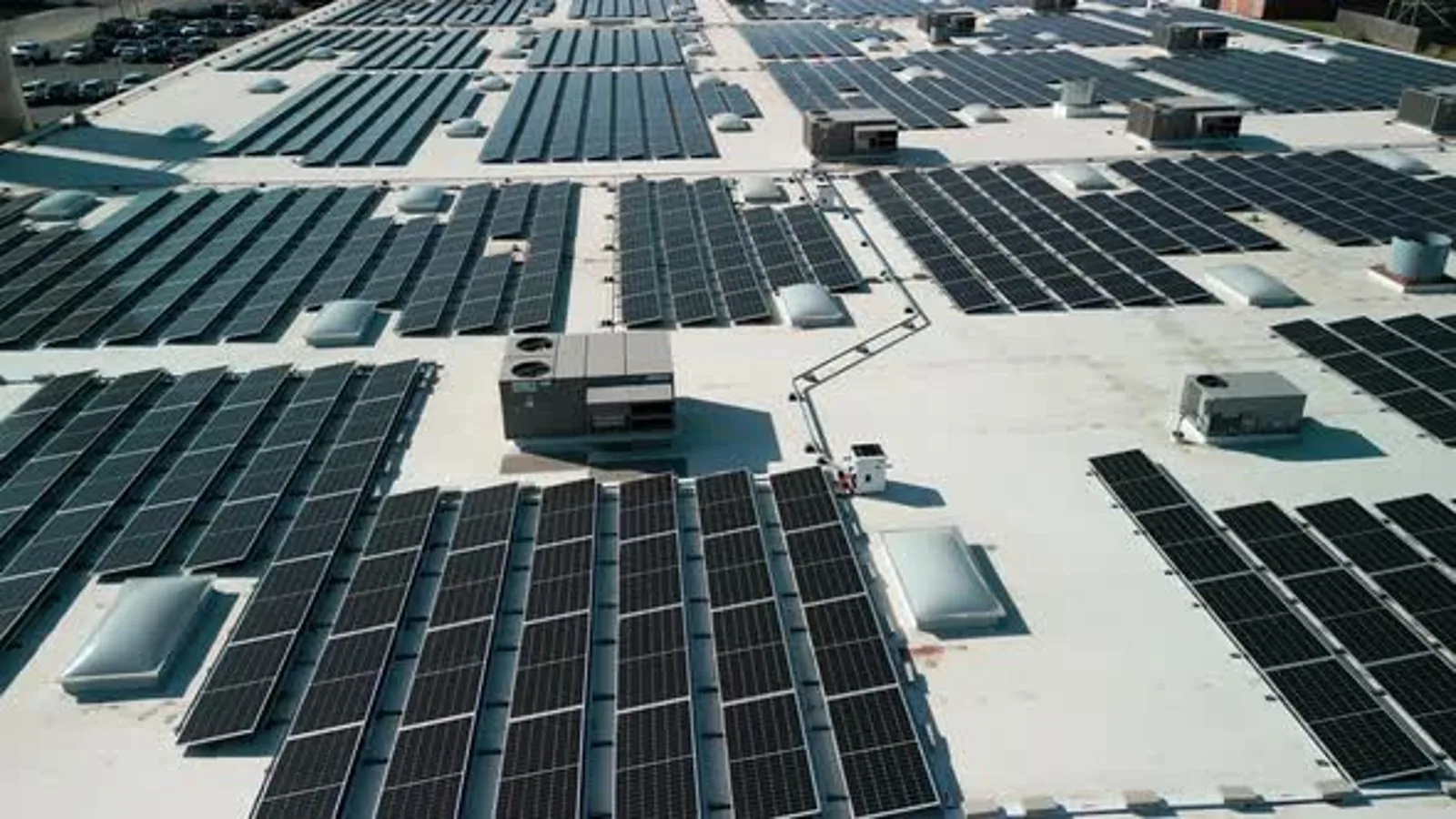
At the Airport Industrial Park, service access may include HVAC equipment, exhaust, or electrical runs that cross the roof. We map those penetrations before overlay work so curbs remain integrated with the new membrane and later service does not require guesswork. A property with extensive equipment may need a more detailed transition schedule than a simple open roof area.
What will work look like on an occupied site?
Recover work still brings deliveries, rooftop traffic, noise, and temporary restrictions. The material route, lift or crane location, roof access point, and protected interior zones should be agreed with the facility contact. At a warehouse or packing operation in Boronda or near the Salinas Ag-Industrial Center, receiving times and equipment use can constrain the work window. We set phases that keep the roof secure at the end of each shift and state which areas remain accessible.
Salinas has a cool-season rainfall pattern and commonly dry summer months. A recover schedule should use that context alongside current forecasts, roof moisture, and surface conditions. Damp substrate or morning condensation can affect preparation and adhesion. If conditions are not suitable, we adjust the sequence instead of covering a surface that has not met the system requirements. Each open area needs an end-of-day protection plan.

When should removal be considered instead?
Tear-off is worth comparing when testing finds wet insulation across several areas, when deck repairs are likely, or when the existing assembly contains incompatible or unstable layers. Removal also exposes the substrate for a more complete evaluation. The choice should reflect the amount of material that remains serviceable, the cost and schedule of removal, and the risk of retaining concealed problems.
We provide the evidence behind each option: core locations, observed moisture, roof layers, repair history, drainage details, and the extent of perimeter work. If only a portion of the roof has failed, selective removal or phased work may be possible. If the assembly is broadly deteriorated, an overlay can postpone rather than resolve the failure. The estimate should make that tradeoff clear.
A recover assessment is not a sales shortcut to one outcome. The same roof can contain dry, stable sections and isolated wet areas. We identify where a recover remains reasonable and where removal is needed, then let the owner compare a defined scope with a full replacement plan. That comparison should account for equipment access, insulation goals, drainage changes, and future maintenance.
What should the recover record preserve?
After installation, the property team needs a record of the assembly that now exists. We identify the materials and roof zones, record repairs to the substrate or drainage, and photograph representative transitions and concealed conditions where possible. The record should show the new elevations at drains, parapets, curbs, and edges so later trades do not cut through the system without understanding the detail.
Older materials remain below the new surface, so retain the original roof plan and repair history with the new documents. Marked sections and equipment references help future inspections locate the correct zone.
For ongoing care, we can create a roof maintenance plan that checks drains, seams, flashings, and equipment transitions at intervals suited to the building. A recover that begins with good testing still needs routine observation. The plan should record the limitations that remain and the findings that would trigger a closer inspection or a future replacement discussion.
Questions Owners Ask
Can a new membrane go over a wet roof?
A recover should not conceal wet insulation or an unstable assembly. We use inspection and selective testing to locate moisture, then define removal or drying requirements before covering the roof. A sample from one area cannot establish that every roof zone is dry.
Is a recover always less disruptive than tear-off?
It can reduce removal activity, but staging, deliveries, equipment access, noise, and daily protection still affect the building. The existing layers and the number of details being rebuilt determine the actual sequence. We compare those constraints for the property rather than assuming the overlay is simpler.
Will an overlay fix ponding water?
Only when the scope includes a workable drainage correction. Added layers can raise drains and change the flow path. We map low areas and outlets, then show whether tapered insulation, crickets, drain modifications, or a different roof plan is appropriate.
How does a recover affect future repairs?
The new roof record should explain which layers remain, where transitions were rebuilt, and what maintenance limits apply. Future leak work may need to account for concealed older layers. We label the roof zones and preserve photos so later inspections can follow the assembly accurately.
Related Roofing Work
Check recover eligibility before choosing the system
Schedule an evaluation that includes the roof layers, moisture checks, drainage, and perimeter details. We will compare a recover with removal based on the conditions found.