
Cold Storage Roofing in Salinas, CA
Inspect cold storage roofing in Salinas around refrigeration equipment, vapor control, condensation, drainage, and operational uptime.
Overview
A cold-storage roof has to protect a temperature-controlled operation from water entry while supporting refrigeration equipment, exhaust, and regular service access. A small flashing failure above a cooler can affect insulation, interior finishes, or the reliability of the space below. We review the roof assembly and building conditions together, then identify what can be repaired and what needs further investigation.
Salinas has agricultural and food-related activity as well as commercial and industrial properties. That market context helps explain why refrigeration equipment may be part of a roof review, but we confirm the actual building use and operating requirements with its team. We do not infer system type or roof condition from a facility’s location.

How does temperature control affect the roof?
Cold rooms and refrigerated process areas can create large temperature differences across the roof assembly. Warm, moist air may move toward cooler layers and condense if the insulation, air barrier, or vapor control is incomplete. A stain or damp ceiling can come from roof leakage, condensation, a pipe, or equipment drainage. We look at the reported area, the roof layers, interior conditions, and nearby mechanical systems before recommending a repair.
The roof design should account for insulation continuity and penetrations through the air and vapor-control layers. We identify where pipes, exhausts, electrical lines, and supports cross the roof and whether their details remain sealed. A manufacturing roof review can address related process equipment, while a warehouse assessment may focus on broader storage and loading concerns. The cold-storage assembly still needs its own temperature and moisture review.
What should be checked around refrigeration equipment?
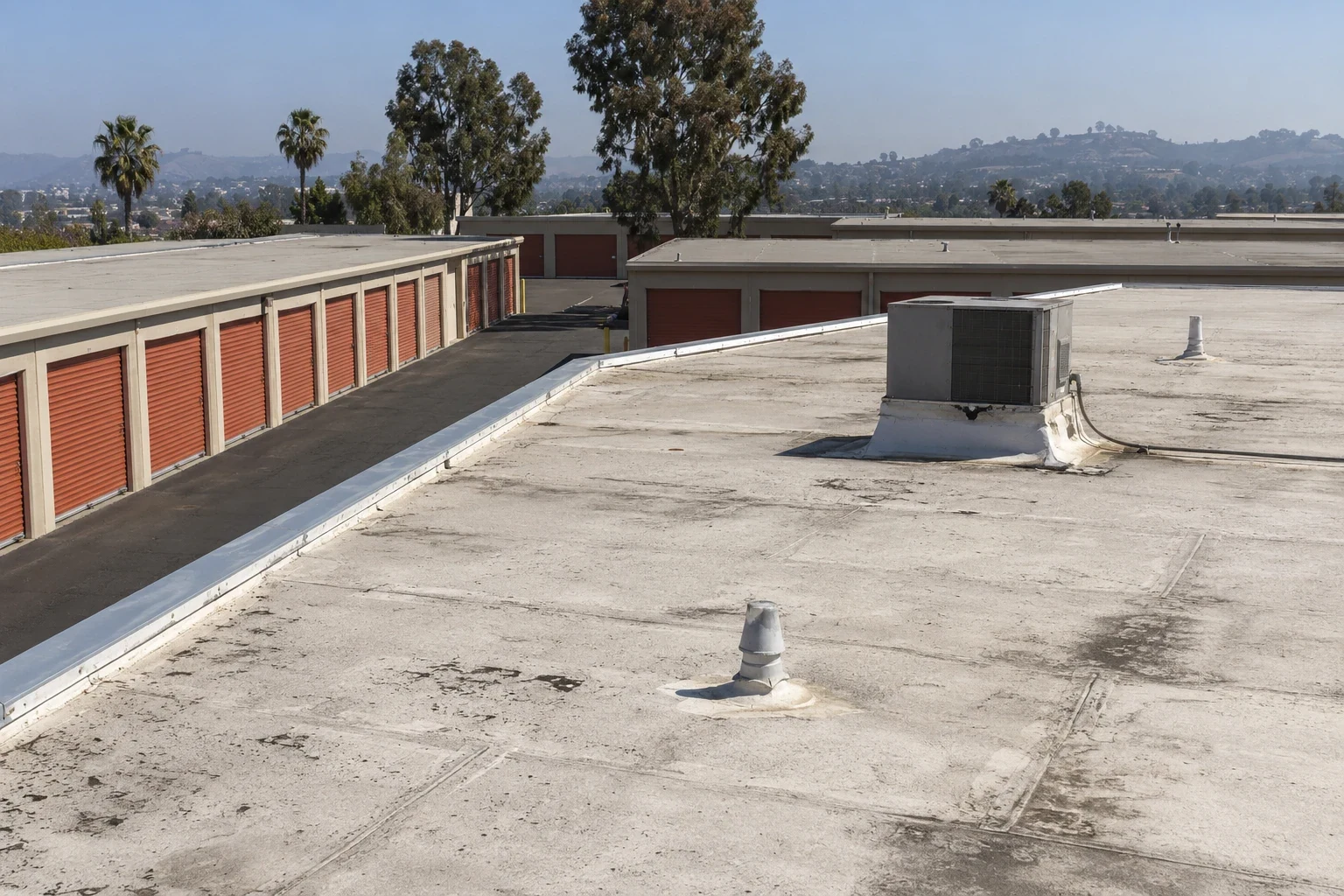
We inspect curbs, refrigerant lines, condensate drains, exhaust fans, electrical penetrations, and the membrane around each opening. Vibration, repeated service access, and equipment replacement can loosen supports or damage flashing. A roof connection needs to remain weather-tight while allowing future mechanical work. We coordinate with the refrigeration contractor before disconnecting or rebuilding a curb, and confirm who protects equipment and interior temperatures during the work.
Condensate routing deserves attention because water discharged onto a roof can collect near a seam or drain. We check where lines terminate and whether supports create an obstruction or puncture risk. Curb and support repairs should account for the installed membrane and mechanical layout. If a unit is being replaced, the roofer needs its dimensions and service plan before the old curb is modified or a new penetration is cut.

How can an owner separate a roof leak from condensation?
Timing and location are useful evidence. A leak that appears after rain may lead to a roof opening, while condensation may track temperature, humidity, process activity, or a change in equipment. Neither pattern proves the origin by itself. We compare interior photographs and dates with weather, roof access, refrigeration service, drain behavior, and the layers above the affected room. Where needed, the investigation can include selective openings or moisture testing.
Once the origin is identified, the repair should address the layer that failed. A membrane patch will not correct an interior vapor-control gap, and a sealant bead at a curb will not repair a wet insulation assembly. Leak tracing and repair documents the likely entry detail and repair boundary; moisture surveys can support targeted investigation when conditions are suitable. We explain what remains uncertain and what evidence would resolve it. The facility can help by logging equipment cycle changes, defrost events, and when moisture appears on interior surfaces. Those records do not replace inspection, but they help distinguish a weather-related opening from a condition tied to temperature or air movement. We also check nearby pipe insulation and condensate routing where they can contribute to water below the roof.
Why do drainage and insulation need to work together?
Insulation can affect drainage when the roof is replaced or reconfigured. Tapered boards may direct water toward outlets, but the design must maintain drain bowl height, overflow capacity, curb clearances, and edge transitions. We inspect where water collects and whether a drain or scupper is open. If a cold-storage roof holds water near equipment lines or a parapet, the project should state whether it will alter the slope or simply renew the surface.
Salinas’ normal rainfall is concentrated in the cooler season, so outlets and overflow paths should be reviewed before sustained wet weather. Cleaning a drain can restore flow but cannot address a low area caused by deck movement. Insulation and cover board planning should follow the actual roof geometry, while drain and scupper repairs need a compatible tie-in to the membrane. The owner should understand how each correction affects temperature control and service access.

How should work protect stored products?
Roof access may pass above active coolers, loading bays, or areas where temperature must stay stable. Before opening the roof, we identify sensitive rooms, inventory, alarms, and any temporary monitoring needed below. The facility team can tell us which unit cannot be shut down and when materials can be staged. We divide the work into zones, keep temporary protection available, and close exposed sections at the end of each shift.
In Salinas Ag-Industrial Center or Salinas Business Park, a facility’s role in agricultural processing or distribution still varies by operator. We confirm the work sequence with the people responsible for its operations. A property in Salinas Business Park requires its own intake, loading, and access map. Occupied-building coordination keeps tenant and production protections aligned with the roof zones under repair or replacement.
When should a cold-storage roof be repaired or replaced?
A localized puncture, open seam, or curb flashing can often be repaired when the surrounding membrane and insulation are dry and stable. Widespread moisture, recurring condensation concerns, repeated equipment-related damage, or deteriorated attachment may call for a larger review. We document the roof and interior evidence separately so the owner can see whether one defect explains the conditions or whether several issues need attention.
Maintenance should check drains, equipment supports, penetrations, walkways, seams, and the coating or membrane condition around service routes. Each visit can log recent mechanical work and any change in interior moisture reports. The property team should retain photographs and repair locations with its refrigeration service records, so the roof condition can be compared with work performed around each curb or line. Preventive maintenance helps maintain that record, and a replacement assessment compares continued repair with a new assembly. The project plan should protect production and stored products at every phase. It should also list who confirms temperatures and interior conditions before each roof zone is reopened to weather.
Questions Owners Ask
Can a roof leak look like condensation in a cold-storage building?
Yes. Both can create moisture inside, and a visible stain may not show its origin. We compare timing, equipment operation, temperature conditions, roof details, and interior evidence before defining a repair.
How do you protect refrigeration equipment during roof work?
We coordinate equipment access and any shutdown with the facility team, then plan temporary protection and the roof sequence around critical units. The mechanical contractor handles equipment connections while the roofer restores the roof detail.
Should cold-storage roofs use more insulation?
The required insulation depends on the assembly, temperature conditions, project design, and applicable review. We inspect the current layers and coordinate insulation choices with roof height, drains, curbs, and vapor-control details.
Can a roof be replaced while the cold room stays in service?
Some projects can be phased so selected areas remain operational. We map sensitive rooms, temporary protection, access, and any shutdown requirements with the facility team before setting the work sequence.
Related Roofing Work
Coordinate the roof with refrigeration operations
Share equipment layouts, temperature-sensitive areas, leak dates, and planned service work. We will inspect the roof and coordinate the repair or replacement plan with your facility team.