
Commercial Roof Edge Metal, Coping and Gutter Repair in Salinas, CA
Repair commercial roof edge metal, coping, and gutters in Salinas, CA with a review of attachment, movement, drainage, and membrane transitions.
Overview
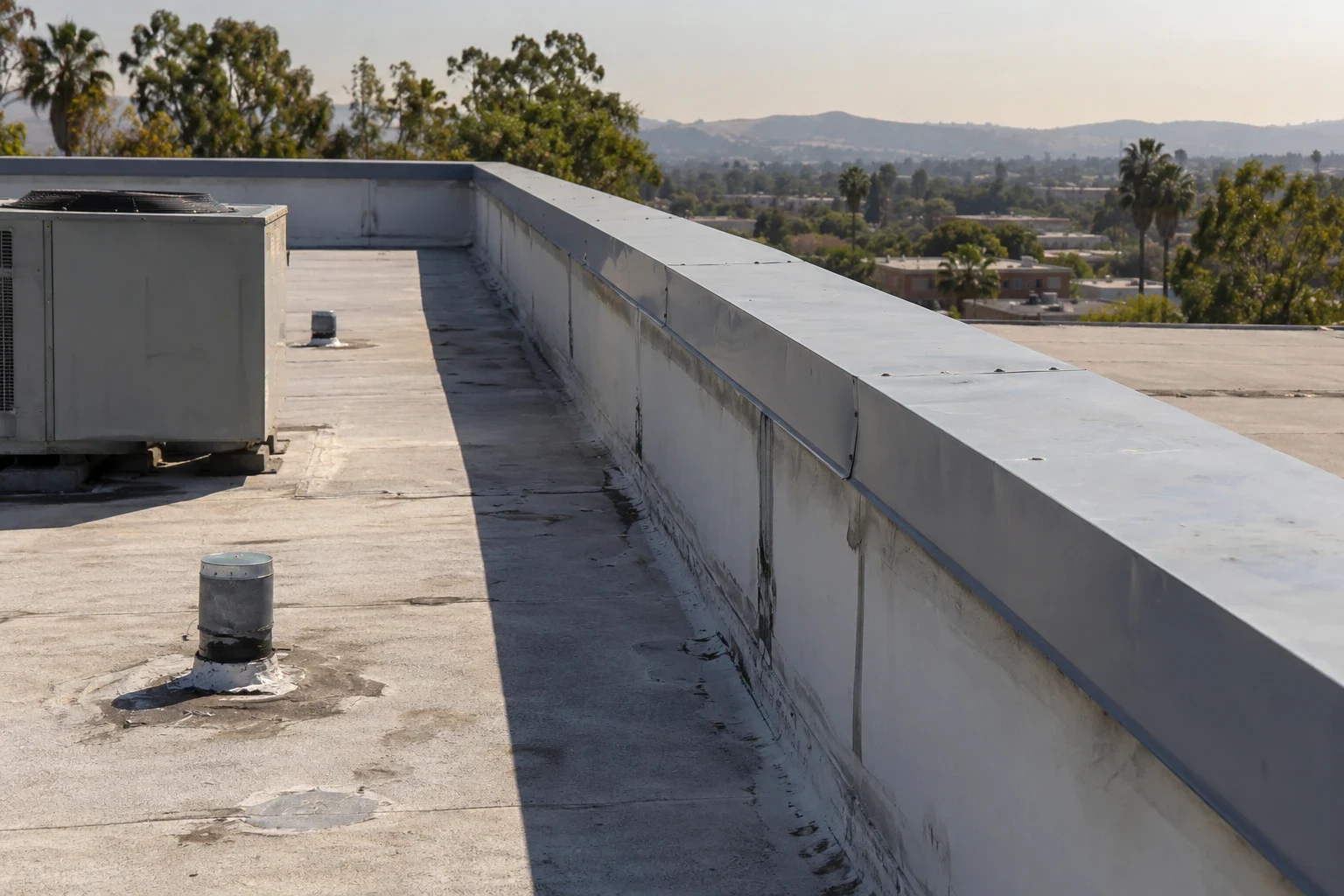
The metal edge is a small part of the roof with a large job: it secures the perimeter and helps move water away from the building. Loose coping, open laps, failed gutter joints, or a separated membrane termination can let water behind the edge before a leak appears indoors. We inspect the metal, fasteners, substrate, and adjoining roof details, then define the repair based on what is actually loose or open.
Salinas’ cool-season rain makes sound drainage and perimeter details worth reviewing before prolonged wet weather. Wind, sun, roof movement, and prior trade work also affect the edge. We record the condition by roof elevation or section and coordinate any repair with the building’s access and operation.

What should be checked at the perimeter?
We inspect coping caps, cleats, joints, corners, fascia, gravel stops, gutter hangers, downspouts, and the transition from metal to the roof membrane. Fasteners can loosen, metal can deform, and seams can open as the assembly moves. A bead of sealant does not replace a missing cleat or a loose edge detail. The scope should identify whether the metal needs resecuring, a new splice, or rebuilding.
Water stains below an edge can originate at a wall transition, gutter overflow, parapet cap, or roof membrane termination. We check where the water flows, whether the gutter has a clear outlet, and whether the edge directs discharge away from the wall. If the leak path is unclear, we record what needs closer review instead of treating the nearest metal joint as a confirmed origin.
At corners and changes of plane, metal details must overlap and move without opening a path into the roof assembly. We look for loose ends, split seams, damaged coatings, incompatible sealants, and work performed by other trades. Photos show both the edge and nearby membrane so the repair can be located and compared during a later inspection.
How does movement affect metal details?
Metal expands and contracts as temperature changes. Long runs, corners, end laps, and penetrations need details that accommodate that movement while keeping water out. Rigidly sealing a moving joint can shift stress to another point or split the seal. We review the existing attachment and splice, then repair the detail using a method appropriate to its material and roof connection.
The parapet cap also has to shed water. A poorly lapped joint, loose cleat, or damaged corner can send water behind the wall surface. If the wall assembly or coping substrate has deteriorated, attaching new metal without correcting the support may not solve the condition. We identify what is visible and whether a limited opening is needed to confirm concealed support.
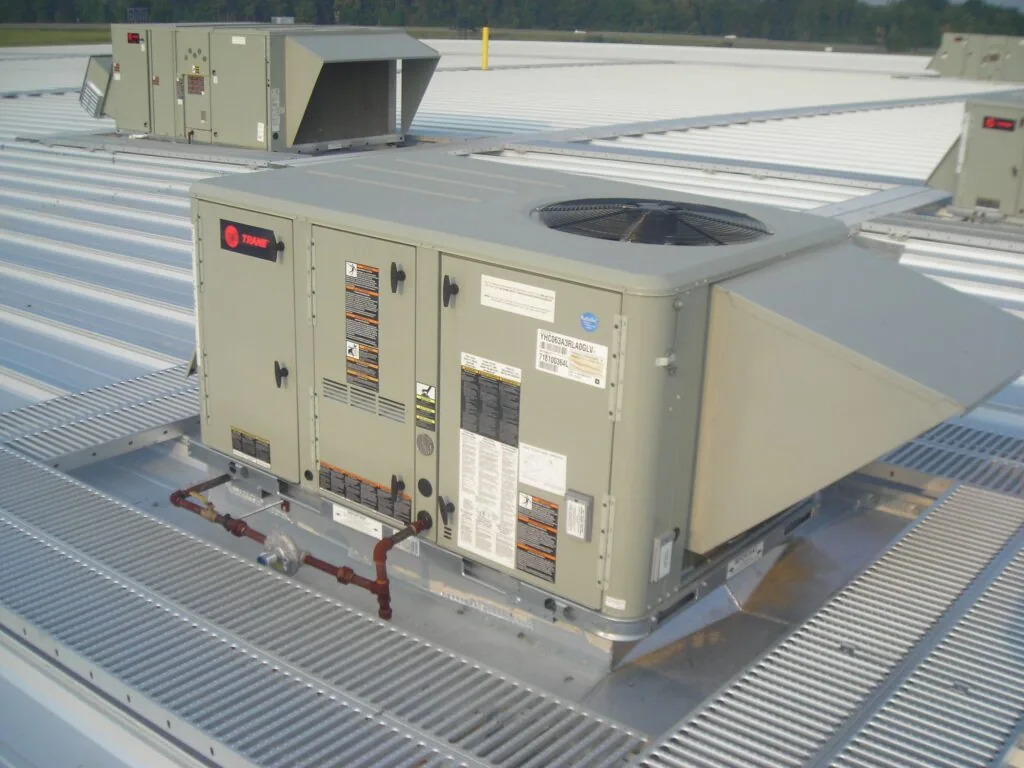
For a metal roof, panel seams, ridge details, gutters, and eave trim work together. A repair at one edge should not restrict panel movement or redirect water toward a fastener line. We inspect the adjacent roof system and state where a metal-fabrication or broader repair scope is needed rather than adding surface sealant to every joint.
Will gutters and downspouts discharge correctly?
Gutters need a clear channel, secure hangers, sound joints, and an outlet that carries water away from the wall and foundation. Debris can collect during dry periods or nearby roof work. A bent section may hold water, while an undersized or obstructed downspout can overflow during rain. We record the condition and identify whether cleaning, adjustment, repair, or a design review is appropriate.
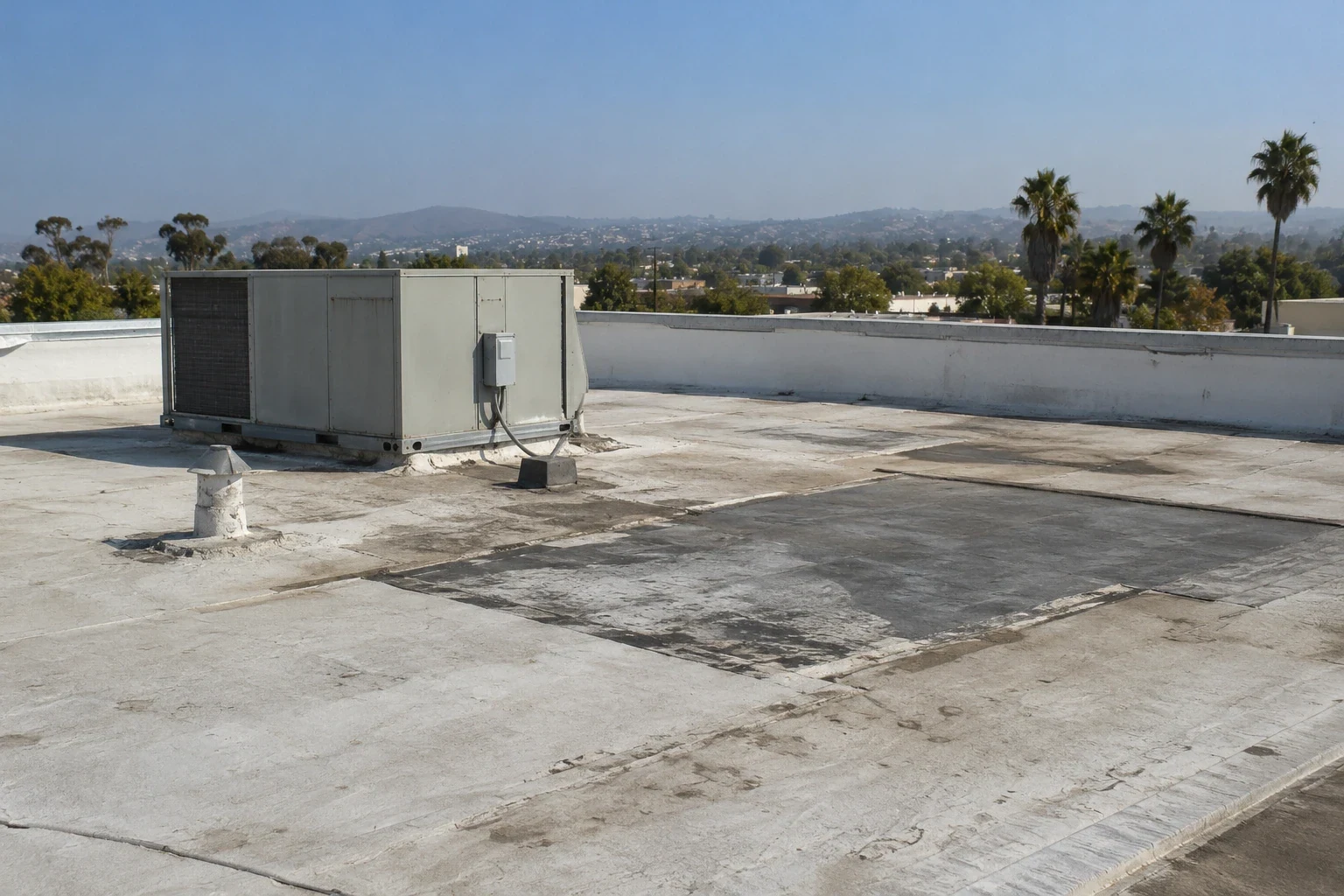
Roof edges and drains form one water-management system. A gutter problem may begin at the roof slope or membrane termination, and an edge repair may need to connect with drain and scupper work. We check how water moves across the surface, over the edge, and into the discharge route before recommending a change.
Buildings near Airport Industrial Park or Abbott Street may have loading, service, or pedestrian areas near the discharge point. The facility team can identify where runoff creates a safety or access concern. We describe the roof-side correction and record when a ground-level drainage change should be coordinated with site or civil work.
Which repair materials are compatible?
Compatibility depends on the metal, coating, adjacent membrane, and movement at the detail. Aluminum, galvanized steel, and other metals can respond differently to fasteners and sealants. A membrane flashing may need a compatible transition rather than direct contact with a metal surface. We identify the materials where possible and specify preparation, fastening, and sealant or membrane products for the repair.
Existing coatings and corrosion need careful review. Cleaning or priming may be necessary before a new coating or sealant can bond. If corrosion has reduced the metal’s integrity or the substrate no longer holds fasteners, a patch may only delay a more complete replacement. We document the extent visible and define the point where new metal is required.
Repairs should account for water flow and future access. A gutter joint should remain serviceable for cleaning, and coping should permit inspection of its seams. We avoid closing a detail in a way that makes later maintenance difficult. The owner receives the repaired boundary and any locations that still need periodic review.
How should the repair be scheduled?
Metal work can involve ladders, lifts, roof access, work near public paths, and temporary removal of edge components. We plan the work zone with the facility contact and confirm fall protection, access control, and any equipment or tenant constraints. If the building remains occupied, we coordinate the ground area below the repair and protect materials from entering loading or pedestrian routes.
Cool-season rain can interrupt metal and membrane work. Summer fog and low clouds may leave a surface damp in the morning, even when the weather is otherwise dry. We check the actual substrate and forecast before applying sealants or completing a membrane transition. If a joint must remain temporarily protected, the owner receives a clear record on the limits and follow-up.
At a property in Salinas Ag-Industrial Center or Gonzales, the site contact may need to preserve receiving or equipment service access. We plan staging and debris removal around those needs. A defined sequence reduces the chance that the repair blocks a route the facility uses during the shift.
What should the owner see in the closeout?
The closeout identifies the elevation or roof zone, metal component, observed failure, materials, attachment or splice repair, and photos before and after. It states whether the repair was limited to visible conditions and whether concealed substrate remains unverified. If gutter flow or downspout discharge needs follow-up, the owner can see that separately from the roof-edge work.
A roof plan with labeled edges helps the facility team compare repairs over time. The maintenance visit can check the same coping seams, gutter joints, and membrane transitions after rain or other work. If the metal repair is part of a broader roof project, the file should show how the new edge integrates with the membrane and insulation plan.
We can pair the repair with a roof condition inspection or a maintenance program. If the roof field also shows repeated leakage, the owner may request a broader repair assessment. Each recommendation should identify the finding that supports it.
Questions Owners Ask
Can new sealant fix loose coping?
Sealant alone may not restore a loose cleat, open splice, or weak substrate. We inspect how the cap is attached and how its joints move, then specify resecuring or rebuilding where needed. Sealant is used only as part of a compatible detail.
Why does water appear inside below the roof edge?
It may enter at a coping joint, membrane termination, gutter, wall transition, or nearby roof detail. We trace the likely water path and compare it with interior reports. A closer inspection may be needed if the entry point is concealed.
Should gutters be included with a roof inspection?
Yes, where gutters and downspouts serve the roof area. We check flow, hangers, joints, outlets, and discharge. A maintenance visit can clear debris, while damaged metal or a poor drainage route may need separate repair work.
Can the edge be repaired without disrupting the building?
Often, when access and the area below can be protected. The sequence depends on metal removal, height, nearby activity, weather, and whether a lift or work zone is needed. We coordinate those limits before the repair starts.
Related Roofing Work
Secure the roof edge and drainage path
Tell us where water appears, which edge or gutter is affected, and what access the property allows. We will inspect the metal and adjacent roof detail before defining the repair.
