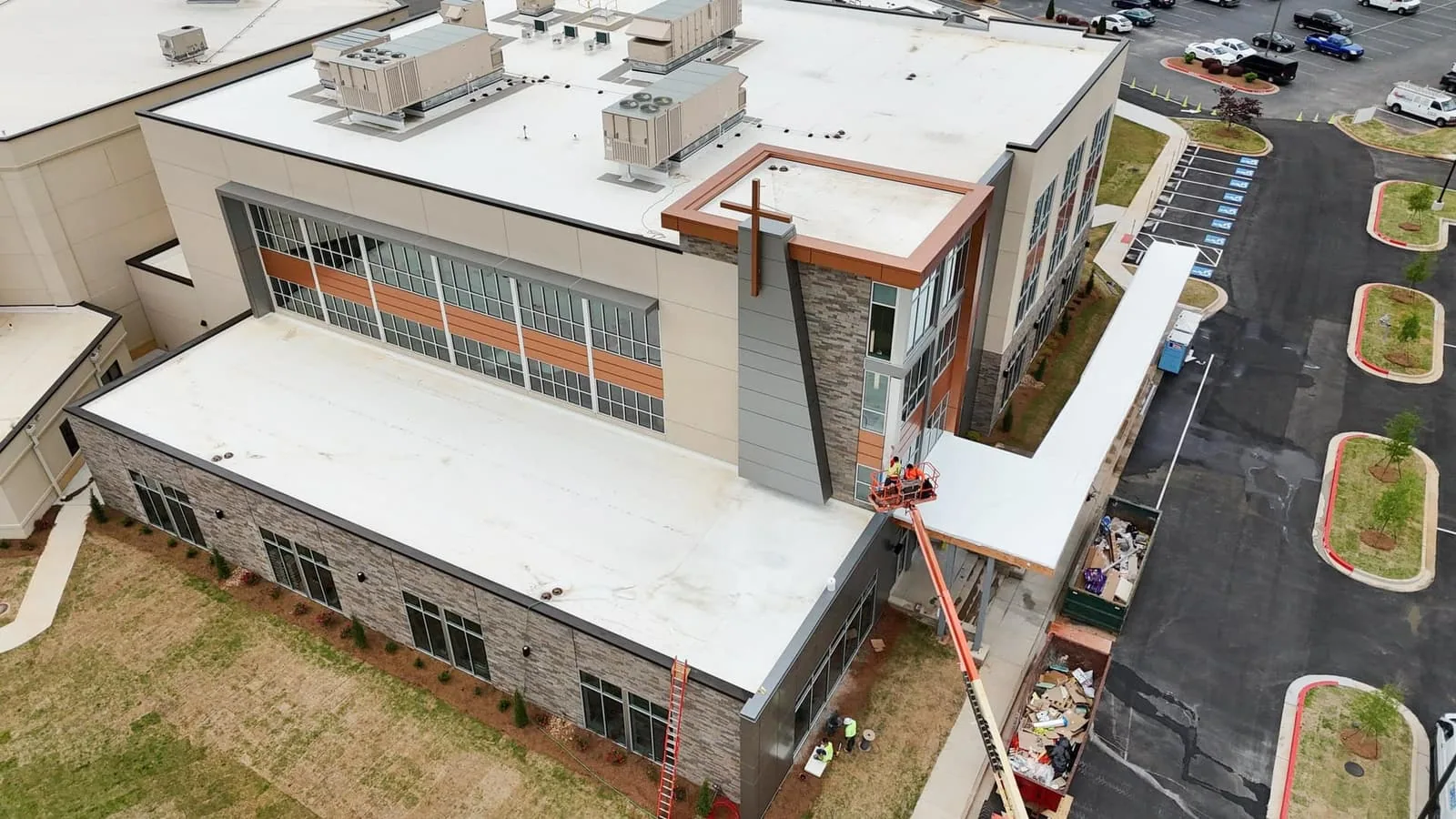
Commercial Roofing on Abbott Street, Salinas, CA
Roof inspections, leak repairs and planned replacement along Abbott Street in Salinas, with scopes tied to access, drainage and operating schedules.
Overview
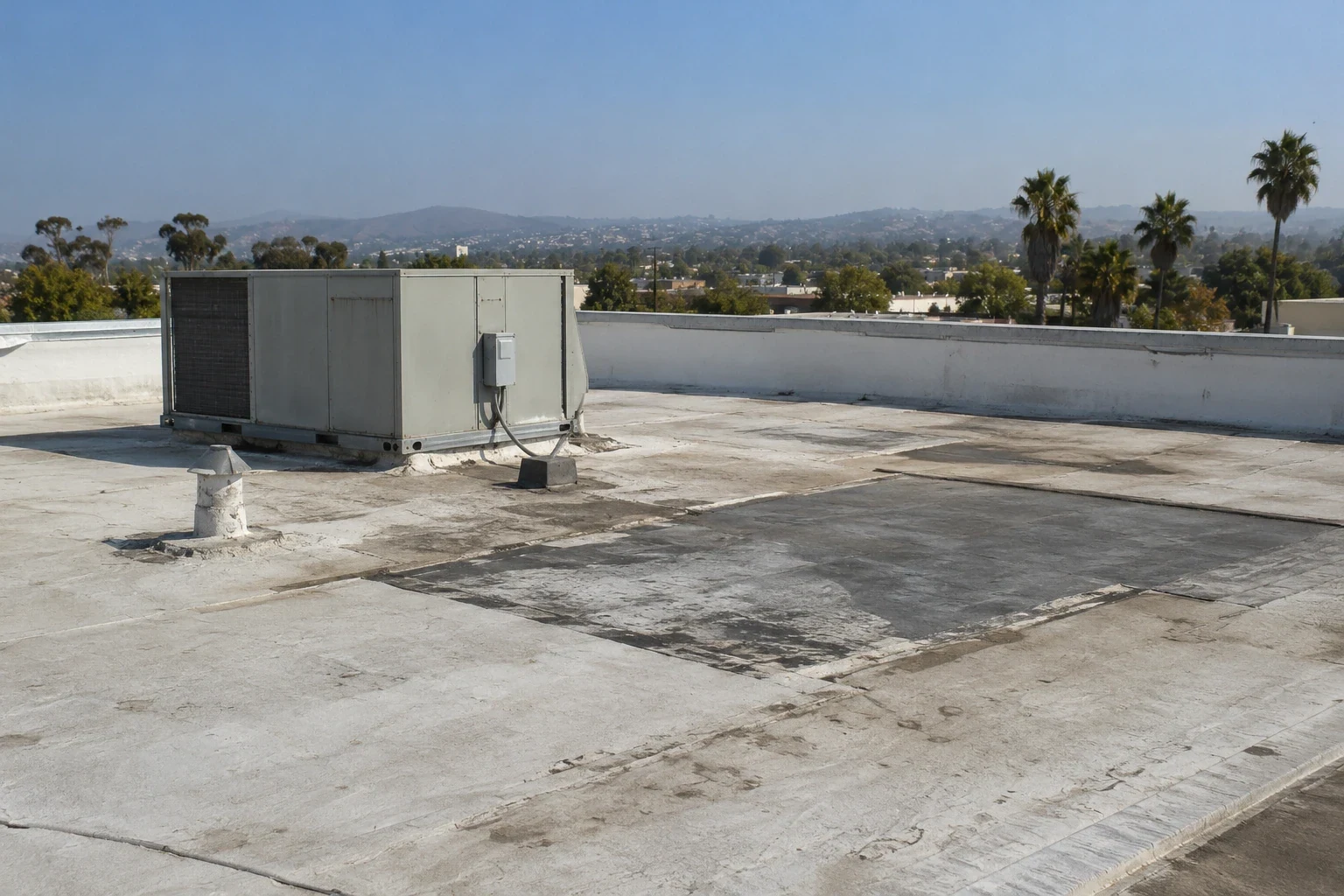
Commercial properties along Abbott Street need roof work mapped to the actual building and access route. Salinas includes Abbott, Lower Abbott, and Abbott Street Extension as separate opportunity areas, with focused-growth planning along the corridor. Those references describe an area, not an individual property’s roof or business. We inspect the installed system, the reported leak zones, and the entry conditions before deciding whether to patch, investigate, maintain, or compare replacement.
The City’s transportation analysis evaluates Abbott Street segments near Sanborn Road, John Street, and Harris Road. Those intersections can help locate the corridor for a site visit, while a property contact confirms current gate, loading, and roof-access instructions. A commercial roof inspection records visible conditions by zone and gives ownership a practical starting point for setting a repair boundary.
How should an Abbott Street roof be reviewed?
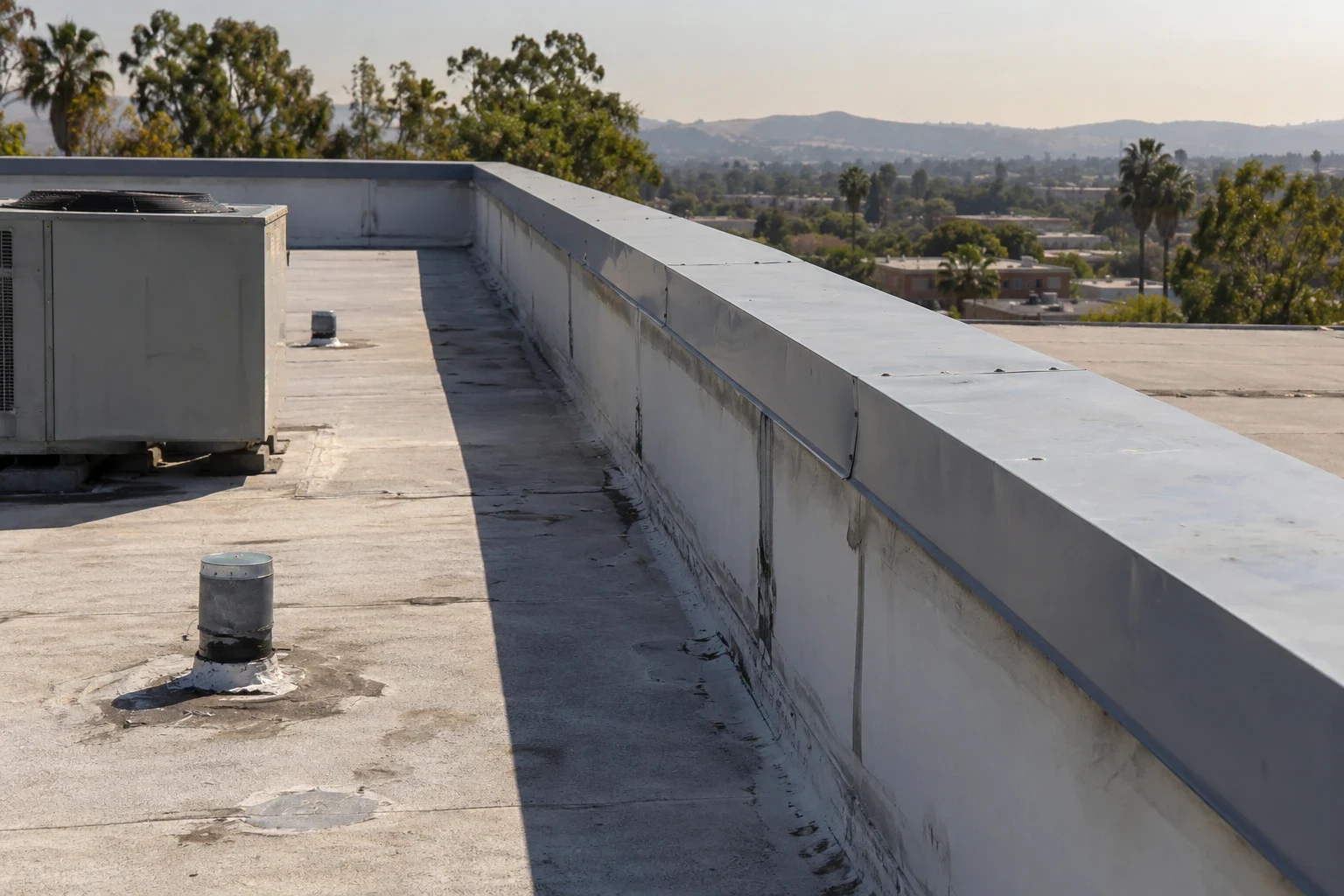
Start with what the building can confirm: its roof assembly, repair history, drain path, penetrations, and access window. We do not infer membrane type or condition from a corridor map. A roof walk checks seams or panel joints, flashing, edge metal, equipment curbs, skylights, drains, and transitions between roof levels. If a leak is reported indoors, we compare its timing and location with those roof details instead of assuming the nearest opening is the origin.
Abbott Street and Harris Road appear together in City planning references for the Salinas Ag-Industrial Center, and Sanborn Road is another corridor evaluated in the local transportation analysis. Where a portfolio includes the Salinas Ag-Industrial Center or West Market Street, keep separate roof maps and repair histories for each property. The same city setting does not make their assemblies or access conditions alike.
What should the crew trace after a leak report?
Water may enter at a seam, curb, wall transition, or drain edge, then travel beneath a roof layer before appearing in a room. We ask for the date, interior location, conditions when the leak appears, and any prior repair. On the roof, we inspect nearby outlets and transitions as well as the most obvious detail. That makes it easier to see whether the suspected entry point sits within a local defect or a wider area that needs testing.
Salinas receives most normal precipitation during the cool season, so outlets, scuppers, and flashing deserve a look before sustained rain. We record debris, standing water if present, membrane condition around the outlet, and the route to discharge. An outlet and scupper repair can address a defined drainage detail. If moisture may extend beyond the visible leak, an infrared moisture survey can help identify candidate zones for further review when conditions suit the method.
Seasonal fog and low cloud cover in the Salinas Valley can leave roof surfaces damp during morning work windows. We check current conditions before inspection or material preparation and schedule any surface-sensitive work for an appropriate time.

When is a patch enough for the observed condition?
A repair can be a sound option when damage is limited, nearby material remains suitable, and a compatible connection can be made. We inspect the defect and surrounding area, confirm the membrane or panel detail as far as available evidence allows, and describe the repair’s limits. A split seam with sound material nearby is a different scope from wet insulation, failed edge metal, or deterioration appearing across several roof zones.
If a patch has reopened, leak reports cover multiple rooms, or concealed moisture may extend beyond the visible opening, we explain what additional testing could change the decision. A commercial roof repair should identify the defect it addresses, the area included, and any adjacent condition left outside that boundary. For wider deterioration, a roof recover review compares retaining the existing assembly with removal, subject to layer count, moisture, attachment, drainage and transition heights.
Those findings also shape timing and cost. The number of details, access equipment, materials to remove, interior protection, and sequence around building use all affect the scope. We show these components separately so an owner can compare a local repair with broader work using the same roof information.
Which access details belong in the work plan?
Before mobilization, the property contact should confirm where crews check in, how they reach the roof, what areas stay open, and where materials may be staged. Abbott Street segments near John Street, Sanborn Road, and Harris Road are useful map references, but a specific property’s delivery route and rules need to come from its site contact. We coordinate the repair sequence with tenant entry, receiving windows, and equipment that cannot be interrupted.
A phased project should show which roof section is active, what protection is provided below, and how the work closes at the end of each shift. If a repair must pause until a later access window, the proposal should identify the temporary measure and return point. For a building that stays occupied, an occupied-building roof sequence can set out notice, area limits, and daily closeout.
Local planning may change around opportunity areas, so an owner should confirm any active access restrictions before scheduling a lift or delivery. We use that information alongside roof geometry, drain placement, and the work sequence to keep the project scope tied to the property.
What findings help with the next roof decision?
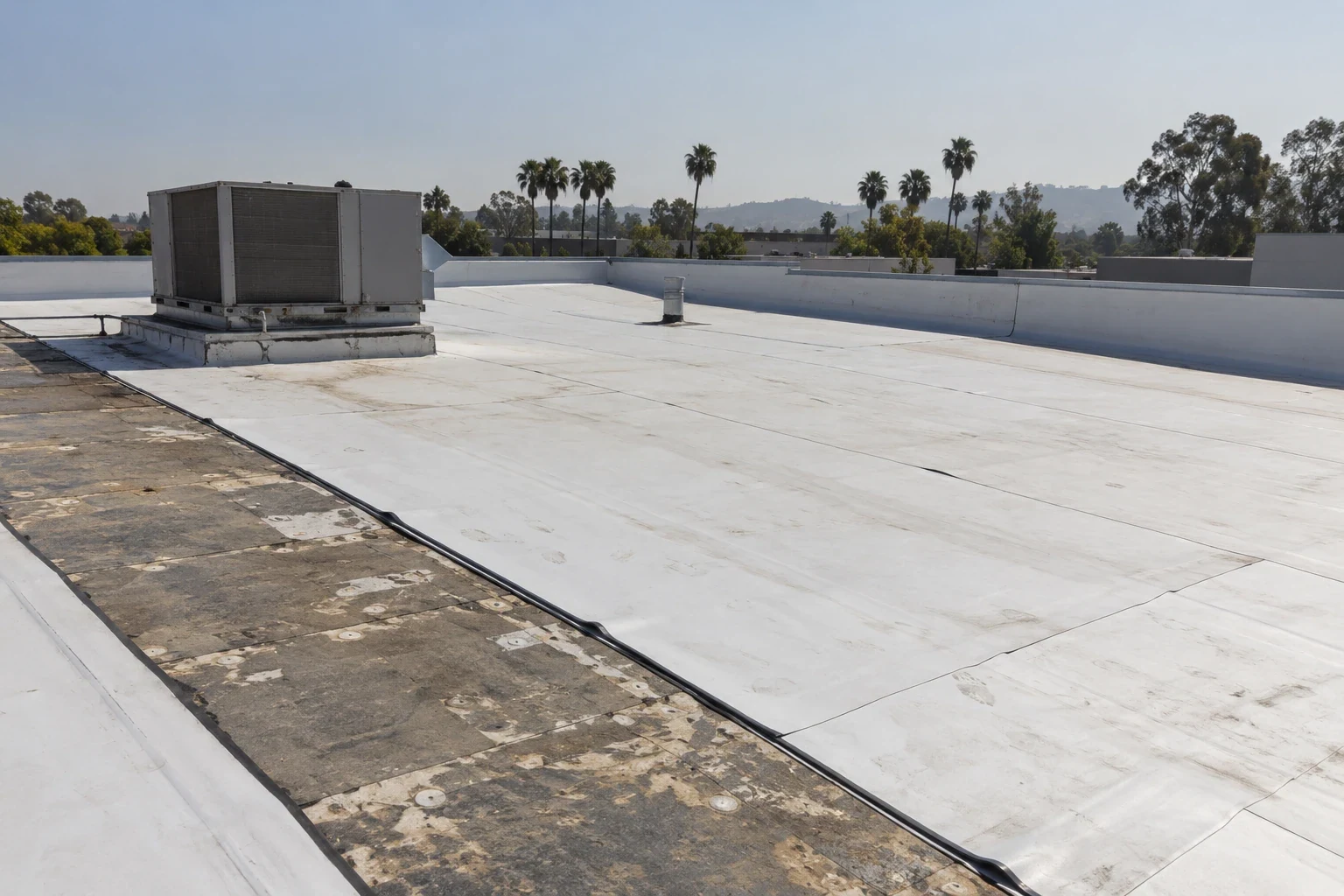
Keep photos, leak dates, repair invoices, and roof plans together by area. A useful condition record says what the inspection reached, which details were visible, and which questions still need an opening or test. It should distinguish completed work from proposed work so a later manager can tell what changed. Where roof access was limited, record the section and the arrangement needed to return.
On Abbott Street, an owner may be weighing one immediate leak repair against a roof project that can be planned with other capital work. A roof condition report can organize observed defects and follow-up priorities. A scheduled return visit can revisit drains, seams, flashing, and equipment curbs during an agreed access window. These records help ownership compare the roof’s condition over time without assuming that one repaired detail resolves every open item.
When the recommendation includes a repair now and a broader review later, the report should name each roof zone and the decision that remains. That gives facilities staff a clear handoff for scheduling, budget planning, and interior coordination.
Questions Owners Ask
Is Abbott Street itself the boundary for a roof inspection?
The inspection boundary follows the property and roof areas the owner makes available. Abbott, Lower Abbott, and Abbott Street Extension are commercial opportunity areas in Salinas; the site contact confirms the building, access point, and scope.
What should an inspection cover after winter rain?
We check the drain path, scuppers, seams, wall transitions, penetrations, and the reported interior location. The roof record should show what was inspected and which repairs need attention before wet weather.
Can the same crew inspect a property near Sanborn Road and Harris Road?
A roof visit can cover a property when access is arranged. We confirm the exact building and check-in requirements with its contact, then keep findings tied to that roof rather than to a roadway intersection.
How do I know whether repair or replacement is the better scope?
The decision follows the observed area, nearby material condition, moisture findings, and repair history. We describe a limited repair where it fits and compare recovery or replacement if broader conditions affect multiple zones.
What should I send before arranging work along Abbott Street?
Roof plans, leak timing, prior repair records, building hours, and the person who can arrange roof access will help focus the first visit. We can then outline any testing or interior coordination needed before pricing the work.
Related Roofing Work
Arrange an Abbott Street roof review
Share the property location, roof access contact, leak history, and operating hours. We will record visible conditions by zone and set out the next repair or investigation step.