Commercial Roofing in West Market Street, Salinas, CA
Commercial roofing along West Market Street in Salinas, with inspections, repairs, drainage reviews and phased replacement scopes for active properties.
Overview
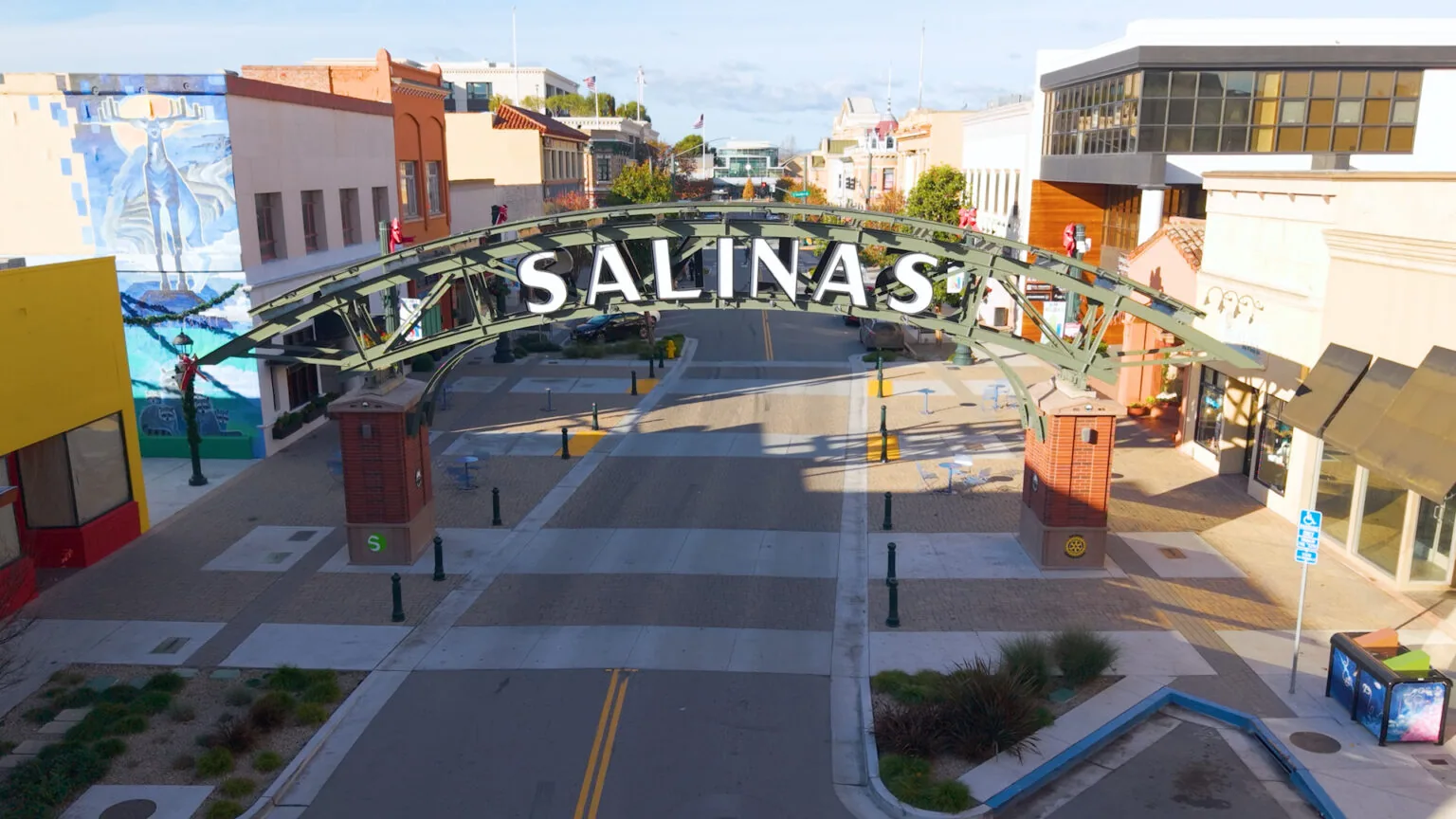
A commercial roof along West Market Street may need repairs planned around the activity inside the building and the access available above it. West Market is near Davis Road, a commercial corridor where property access and operating schedules can affect roof work. Those plans give a useful geographic frame; the roof type, leak path, and entry route still have to be checked at the property. We begin with the assembly, drains, seams, flashings, and equipment that can affect the work.
Salinas Valley summers include long periods of fog and low cloud cover, while the city’s normal rainfall is concentrated in the cool season. That pattern makes it useful to record both morning surface conditions and how water clears after rain. A commercial roof inspection can map findings by roof zone and distinguish a current leak from a maintenance item before the owner chooses a repair or wider scope.
What does the West Market setting change?
West Market Street at Davis Road serves commercial properties with varying access and delivery needs. We confirm the current building use, roof access, drain locations, and any nearby work that could affect staging before setting a sequence. We confirm the building’s use, roof access, drain locations, and any nearby work that could affect deliveries or staging before we set a sequence.
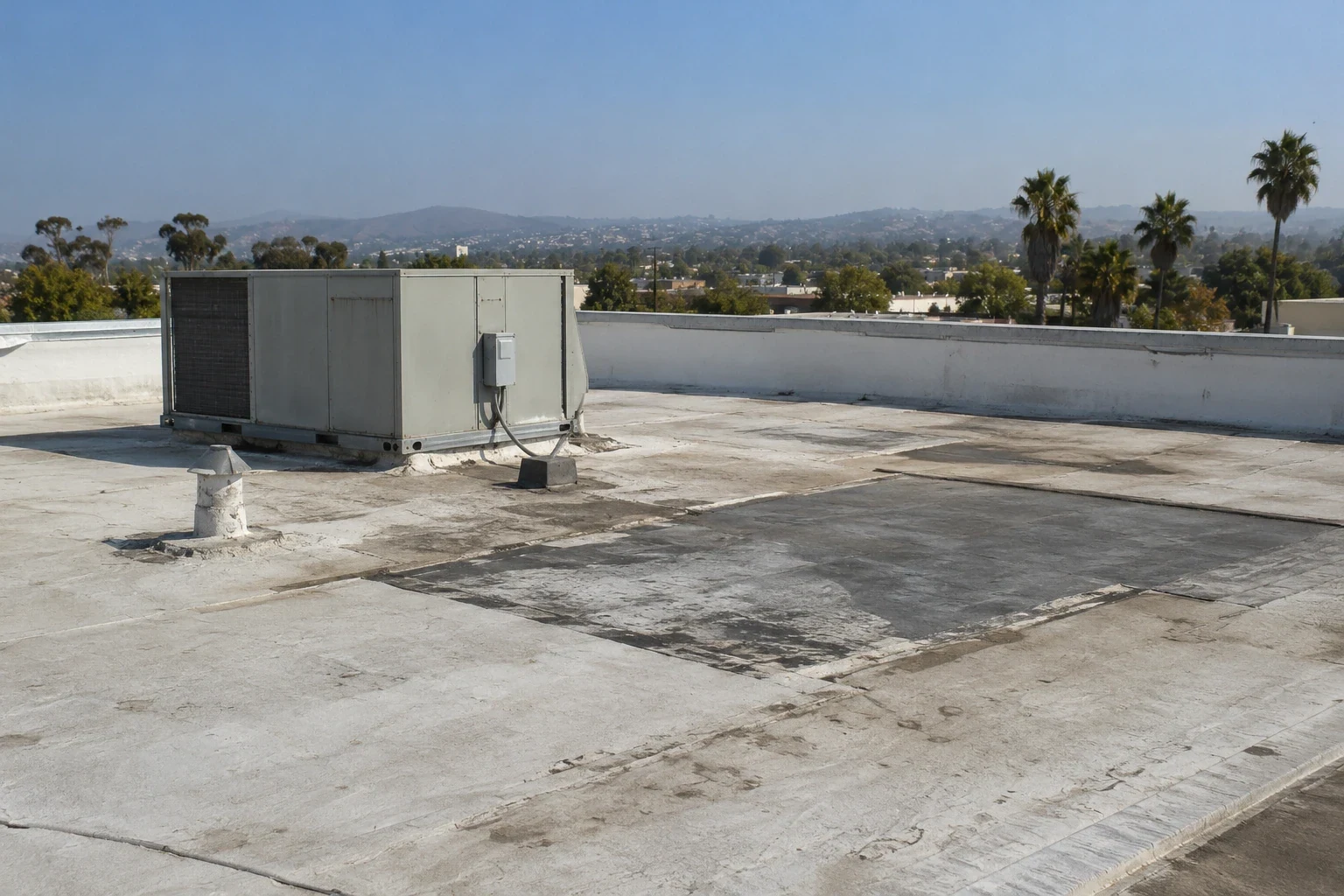
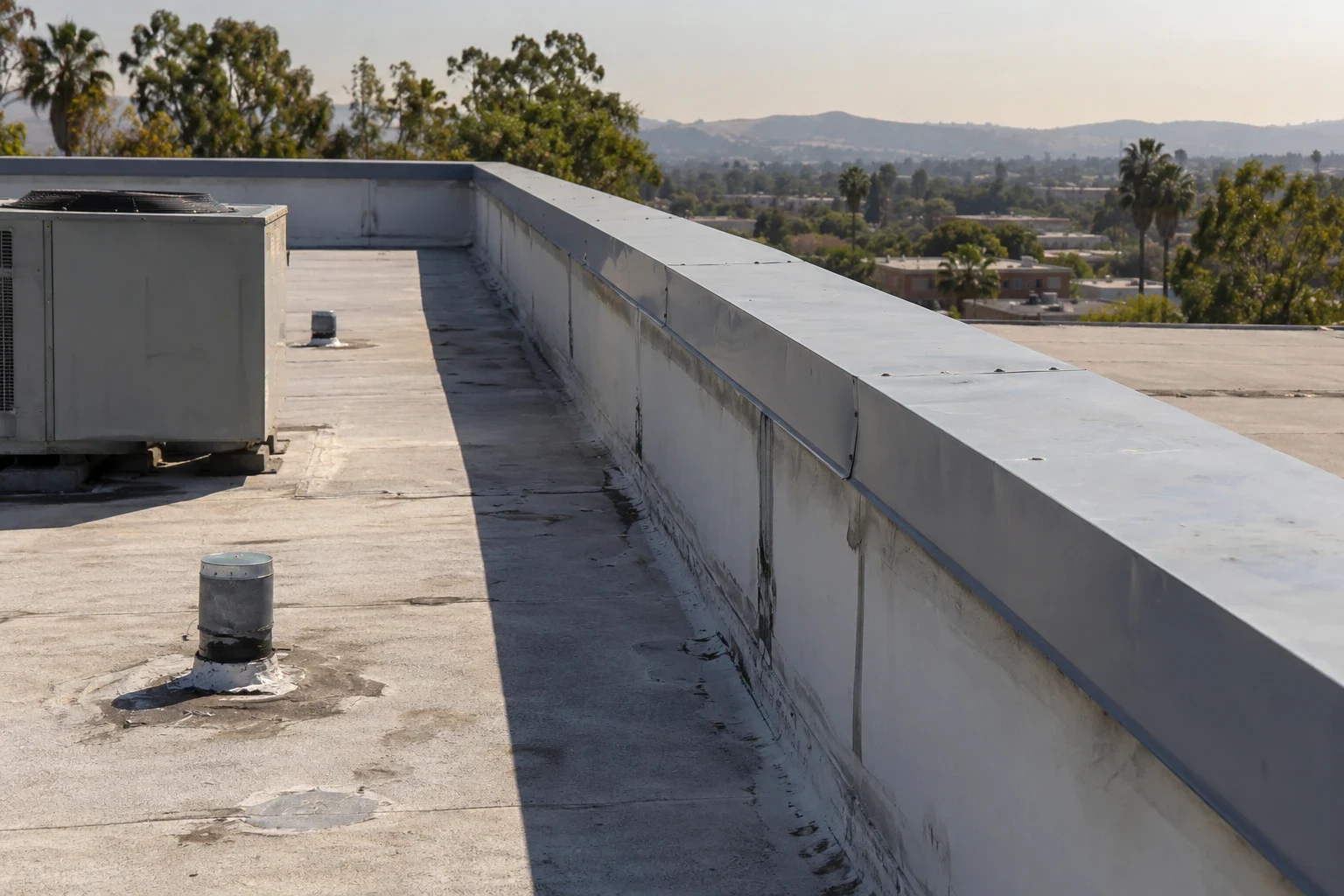
A roof visit starts at the hatch or approved access point, then follows the roof zones and details that relate to the owner’s concern. We record equipment curbs, skylights, edge metal, penetrations, and areas where prior work changes the surface. The neighboring Valley Center Corridor is another City-mapped opportunity area in Salinas, while North Main Street has its own planning context. A portfolio should keep each building’s roof record separate rather than transfer one property's findings to another.
Which details should the first roof walk record?
Start with the reported leak, then trace the nearby details that can move water or interrupt the membrane. We inspect seams, laps, penetrations, drains, scuppers, parapets, and transitions between roof levels. A ceiling mark is useful when its location and timing are recorded, but the roof opening can be farther away. We compare the interior report with slope, outlet direction, and repair history to establish where testing or a closer look may be useful.
Salinas’s cool-season rain concentrates attention on outlets and flashing before wet weather returns. A drain review should record debris, connection condition, surrounding membrane, and whether water has a clear path to the outlet. If moisture is suspected below the surface, an infrared moisture survey can help identify areas for follow-up when conditions suit that method. The finding should be tied to a roof zone and to a decision, such as where to open the assembly or how far a repair should extend.
Foggy mornings can leave surfaces damp, which may affect when crews can safely inspect or prepare certain materials. We record conditions at the time of the visit and set any follow-up around the specific roof work rather than treating one morning as a lasting description of the property.

How do you compare repair with replacement?
A localized repair can be appropriate when a defect is limited and the surrounding membrane, flashing, or panel remains serviceable. We inspect enough of the adjacent area to find sound material for a compatible repair and record any separate concerns nearby. A repeated leak at the same seam, deterioration across several zones, or wet insulation can change the conversation. The written scope should explain which condition the proposed work addresses and which roof areas were not included.
Replacement or recovery requires a broader review of existing layers, deck and insulation condition, edge height, drainage, and tie-ins at curbs and walls. A recovery leaves existing material below the new assembly, so moisture and attachment need to be understood before that path is selected. A commercial roof repair can address a defined failure; a replacement evaluation compares renewal when findings and repair history support a larger project.
We also consider the cost drivers in plain terms: the number of roof zones, removal needs, insulation or cover board, edge and drain details, equipment coordination, and the access window. A proposal should separate those items so an owner can compare a limited fix with a complete scope on the same assumptions.
How can the work fit the property schedule?
Roof access, tenant hours, deliveries, and equipment operation can affect a repair as much as the selected material. We confirm who can authorize entry, which areas must remain in service, where materials may be staged, and whether interior protection is needed below the work zone. If a larger project needs phases, each phase should show what will be opened, how the roof will be closed at the end of a shift, and which details need a later return.
West Market’s position near Davis Road is useful for identifying the corridor, while the property contact supplies current access instructions and restrictions. Before mobilization, the owner confirms any active staging, parking, or curb restrictions with the property contact. We build the repair sequence around confirmed entry conditions and the roof assembly, not a generalized assumption about corridor traffic.
For an occupied facility, an occupied-building roof plan can spell out phasing, protection, notices, and daily closeout. If the roof cannot be safely closed in one visit, we identify interim protection and the next access window in the proposed work plan.
What should ownership keep after the inspection?
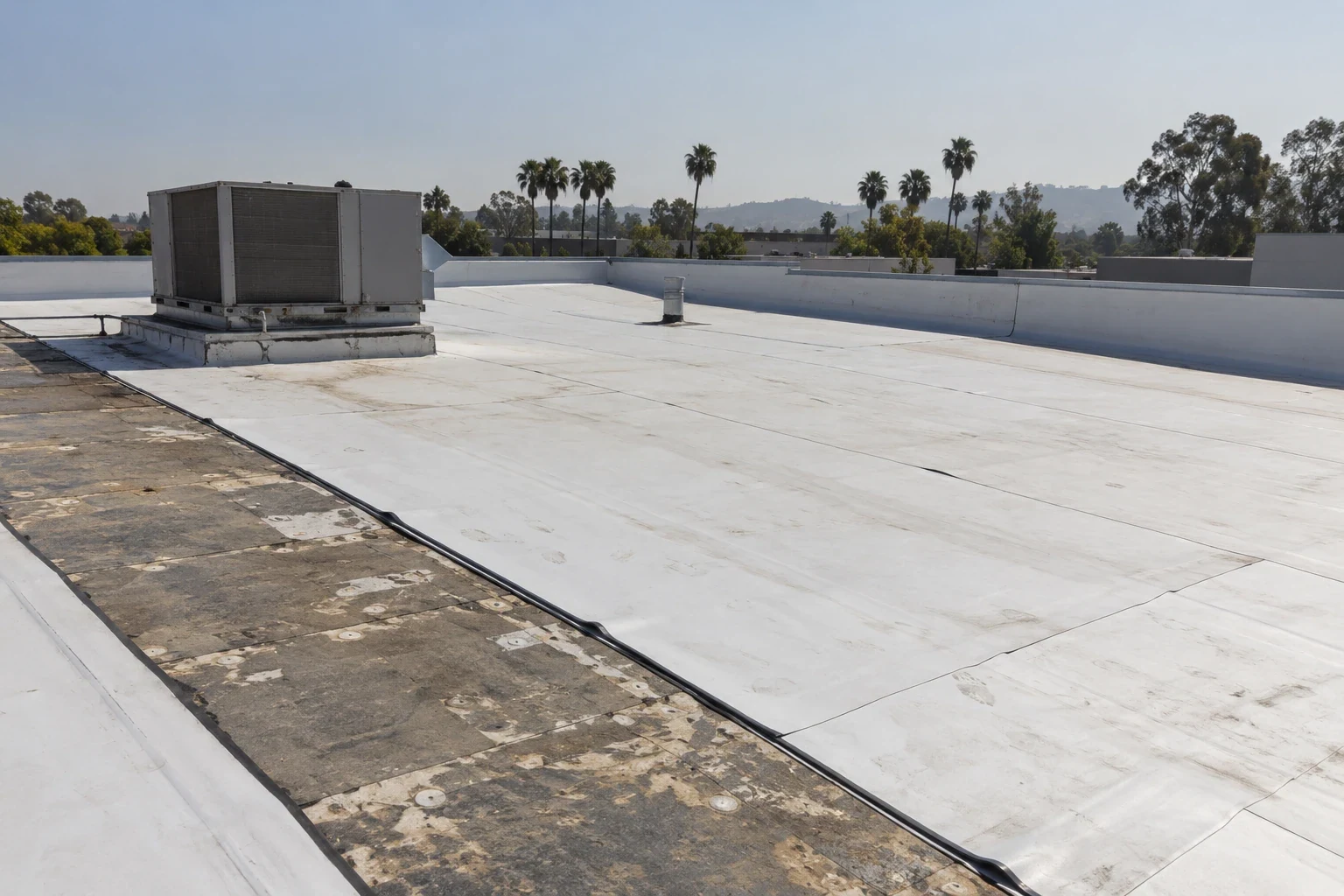
A useful condition record links photographs to roof zones and states what was visible, what was repaired, and what remains open. Keep leak dates and interior locations with prior invoices, plans, and inspection findings so a later visit can compare the same details. If a roof area was inaccessible or concealed, record what follow-up would resolve the uncertainty and whether it could change the proposed scope.
For a property portfolio, a record for the West Market Street location should stay distinct from roofs elsewhere in Salinas. City materials also map Davis Road and the Valley Center Corridor among local planning references, but a shared city context does not make building conditions interchangeable. A roof condition report can organize repairs and follow-up questions by priority, while a maintenance visit can return to drains, seams, and penetrations before the next cool-season rain.
When the recommendation includes both urgent water control and work that can be scheduled later, show those choices separately. Ownership can then match the repair sequence to building use, access, and budget planning without losing track of the roof areas that still need attention.
Questions Owners Ask
How do you identify the roof system on a West Market property?
We inspect the visible assembly and compare it with available roof records, then document any area that needs closer investigation.
What helps trace a leak along West Market Street?
Share when water appeared, the interior location, any prior repair, and the roof access contact. We compare that report with the roof zones, drains, seams, and penetrations before setting the repair boundary.
Can work be planned during foggy mornings?
The Salinas Valley has extended summer fog and low cloud cover. We check actual surface conditions before inspection or material preparation and adjust the work window when a damp surface affects the task.
When should an owner compare a patch with replacement?
A defined defect with sound material around it may suit repair. Several failing details, repeated leaks, wet insulation, or widespread deterioration can support a broader review, with testing added where hidden conditions could change the scope.
What affects the timing and cost of a West Market roof project?
Roof area and assembly, removal or recovery needs, drain and edge work, equipment coordination, staging, and the available access window all affect scope. We state those factors so the owner can compare options with clear assumptions.
Related Roofing Work
Arrange a West Market roof review
Share the property location, access window, leak history, and roof areas that need attention. We will document visible conditions by zone and outline repair or renewal options around the building schedule.