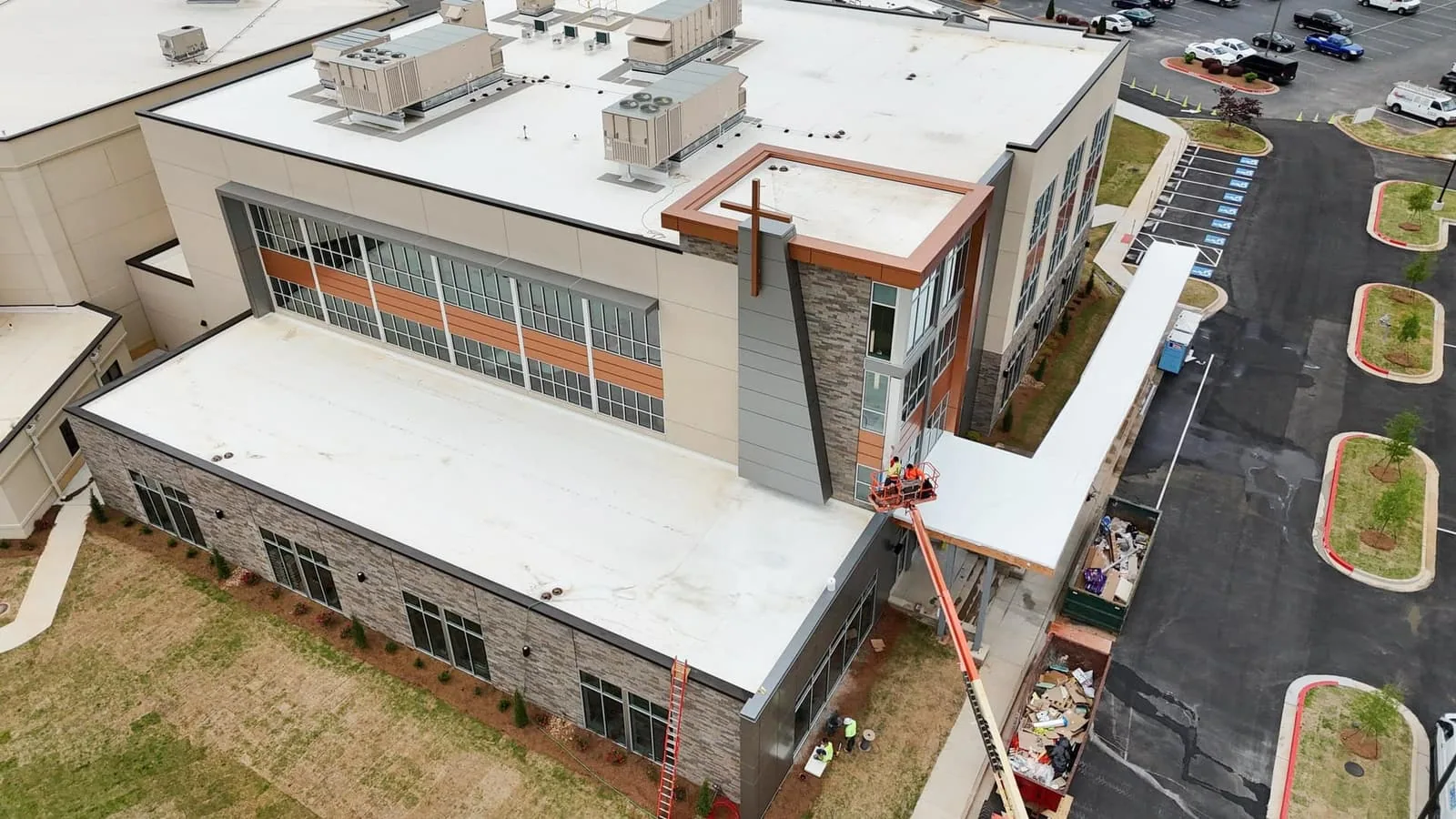
Commercial Roofing in Seaside, CA
Commercial roof repair, inspections and replacement planning in Seaside, CA. Review roof conditions, tenant access and practical work options.
Overview
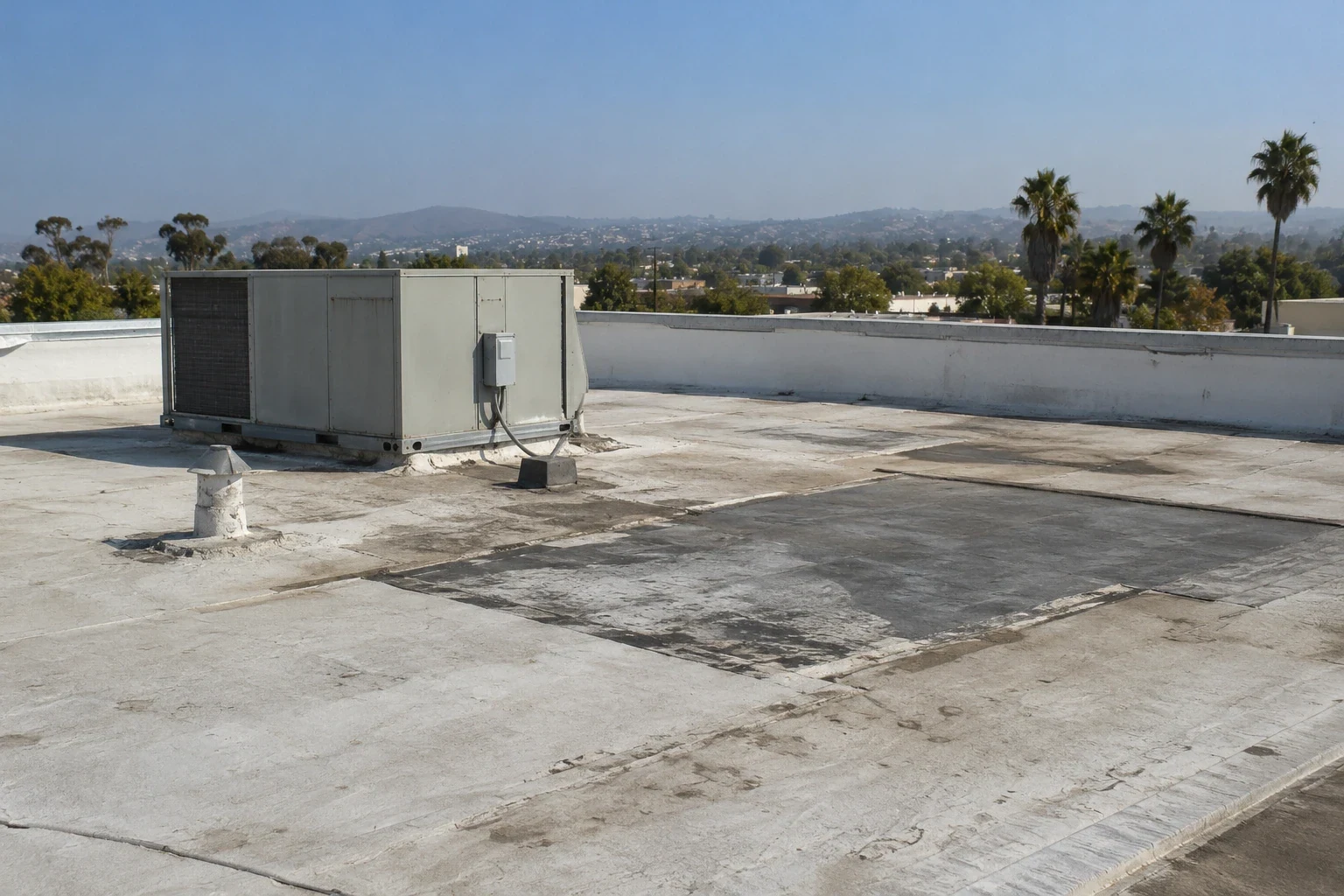
Commercial buildings along West Broadway serve Seaside’s downtown core and mixed-use corridor, so roof work has to account for the activity below as well as the membrane above. The city’s local conditions identify this area as a commercial center, but they do not tell us what assembly any individual property has. We start at the roof: identify the system, trace drainage, inspect transitions and record any interior symptoms that need to be reconciled with what is visible above.
For a building in Seaside, the useful review is specific to its roof zones and operating hours. A storefront, office or mixed-use property can have different access, tenant and interior-protection needs even when nearby buildings share the same street. We record what can be seen, separate active water entry from maintenance items, and show repair and replacement choices beside the conditions that support each one. The scope should support a decision based on the actual roof.
What does the West Broadway setting change?
West Broadway is identified as Seaside’s downtown commercial core and a mixed-use corridor. That makes tenant coordination and access planning relevant to a roof scope, while the city’s 2040 General Plan gives broader direction for land use, development, transportation, employment and economic development. Neither document identifies a roof assembly or condition. We confirm whether a building has single-ply membrane, built-up roofing, metal panels or another system before selecting a repair method.
On a mixed-use property, a small leak can affect a tenant space, shared corridor or equipment area with different operating hours. We ask where water appeared, when it started, whether it changes with rain or wind, and what was happening above that area. Then we compare the report with drains, wall transitions, curbs, skylights and membrane seams. The inspection distinguishes a visible defect from a suspected path that needs further testing. That boundary matters because repairing the wrong detail can leave the original entry point open.
The city also maintains commercial-property vacancy information, but that does not establish whether a specific building is vacant or accessible. Before work, we confirm roof access, interior protection and staging limits with the property contact.
For a clear starting record, our commercial roof inspection records the assembly, drainage path, penetrations, perimeter conditions and reported leak areas. We can connect that record to a drain and scupper review where water is not moving as intended. Each observation should identify its roof zone and the next action, so an owner can distinguish urgent repairs from items to monitor.
Which roof details deserve a closer look?
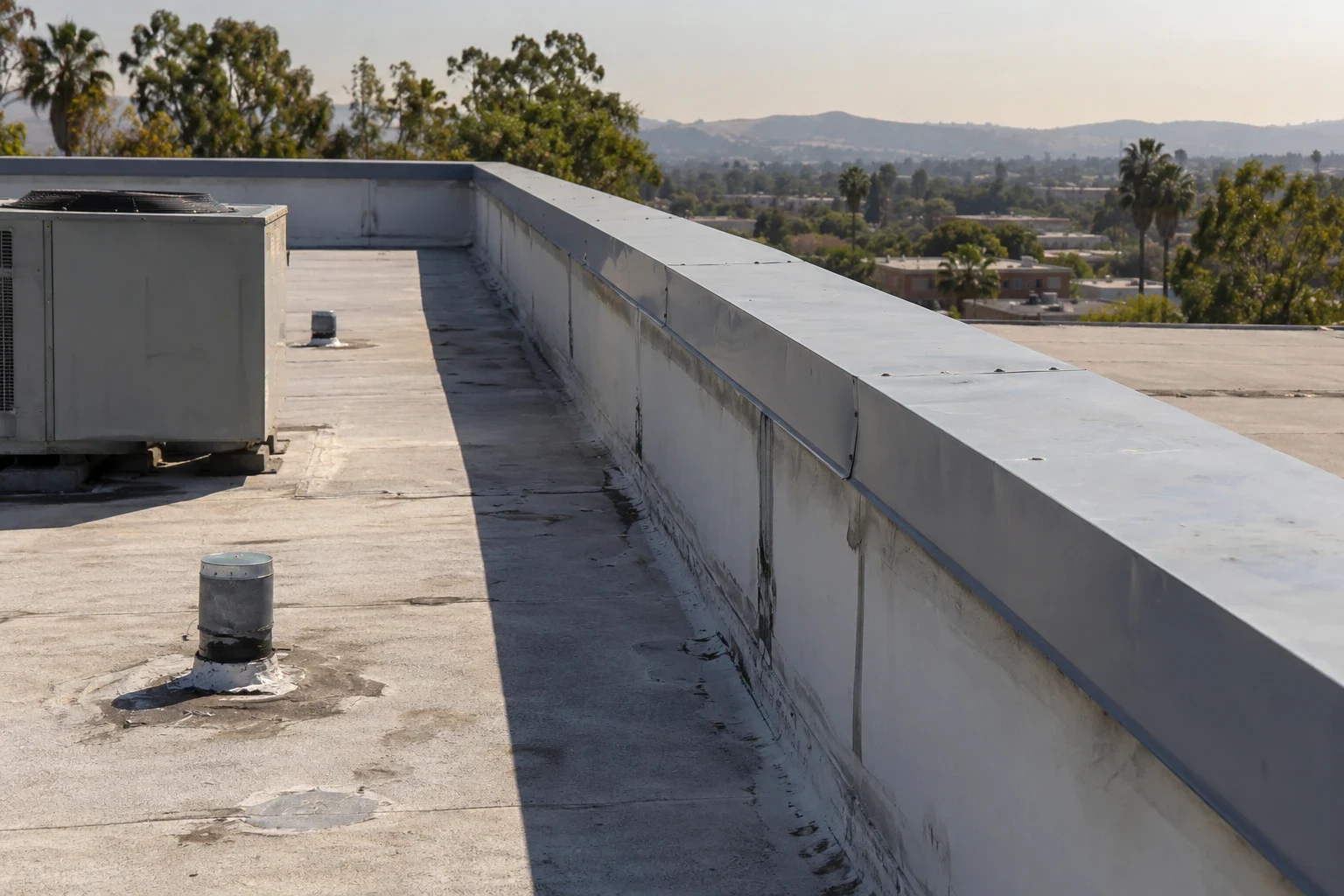
Water entry often appears inside at a point separate from the roof defect. We compare the interior report with roof details that can admit water: open seams, split flashing, loose edge metal, failed sealant, damaged curb transitions and clogged or slow drains. A stain guides the walk; we map the suspected route and state what supports the repair boundary.
Coastal Central Coast weather also affects the work window. National Weather Service Monterey Bay products describe breezy conditions and marine-layer flow along the coast. We check current conditions before roof access and material placement. Wind affects material handling, while damp surfaces may change when some repairs can begin. We confirm the surface is suitable for the selected system.
For low-slope roofs, we inspect drain paths, ponding evidence and visible membrane or insulation damage. On metal roofs, we check panel laps, fasteners and transitions. If surface evidence is incomplete, a targeted leak repair assessment can define the next investigation.
Our roof coating restoration evaluation begins with the existing surface and its attachment, not with a promise that a coating will fit. We check whether the substrate is sound, whether moisture is present, and whether details can be prepared and reinforced. A coating is an option only when the underlying conditions support it; otherwise, repair or replacement may be the more defensible route.

How should access and tenant needs shape the work?
Before work, we confirm roof access, the site contact and hours when activity is lowest. Along West Broadway, storefront hours, deliveries and occupied space may affect staging. We identify entrances to keep clear and areas needing interior protection.
For an active leak, the first report should identify the affected room, the time water was noticed, whether it is still entering and any nearby equipment or electrical concern. If safe to do so, protect contents and keep people clear of wet or damaged areas. We use that information to prioritize the roof review, then inspect the matching zone and adjacent details. A repair plan should describe what will be opened, how the area will be protected and what temporary measures are appropriate while permanent work is prepared.
Occupied-building reroofing needs a different plan from a contained repair. We divide the roof into work areas, agree on daily access and laydown limits, and coordinate noisy or odorous steps with affected occupants. Our occupied-building reroofing plan sets out those constraints with the sequence, protection measures and transitions between completed and active areas. When tenant turnover or business hours change, the schedule can be adjusted before a crew is committed to a zone.
Maintenance visits also benefit from predictable access. A preventive roof maintenance scope can check drains, seams, flashing and rooftop penetrations at agreed intervals, with photos tied to the locations inspected. The record helps an owner compare changes between visits and address small deficiencies before they become a more disruptive interior issue.
When does repair stop being the right scope?
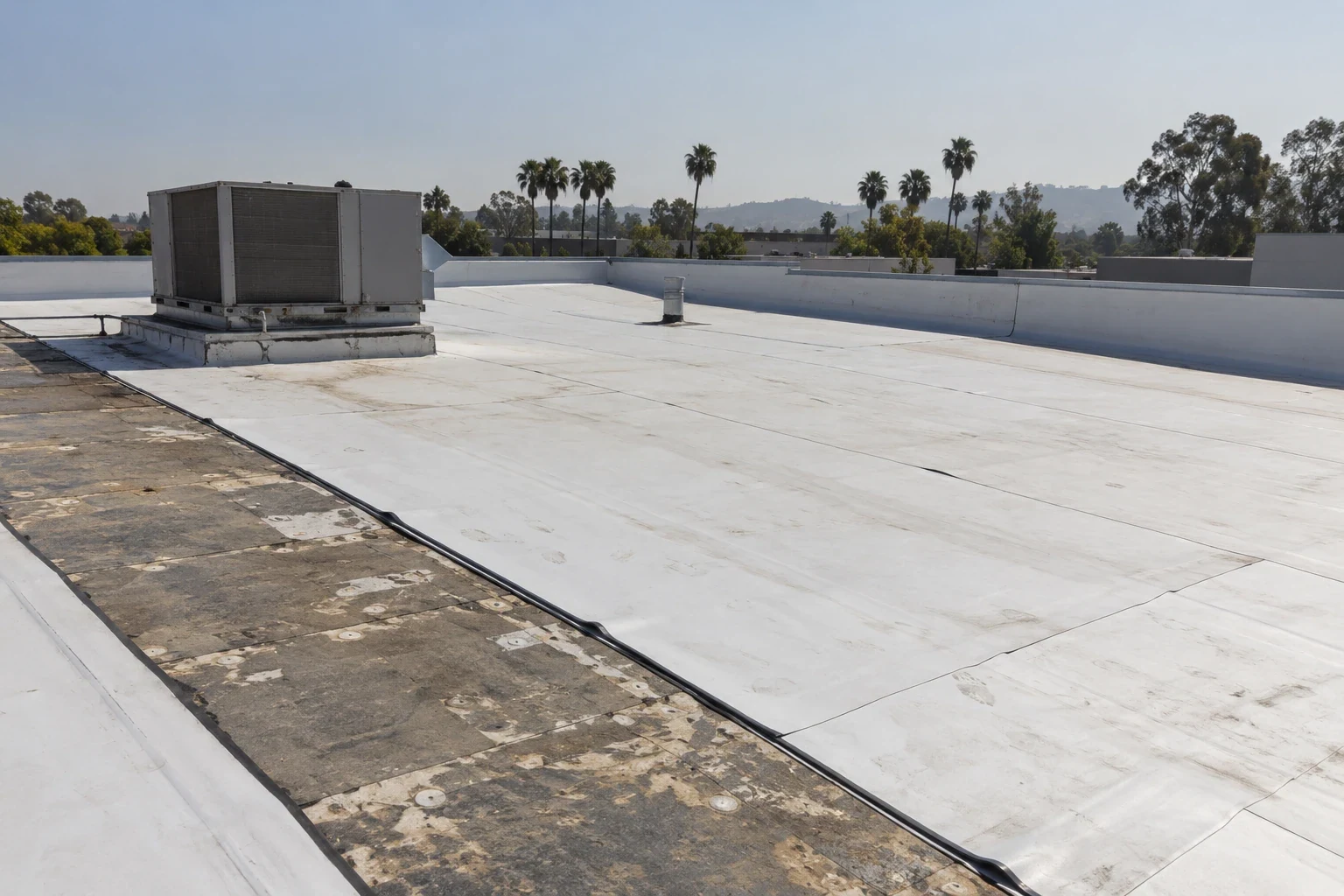
A repair remains practical when the surrounding membrane or panel is serviceable, the defect can be reached and corrected, and the adjacent flashing can be returned to a watertight detail. Replacement deserves review when failures recur across zones, insulation is compromised, attachment has deteriorated or repairs leave unresolved transitions. We document conditions rather than judging by age alone.
A mixed-use property may need phased work to protect tenants. We explain tie-in locations, equipment resets and interior protection for each phase. If the scope changes a structural or fire assembly, confirm permit requirements with the city before work.
Cost and timing depend on the actual assembly, access, tear-off or preparation needs, insulation condition, edge and penetration details, disposal, staging and the length of protection required. We identify the scope drivers and assumptions behind each option before scheduling.
Our review can compare a defined repair with a replacement evaluation, including what each option resolves and what remains. For nearby commercial properties, we can also coordinate regional service planning around Marina, Sand City and Monterey. The roof plan for a Seaside property still starts with its own assembly, condition and access needs. We invite the owner to arrange a roof review around tenant schedules and operating hours, with findings organized by priority.
Questions Owners Ask
What should a Seaside owner send when reporting a leak?
Name the affected room, when the water appeared, whether it is still entering and any nearby equipment or contents that need protection. A safe interior photo helps us prepare. We compare the report with the roof zone, drains, seams, curbs and wall transitions. If water is near electrical equipment or a ceiling is sagging, keep people clear and contact the appropriate building professional promptly.
Does the West Broadway plan tell you what roof system a property has?
No. It identifies West Broadway as Seaside’s downtown commercial core and mixed-use corridor, which helps frame operating and access questions. It does not identify a building’s roof system. We inspect and record the assembly before recommending a scope.
Can the roof work fit around storefront or tenant hours?
Yes, when the access and sequence are planned with the property contact. We confirm quiet periods, deliveries, entrances, staging limits and any interior spaces that need protection. A repair may stay in one zone; replacement requires transitions as areas open and close. We set out daily access before scheduling.
How do you decide between another repair and replacement?
We compare the repairable detail with the condition around it. A localized seam or flashing defect may support repair when the adjacent roof remains sound. Repeated failures, wet insulation or broad attachment problems can justify a replacement evaluation. The findings identify which zones support each option and what testing could change the decision.
Related Roofing Work
Arrange a roof review in Seaside
We will plan the inspection around roof access, tenant needs and operating hours, then provide findings organized by priority.