Commercial Roofing in Airport Business Center, Salinas, CA
Roof inspections, leak repairs and replacement planning for Airport Business Center properties in Salinas, with practical access and operations coordination.
Overview
A business-park or industrial property in Airport Business Center may need a roof repair that fits around deliveries, staff access and equipment below. an Airport Business Center assessment district has improvements along Moffett, La Guardia and Vandenburg streets. Salinas planning also connects Airport Boulevard with industrial opportunity areas and U.S. 101, and identifies airport-adjacent business-park, industrial and logistics uses. Together, these details describe a business district spanning multiple street fronts; each roof still needs its own inspection.
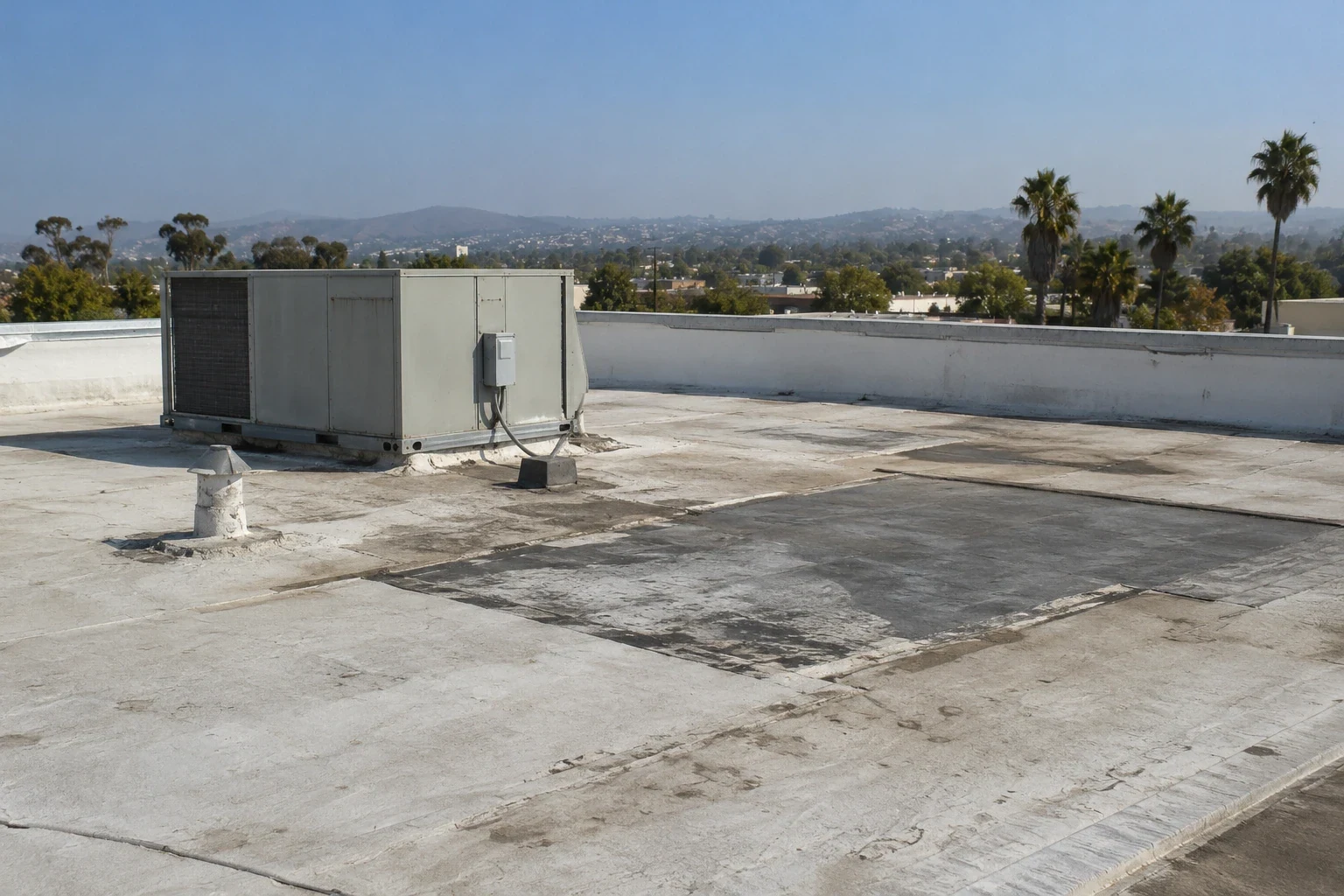
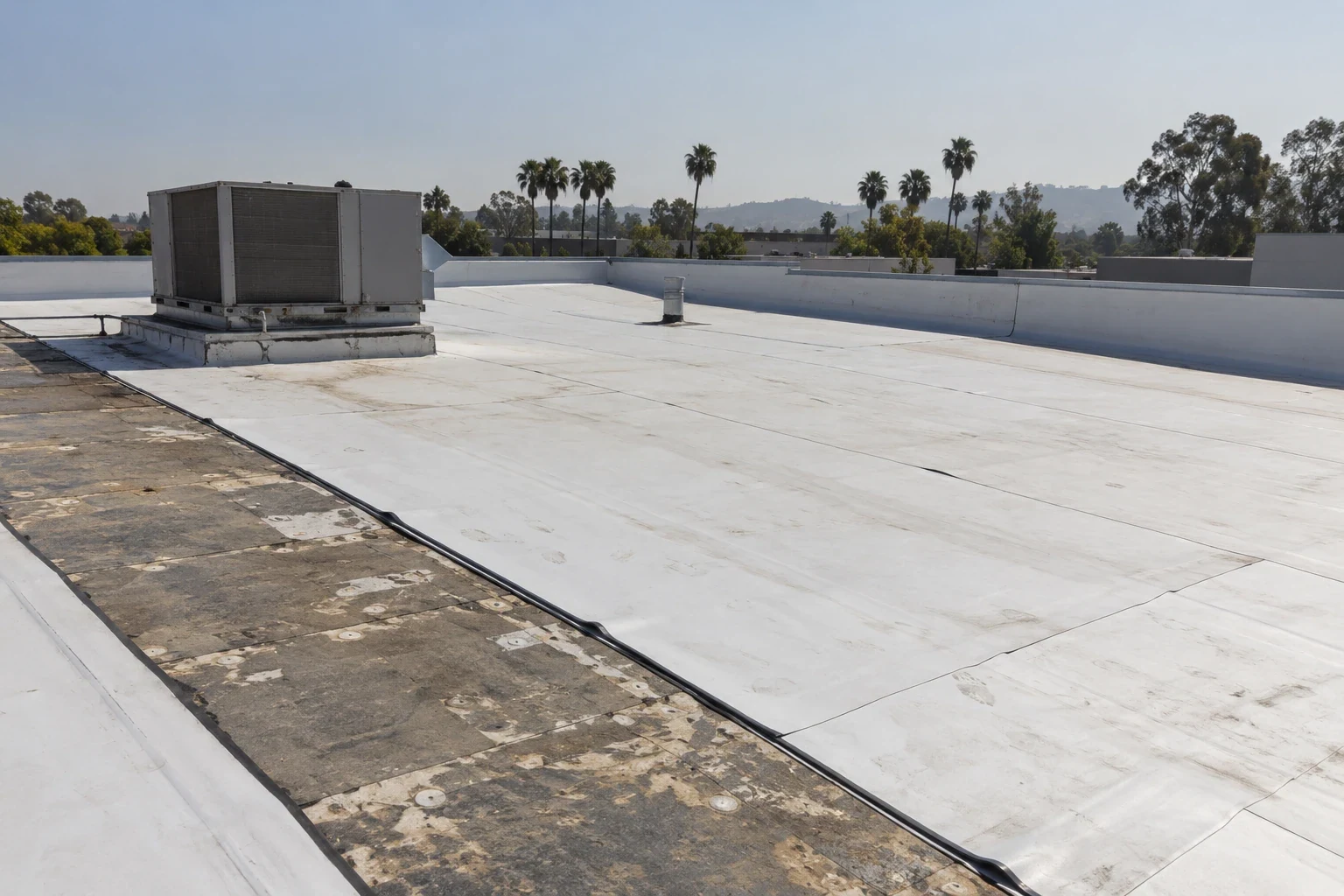
We document the installed assembly, accessible roof zones, drainage, seams, curbs, penetrations and edge details before describing a repair boundary. The inspection also captures reported leak timing, prior work and operating restrictions that affect the sequence. A commercial roof inspection gives ownership a clear record of what is visible, what needs more investigation and which option fits the building’s condition.
What should a property contact coordinate before a crew arrives?
Start with the site representative who can authorize roof access and confirm where a crew should check in. Identify roof hatches or ladders, escort rules, delivery hours, parking restrictions and the areas that must remain open. If loading or vehicle routes need to continue, mark them on a site sketch and review any planned lift, material drop or temporary closure with the property contact. The City assessment district covers several streets, while access rules are set at each property.
Airport Boulevard connects the industrial opportunity areas with U.S. 101. Confirm staging, route conditions and approvals with each site representative. A building managed alongside the Salinas Business Park or Salinas Ag-Industrial Center should keep separate access records and roof records, even if one facilities team handles all three.
Before work, identify who can approve a scope change, which equipment must remain active and what areas need protection. Schedule a larger project by roof zone, with clear end-of-shift closure steps if weather or concealed conditions interrupt the work.
A roof-zone sketch connects the inspection to later maintenance. Mark features that are present, then add dated photos and the related leak report. Keep each building’s assembly and repair history in its own file.
Which roof details need to be checked first?
Identify the installed assembly before choosing a repair method. Industrial or logistics planning does not show whether a specific property has a membrane, metal or built-up roof. We compare available plans with field observations and inspect accessible seams, penetrations, drains, edges and transitions as appropriate to the system.
For a reported leak, record the interior location and when water appeared, then inspect the roof zone and connected details. Water may follow a deck or framing path before it reaches a ceiling, so the wet spot does not by itself define the repair area. We check nearby outlets, transitions and prior patches for evidence consistent with the report. If the leak follows rooftop service or equipment work, compare that timing with the penetration or curb detail rather than assuming the equipment caused it.
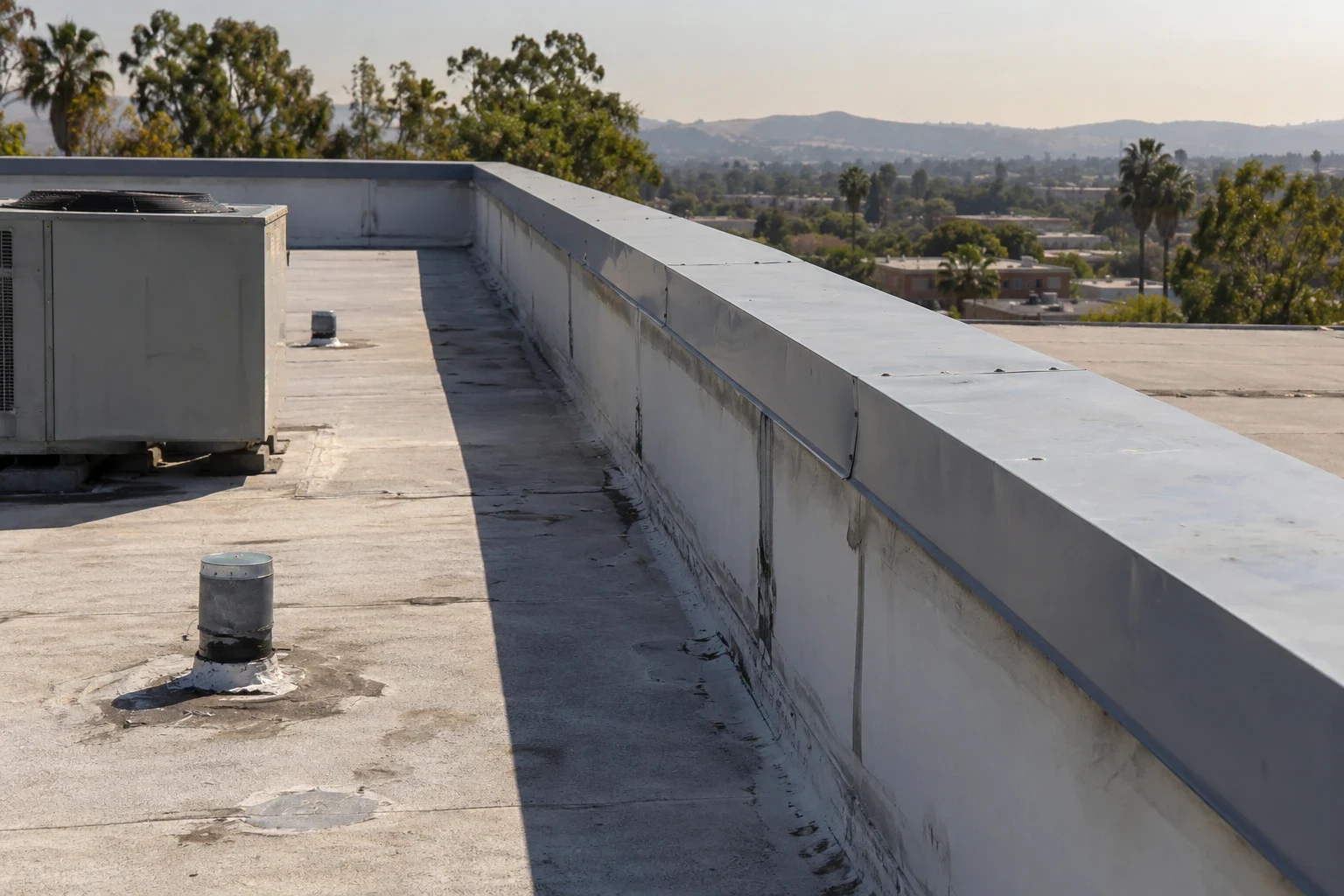
Drainage review follows the path water should take toward an outlet. record debris, blocked flow, standing water, outlet condition and flashing at the drain or scupper. A drain and scupper repair is useful where the component or its connection has a supported defect. If a seam or curb is the likely entry point, that work needs its own detail in the scope. Repeated reports or moisture extending past the visible opening may justify additional testing before a repair boundary is priced.
At rooftop equipment, inspect accessible curbs, supports and adjacent roofing transitions. A curb and support review considers both the roof detail and equipment interface. record what would require more access or testing.

How should an owner compare repair with replacement?
A localized repair is more supportable when the origin is found, the surrounding materials remain serviceable and the work can restore the detail without leaving a broader known condition unresolved. The proposal should identify the roof zone, preparation, materials, transitions and how the completed area will be checked. A commercial roof repair should also state which nearby conditions are outside its boundary and what finding would require a separate authorization.
Replacement deserves comparison when failures are spread across the roof, repairs recur in separate zones, or the substrate and insulation condition make patching an unreliable long-term choice. The inspection record should show what evidence supports that decision. We can explain removal or recover assumptions, insulation needs, penetrations, drains, perimeter work and tie-ins so the owner can compare a limited repair with a larger scope on equivalent terms.
Price and duration reflect roof area, access equipment, material handling, disposal, transitions, substrate and available hours. If deliveries or equipment routes need to stay clear, confirm that with the property contact. An occupied-building roof plan can identify work zones, protection and daily closure steps.
Most annual rainfall in Salinas falls during the cool season. Schedule exposed work with the current forecast and a defined dry-in plan, including what happens if conditions interrupt the shift. Use the current forecast to set the work window and protection plan. Revise the sequence if a roof area cannot be closed safely before the shift ends.
What information should stay with the roof file?
Keep the roof plan, inspection records, dated photographs, leak history, repair invoices, material documentation and warranty records under the individual property. Closeout should describe work completed, where access stopped, what remains open and the next recommended review. If an area was not tested, label it as unknown rather than carrying it forward as confirmed damage. These distinctions help the next facilities contact make a budget decision from evidence.
When a portfolio includes properties in Airport Business Center and North Salinas, keep shared priorities in one schedule while maintaining a separate condition record for each roof. For roof work in the Airport Business Center, we document each building’s assembly, access plan, and maintenance history separately.
A preventive maintenance visit can revisit drains, seams, flashings and previous repairs at an interval suited to the roof and its operation. The record should separate inspection findings from work completed and list items needing authorization. If a new leak appears, record the room, date, current water entry and any recent roof service, then share the correct access contact. Keep people clear of wet electrical areas and do not enter unsafe spaces while waiting for inspection.
At closeout, confirm repair photos, remaining recommendations, material records and the next review date. Retain the daily area closures for phased work so the property file shows what was repaired and what still needs a decision.
Questions Owners Ask
Does Airport Business Center mean the airport itself is the service-area target?
No. The page describes the broader business center and its commercial context. Roof inspections and recommendations are for individual properties in the area, not an airport facility as a location target.
What access information should a facilities manager provide?
Send the property contact, roof entry method, delivery windows, staging limits, operating hours and any equipment that must remain active. The crew can then plan a site-specific sequence with the building representative.
How do we identify the roof system at a business property?
The inspection checks the visible assembly and compares it with available roof plans and repair history. We record the material, access limits, and details that may need further review.
When should an owner request testing beyond a visual inspection?
Additional testing may help when leaks recur, moisture appears across separate roof zones or a concealed condition could change the repair boundary. The inspection should explain the question the test is intended to answer.
How can maintenance be planned before winter rain?
Most annual rainfall in Salinas falls during the cool season. Review outlets and vulnerable transitions ahead of that period, then use current conditions and forecasts to set the work window. Review outlets and vulnerable transitions ahead of that period, then use current conditions and forecasts to schedule the work and protection plan.
Related Roofing Work
Review a commercial roof in Airport Business Center
Share the property location, access requirements and leak or maintenance history. We will inspect the installed system and outline a practical next step.