Spray Polyurethane Foam Roofing in Salinas, CA
Evaluate spray polyurethane foam roofing in Salinas by substrate, moisture, drainage, protective coating, access, and maintenance needs.
Overview
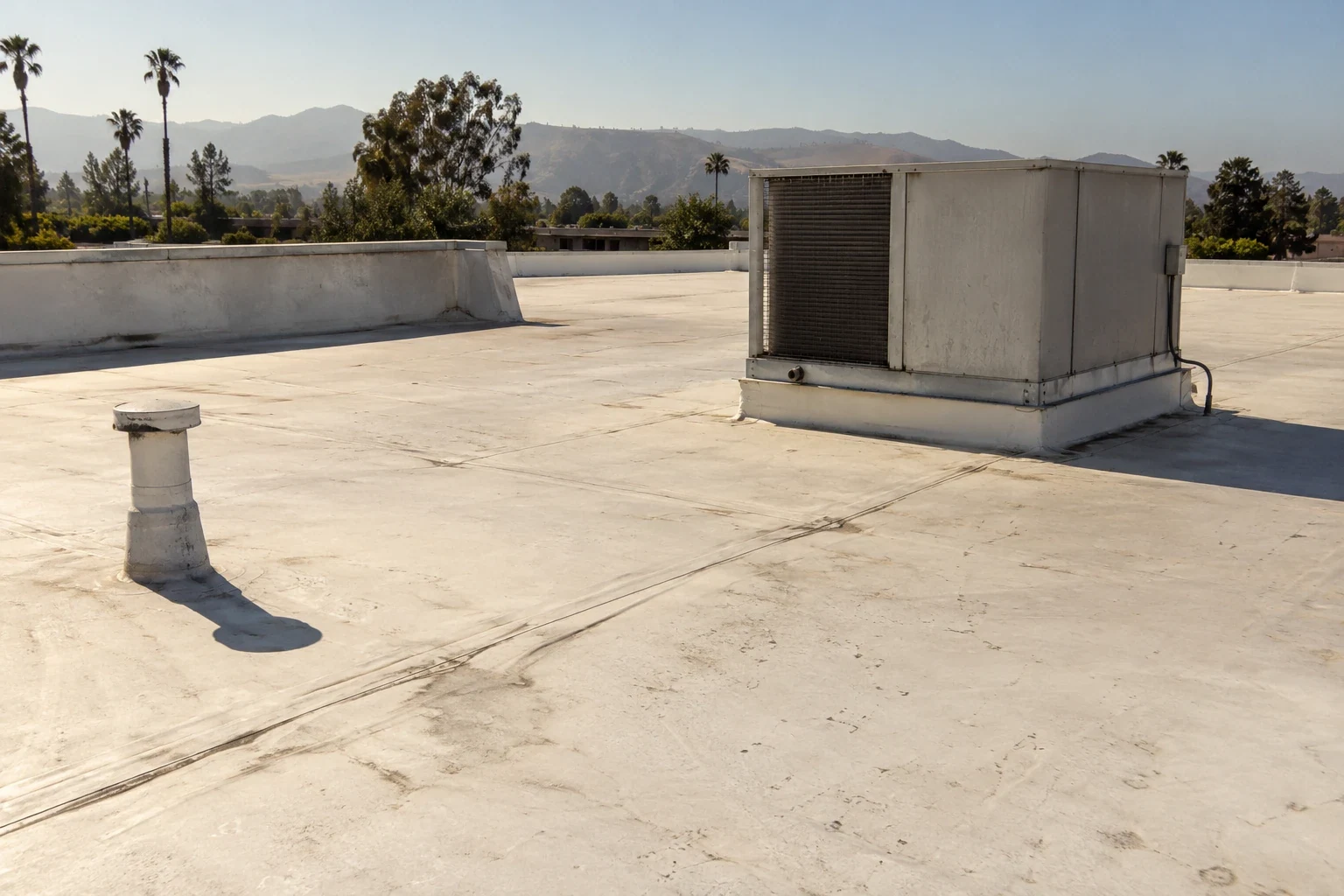
Spray polyurethane foam roofing forms a continuous layer over a prepared roof surface, then receives a protective coating to shield it from weather and ultraviolet exposure. The system’s performance depends on substrate condition, foam thickness, drainage, edge treatment, and the coating above it. In Salinas, we inspect the actual assembly and building operation before recommending foam installation, repair, or a different roof system.
Cool-season rain and fog-prone summer mornings influence when surfaces are ready for application, but the crew must follow actual site and product conditions. A dry-looking deck is not enough to establish whether the substrate is suitable. We check for moisture, contamination, loose material, and drainage problems before foam is placed.
How does a spray-foam roof work?
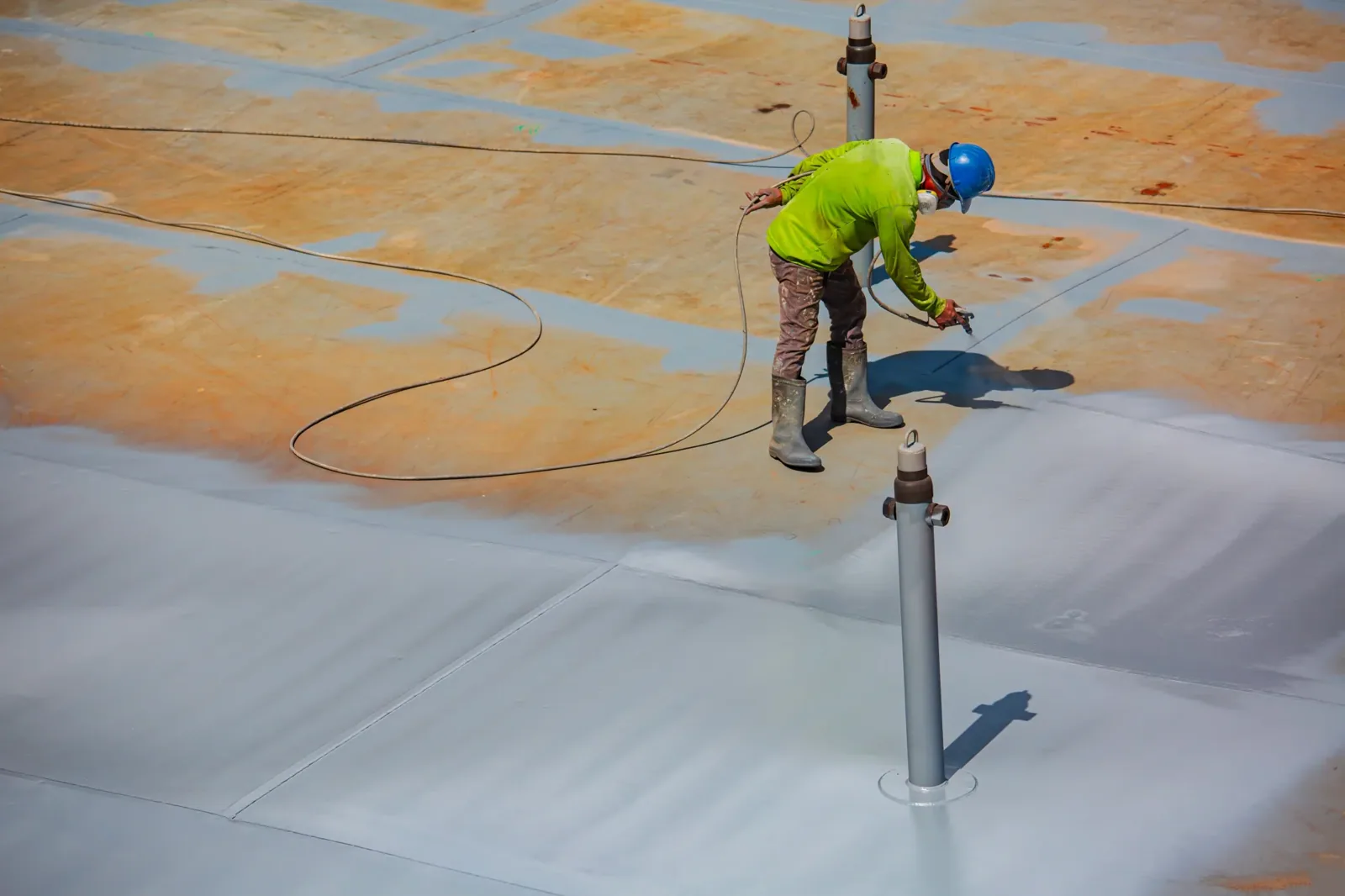
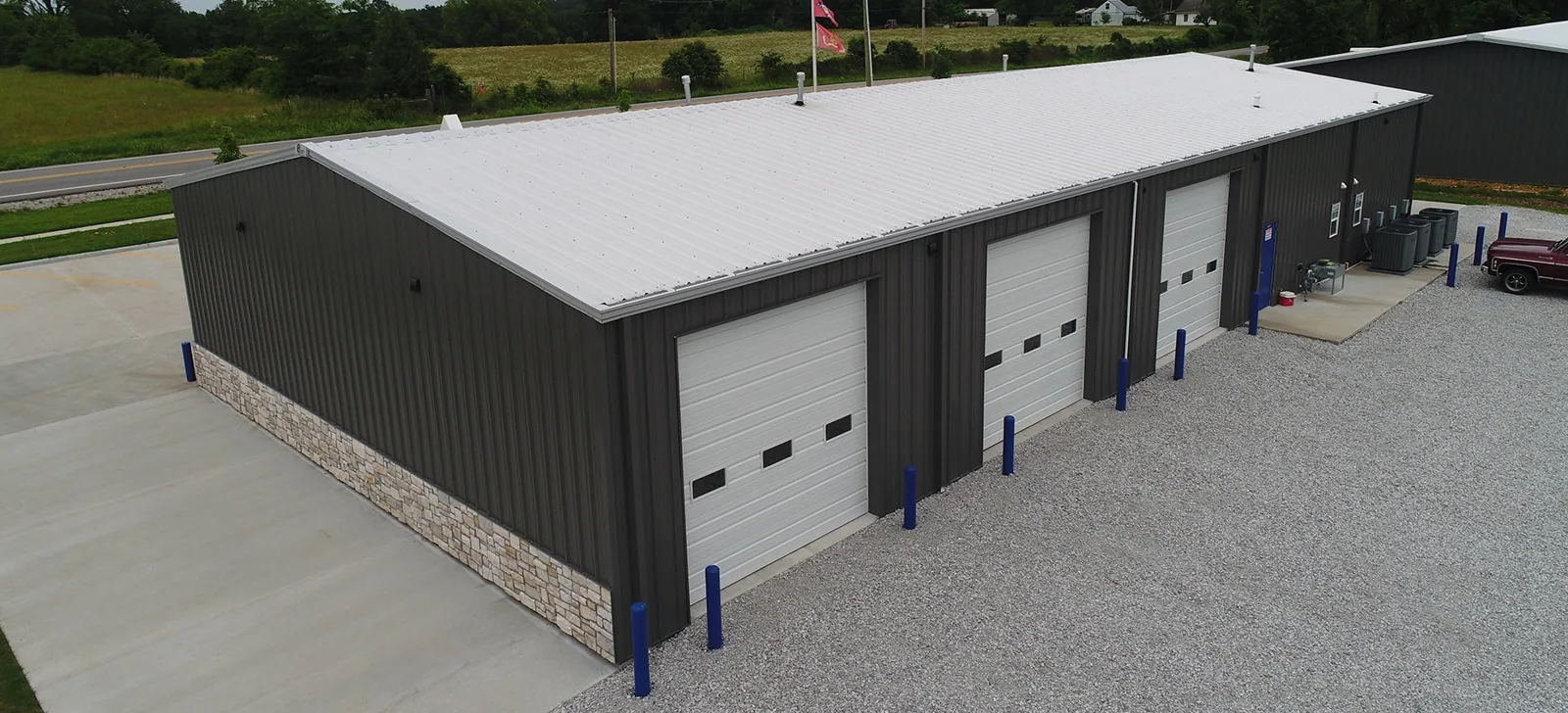
Two liquid components are mixed and sprayed, where they react and expand into a cellular insulation layer. The foam can follow the shape of the deck and create a continuous surface, but only over a prepared substrate. Crews control application thickness and surface profile, then apply a compatible protective coating at the specified coverage. The coating is part of the weathering assembly, not a decorative finish. Voids, thin areas, poorly formed edges, and missed details can compromise the system.
Drainage design is particularly important because the foam surface is shaped on site. We review how water reaches outlets and whether slope changes could direct water toward a curb or parapet. A spray-foam proposal should also consider perimeter terminations and future access routes. Where the project team compares it with silicone restoration or acrylic coating systems, the substrate and moisture findings determine whether an overlay can be considered.
What must be ready before application?
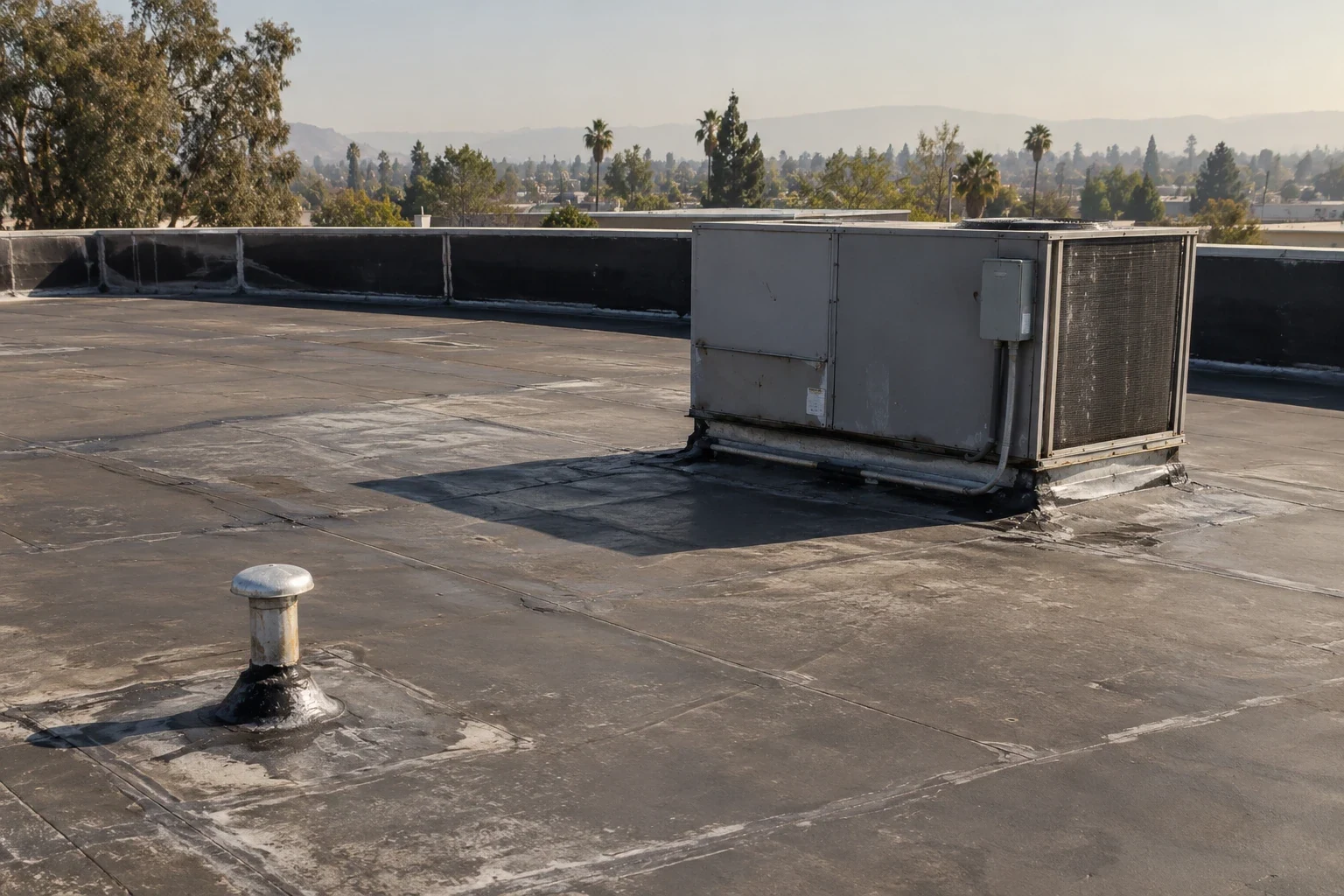
The existing roof must be dry, clean, stable, and compatible with the planned foam system. We look for trapped moisture, loose coatings, corrosion, wet insulation, open seams, and soft deck areas. Foam should not be used to bury unresolved water entry or unstable material. If the current roof has gravel surfacing or multiple layers, the preparation plan must explain how those conditions will be removed, secured, or addressed before spraying.
Representative test areas may help confirm adhesion when the substrate is uncertain. The project should establish who evaluates the result and what happens if it fails. That decision should be recorded before application so crews know whether to proceed, prepare further, or stop for a revised scope. We also inspect curbs, drains, scuppers, wall transitions, and equipment supports before application because their details must connect to the new surface. A roof condition report records visible defects, while selective openings or other checks can resolve concealed questions that affect the installation boundary.
How do thickness and coating protect the roof?
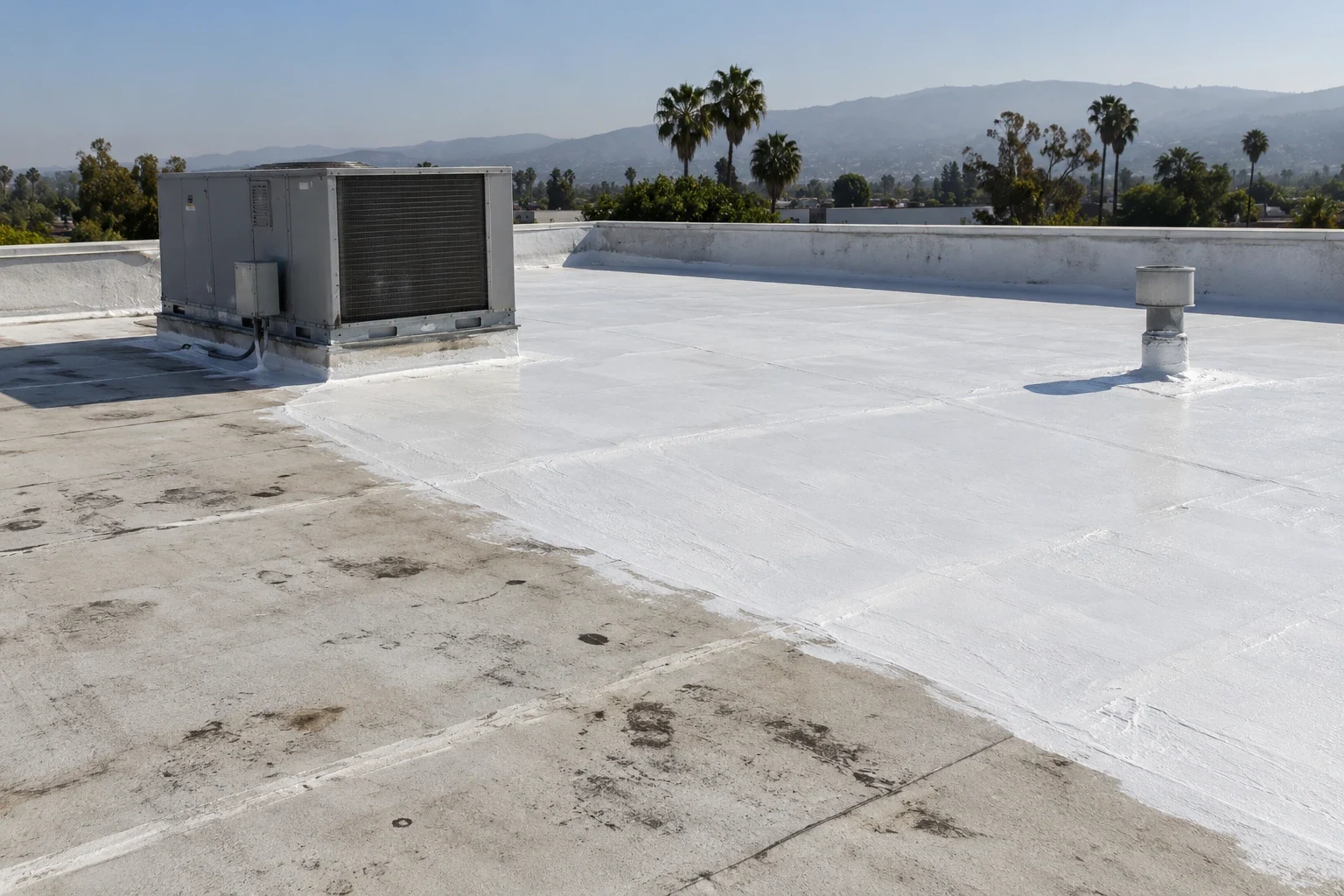
Foam application builds slope and insulation together, so thickness varies according to the design and the actual deck. The surface needs an even profile that sheds water without leaving thin spots or abrupt transitions. Crews control lift thickness and allow the material to cure as specified. The protective coating must cover the foam at the required rate and reach corners, curbs, and edges. The owner’s closeout record should document the completed surface and coating application areas.
Coatings weather over time and may need inspection or renewal depending on exposure, product requirements, and maintenance history. The foam itself should remain protected from direct sunlight and foot traffic. A service path, walkway pads, and roof access rules help avoid punctures during mechanical work. We coordinate equipment curb repairs and flashing at roof openings before the coating closes around those details.
How should moisture and ponding be handled?
Moisture beneath the old roof can reduce adhesion and remain trapped after an overlay. We investigate the assembly where leaks repeat or interior evidence suggests wet insulation. Infrared readings, core cuts, and visual inspection each answer different questions, and results should be interpreted together. The scope needs to identify material that will be removed and what will remain below the foam. A repair should not hide an active leak path under a new continuous surface.
Standing water can shorten coating life and expose low spots to prolonged wetting. We inspect drains, scuppers, and overflow paths, then record whether new foam will create a positive route to each outlet. If the deck deflects or the outlet is too high, the design may need structural or drainage work beyond the foam application. Drainage repairs should be coordinated with the final elevation, and moisture testing can help identify specific areas for confirmation.
What does application require at the property?
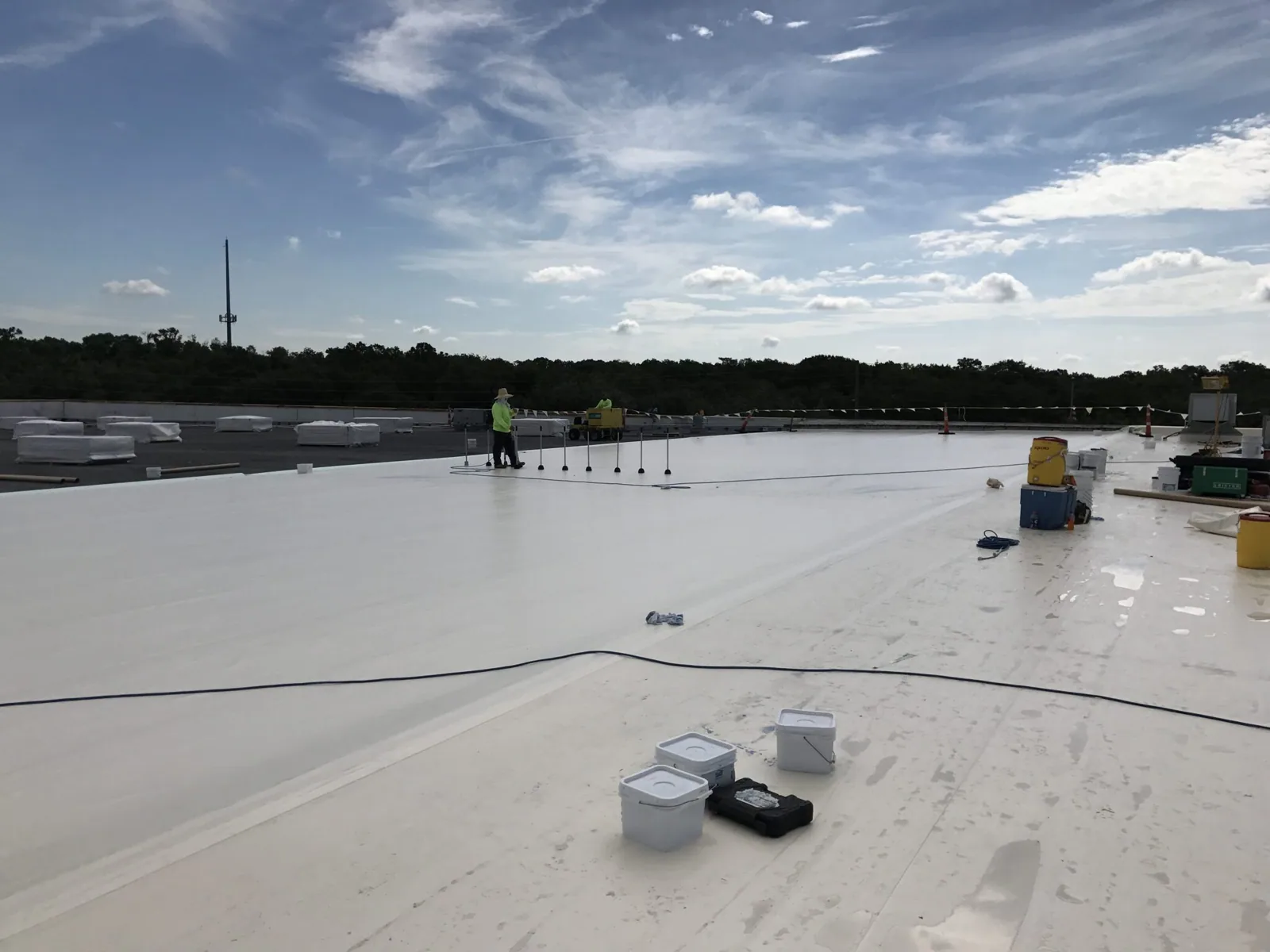
Spraying requires controlled access, masking or protection of nearby surfaces, and attention to wind and ventilation. The site plan should address overspray, intakes, vehicles, pedestrian routes, and adjacent operations. At an occupied building, the owner needs notice of work areas and any temporary restrictions. We coordinate staging, roof access, and the sequence for protecting openings so foam and coating are applied only under suitable conditions.
Commercial properties in Salinas include warehouses, food-related operations, offices, and industrial space. A facility in Salinas Business Park still needs a site-specific plan for deliveries and rooftop equipment; the area name does not establish how its occupants operate. The building contact helps identify intakes, sensitive processes, and roof sections that can be worked without interrupting the day. In Alisal and East Salinas, commercial and industrial properties vary by use, so we confirm each property’s access and operational limits with its manager. The crew can then set protection and staging around those needs. Occupied-building coordination connects those details to each shift’s closeout and weather protection.
When can a foam roof be repaired?
Small punctures, coating wear, or a localized separation may be repairable when the foam below is dry, firm, and well bonded. The repair includes trimming loose material, rebuilding the surface, and applying compatible coating so water cannot enter at the cut edge. If moisture has spread beneath the foam or the coating has failed across wide areas, the repair boundary may need to expand. We document whether the issue is confined to the finish or affects the foam and substrate.
Maintenance visits should inspect coating coverage, blisters, cracks, punctures, drains, flashings, and walk paths. The owner can use photos and zone labels to watch how conditions change between visits. A maintenance plan may identify coating renewal before foam is exposed, while a restoration review helps determine whether the existing layer can remain. Replacement is considered when the substrate or foam cannot support another repair cycle.
Questions Owners Ask
Can spray foam go over an existing commercial roof?
Only when the substrate is dry enough, clean, stable, and compatible with the proposed system. We inspect the layers, test adhesion where needed, and identify wet or loose material that has to be removed before spraying.
Does foam roofing need a coating?
Yes. The coating protects the foam from weathering and ultraviolet exposure. It must cover the surface at the specified rate and stay intact; maintenance includes checking for wear, cracks, and damage that could expose the foam.
When can tapered foam address a low drainage area?
Evaluate a slope correction only after checking deck movement, outlet elevation, and the available drainage path. If a blocked drain or deflecting deck causes the low area, that condition needs separate correction; adding foam alone may not resolve it.
What should an owner confirm after a foam-roof puncture?
Document the puncture location, then check whether foam around it is dry and bonded. Remove loose or wet material to a sound boundary, rebuild with compatible materials, and restore the protective coating; expand the review if moisture extends below the visible damage.
Related Roofing Work
Check the substrate before choosing foam
Share roof history, leak locations, access needs, and any known moisture concerns. We will inspect the existing roof and explain what preparation and drainage work a foam system would require.