Silicone Roof Coatings in Salinas, CA
Assess silicone roof coating systems for Salinas commercial properties by substrate condition, adhesion, drainage, repairs, and maintenance.
Overview
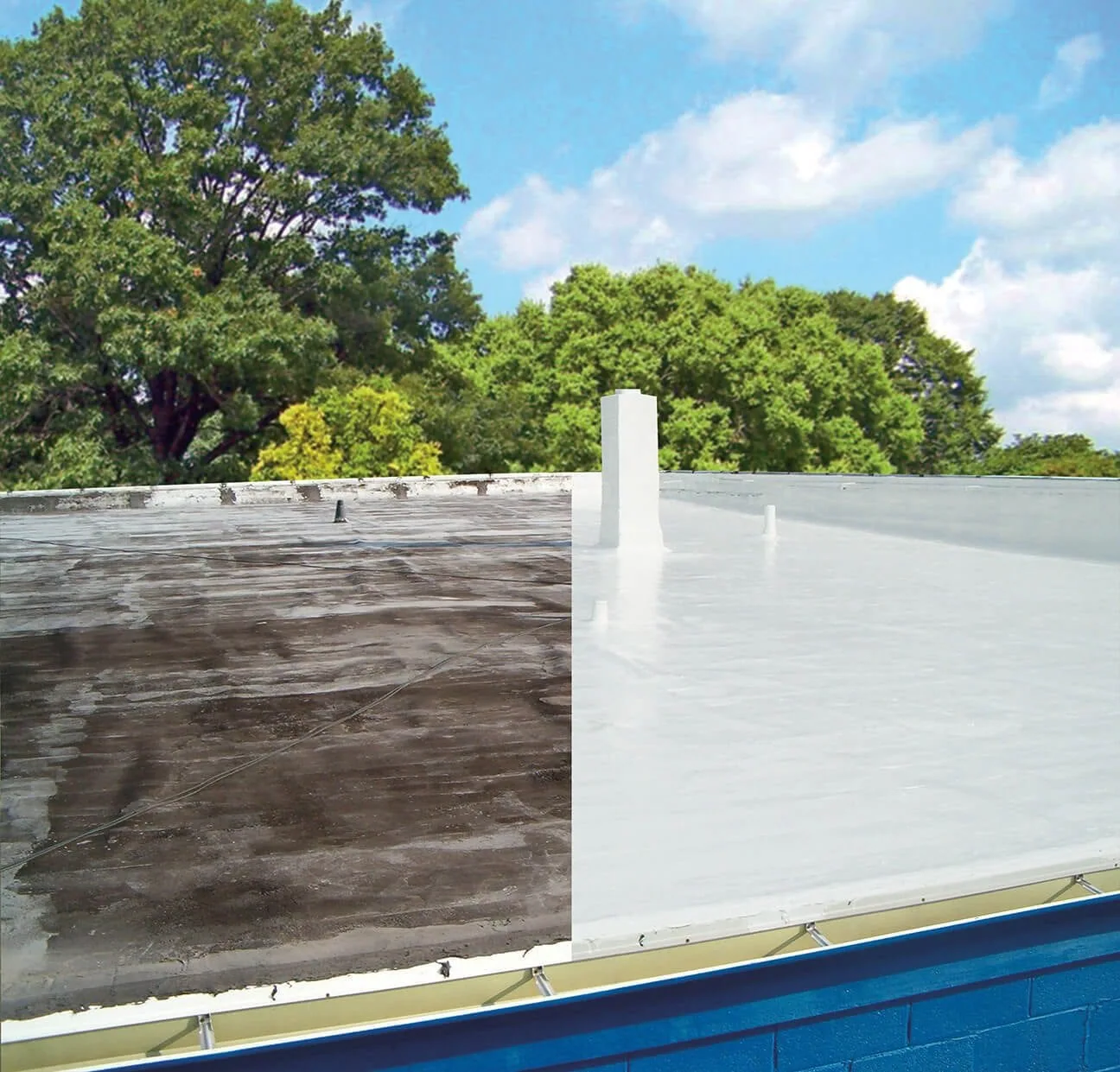
A silicone coating can renew the weathering surface of some commercial roofs, but only when the existing assembly is stable, dry, and compatible with the system. In Salinas, we inspect the roof layers, seams, drainage, penetrations, and prior repairs before recommending a coating. The owner should know what preparation the roof needs and which conditions a new surface will leave in place.
Salinas has a long dry period and most normal rainfall arrives in the cooler months. That helps frame scheduling for cleaning, repairs, and coating application, but current surface conditions govern when work can proceed. The coating is only one part of the scope: substrate preparation, flashing, drains, and future access all affect its performance.
When might a silicone coating make sense?
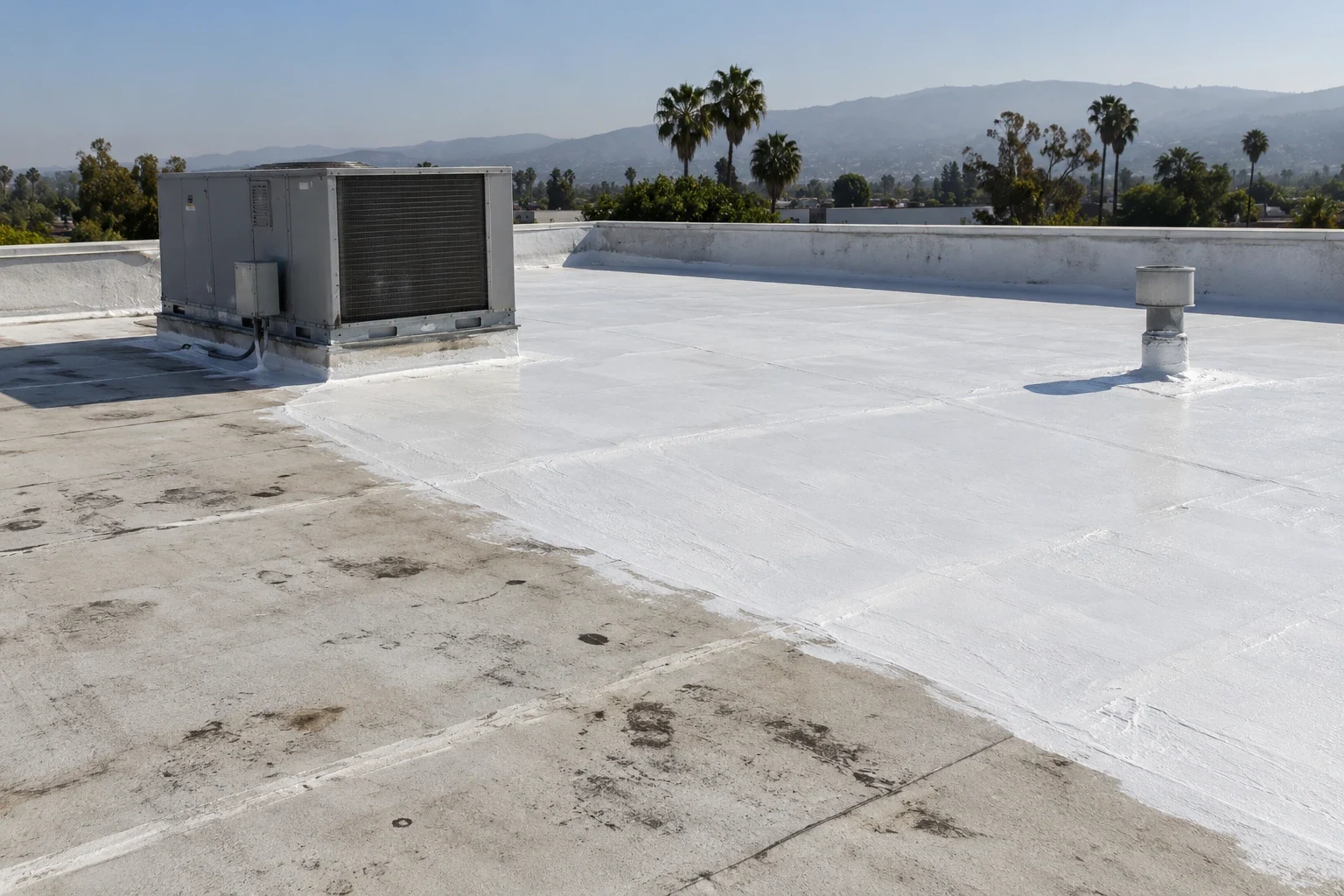
A coating may be appropriate when the roof membrane or existing coating remains bonded, the substrate is dry, and the surface can be prepared to receive a compatible product. Silicone is often considered where standing water exposure is a concern, but that does not make it a substitute for correcting a blocked drain, failed seam, or structural low spot. We inspect the drainage path and state whether the project changes roof geometry or leaves it as found.
The assembly may include metal, modified bitumen, single-ply membrane, or an existing coating. Adhesion and compatibility vary by surface, contamination, and prior materials, so a test patch or manufacturer-required primer may be needed. We compare coating with acrylic restoration and spray-foam assemblies when the owner is considering renewal options. Each has different substrate, drainage, and maintenance requirements.
What should be repaired before coating?
We look for loose membrane, open laps, blisters, punctures, exposed reinforcement, rust, wet insulation, and failed flashings. A coating applied over a weak bond can peel with the material below it. Wet layers need to be located and removed or otherwise addressed under the approved scope. We also identify where existing patches, sealants, or coatings may interfere with adhesion and test those areas before specifying preparation.
Every seam, curb, drain, scupper, wall transition, and roof edge needs a detail repair before the field coating closes over the roof. A coating can bridge small texture changes, but it cannot rebuild a loose termination or replace a damaged drain connection. The inspection record should separate confirmed repair items from surfaces still needing adhesion testing. Where there are recurring interior leaks, leak tracing can locate likely entry points before coating work begins. We also confirm the repair materials and primers proposed for each surface so incompatible layers are not hidden by the new coat. When preparation reveals wet or unstable material, the owner should see the location and recommended correction before application continues. That record makes the coating boundary clear at closeout. We can then tie later inspection records to the same roof zones.
How does application preparation work?
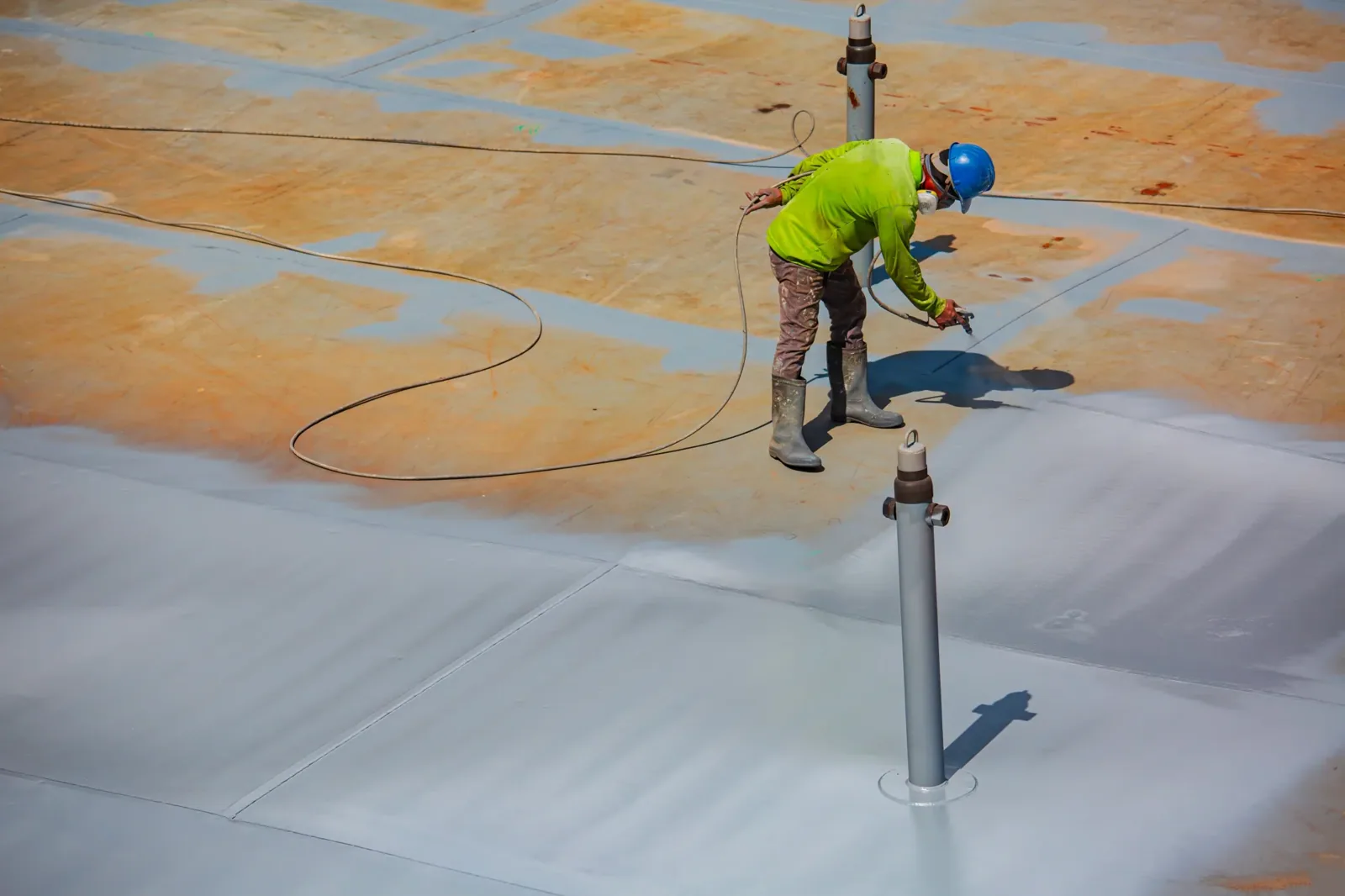
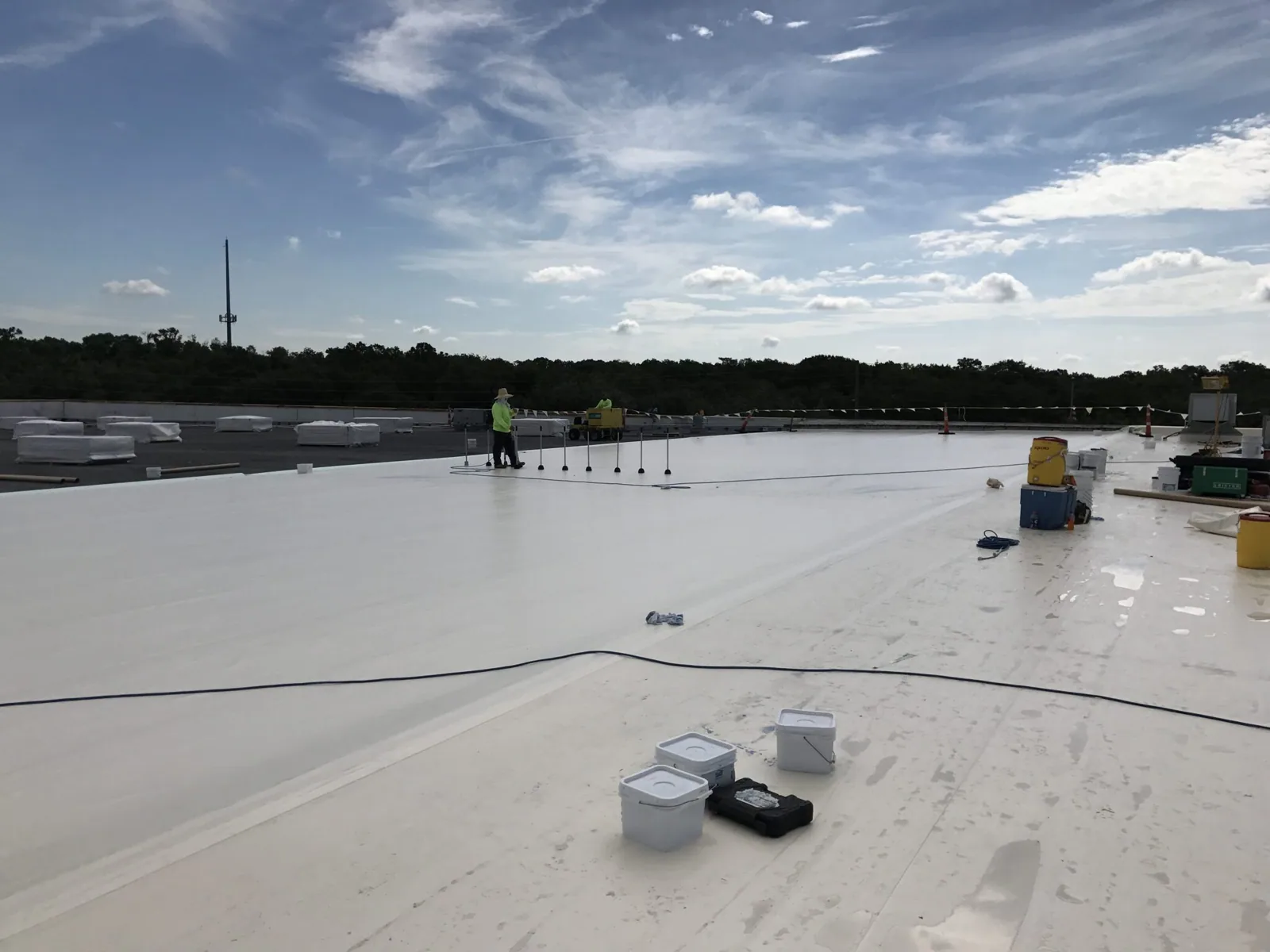
Preparation typically includes cleaning the surface, removing loose material, repairing defects, and priming where required by the selected coating. The substrate must meet the product’s moisture and temperature limits. Roofs near food processing or occupied areas may need additional controls to protect intakes, equipment, stored goods, or pedestrian paths during cleaning and application. We agree on the method and work zone with the site contact before bringing materials onto the roof.
Coating thickness and coverage need to follow the product design, including reinforcement at seams or transitions where specified. We document preparation and application areas so the owner can see what was completed. Weather can change quickly, and a surface that is damp from fog or overnight condensation may need more drying time. Crews confirm conditions in the field and leave each shift with edges and open details protected from water.
What about drains and standing water?
Silicone can tolerate intermittent ponding better than some coating chemistries, but the roof still needs a functioning drainage path. Standing water can collect debris, conceal developing leaks, and keep access areas wet. We inspect drains and scuppers, check overflow routes, and confirm whether the deck or insulation directs water where intended. If the owner expects coating to eliminate ponding, the proposal must say whether slope correction or outlet work is included.
For a roof in Salinas Business Park or the Ag-Industrial Center, facility records and actual roof layout help identify equipment zones and outlet access; district context does not define the assembly. At buildings in Alisal and East Salinas, we still confirm each roof’s low spots and outlet details directly. Drainage repairs should be completed and tested as part of the preparation, not hidden beneath a new surface.
How should a coated roof be maintained?
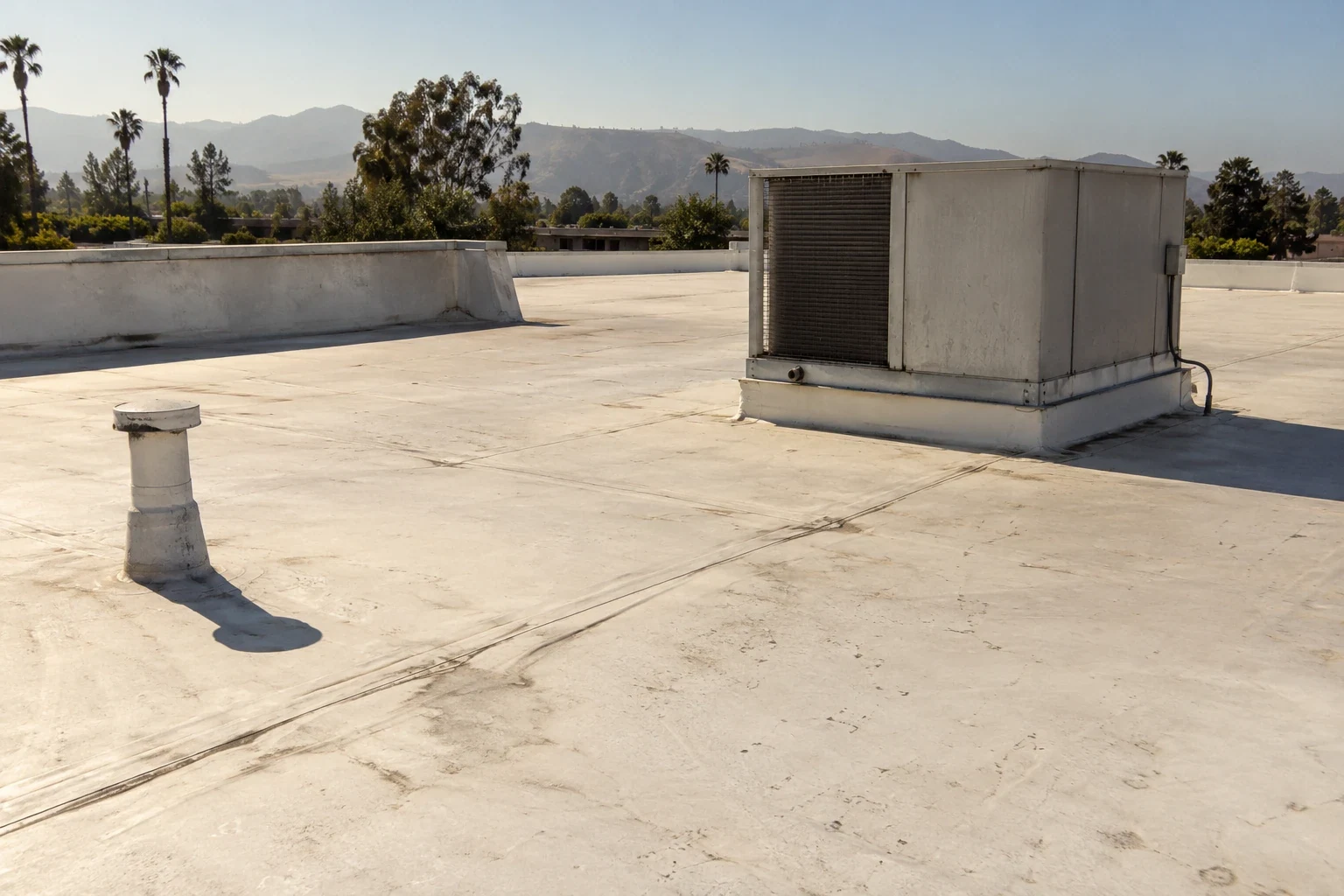
A coating does not make the roof maintenance-free. Owners should keep drains open, inspect flashings, check areas used by service trades, and watch for punctures, cracks, blisters, or coating loss. Mechanical work can damage the surface, and a later patch needs compatible material and preparation. We record the roof zones where repairs are made and record whether the coating remains bonded around the work.
Inspection intervals and recoating depend on the product, exposure, condition, and maintenance history. We check whether the film has worn thin, lost adhesion, or separated at a repair, and whether the substrate below still supports another application. A fresh topcoat cannot restore wet insulation or a moving seam. Where service crews regularly cross the roof, the maintenance record should also map the path and identify any walkway protection that needs repair. Before recommending another coat, we test adhesion and confirm that the existing layer can support it. A maintenance visit can record changes and repair needs, while restoration planning checks whether the current assembly remains suitable. If moisture or adhesion failure extends across the roof, a new coating may not be the right next step.
How can coating work fit building operations?
Cleaning, repairs, and coating each affect the building differently. The site plan should cover water or debris from washing, overspray protection, odors, ventilation intakes, access routes, material staging, and weather protection. A production facility may need a temporary exclusion zone around an intake or loading area. We confirm those sensitivities with the owner and coordinate any equipment shutdown or additional protection before work begins.
Commercial projects in Salinas range from warehouse and office roofs to agricultural-support buildings. We work by zones so the property contact can see which areas are prepared, coated, and ready for service. The closeout record should include the coating product, application areas, repairs, and any exclusions or follow-up tests. If a roof remains occupied, occupied-building coordination keeps the daily sequence and access changes visible to staff.
Questions Owners Ask
Can silicone coating go over any commercial roof?
No. The existing roof must be stable, dry enough, clean, and compatible with the coating. We inspect seams, flashings, surface condition, and prior materials, then test adhesion or specify repairs before deciding whether coating is suitable.
Does silicone coating stop ponding?
It can tolerate ponding under suitable conditions, but it does not correct blocked drains, deck deflection, or inadequate slope. We state whether the scope changes drainage or simply restores the surface around the existing geometry.
Can silicone coating be applied over an old coating?
Sometimes, if the old layer is well bonded and compatible with the new product. We clean and test representative areas, then identify any material that must be removed or primed before application.
How do we maintain a silicone-coated roof?
Keep drains clear, inspect flashings and service paths, and document punctures or coating wear. Before recoating, confirm adhesion and confirm that the roof layers remain dry and stable.
Related Roofing Work
Confirm the roof can support a coating
Share the roof system, prior coating or repair history, leak locations, and building access needs. We will inspect the substrate and explain what preparation or drainage work the coating requires.