Aircraft Hangar Roofing in Salinas, CA
Plan Salinas hangar roof repairs around aircraft clearance, door systems, drainage, maintenance access, and uninterrupted aviation operations.

Overview
An aircraft hangar roof has to clear a wide interior span while working beside a large moving door, aircraft, service equipment, and controlled access. A leak over a maintenance bay can affect tools and work areas, while a failed edge detail can interfere with door movement. We inspect the roof system and its transitions, document what needs repair, and coordinate the work zone with the operator.
Salinas includes airport-adjacent industrial planning areas, including the Salinas Business Park, whose developer describes planned warehousing, logistics, packaging, and advanced manufacturing uses near Salinas Municipal Airport. That context does not identify an individual hangar's roof or operation. We confirm the actual structure, access rules, door configuration, and maintenance history before proposing work.

How do hangar doors affect roof work?
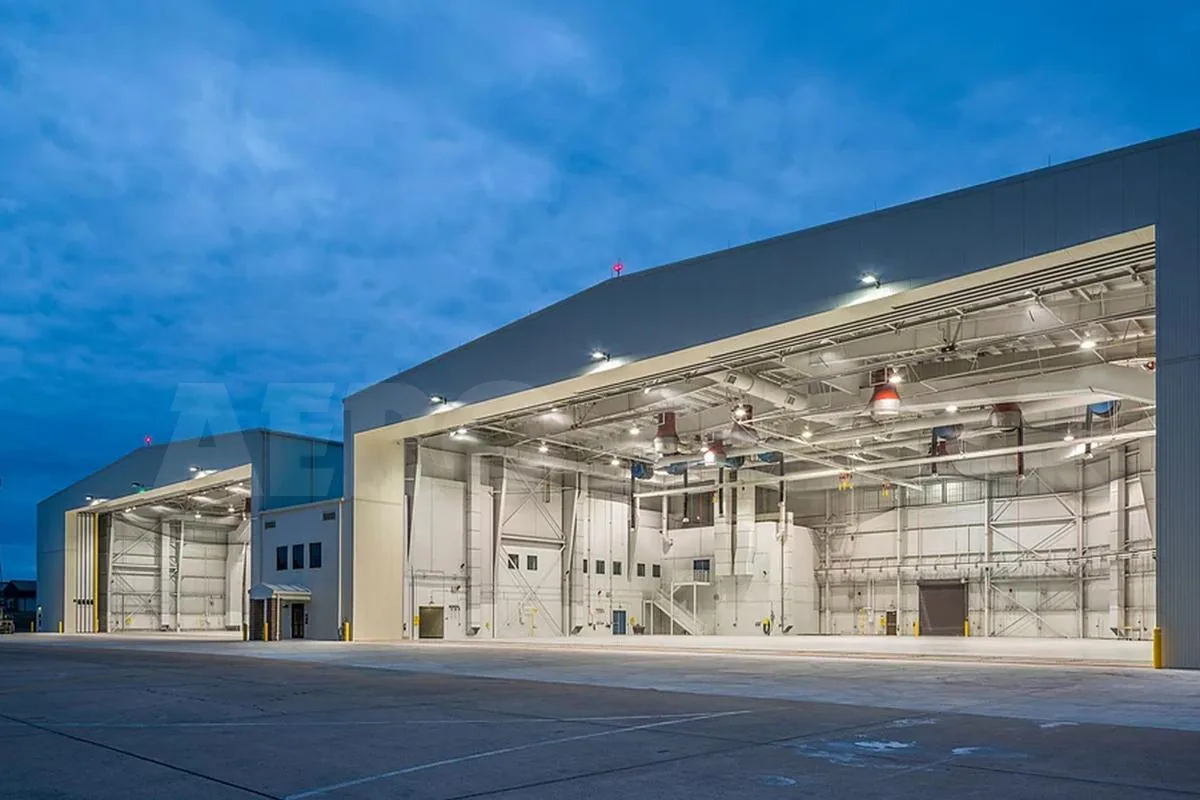
A hangar door can span most of a building wall and may use tracks, rollers, cables, motors, and weather seals that need to remain accessible. We inspect roof-edge flashing and the adjoining wall connection without assuming that a door adjustment will solve a roof leak. If overhead work may interfere with opening, maintenance, or aircraft movement, the operator sets the safe access window and identifies any equipment that must be parked outside the work zone.
Door tracks and roof edges can meet at details where movement, wind, and water all matter. We document the transition, record where water can enter, and coordinate temporary protection so the opening is not left exposed during a shift. Edge and coping repairs should restore the roof boundary while preserving door clearances. The work plan identifies who controls the door and when it can be cycled for a final check.
Metal skin, insulation, and interior liner can respond differently as the roof heats and cools. We check panel laps, fastener lines, and end laps for movement or corrosion, then compare those observations with any water marks below. A patch should match the panel material and avoid trapping moisture at the repair edge. For a membrane roof, seams and penetrations receive a different material and preparation sequence, so identifying the system is part of the inspection rather than a guess based on the building shape.
What needs to be protected inside the hangar?
Aircraft height and wing clearance influence lift placement, interior protection, and where materials can be staged. We map the roof area above the hangar floor and nearby shops, then identify whether aircraft, maintenance stands, or sensitive equipment need relocation. The operator should define the areas that must remain clear, the route for moving equipment, and any limits on dust, noise, or overhead work. That information belongs in the schedule before material arrives.
Work above an occupied bay requires a clean separation between the roof task and aircraft access. We establish drop zones and barriers with the facility contact, keep fasteners and debris controlled, and inspect the work area before it returns to service. Phased occupied-building work can help when the hangar has multiple bays or associated offices, but each phase still needs a weather plan for the exposed roof.
How is water traced across a wide roof?
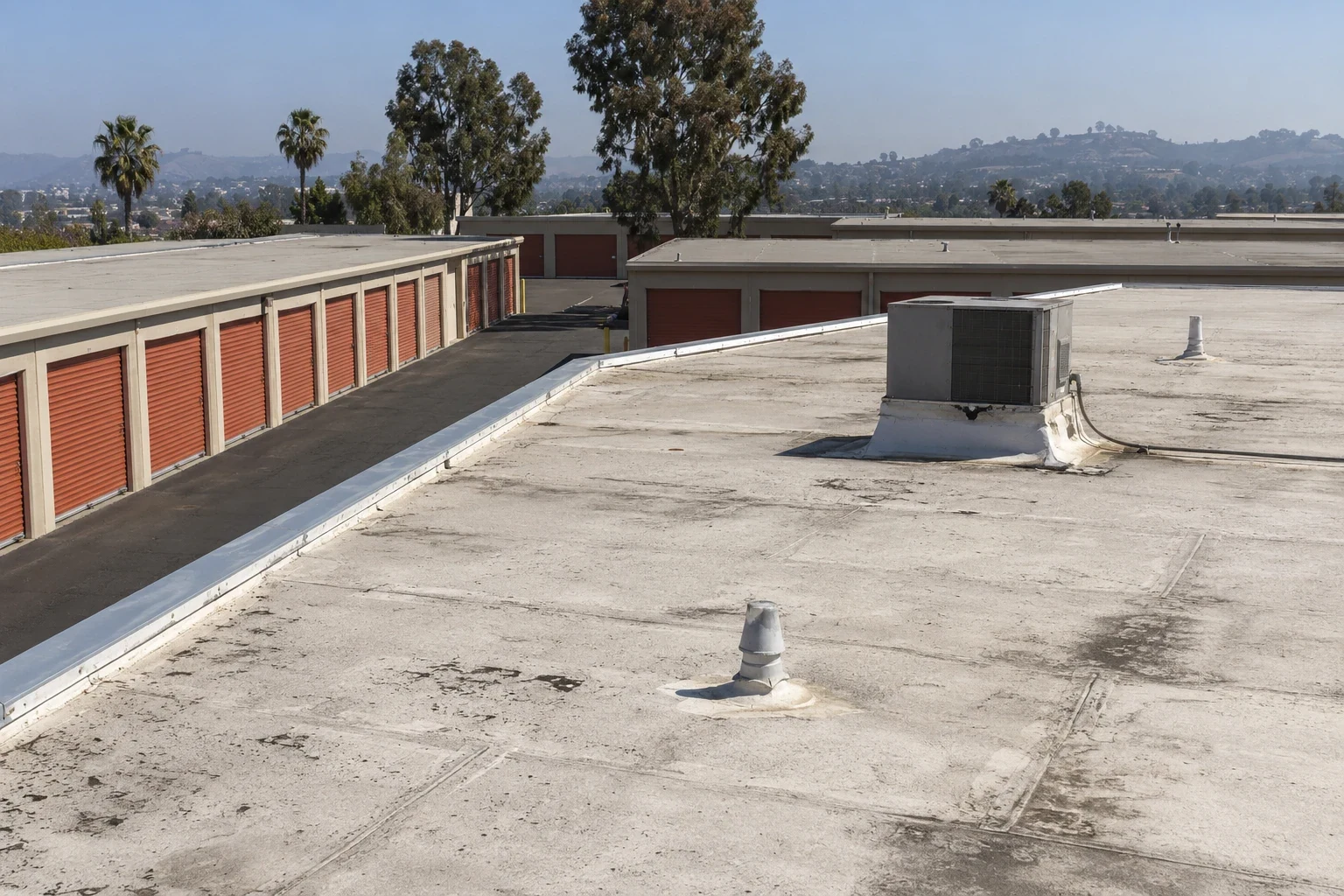
A mark on a hangar floor may sit far from the roof opening because water can travel along a deck, purlin, or insulation joint. We record the location, time, and conditions when the leak appeared, then inspect the matching roof area and nearby seams, penetrations, and drainage points. If the building has several bays, the report names the bay and roof zone so the investigation can distinguish a recurring entry path from a separate condition.
Active water near electrical systems or aircraft should be isolated according to the operator's safety procedures while the roof origin is investigated. We document temporary protection separately from the permanent repair and select materials compatible with the existing assembly. A leak repair should identify the detail repaired and any adjacent area that needs monitoring. When several reports share a roof zone, moisture surveying may help locate wet insulation that visual inspection cannot confirm.
Which roof and equipment details need inspection?
Hangar roofs may use metal panels or low-slope membranes, with large spans that make attachment and drainage important. We identify the system, inspect seams and fasteners, and check how curbs, vents, skylights, and other openings connect to the roof. Where an aviation property includes adjacent storage or production buildings, warehouse roof inspection and manufacturing roof planning address distinct loading and equipment needs. Corrosion, movement, loose fasteners, or an old repair may need a different response than a puncture in an otherwise sound membrane. We record the evidence before selecting a repair material.
Mechanical and electrical contractors may need access above or below the roof during a project. We coordinate penetrations, supports, and shutdowns in advance so one trade does not leave an unprotected opening for another shift. Curb and support work should restore flashing around the equipment, while standing-seam metal roofing calls for repair methods suited to its panel profile and movement. We also evaluate membrane assemblies by their seams, attachment, and repair history.

How should the work schedule account for Salinas weather?
NOAA normals for Salinas show most annual precipitation falling in the cool season, while the Salinas Valley also experiences frequent summertime fog and low cloud cover. These conditions are useful scheduling context, not a substitute for a current site forecast. We review the expected work window, the time needed to secure an open section, and how the operator will protect aircraft and equipment if weather changes during a shift.
Roof access should be coordinated with current surface conditions and the facility's operating calendar. A planned repair may need a dry interval for preparation or adhesive work, while a metal detail has different installation requirements. Near Airport Industrial Park or downtown Salinas, staging and approach routes also vary by site. We confirm the actual gate and lift position with the property contact instead of assuming one corridor has a standard access pattern.
When should a hangar owner price replacement?
A repair can be appropriate when a failed seam, fastener, curb, or perimeter detail is isolated and surrounding material remains serviceable. Widespread corrosion, repeated leaks, wet insulation, or attachment concerns may justify a broader assessment. We map conditions by roof section and explain what can be confirmed visually and what may require testing. The owner can then compare the cost and access impact of repairs with phased replacement.
Replacement planning should include aircraft relocation, door operation, interior protection, crane or lift access, and temporary weather closure. A facility with multiple hangars may prioritize work by condition and operational effect rather than treating all structures as one scope. A replacement evaluation can set out those phases; maintenance records help track fasteners, seams, drains, and repairs between capital projects.
Owners can also consider how a roof project intersects with aircraft inspections, planned maintenance, and lease or tenant schedules. We phase noisy or overhead tasks around those activities where possible, while preserving a weather-tight closeout at each daily stop. A useful proposal distinguishes the roof work itself from operator tasks such as moving aircraft, suspending a bay, or authorizing access. That division makes approvals and schedule changes easier to manage.
Questions Owners Ask
Can hangar roof work proceed while aircraft remain inside?
It may be possible in a defined zone, depending on lift access, overhead protection, debris control, and the roof phase. We confirm clearance and relocation needs with the operator before work begins.
What if a hangar door leaks at the roof edge?
We inspect the roof termination and door transition together, then document whether the opening is at flashing, panel, seal, or another detail. Door operation is checked with the facility contact after the repair.
Does summertime fog mean the roof is leaking?
No. Salinas Valley fog is climate context, while a leak diagnosis comes from the building. We compare interior reports, roof details, and weather timing before specifying a repair.
How do you protect a hangar if rain is forecast during replacement?
We divide the work into sections that can be secured within the shift and identify temporary closure steps in advance. The sequence follows the forecast and the operator's aircraft protection plan.
Related Roofing Work
Plan roof access around aircraft operations
Share hangar door requirements, aircraft clearances, maintenance windows, leak records, and access rules. We will inspect the roof and prepare a work sequence that accounts for aviation operations.