Commercial Roofing in Watsonville, CA
Plan a Watsonville commercial roof inspection, repair or renewal by documenting the assembly, water path, access needs and operating schedule.
Overview
A commercial roof in Watsonville should be reviewed against the building it protects: its installed assembly, drainage, penetrations, and the hours when the property can be accessed. The Salinas Valley is a regional point of access to nearby communities and coastal towns, and Watsonville is listed as a neighboring Central Coast city. The Pajaro Valley lies north of Salinas in northern Monterey County. Those references set geographic context, not roof condition or a travel time.
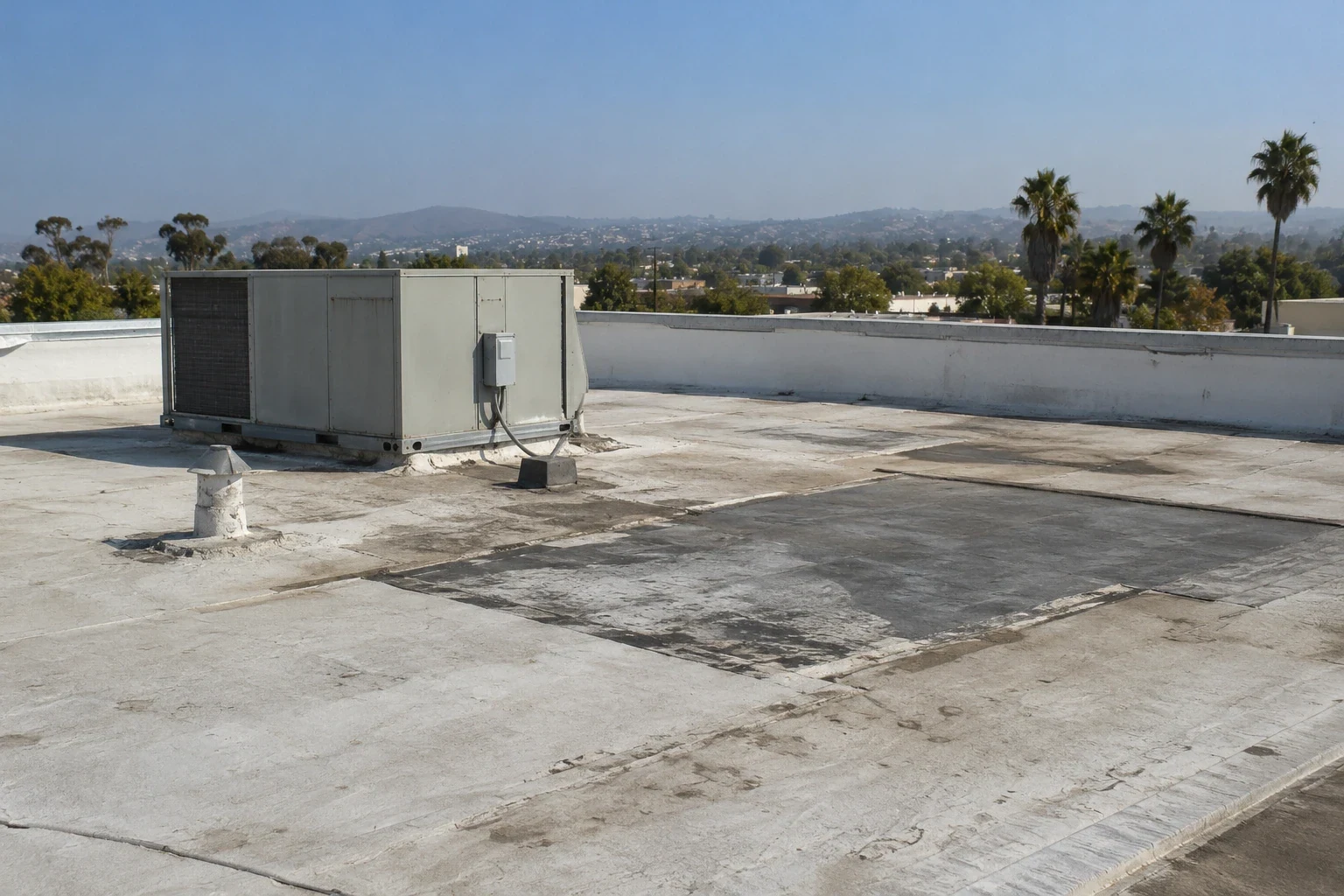
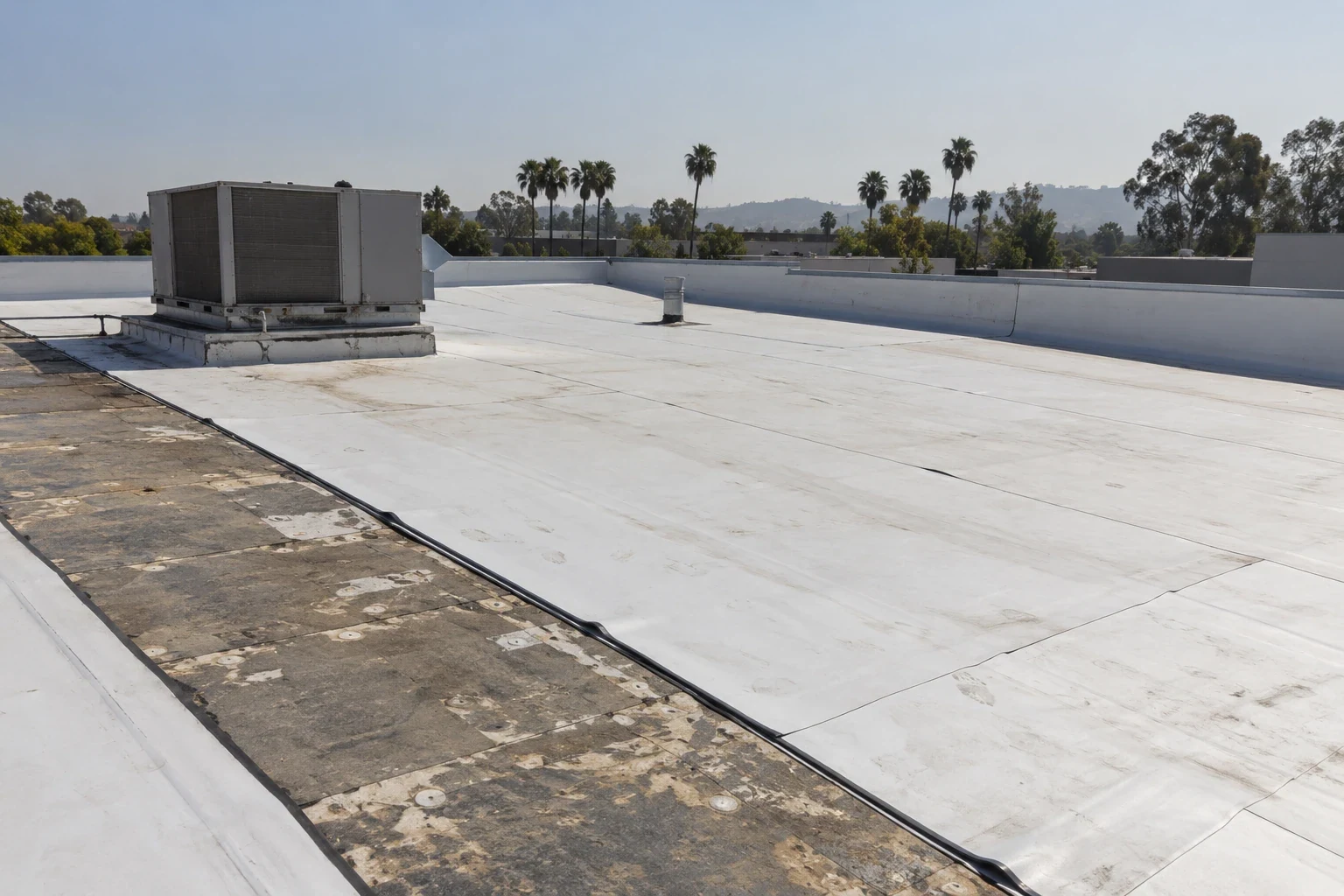
A first visit can record visible membrane or metal, prior patches, outlets, edge details, and reported leak areas. We record which zones were reached and what would require additional investigation. A commercial roof inspection gives ownership a usable starting record before it compares repair, maintenance, or replacement.
What does the regional map say about Watsonville?
Watsonville is identified as a neighboring Central Coast city in California’s local-government directory. Salinas local conditions describe regional access to nearby communities and coastal towns from the valley, while Monterey County mapping identifies the Pajaro Valley north of Salinas. These facts help locate the service region; they do not identify the building’s use, roof construction, or site access. We confirm those details directly with the owner or facilities contact.
If an owner manages roofs in more than one part of the region, keep a separate condition file for each property. Reports for Pajaro and Las Lomas should stay tied to those communities, just as a Watsonville report should document the building inspected. A common portfolio does not mean the roofs share a deck, drainage layout, or maintenance history.
For a Watsonville property, roof access, tenant notice, equipment restrictions, and repair records can shape the first visit. We confirm those items before mapping a repair sequence or proposing a broader scope.
Which roof details help trace a leak?
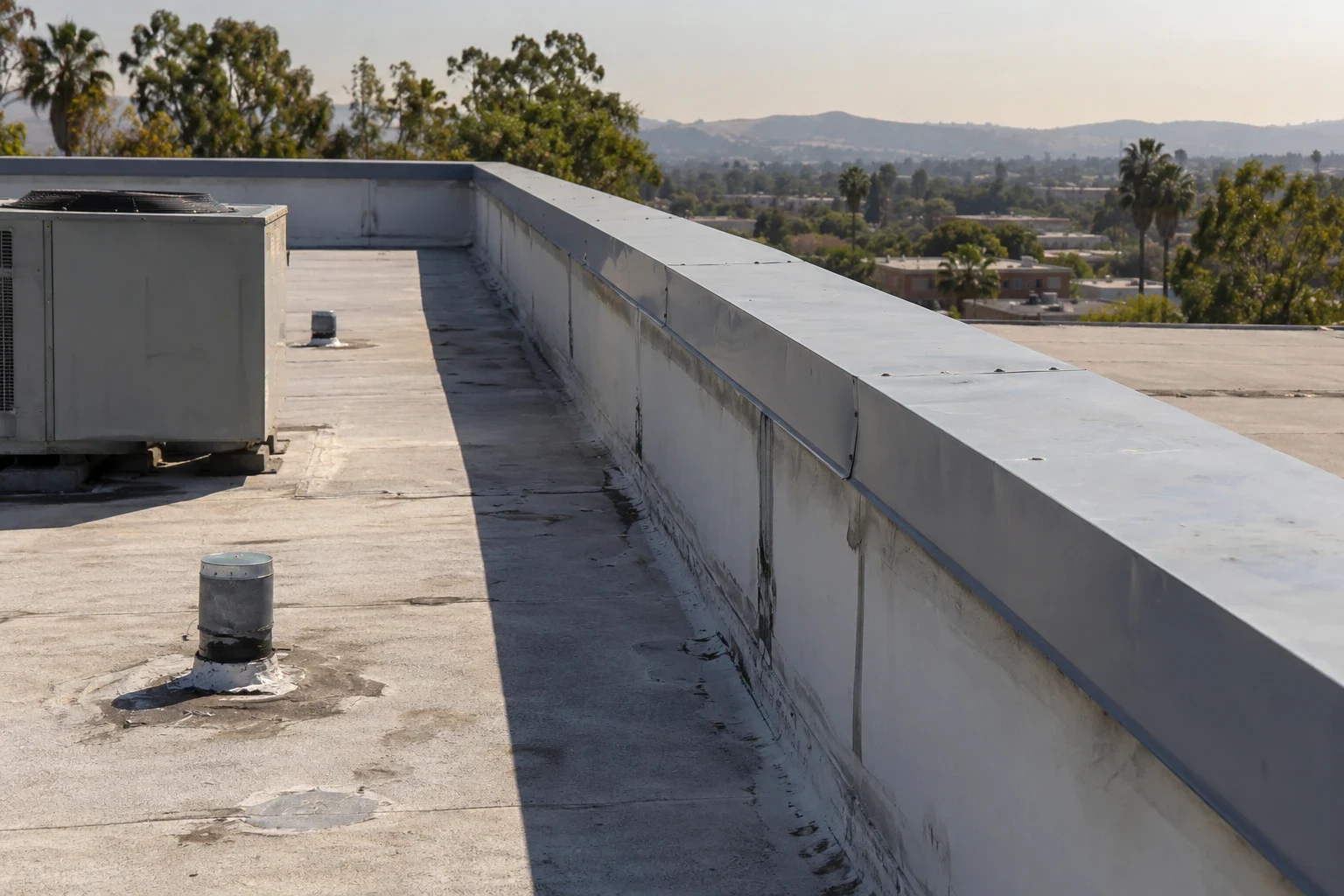
We inspect the reported area and the details that can admit or redirect water: seams, laps, flashing, penetrations, curbs, drains, scuppers, parapets, and transitions between roof levels. The interior report should include the room, date, and conditions when water appears. A ceiling mark may sit away from the roof opening, so the path needs to be compared with slope and outlet direction before a repair boundary is set.
If the surface does not show how far moisture extends, an infrared moisture survey may help identify candidate zones for closer evaluation when the roof and conditions fit the method. A selective opening can then answer a defined question about concealed insulation or deck condition. We connect any test to a scope decision, rather than recommending investigation without explaining what it could change.
Where an outlet is restricted, we check whether the surrounding membrane, drain bowl, and flashing are also involved. Clearing debris and repairing a failed seam are different tasks; the inspection should keep each finding with its own roof zone and next step.

How should weather affect a roof schedule?
Published precipitation normals for Salinas, CA show most typical rain falling during cooler months, and the Salinas Valley can experience extended summer fog and low cloud cover. Those climate facts describe Salinas and the valley, not a measured Watsonville property forecast. For a roof project, the important check is the surface and weather at the work site on the planned day, especially before a task that needs dry material preparation or a secure close.
We review drainage before the wet season, record any standing water or outlet restriction, and identify exposed seams and flashing that may need attention. If rain is expected before a repair can be completed, the scope should state the temporary protection and return step. A drain and scupper review can examine an outlet and adjacent details, while a commercial roof repair can address a defined membrane or flashing failure.
Current conditions also influence the sequence of a replacement. We plan daily closeout and protect open roof areas based on the forecast and the property’s access requirements, not a general seasonal assumption.
When should an owner move beyond a repair?
A repair may fit when the defect is limited and nearby material can support a compatible patch or flashing detail. We check the area around a tear, puncture, failed seam, or drain transition and record whether prior work has reopened. Several leak reports, deterioration across roof zones, or moisture beneath the visible membrane can change the path. The owner should see the observations supporting a local repair and the evidence that would justify a broader evaluation.
A recover leaves part of the existing roof assembly in place. Layer count, attachment, deck and insulation condition, drain elevations, and perimeter height can affect whether that is suitable. A roof recover evaluation compares that option with removal; a replacement review considers a new assembly when existing material cannot remain or repeated repairs no longer address the observed condition.
Scope and cost change with material removal, insulation, flashing, drainage, rooftop equipment, access equipment, and the number of work zones. Timing also depends on tenant coordination and whether each phase can be closed between visits. We itemize those decisions so ownership can compare alternatives on the same assumptions.
What belongs in the property’s roof record?
Maintain a folder for each property with available roof drawings, dated condition photos, leak reports, completed-work invoices, and outstanding recommendations. A report should say what the crew could see, which areas were inaccessible, what work was completed, and which questions remain open. If a test or selective opening could change the repair boundary, identify it and state what decision the result would inform.
A roof condition report can group active leaks, maintenance items, and follow-up testing for ownership. If the portfolio also includes property in Pajaro or Las Lomas, maintain separate histories and compare them only after the roof assembly and inspection limits are documented for each site.
Before work begins, confirm who can authorize access, where materials may be staged, which operations need to continue, and how occupants will be notified. For a larger project, the sequence should show the area open during each phase, the protection below it, and how the roof will be secured before the crew leaves. That gives facilities staff a record they can use to coordinate the next access window and track the open scope.
Questions Owners Ask
Does the Salinas climate data describe Watsonville?
No. Watsonville weather can differ from Salinas, so we schedule roof work around the conditions at the property. We check current site conditions and the roof’s drainage before recommending work or scheduling material preparation.
What information helps locate a commercial roof leak?
Share the room, timing, whether rain or equipment activity preceded it, and any prior repair. We compare the report with roof drains, seams, curbs, and transitions before defining the area to repair or test.
Can a single roof area be repaired without replacing the whole assembly?
Yes, when the defect is limited and surrounding material can support a compatible repair. We inspect beyond the opening and explain any adjacent conditions that could require a different scope.
How do you decide whether a recover is possible?
We review existing layers, moisture, attachment, deck and insulation condition, drainage, and edge height. If a concealed condition could change the answer, a test opening may need to come before a final proposal.
What should a facilities contact arrange before work starts?
Confirm roof access, tenant notices, material staging, equipment restrictions, and the hours when the crew can work. The proposal should also state phasing, interior protection, and how each open roof area will be secured.
Related Roofing Work
Arrange a Watsonville commercial roof review
Share the property location, roof history, leak timing, and access requirements. We will document visible conditions and outline the next repair, investigation, or renewal decision.