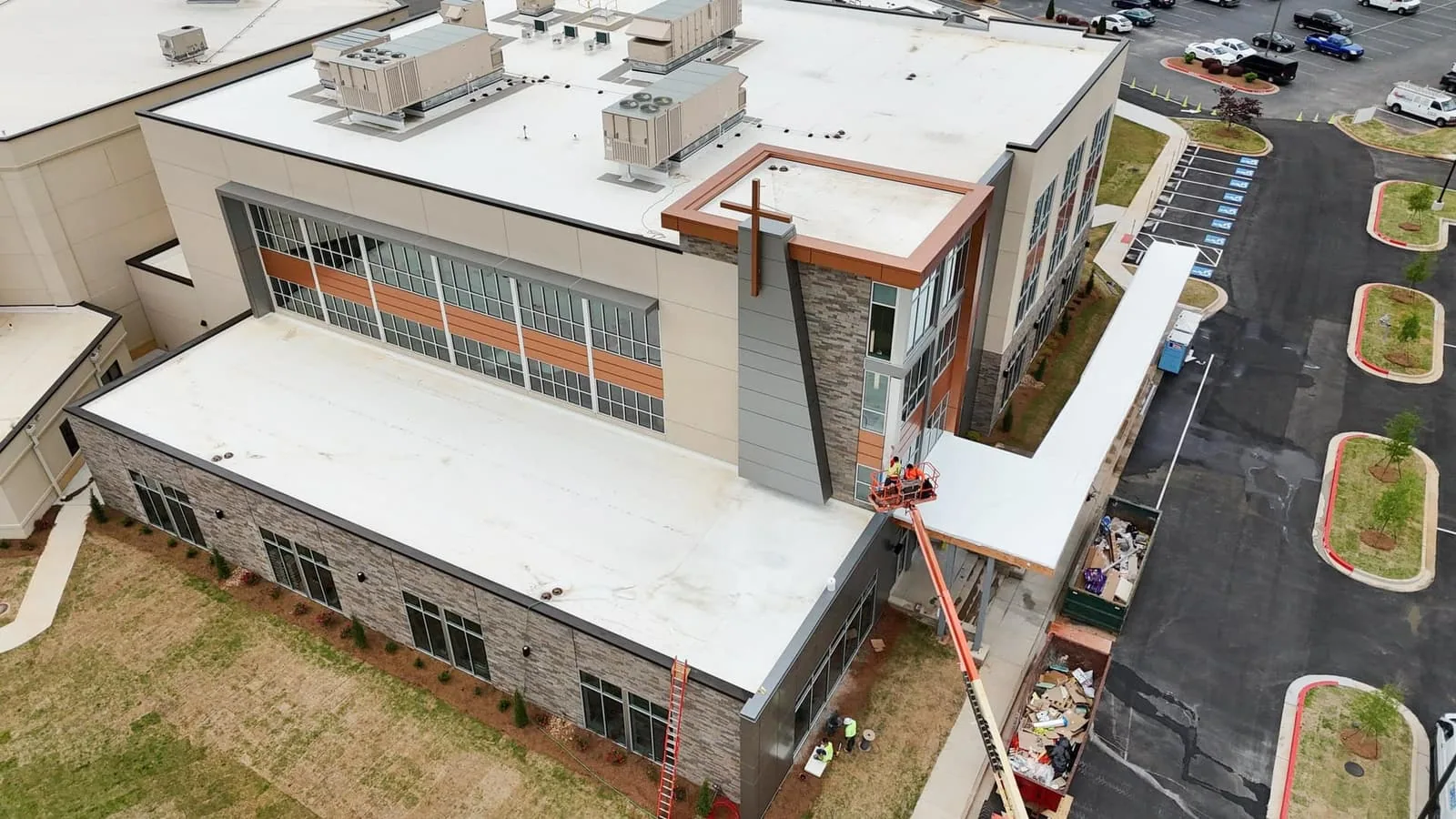

Commercial Roofing in Las Lomas, CA
Commercial roof inspections and repair planning in Las Lomas, with leak tracing, drainage, access, and scope decisions for each property.
Overview
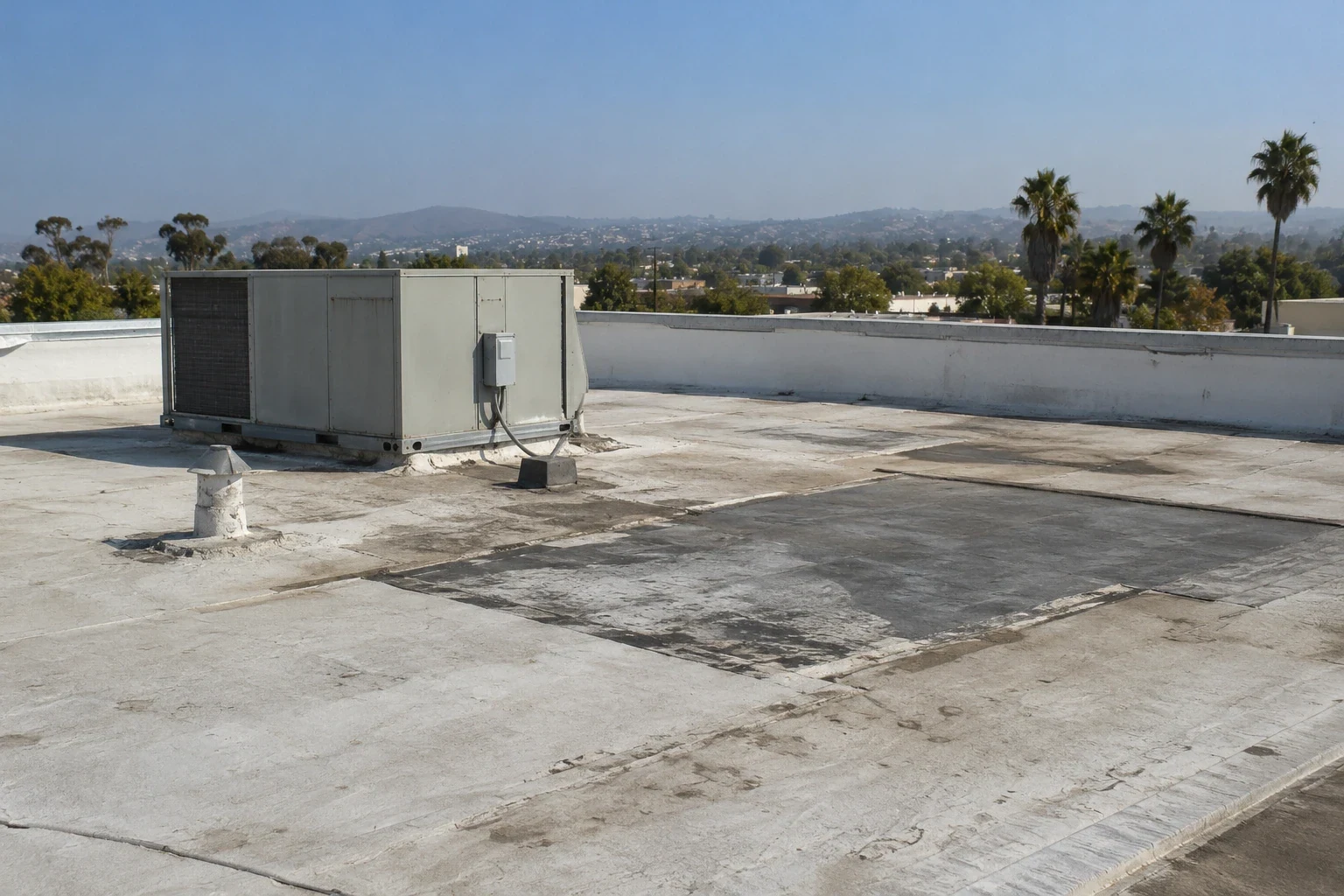
A leak report from Las Lomas should be checked against the roof plane, water route, and access window before a repair is priced. Las Lomas is an unincorporated community in Monterey County’s North County area. County district materials group it with Castroville, Pajaro, and Moss Landing. Those facts identify the community and regional setting; they do not describe any property’s roof system or condition.
We confirm the building with its owner or facilities contact, inspect visible membrane, metal, drains, flashing, and penetrations, then record which areas need follow-up. Most precipitation in Salinas falls during the cool season. Check current Las Lomas conditions before scheduling roof work. A commercial roof inspection can document the roof’s actual water path and help ownership compare a local repair with further investigation or broader work.
What does North County planning establish?
Las Lomas is in North County and groups it with Pajaro, Castroville, and Moss Landing in a supervisory district. That regional geography helps an owner identify the community, but it does not establish commercial building types, roof age, or the route to a particular property. We ask for the site contact, property location, and any roof plan or prior work record before setting an inspection boundary.
If the owner manages several buildings, each roof needs a separate map and condition history. A shared county district may help with administration, but two properties can have different decks, membrane types, drain placement, and repair timelines. We document the roof areas available for review, record any section that requires a separate access arrangement, and keep recommendations attached to the correct building.
That approach gives ownership a clear record for later comparison without assuming that one community-level description applies to each property.
How do you trace water from roof to room?
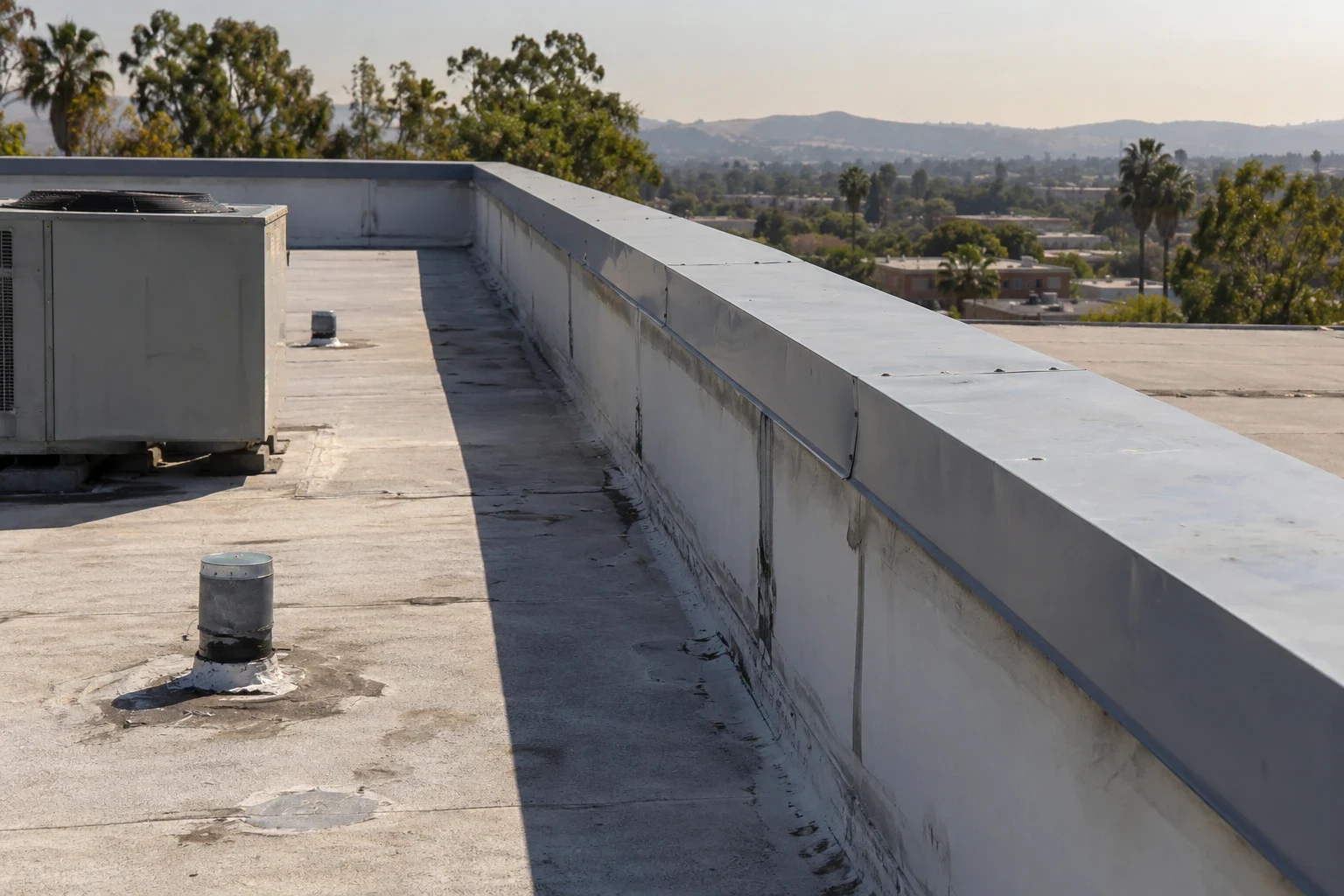
Start with when the leak appears, where it shows indoors, and whether a prior repair changed its timing. We inspect the reported roof zone plus nearby seams, laps, wall transitions, penetrations, equipment curbs, and drains. Water can move below the visible surface before it reaches an interior finish. The room location therefore helps focus the search, while slope and outlet direction help establish which roof details may be connected.
If a surface walk leaves a question about concealed moisture, an infrared moisture survey can help identify zones for closer evaluation when the method suits current conditions. We tie that step to a decision, such as whether a test opening could change the repair boundary or establish whether insulation should be removed. A drain problem, a failed seam, and water below a membrane need different responses, so each finding should remain distinct in the inspection record.
Where an outlet is restricted, we review the surrounding flashing and membrane as well as the path to discharge. A clear outlet is useful, but it does not resolve a separate opening at a curb or wall.

When can a localized repair remain the right next step?
A limited repair may fit when the defect is contained and the surrounding roof can support a compatible connection. We look beyond the opening at adjacent seams, flashing, edge metal, and past patches. A leak that returns at one detail can call for a closer review of that connection; leaks across separate roof zones, widespread deterioration, or moisture below the membrane may require more than another patch. The proposal should show what area the repair includes and which observations remain outside it.
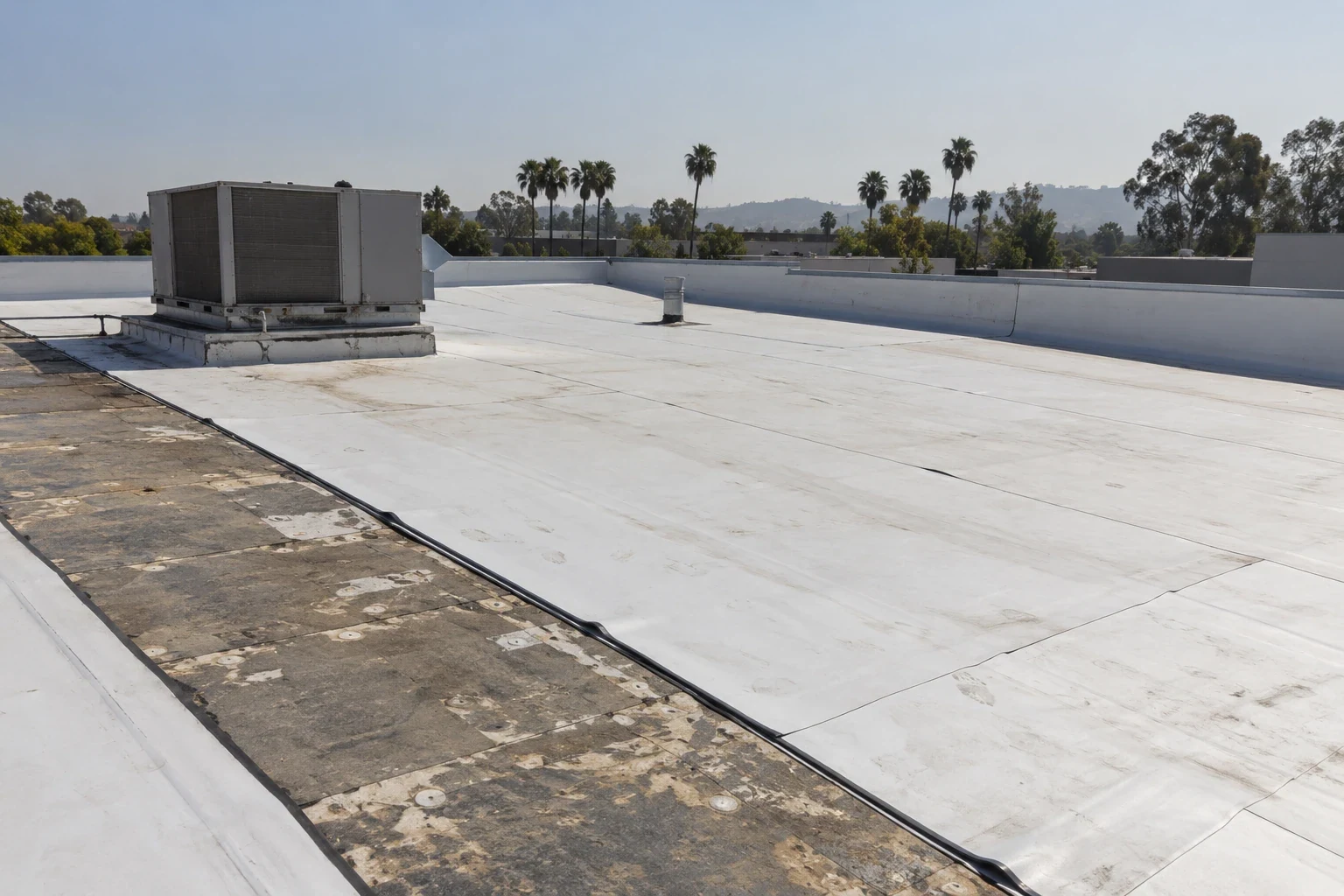
A commercial roof repair can address a defined condition, while a broader assessment compares recovery with replacement. Recovery leaves material below a new assembly, so attachment, layer count, moisture, deck and insulation condition, drainage, and finished edge heights deserve review first. A roof recover evaluation can compare retention with removal where the existing layers support that question.
Waiting on an opening can allow water to reach adjoining material or interior space. If immediate permanent work is not scheduled, the owner should know what temporary protection can limit entry and what change should trigger another visit.
What changes the timing and scope of replacement?
Replacement planning begins with roof zones and the layers that must be removed or retained. We check deck clues, visible insulation, edge heights, drains, curbs, parapets, and tie-ins to neighboring roof areas. If the assembly includes multiple phases of past work, each section may need a separate repair or replacement boundary. A test opening can help establish concealed conditions before quantities and details are treated as final.
Cost and timing depend on removal, insulation or cover board, flashing work, drain transitions, material staging, access equipment, and how many areas need separate protection. A proposal should state which details are included, how the roof closes each day, and what assumptions depend on conditions found after opening. If the facility has limited access hours or equipment that must stay in service, those requirements affect phasing and should be confirmed before the crew schedule is set.
A commercial roof replacement review can compare the full scope with repair alternatives using the same roof map and access assumptions. That makes it easier to see which cost drivers belong to the selected assembly and which come from the building’s operating constraints.
Which records make the next visit more useful?
Keep roof plans, photographs, leak dates, repair invoices, and inspection findings in one file for each property. A useful record states what was visible, what the team repaired, what could not be reached, and which question remains unresolved. If an owner later compares work in Pajaro or Moss Landing, separate reports keep the Las Lomas roof’s condition and repair boundary intact.
A roof condition report can prioritize observed defects and identify follow-up testing. Before another site visit, confirm who can authorize roof access, whether interior checks are available, and which areas need protection. If the building is occupied, schedule the inspection and repairs around operating hours and the access arrangements the property contact approves.
When the report lists immediate repair and later renewal as separate choices, ownership can plan the next step without losing sight of open conditions. Carry forward the roof zone, evidence, and the decision that still needs to be made. A dated follow-up keeps that open question attached to the area.
Before mobilization, confirm the building contact, approved roof entry, material delivery window, and any areas that must remain open to customers or tenants. If work must pause, define how the roof will be closed and protected at the end of the shift. A clear daily handoff helps ownership track completed repairs, weather delays, and any detail that requires a separate return visit.
Questions Owners Ask
How do you identify the roofing system at a Las Lomas property?
We inspect the roof and review available property records to identify the assembly, drainage, and visible condition before proposing work.
What should I include in a leak report?
Include the interior location, time and conditions when water appeared, and any earlier repair. We compare that information with nearby roof zones, drain paths, seams, and penetrations before setting a work boundary.
Can a limited repair be planned before replacement?
A local repair can be appropriate when the defect is contained and adjacent material is serviceable. We also explain whether inspection found conditions that call for testing or a broader review.
How do you decide whether to recover or remove the roof?
The existing layers, moisture, attachment, deck and insulation condition, drainage, and perimeter height all affect that choice. Where a hidden condition could change the scope, a selective opening may be useful before finalizing the proposal.
How do you set roof-work timing in Las Lomas?
We check the property’s drainage and current conditions before setting the inspection, repair, or installation window. Confirm a safe access route and material staging location with the site contact.
Related Roofing Work
Arrange a Las Lomas roof review
Share the property location, leak history, plans if available, and the person who can arrange roof access. We will map visible conditions and set out the next repair or renewal decision.