Commercial Roofing in Soledad, CA
Commercial roof inspection and repair in Soledad for industrial and agriculture-support properties, with scopes tied to roof condition and site access.
Overview
An industrial or agriculture-support building in Soledad may need roof work planned around equipment, receiving and the people working below. Los Coches and the agriculture industrial area include a mix of business and agricultural-support operations. We confirm the current building use and delivery schedule with each site contact before coordinating roof work. Those are recognized commercial areas, while the assembly and condition of each roof still need to be confirmed at the property.
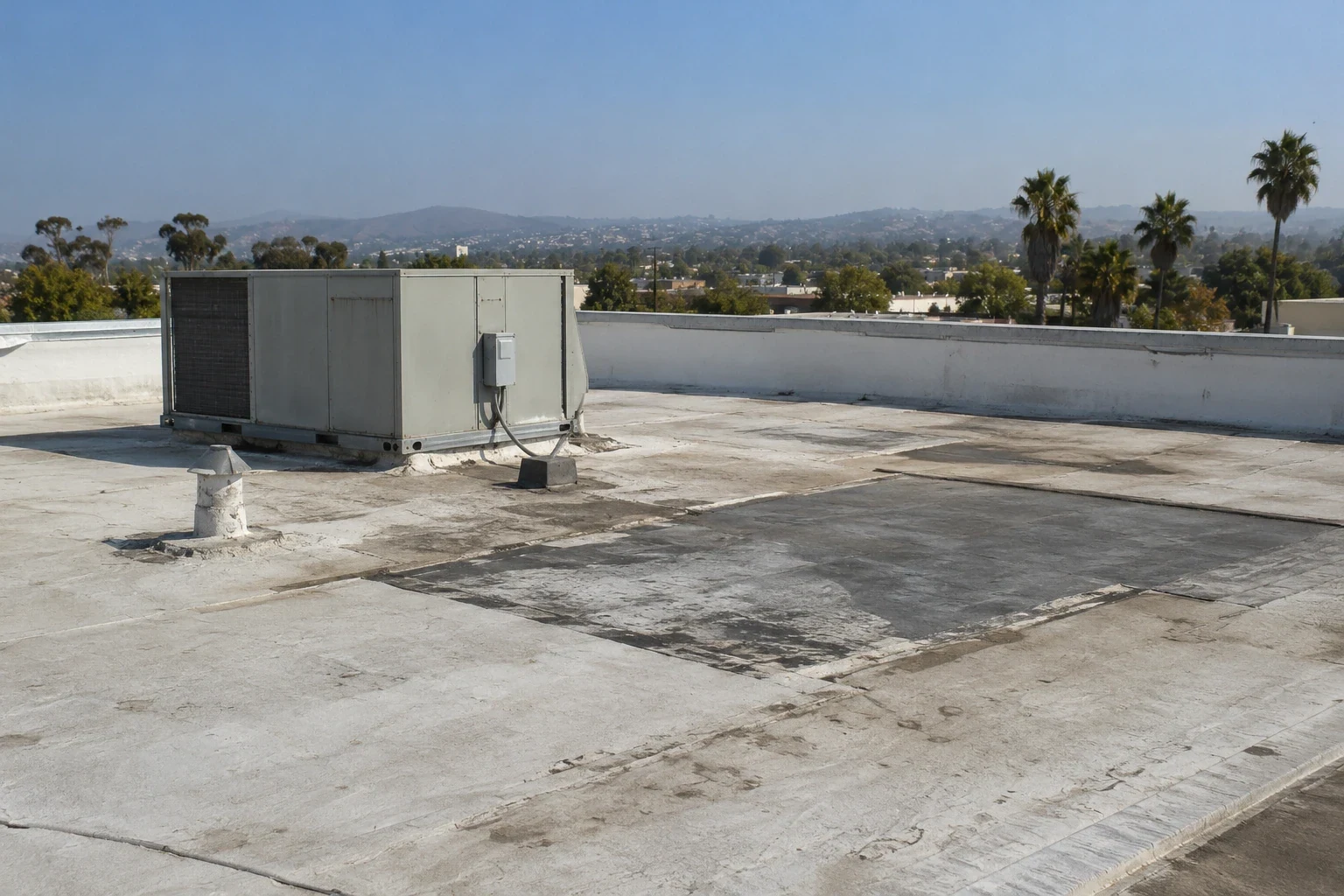
We start by identifying the installed system, the roof zones available for inspection and any leak or maintenance history. The walkthrough checks drainage, seams, flashings, curbs, penetrations and prior repairs where those details are present. A commercial roof inspection gives ownership a clear basis for choosing a localized repair, more investigation or a larger capital scope.
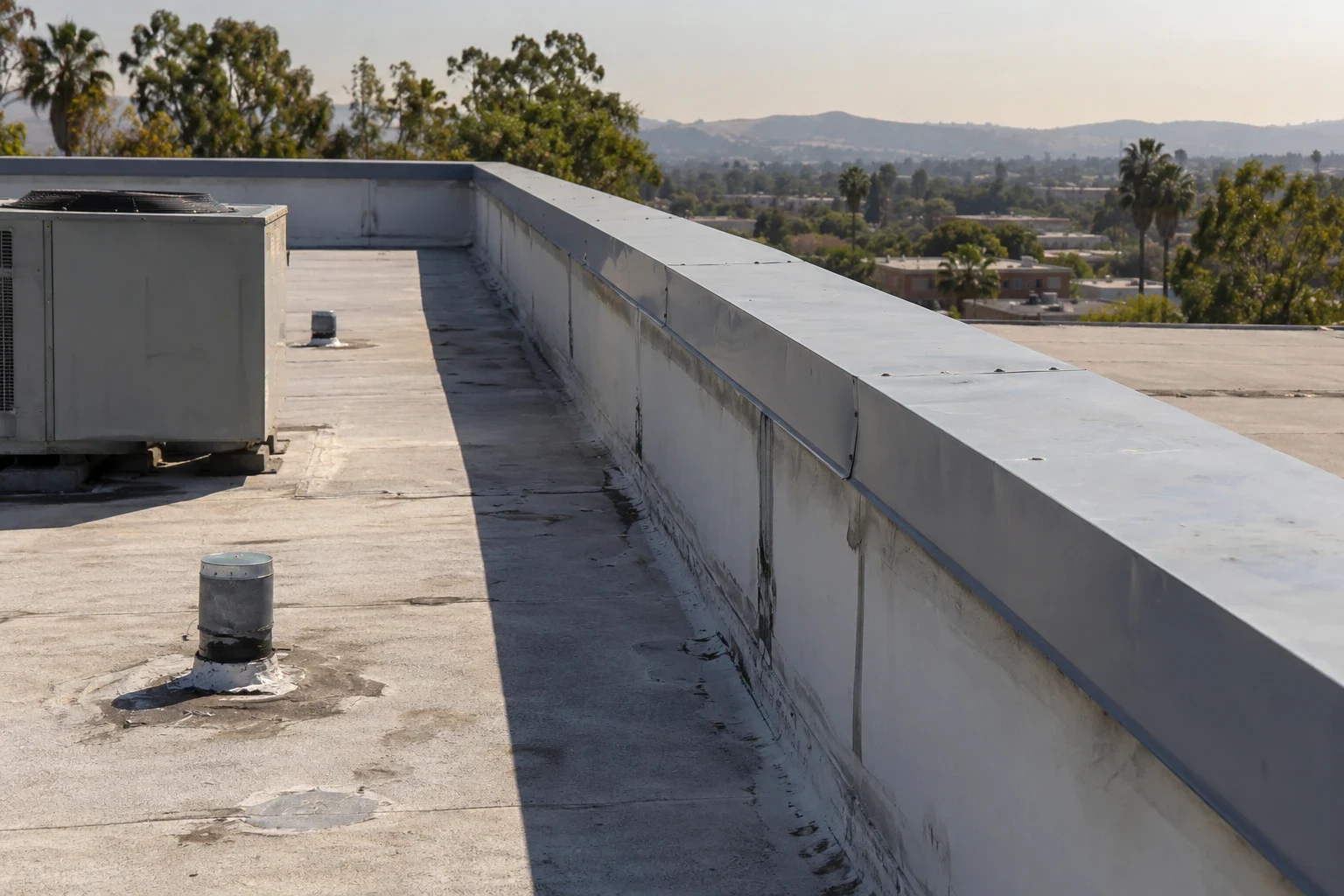
How should truck access shape the work plan?
Before a roof visit, confirm the current check-in point, approved material drop, loading periods, vehicle routes, and any activity that must continue at the property. Before a roof visit, confirm the current check-in point, approved material drop, loading periods, vehicle routes and any activity that must continue. A property contact should approve lift setup or temporary access changes before a crew is scheduled.
For businesses in Los Coches or the agriculture industrial park, the owner may need a different sequence for roof work over production equipment, incoming materials or stored goods. Identify what must remain active, what can be paused and what interior spaces need protection. If roof access crosses an operating area, agree on the route and escort before bringing tools or material onsite. Keep emergency and delivery paths clear according to the property’s own rules.
At the first walk, mark accessible sections and record hatches, ladders, drains, curbs, seams and edges that are present. Label each roof area on a simple plan so photos and findings stay tied to the right section.
Soledad’s industrial areas are distinct locations, and the property records should remain distinct too. An owner with sites near Gonzales or King City can coordinate maintenance dates across the portfolio, but a leak report, roof assembly and access plan belong to the building where the condition was observed.
What should the first roof walk establish?
Confirm whether the roof is a membrane, built-up or metal assembly through records and field observation. Industrial or agriculture-support use does not establish a particular roof type. We compare available drawings and warranty information with what is visible, then inspect seams, laps, flashing, penetrations, edge details and transitions that apply to the system. record any areas that could not be reached or where a drawing differs from the installed condition.
For a leak above Los Coches or the agriculture industrial area, record the work bay or storage zone and whether entry appeared during receiving, production or after roof service. Share the roof access contact so we can compare that timing with drains, seams and equipment openings. The interior stain may sit downstream of the breach, so we record the likely path separately from the visible ceiling mark. The inspection also lists what needs more access or testing.
Trace drainage toward each outlet and check debris, flow, drain or scupper condition and nearby flashing. A drain and scupper service should correct a confirmed component problem. If a leak aligns with a seam, curb or wall, include that detail in the scope.
Where multiple reports recur or moisture may extend beyond a visible opening, request further diagnosis before selecting a broad repair. A moisture survey can help guide investigation if the roof assembly and site conditions suit the method. The report should state which areas were tested, what the findings establish and what remains concealed. That distinction matters when an owner is comparing a targeted repair with replacement planning.

When is a repair likely to hold its scope?
A repair is easier to define when the origin is visible, the surrounding materials remain serviceable and the work can address the relevant seam, flashing or penetration without leaving a known adjacent condition untreated. The proposal should identify the roof zone, preparation, compatible materials and connected details. A commercial roof repair should state the limits of the work and the finding that would require a separate decision from ownership.
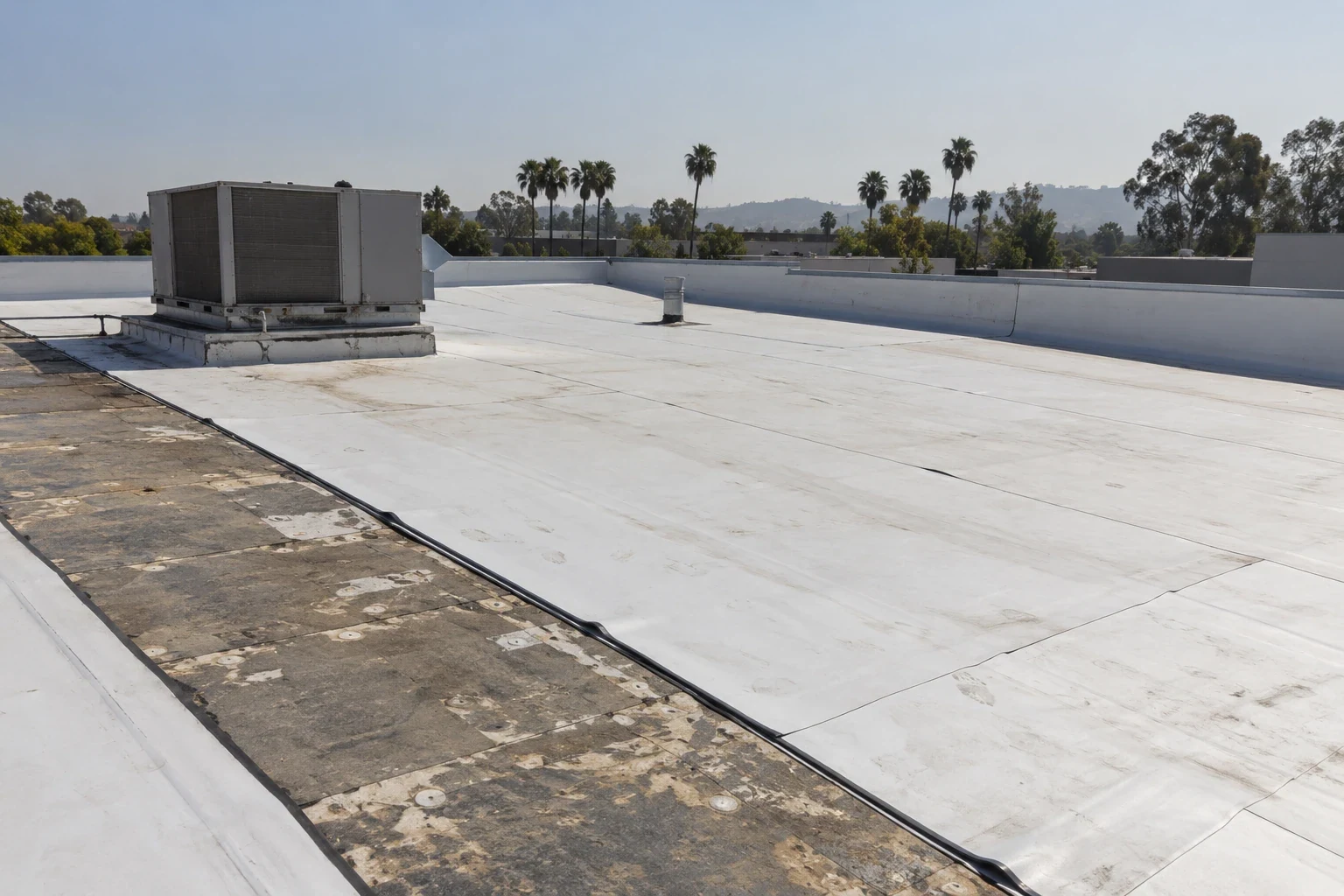
Replacement may merit comparison when defects appear in several areas, the same leaks return after prior work or the substrate and insulation need broader review. We explain the observations that support that option and any uncertainty still to resolve. A replacement proposal should state removal or recover assumptions, insulation, edges, drains, penetrations, tie-ins and protection needed around business activity so owners compare the same scope.
Cost and duration depend on measured roof area, assembly, tear-off, deck or insulation condition, transition details, access equipment, waste handling and the time available for work. Operations can affect material staging and daily closure. For a facility that stays open, an occupied-building reroofing plan can set work zones, notices, interior protection and the point at which each area is secured before crews move on.
Most annual precipitation in Salinas falls in the cool season. Use that market-level context to plan inspection timing, then set the actual work window from local roof condition and the current forecast. If the schedule includes an exposed opening, specify how it will be protected if rain or a newly discovered condition interrupts the shift.
What should the owner retain after the visit?
Keep the property’s roof plan, inspection record, dated photos, leak reports, invoices and warranty documents together by roof zone. After repair, record the detail addressed, materials used, completion photos, remaining recommendations and next review date. If an area could not be inspected, mark it as an open condition so it is not mistaken for a confirmed defect at the next budget review.
A maintenance visit can compare drains, seams and flashings with the previous record and flag changes before they become a broader work order. A preventive roof maintenance visit should identify each item by location and priority. For an agriculture-support operation, coordinate access and equipment requirements with the facility contact before scheduling; the appropriate interval depends on the roof’s observed condition, warranty terms and operating needs.
If water appears inside, record the room, time, current status and any activity near the roof that preceded the report. Protect goods or equipment only where it can be done safely, and keep people away from wet electrical areas. Provide the correct roof-access contact and relevant repair history. The inspection can then connect the report to a roof area and identify what should happen next.
A shared calendar can coordinate Los Coches, the agriculture industrial park and other South County work. Keep findings and approvals separate by property.
Questions Owners Ask
Can you inspect more than one business property in Soledad?
Yes. We can coordinate visits across properties, but each inspection and recommendation is specific to its building, roof zones, and access conditions.
What should we confirm before a roof crew enters an industrial property?
Provide the site contact, check-in point, approved access route, delivery window, active equipment constraints and areas needing protection. Confirm any lift or staging plan with the property representative.
What should a site contact confirm before deliveries arrive?
Confirm current routes, receiving hours, and site rules before scheduling deliveries or roof equipment.
Which leak details matter above an agriculture-support operation?
Identify the affected work or storage area, when moisture appeared, and whether materials or equipment need protection. record any recent service near roof penetrations and which operations cannot pause during inspection. We compare that report with accessible roof zones before setting a repair boundary.
How can a roof project stay compatible with production?
Divide work by roof area, identify equipment and receiving constraints, and set protection and daily closeout expectations before mobilization. The property contact should approve changes if concealed conditions alter the sequence.
Related Roofing Work
Review a commercial roof in Soledad
Share the property location, access requirements and any leak or maintenance records. We will assess the installed system and outline a practical next step.