Commercial Roofing in Highway 68 Gateway, Salinas, CA
Commercial roof inspections and repairs in Salinas’s Highway 68 Gateway, with drainage, access, leak history and project phasing reviewed by roof zone.
Overview
A commercial roof in Salinas’s Highway 68 Gateway needs a plan tied to the building, not just the corridor name. Highway 68 Gateway lies along State Route 68, which connects Salinas districts and commercial areas. That context helps locate the district; it does not establish the roof assembly or building use at any address. We inspect the actual roof, trace reported water entry, and confirm how crews can reach the work area.
Most rain in Salinas falls during the cool season, while summer fog and low cloud cover can leave roof surfaces damp in the morning. That makes outlet condition and the planned access window useful parts of a review. A commercial roof inspection records seams, penetrations, drains, and flashing by zone before the owner chooses repair, maintenance, or a larger project.
What does the Highway 68 Gateway map tell us?
The City’s opportunity map names the Highway 68 Gateway, and local conditions describe State Route 68 as connecting planning areas shown in Salinas. Zoning and planning also identify coordinated land-use review in the gateway. Those are useful references when an owner is planning work on a property in the area, but a land-use label does not tell us what membrane or metal is installed. We confirm roof type, access, and drainage at the building.
North Main Street and Abbott Street are commercial and employment corridors with distinct access patterns. A property group can use the North Main Street and Abbott Street location records as separate geographic references. Their roof observations should remain separate. Even within one city, buildings can have different decks, layers, penetrations, repair histories, and hours of operation.
Which details matter on the first inspection?
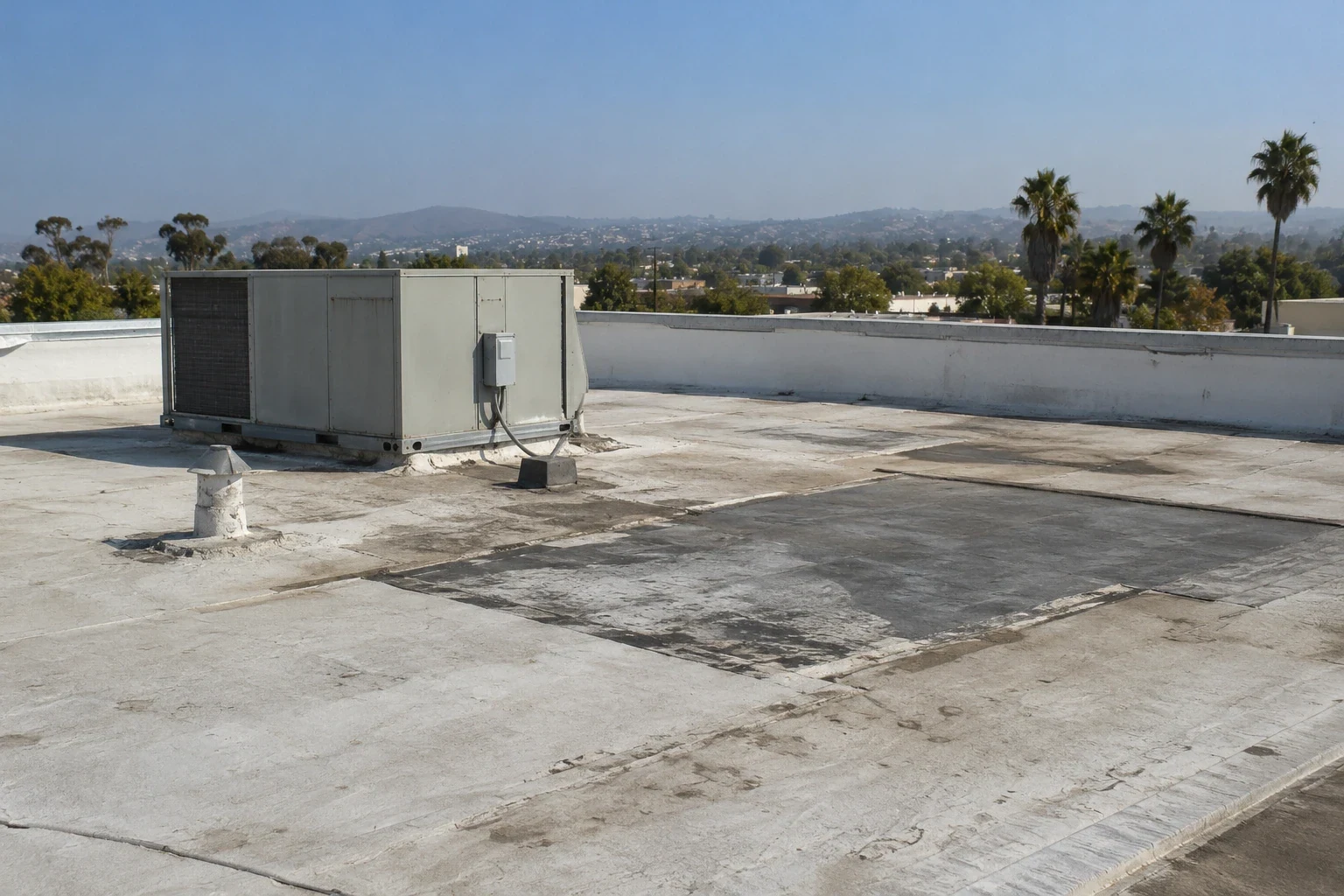
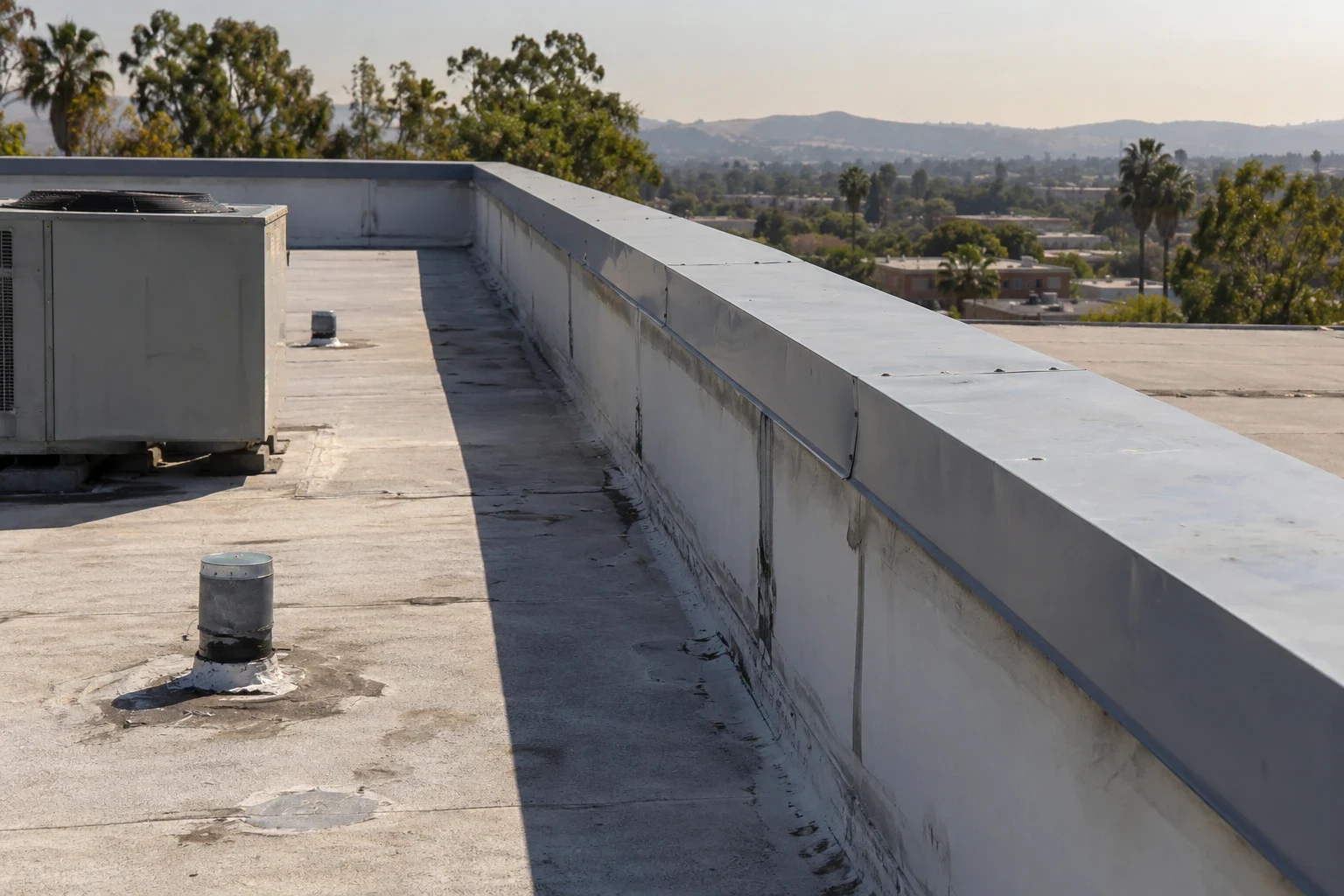
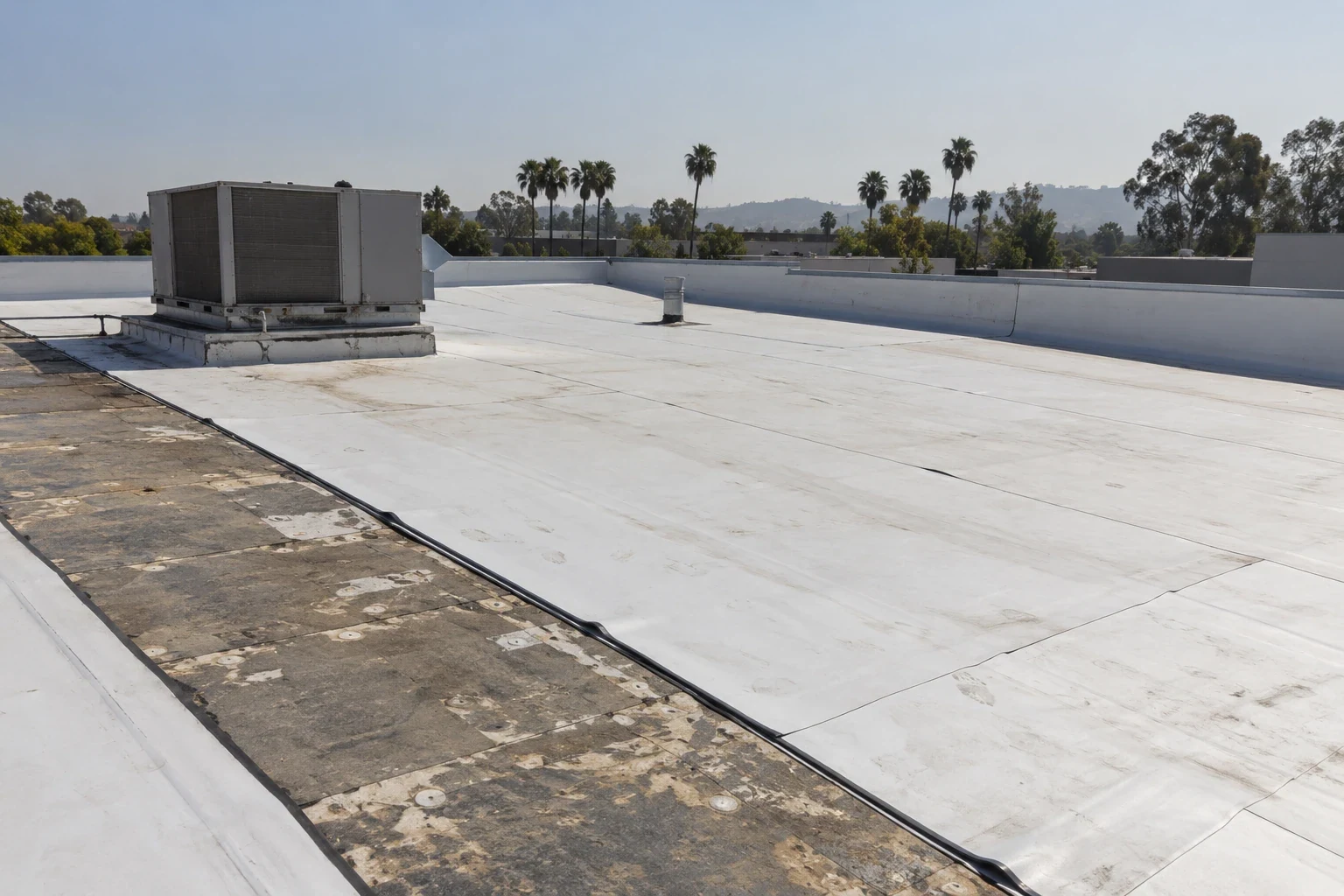
We check the roof surface and details that can interrupt it: seams or panel joints, edge metal, wall transitions, penetrations, skylights, equipment curbs, and expansion joints. Drains and scuppers receive a separate look because a restriction can hold water near a flashing or seam. If the owner reports a leak, we record its date, interior location, and whether it followed rain or equipment activity. Those details help compare a likely entry point with the roof layout.
Water can travel below a membrane before it appears indoors. If the visible condition does not establish how far moisture extends, an infrared moisture survey may help identify zones for closer evaluation when conditions suit the method. A test opening or other follow-up should answer a specific project question, such as whether concealed material needs removal or how far a repair should extend.
Cool, fog-prone mornings in the Salinas Valley can affect surface conditions during inspection and preparation. We check conditions at the property and adjust a task if the roof surface is not ready for the work planned that day.

How should the roof be read before rainy weather?
Salinas receives most normal precipitation in the cool season. Before sustained rain, we review drain paths, scupper openings, flashing, low points, and any repair area that could admit water. If water remains after an outlet is clear, we record where it sits and inspect the surrounding slope and transitions. A single observation of ponding is not a full diagnosis; the roof plan and drain arrangement help show which corrective option deserves review.
Some conditions call for maintenance, such as debris at an outlet or an exposed detail that can be corrected before it opens. A leak through a seam or curb can call for a defined repair, while repeated reports in different areas may justify broader investigation. A commercial roof repair can be scoped around a confirmed defect. Where the drain or scupper itself needs adjustment, drain and scupper work can address the outlet and nearby flashing as one detail.
Timing depends on access, current surface condition, the material needed, and whether a test or interior coordination is required. We identify those steps in advance so the owner can decide what should happen before the wet season and what belongs in a later capital plan.
When does a repair become a renewal discussion?
A repair can remain local when the defect is contained and surrounding materials remain suitable. We inspect the area around a failed seam, fastener, flashing, or membrane opening to see whether a compatible detail can connect to stable roof. If the same leak returns, multiple zones show deterioration, or moisture extends beneath the surface, the owner may need to compare additional testing with broader work. The scope should name the observed condition, the repair area, and what was not included.
A replacement or recovery review considers the existing assembly, layer count, moisture, attachment, deck and insulation condition, finished edge height, and drain transitions. A recover leaves existing roofing in place, so its condition needs to support the added assembly. A recover and overlay evaluation can compare that path with removal; a commercial replacement scope can define a new assembly when the existing roof cannot support a limited fix or recover.
Project cost and timing change with roof area, removal, insulation, flashing, drainage, equipment protection, and how many work zones need separate access. We show these drivers so the owner can compare choices on a consistent basis.
How can access and records keep the project clear?
A route corridor does not reveal the property’s entry rules. The site contact confirms check-in, roof access, delivery hours, material staging, and which operations must remain available. If workers need to cross active areas, that path and any interior protection should be agreed before the crew arrives. A phased plan should identify each roof area, daily closure point, and the follow-up visit needed to complete a detail.
State Route 68 is a planning connector, while the owner’s facility contact provides current directions and staging requirements. The City Permit Center handles building permits and planning services; if proposed work changes structural or fire assemblies, the owner should confirm project-specific review with the City. That check belongs in planning before scope assumptions are treated as settled.
Keep the inspection record with photos, leak dates, work completed, and open recommendations. A roof condition report can sort defects by priority, and a scheduled maintenance visit can revisit outlets, seams, and penetrations during an agreed access window. The record should identify what was visible and what still needs testing, so a later decision stays tied to the right roof area.
Before work begins, confirm where a service truck can park, how materials reach the roof, and whether deliveries or customer traffic need a protected route. The property contact should identify any hours when a lift, ladder, or staged material would interfere with normal use. Include those limits in the daily sequence and closeout, then verify the roof is secure before reopening each work zone.
Questions Owners Ask
Which properties can you inspect near Highway 68?
We inspect commercial properties across the Highway 68 area. The owner or facilities contact arranges access, and our recommendations address the building and roof assembly.
How do you select a roof system for a property near Highway 68?
Selection follows the installed assembly, deck, drainage, penetrations, repair history, and the owner’s project objectives.
What should I provide when a leak appears after rain?
Send the interior location, timing, roof access contact, and any prior repair records. We inspect related drains, seams, curbs, and wall details, then identify what evidence supports a repair or further evaluation.
How can we prepare the roof for Salinas’s wet season?
Review drains, scuppers, flashing, and known repair areas before the cool-season rain period. A clear outlet helps water leave the roof, but a separate seam or penetration issue still needs its own inspection.
What determines whether work can be phased?
The roof assembly, weather, access hours, equipment needs, and whether each area can be closed securely between visits determine the sequence. We state staging, protection, and return requirements in the scope.
Related Roofing Work
Plan a Highway 68 Gateway roof review
Share the property location, roof access contact, leak history, and work-hour restrictions. We will document conditions by zone and outline a repair or renewal path for the building.