
Wind Damage Roof Repair in Salinas, CA
Assess wind-related roof damage in Salinas by roof zone, attachment, edge details and interior reports, then plan repairs around safe access and operations.

Overview
A warehouse or produce-support building can show wind damage first at a perimeter, penetration or rooftop unit. A lifted edge, displaced cap or loose panel needs a close look at the attachment and the material around it before anyone decides how far the repair should extend. We inspect the affected roof zone, compare it with adjacent details and record what is visible so the owner can separate a defined repair from conditions that still need examination.
Salinas sits in a valley where summer fog and low cloud are common, while National Weather Service products also describe breezy marine-layer flow along the Central Coast. Those conditions are context, not proof that a particular gust damaged a particular building. We use the reported date and current site conditions to guide inspection and access, and we do not transfer a weather observation from one part of the region to every property.

Where can wind first loosen a roof connection?
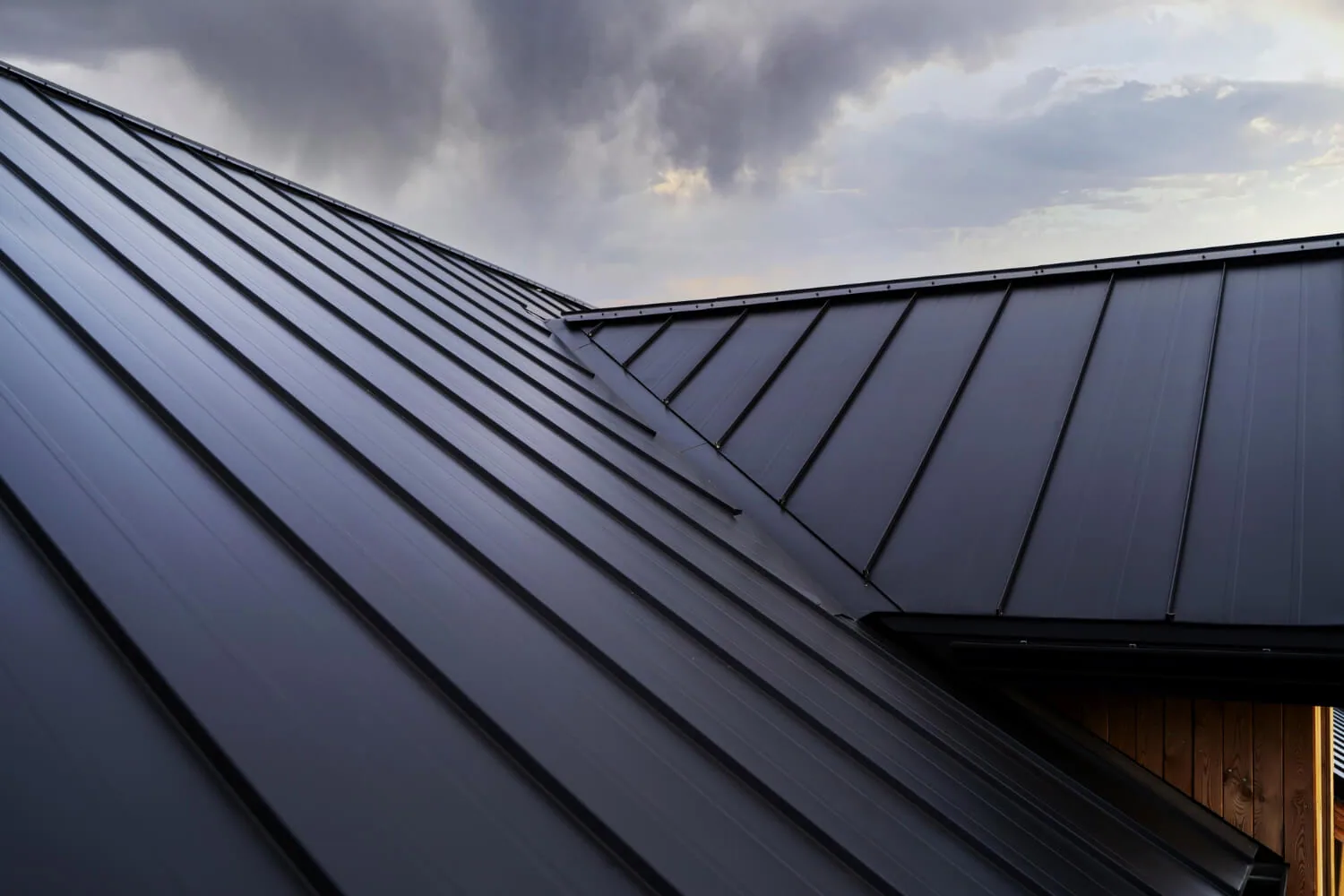
At the perimeter, check coping, edge metal, fascia and the membrane termination for movement, fastener pull-through, gaps or loss of seal. At a metal roof, inspect panel laps and fastener lines for displacement or widening openings. On a membrane assembly, follow the edge condition into the field and examine nearby seams. A surface wrinkle alone does not establish a failure, so we record the connection and the adjacent material that supports it.
Parapets, curbs and roof-to-wall transitions also deserve attention because a small separation can admit water after the wind has passed. We photograph the detail with a clear roof-zone reference, record whether the assembly is wet or dry, and check below for related interior reports. A proposed edge-metal or coping correction should describe the attachment and termination being repaired, not just cover the visible gap. If the evidence points to a split membrane seam, a separate seam repair evaluation may be appropriate.
How should a leak report be connected to roof evidence?
Record which room or production area reported water, when it appeared and whether the report followed rain, washdown or equipment service. Water can travel along a deck or insulation interface before it reaches an interior finish. We compare that report with drains, penetrations, laps and roof edges in the corresponding zone, then identify the detail that can be confirmed and any concealed question that remains. An interior stain is useful evidence, but it does not locate the roof opening by itself.
Salinas includes industrial and commercial opportunity areas such as Airport Industrial Park and the Salinas Ag-Industrial Center. Those are broad employment areas with varied properties, not a claim about the construction of any one roof. For an owner arranging work near either district, we still identify the actual building, material and access contact before a lift or repair phase is planned. A commercial roof inspection can map observed conditions, while a leak investigation connects a water report to the relevant roof details.
When should roof access wait for conditions to settle?
Wind changes the safety of ladder, lift and rooftop work, and it can affect loose material before repair begins. We review current conditions, equipment limits and the planned task before sending personnel onto the roof or lifting material. If access is not suitable, the visit can be rescheduled while the owner protects an affected interior area and restricts access beneath a loose component. No repair sequence should leave an opening or unsecured material exposed at shift end.
Fog and low cloud in the Salinas Valley can also affect the roof surface during early hours. We check the substrate before using adhesives or other products with surface requirements, then schedule preparation and application in a suitable window. Around North Main Street or the Highway 101 gateway, delivery and equipment staging depend on the individual parcel and traffic plan; a named corridor does not establish a standard crew entrance. For active water entry, emergency roof response is available around the clock, with access and safe working conditions confirmed for the property.
What belongs in a wind-damage repair scope?
A useful scope identifies the failed detail, the surrounding material included, the preparation required and the method for restoring the weather barrier. A localized fastener or flashing correction may be different from replacement of an edge assembly or a larger membrane section. We record whether insulation, substrate or concealed attachment needs further testing. If investigation may change the repair quantity, that decision point should be clear before the owner authorizes a broader opening.
The repair should include protection below and a plan for keeping the building in service where conditions allow. We coordinate work near active receiving, refrigeration or office areas with the owner’s operating contacts, then record what changed and what remains under observation. The estimate should distinguish the repair itself from access, protection and any testing that could alter the quantity. That lets the owner compare a defined correction with an unresolved allowance instead of treating each as settled construction. A commercial roof repair can address a supported local defect; repeated separation or widespread attachment concerns may require a replacement assessment. Ponding or damaged drainage observed during the same visit can be documented separately and compared with a ponding-water repair scope.
What should the owner keep after the repair?
Keep photographs tied to the roof zone, the written description of the failed connection, the repair material and the date the work was completed. Record any area that could not be examined, along with the access or testing needed to return. If a later leak appears, the owner can compare its location and timing with the repaired detail rather than treating every new report as the same event. The record also helps maintenance staff identify a change before it becomes a larger interior problem.
Seasonal review is useful in Salinas because the station’s normal rainfall is concentrated in the cooler months, while the valley has frequent summer fog and low cloud. That annual pattern helps set a maintenance calendar, but current roof condition still drives the task. Owners with properties around Salinas Ag-Industrial Center or North Main Street can arrange a review around their own receiving and production schedules. Share the interior report and access window, and we will organize findings by priority.
Questions Owners Ask
Does a windy day prove that the roof edge failed?
No. We inspect the edge attachment, adjoining roof material and interior conditions, then document what supports the repair recommendation. The owner’s weather report helps establish timing, while the building itself provides the damage evidence.
Can a loose piece be secured before a full repair is designed?
A temporary measure may be appropriate when it can be completed safely and protects the building. We identify the temporary work separately from a permanent correction and explain what additional examination is needed to finalize that scope.
What should happen if water appears below the damaged area?
Tell the facility contact which room or process area is affected and when the water appeared. We compare that location with accessible roof details, protect the interior as needed and record any concealed condition that could alter the repair.
Can repairs be scheduled while a warehouse remains open?
Often, if the roof zone, interior protection and material route can be separated from active operations. We coordinate receiving hours, access restrictions and daily closeout with the property contact before setting the work phase.
When does wind damage point to replacement instead of a patch?
A pattern across multiple roof zones, widespread attachment failure or moisture in the assembly can support a broader evaluation. We map those findings and state whether testing is needed before the owner compares repair and replacement options.
Related Roofing Work
Arrange a roof review around safe access
Share the reported damage, affected interior area and the building’s access window. We will inspect the roof, document findings by zone and outline repairs by priority.