
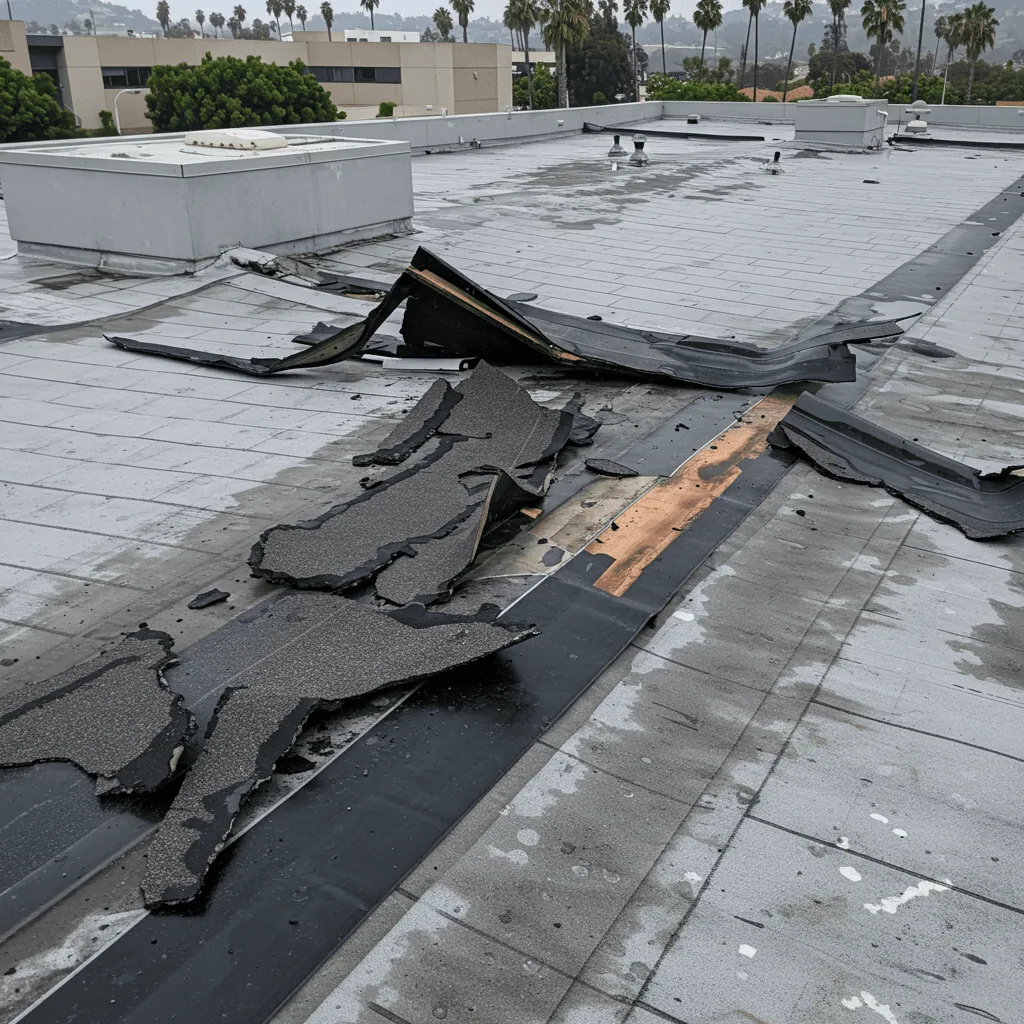
Commercial Fire Damage Roof Repair in Salinas, CA
Assess fire, heat, smoke and suppression-water effects on Salinas commercial roofs, then define a repair or replacement scope with clear findings.

Overview
A fire near a commercial building can affect roofing beyond the area where flames were visible. Heat may distort a membrane, loosen a seam or damage a metal coating, while smoke residue and suppression water can reach other roof zones. We inspect the roof after the incident area is safe to access, document visible conditions and coordinate with the owner’s fire-restoration and building professionals when the roof’s substrate or structure needs a separate review.
Salinas has commercial and public properties in Downtown and industrial or agricultural support settings such as Salinas Business Park. Those uses describe the city’s building mix; they do not suggest that a fire occurred at either place or establish damage at a particular property. The scope begins with the reported event, the building’s operating needs and the roof assembly actually present. We separate observed roofing damage from conditions that require further testing before a repair or replacement decision is made.

What needs to be established before a roof inspection?
The property owner or incident lead confirms that the roof is safe to approach and identifies any area still under fire, structural or utility review. We coordinate entry and work limits with the responsible site contact rather than entering a restricted zone. Before walking the roof, record the event area, visible impact, water reports and access conditions. If a qualified building professional needs to clear a section, that decision comes before roofing inspection proceeds there.
Once access is authorized, we document roof zones, surface changes, damaged penetrations, displaced edge details and the location of any suppression-water entry. Photos should show the observed condition and its position without implying that an uninspected assembly is unaffected. A condition report with labeled findings can keep roofing observations together for the owner and other professionals. Any concealed condition or area not reached is recorded as an open question rather than described as completed repair work.
How can heat affect the roof assembly?
Heat exposure can change membrane flexibility, seam adhesion, flashing or coatings. Metal panels and edge components may show finish damage, distortion or movement. The visible pattern helps select where to examine, but appearance alone does not establish the condition of the deck or insulation below. We identify the roof material, compare affected and adjacent areas, and document separations, blistering, openings or other observable changes in the assembly.
The roof’s repair method depends on the material and extent confirmed. A membrane patch, seam reconstruction or replacement of a damaged curb detail may be appropriate for a limited condition; heat that affects multiple connections can require a broader evaluation. Where an opening or lap has separated, we document whether a seam failure correction is supported. If a small area of membrane is physically broken, the owner can also compare it with a puncture repair, while keeping fire-related damage distinct in the incident record.
How should smoke residue and suppression water be assessed?
Smoke residue can coat roof surfaces, equipment and air-handling components, but residue does not by itself show that a membrane has lost integrity. We record what is visible and coordinate cleanup questions with the property’s restoration or environmental professionals. Roofing recommendations address the assembly and water barrier, while testing or cleaning outside that scope stays with the qualified participant assigned by the owner.
Suppression water can collect at drains or travel through existing openings, so interior reports and roof conditions should be mapped together. We inspect outlet connections, overflow routes, seams and penetrations near the reported wet areas, then identify whether a leak repair is needed. A roof inspection can document accessible conditions, and leak repair planning can define a supported water-entry correction. Ponding observed after suppression activity should be reviewed for its actual drainage path rather than assumed to result from roof failure.
How should roofing work fit the recovery schedule?
A fire can interrupt production, tenant access, receiving or office work, and roof repair may need to follow other restoration tasks. We identify which roof areas can be accessed, what protection is needed below and how an open section will be secured if work spans more than one shift. The owner and restoration lead can coordinate debris movement, temporary utilities and interior access. A clear sequence helps avoid closing a roof detail before related equipment or building work is ready.
For a property near Downtown Salinas or Salinas Business Park, staging and delivery still depend on that building’s approved route and operating limits. Downtown planning identifies infill and parking work, while the business park describes industrial and ag-support uses; neither fact defines a specific site’s access. We confirm the actual contacts, timing and affected operations, then record any temporary restrictions that remain after each work period.
What should a fire-related roof proposal include?
The proposal should separate observed damage, recommended roofing correction and any investigation still needed. It identifies the roof zones, materials, preparation, protection and closeout included, along with conditions that could change the quantity after removal. We can document roofing findings and photographs for the owner’s insurance process; coverage, causation decisions and claim approval belong to the insurer and other assigned professionals. That separation gives the owner an actionable roofing scope without promising a claim outcome.
A limited repair may work where the assembly around the damaged detail remains suitable and dry. If heat, smoke or water affects several areas, a wider survey or replacement comparison may be more useful. Roof claim documentation can organize the roofing record, while a replacement assessment can compare an extensive repair with a new assembly. The owner should be able to see what is confirmed, what is conditional and what decision is needed before the next phase starts.
How do Salinas conditions affect the return to service?
Normal rainfall in Salinas is concentrated in the cooler months, while summer fog and low cloud are common in the valley. After a fire event, current moisture and weather matter when an exposed roof needs temporary protection or a new material must be installed. We check the receiving surface, follow the selected product’s conditions and plan a secure daily tie-in. A calendar date does not replace an on-roof assessment of whether the work can be closed safely.
At turnover, the owner receives images and records tied to completed roof zones, materials installed and unresolved items. The record should identify where restoration work remains, who is responsible for it and what must happen before a restricted area can reopen. We can schedule a follow-up inspection after other trades finish, so new penetrations or movement are checked before the roof history is closed. Share the building’s recovery schedule and access rules, and we will organize roof work around the next safe and practical window.
Questions Owners Ask
Can a roof be inspected while fire investigators are still working?
Roof access follows the incident lead’s safety and authorization requirements. We wait for the responsible contact to release the area and identify restrictions before starting the roofing inspection.
Does smoke on the roof mean the membrane must be replaced?
Not on its own. We identify the roof material and inspect for physical changes or failed connections. Cleaning or environmental testing should be directed by the qualified restoration professional handling that work.
Can suppression water cause a roof leak after the fire is out?
Water may collect at low areas or move through an existing opening. We compare interior reports with drains, seams and penetrations, then document the repair supported by the observed condition.
Does the roofing report determine insurance coverage?
No. We can provide photos and a roofing scope that describe observed damage and recommended work. The insurer determines coverage and claim decisions under its process.
How do you keep a damaged roof protected during restoration?
We coordinate a temporary closure and work sequence with the owner and other assigned professionals. The plan identifies the roof area opened, the protection used and the condition required before the crew leaves.
Related Roofing Work
Plan the roofing scope with the recovery team
Share the authorized access window, event-area map, roof records and restoration schedule. We will document roofing conditions and outline repair options by roof zone.