
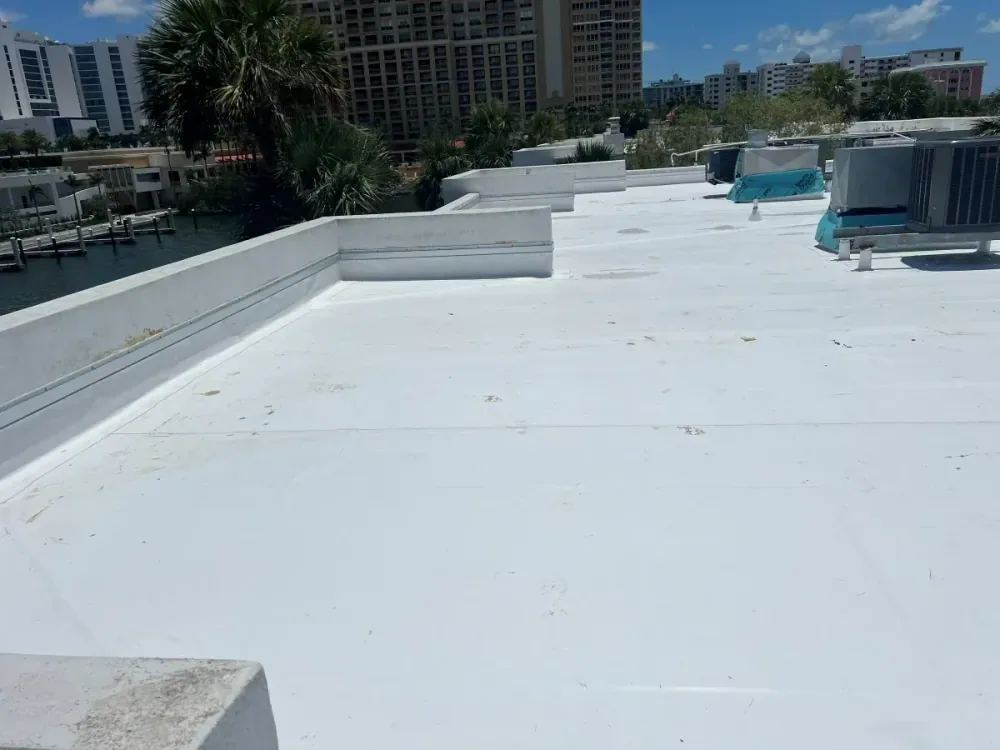
Commercial Roof Puncture Repair in Salinas, CA
Repair punctures and foot-traffic damage on Salinas commercial roofs with compatible materials, a mapped repair boundary and protected operations.

Overview
A small cut beside an HVAC service route can admit water above an office, warehouse or processing area. A scuff or indentation may look similar from a distance but require a different response. We inspect the membrane, trace the mark to its limits and check whether the roof layer beneath it is affected. The repair record identifies the location and materials, giving the owner a clear distinction between a confirmed puncture and nearby wear that needs monitoring.
Salinas supports agricultural processing and industrial activity, and city districts employment areas including Salinas Business Park and the Salinas Ag-Industrial Center. Roofs serving equipment, packaging or distribution may have regular service traffic, but the building use alone does not establish what caused a defect. We ask when the damage appeared, which trade accessed the area and whether an interior leak followed, then inspect the specific roof zone before assigning cause.

Is the mark a puncture, abrasion or compressed area?
A puncture breaks through the membrane, while abrasion can thin or roughen the surface without making an opening. A compressed area may reflect a load or impact, and a seam cut or flashing tear belongs to its own repair detail. We examine the edges, surrounding material, roof layer and interior report, documenting what can be seen without enlarging the opening unnecessarily. If moisture may have traveled below the membrane, the owner should know whether testing is needed before the repair boundary is final.
Foot traffic can concentrate around curbs, rooftop equipment and the route to a service hatch. We map the affected position and identify the equipment or trade access associated with it when that information is available. A maintenance visit can also review walkway protection and nearby details, but a new puncture still needs a direct inspection. Where a tear follows a split lap, compare the finding with a seam failure repair rather than treating it as a field puncture.
How do you connect a puncture to water inside?
Log the room, roof zone and timing of the interior report, including whether the leak appeared after rain or equipment service. Water can move sideways within an assembly, so a ceiling stain may not sit directly below the puncture. We inspect the reported position and surrounding seams, drains, curbs and penetrations, then explain whether the roof opening fits the observed path. A roof map and labeled photographs help the owner avoid treating separate water reports as one recurring leak.
When water is active, temporary protection may be needed while the permanent repair is prepared. We document the temporary step separately and keep the permanent scope tied to the defect and material condition found. A commercial roof inspection can record other accessible conditions in the same roof zone; leak repair planning addresses the entry point and interior protection. If wind or a displaced component created a separate opening, it should be evaluated under a wind-damage repair scope.
What makes a membrane patch compatible?
Identify whether the roof is TPO, PVC, EPDM, modified bitumen or another assembly before selecting a patch method. Surface texture and color do not reliably identify the membrane. Preparation may involve cleaning, drying, removing loose material and checking adhesion around the affected spot. The repair then needs suitable material, dimensions and edge treatment for that system. We describe the work so the owner can see what was opened, what was installed and how the repair ties into sound surrounding membrane.
A puncture above wet insulation can require a different scope from a shallow surface cut. If the condition below is not visible, a survey or selective opening may help answer whether additional material must be removed. A TPO repair is not interchangeable with an EPDM patch; compatibility depends on the actual roof and repair products. We state any unresolved condition before extending work beyond the confirmed area, and protect the opening while that decision is made.
How can the repair fit around equipment service?
Before the visit, identify the service hatch, equipment area, trade contact and any time restriction for roof access. A repair near active refrigeration, ventilation or production equipment may need coordination with the operator and the service contractor. We agree on a route that avoids unnecessary traffic over the membrane and keep the work area clear of loose tools and fasteners. Interior protection and a daily closeout are part of the plan when the affected space remains occupied.
At a property in the Salinas Business Park or Salinas Ag-Industrial Center, operating needs depend on the individual building and tenant. We confirm its actual receiving point and contact rather than relying on a district name to set the delivery plan. The repair proposal should identify the access window, the expected disruption and any step the owner or equipment vendor must complete before the membrane can be closed.
What reduces repeat damage along a service path?
Once the puncture is repaired, review how maintenance personnel reach the equipment and whether an appropriate walkway or protected route is needed. A roof traffic plan can reduce incidental contact with seams, drains and membrane field. It does not replace inspection after new mechanical work. The owner can keep a simple service log with the equipment, date, roof zone and contractor, which helps connect later damage to a specific change without assuming that every mark came from the same trade.
Salinas’ normal rainfall is concentrated in the cooler months, so a pre-season roof review can find open penetrations or traffic wear before persistent rain reaches them. Summer fog and low cloud may keep a surface damp during morning work, so the repair itself still depends on current conditions. We can document repaired and monitored areas separately, then set a follow-up based on the assembly and site use. The aim is to give facilities a usable record, not a general instruction that every roof needs the same traffic control.
When does repeated puncture damage signal a wider problem?
Several punctures in one location may indicate concentrated service traffic; defects across different zones can point to a broader maintenance or assembly issue. We map each mark, examine seams and penetrations and compare the condition with repair history. If moisture, widespread membrane wear or attachment problems appear beyond a single spot, additional testing or a larger roof evaluation may be more useful than repeating local patches.
A supported repair scope states the number and location of defects, material and preparation included, interior protection and any conditions that could change the work. A separate replacement review is reasonable only when the roof’s overall evidence supports that comparison. We give the owner the confirmed correction beside remaining questions, with access and operation impacts identified for each choice. Share the service record and recent leak reports, and we will organize the inspection and recommended next step by priority.
Questions Owners Ask
Can a small puncture cause a leak far from the opening?
Yes. Water can travel through or along roof layers before it appears inside. We compare the reported area with the membrane, nearby seams and penetrations, then document how well the evidence supports the puncture as the origin.
Can you patch a puncture without knowing the membrane type?
We identify the roof assembly first because preparation and repair material need to be compatible. If the system cannot be confirmed visually, we state what additional inspection or testing would resolve the question.
Should foot traffic be stopped after damage is found?
Keep unnecessary traffic away from the affected area and follow the facility’s safety procedures. We coordinate a service route and any temporary protection with the owner before the repair is scheduled.
Will a patch cover wet insulation beneath the puncture?
A surface patch does not establish or correct concealed moisture. We inspect the assembly and identify whether a survey or selective opening is needed before the repair boundary is approved.
What information should equipment contractors share after roof service?
Record the equipment location, service date, new penetrations and any membrane or flashing disturbed. That helps the owner arrange a roof closeout check and makes later leak reports easier to compare with the work history.
Related Roofing Work
Locate and document the membrane damage
Share the roof zone, leak timing and recent equipment service history. We will inspect the membrane, confirm the repair material and plan the work around building access.