Self-Storage Roofing in Salinas, CA
Protect self-storage units and access lanes in Salinas with roof repairs planned around drainage, tenant access, security, and phased work.
Overview
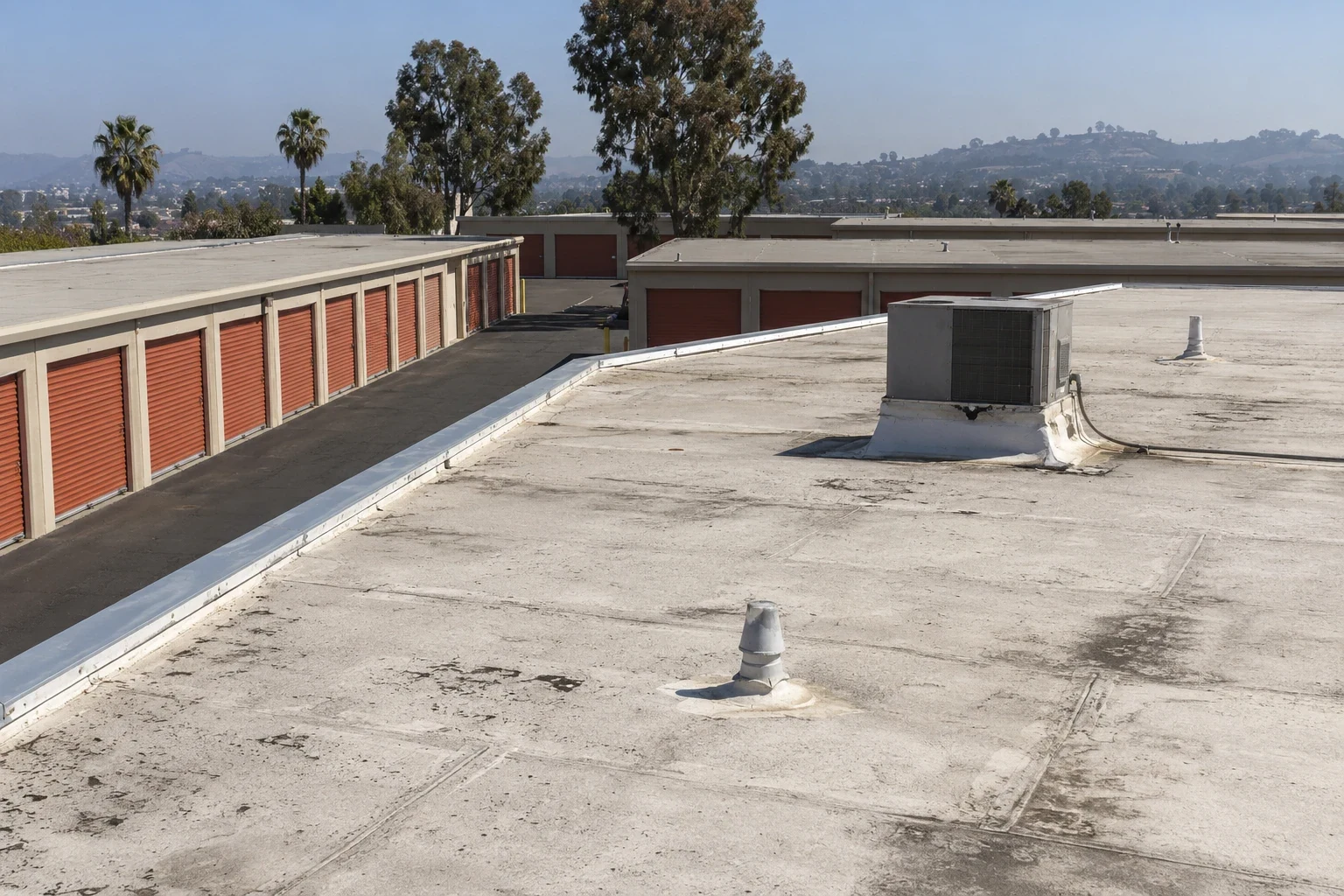
A self-storage roof protects rows of units, drive aisles, office space, and stored property under one operating site. A leak above a unit can become a tenant claim before water appears in the office, so the first task is to locate the roof zone and trace the path. We inspect the assembly, document active conditions, and plan repairs around gate access, customer visits, and security procedures.
Salinas properties range from neighborhood storage facilities to commercial sites near mapped business and industrial areas. A district name cannot tell us the roof type or unit layout. We confirm the building configuration, access controls, drain arrangement, and maintenance history with the owner before recommending work.
How should tenant belongings be protected?
When a tenant reports water, management should identify the unit number, the affected wall or ceiling, and when the condition appeared. We compare that location with roof seams, penetrations, drains, and changes in deck slope. Water can travel before it reaches a unit, and a stain alone does not identify the opening. A written record keeps the inspection focused and helps management decide whether to relocate contents or restrict a specific aisle while the origin is repaired.
During active work, we coordinate notice and access with site staff so tenants are not routed beneath material handling or an open repair. Interior protection is set before work begins, and any temporary covering is checked at the end of the shift. Commercial leak repair should leave a clear record of the origin and repair boundary. If several units have reports, a condition inspection can separate isolated leaks from a roof-wide pattern.
Recurring condensation should be distinguished from roof leakage before repairs are specified. Storage units may have limited ventilation, and temperature differences can create moisture that resembles a roof entry. We inspect the roof above the reported area and compare the pattern with adjacent units, penetrations, and weather timing. If the evidence points to interior humidity or plumbing, the owner receives that distinction so roof work is not assigned a condition it cannot resolve.
What does tenant access change during a repair?
Storage facilities rely on predictable access to gates, loading doors, and drive aisles. A lift or material drop near a roll-up door can prevent a tenant from reaching a unit even if the roof work stays overhead. We identify which rows are affected, agree on temporary restrictions, and sequence work so customer traffic can continue on the remaining routes. The site manager should have a direct contact for schedule changes, especially when weather shifts the planned work window. Retail roof access planning also accounts for customer circulation during active work.
Roof access also has a security dimension. The owner can explain gate codes, escort expectations, camera coverage, and the hours when a crew may enter. We establish where tools and materials are staged, keep access points clear, and secure the area before leaving. Occupied-building reroofing planning is useful when repairs extend across multiple rows or need to keep the office and most units operating.
Where do drains and roof transitions need attention?
Long roof runs can carry water past several rows before it reaches a drain or scupper. We check strainers, outlets, overflow paths, seams, and the transitions around parapets and equipment curbs. Leaves, packaging, and windblown debris can collect where roof geometry changes. If water remains after an outlet is cleared, the inspection should record whether slope or deck movement may be contributing instead of treating every puddle as a clogged drain.
Salinas receives about 15.38 inches of annual precipitation, with most falling in the cool season. That supports a practical drain review before the wetter period, while current conditions at the property still determine the immediate scope. Drain and scupper work should preserve both the primary outlet and overflow route. We record which roof area feeds each outlet so a later tenant report can be checked against the same zone.
Which roof details are common failure points?
Seams, perimeter terminations, pipe penetrations, skylights, and equipment supports interrupt the membrane and deserve close inspection. Sealant that looks intact from the ground may conceal movement at a curb corner or an older patch may be lifting at its edge. For the reported unit row, we record the membrane and attachment before matching a repair material to that assembly. A repair that bonds poorly or blocks drainage can trade one visible problem for another.
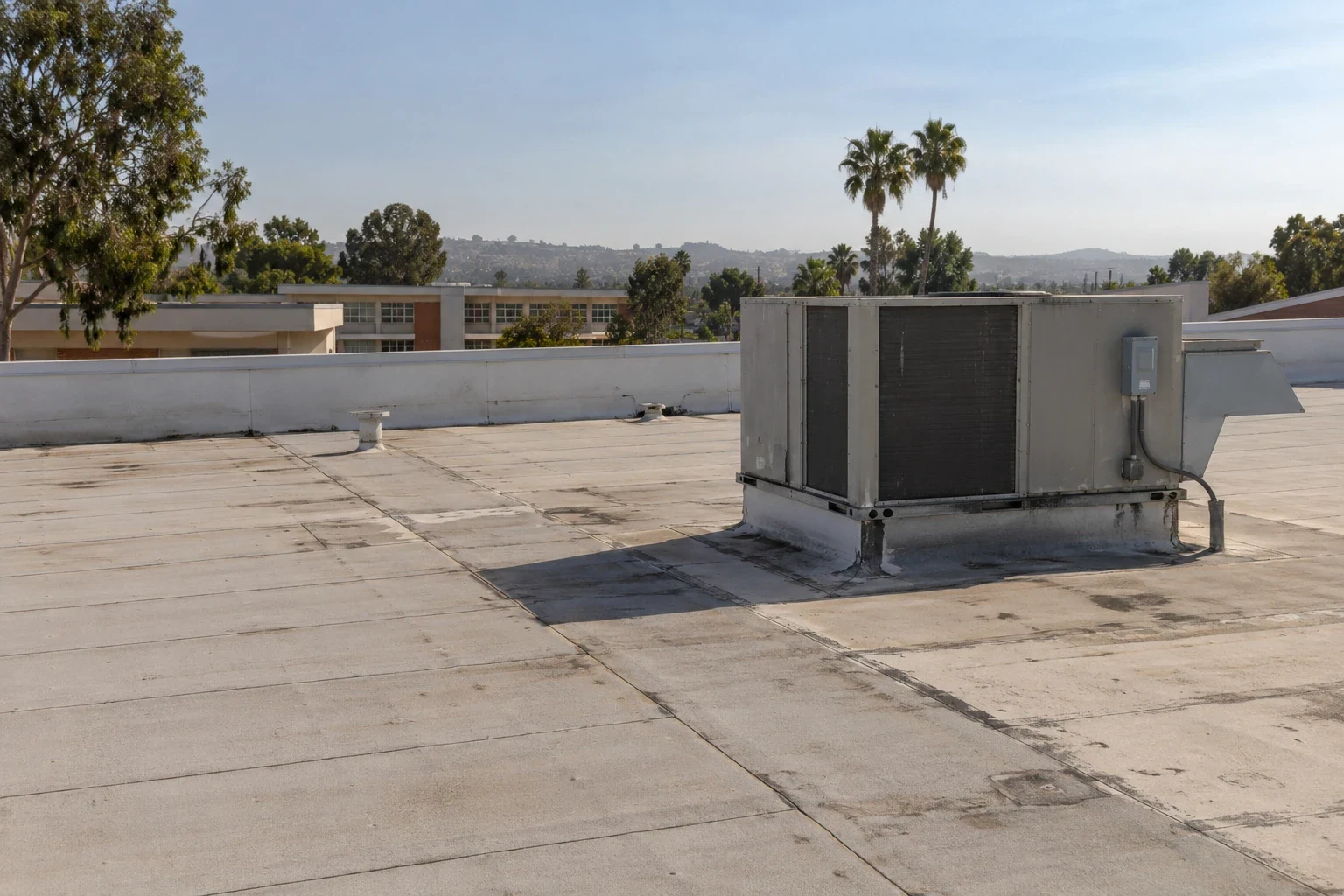
Many storage buildings also have ventilation equipment and electrical conduits that require future service. Before a mechanical contractor changes a unit or support, we confirm how the opening will be protected and who will complete the final flashing. Equipment curb repairs should leave the roof connection serviceable. For a property sharing loading or inventory concerns, warehouse roof planning offers a useful comparison.
How does the Salinas site affect staging?
Salinas includes commercial and industrial opportunity areas such as Salinas Business Park and Airport Industrial Park, alongside central commercial districts. Those places help describe the market, but a roof crew still needs the facility’s actual gate, ladder, and staging plan. We confirm whether deliveries can reach the work area without crossing tenant traffic, and whether a lift can be positioned without blocking emergency access or the office entrance.
At a facility near downtown Salinas or Alisal and East Salinas, street approach and parking can differ from an airport-adjacent industrial site. The roof inspection does not assume one layout from another. The owner can identify busy move-in periods, auction or delivery activity, and the rows with the highest access needs. We use that information to set a sequence, provide tenant notices, and keep the work boundary easy to understand.
When is repair enough, and when is replacement worth pricing?
A puncture, open seam, or failed penetration can often be repaired when surrounding membrane and insulation remain serviceable. Repeated leaks across distant rows, widespread moisture, or deteriorated attachment can justify a broader assessment. We map defects by roof zone and explain where testing would clarify what lies below the surface. The written scope separates immediate repairs from conditions that affect a longer capital plan.
Replacement may be phased by building or roof section to manage tenant access and protect stored property. The owner needs to know how each phase affects gates, aisles, office operations, and temporary weather protection. A replacement assessment compares the current assembly with a new system; planned maintenance records drains, flashings, and repairs between larger projects. The decision should reflect both roof condition and the operating cost of recurring access restrictions.
A maintenance visit can track open seams, loose edge metal, blocked outlets, and patches that are approaching failure. The record should identify the roof zone and the action taken, not simply say that the roof was checked. That gives management a usable baseline when a new tenant report arrives or a future capital plan is prepared. On a multi-building site, matching each record to a building and section prevents a repair record from being mistaken for work completed elsewhere.
Questions Owners Ask
What information helps investigate a tenant leak report?
A unit number, the affected surface, date and time, and any recent work nearby help us compare the report with roof details. We inspect the relevant zone and document the repair location.
Can repairs happen while tenants use the facility?
Yes, when access and protection are sequenced. We identify affected aisles, coordinate notices and gate procedures, then keep other routes available when the work allows it.
How do you prevent a repair from blocking a drain?
We inspect the outlet, overflow path, and surrounding membrane as one assembly. The repair scope preserves water flow and records any drainage condition that needs separate correction.
When should an owner consider reroofing several storage buildings?
Recurring leaks, widespread wet insulation, and repeated access restrictions can support a portfolio review. We document each building separately so the owner can prioritize by condition and operating impact.
Related Roofing Work
Keep unit access in the roof plan
Share the leak reports, gate procedures, tenant access hours, roof records, and drain concerns. We will inspect the affected areas and plan repair or replacement around facility operations.