
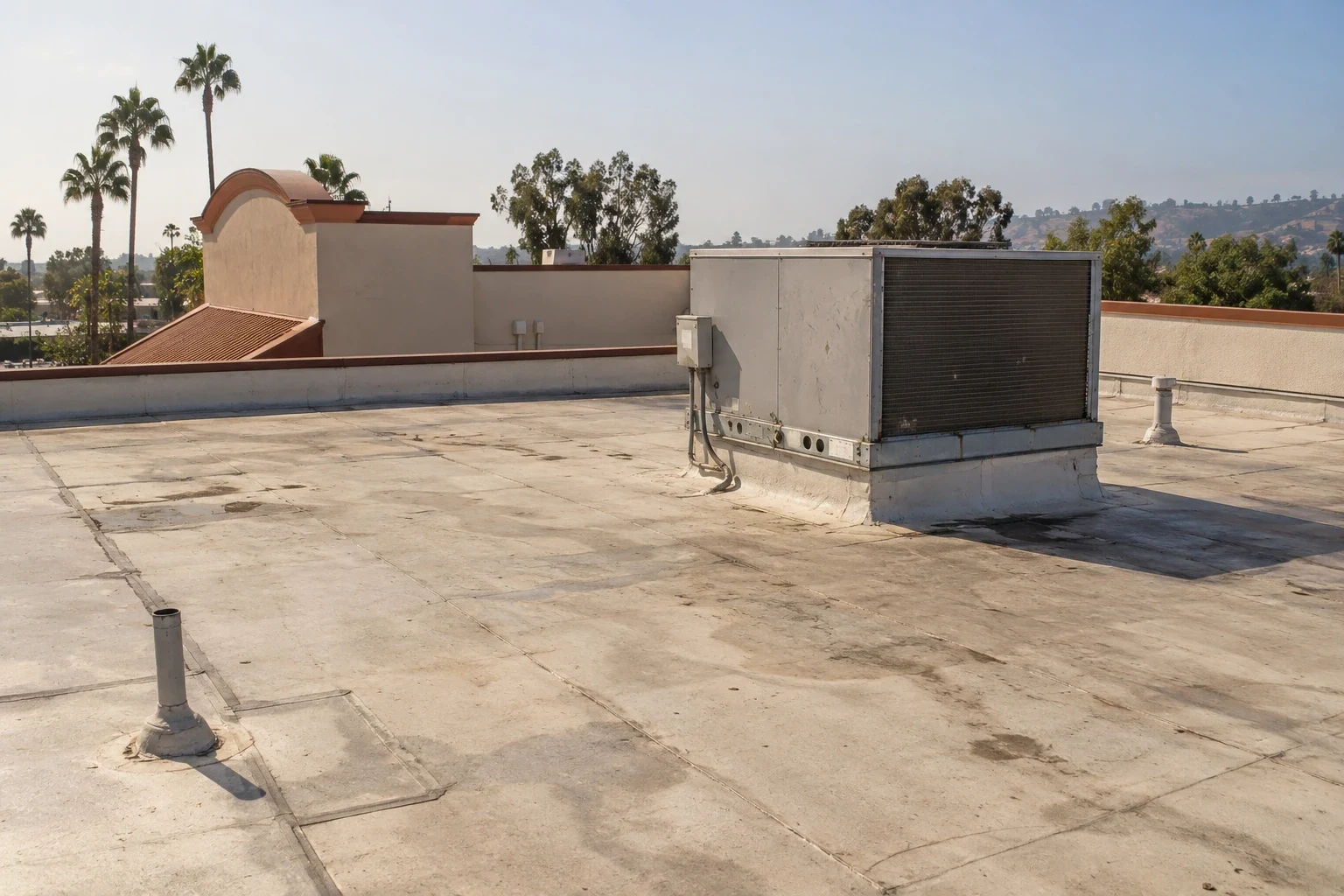
Restaurant Roofing in Salinas, CA
Coordinate restaurant roofing in Salinas around dining hours, kitchen exhaust, refrigeration, drainage, guest access, and delivery needs.

Overview
A restaurant roof has to protect dining rooms, kitchens, refrigeration, storage, and the equipment that keeps service moving. A leak can reach a prep area or disrupt exhaust and refrigeration even when the opening is small. We inspect the roof assembly and interior conditions together, then plan repair or replacement around service hours, deliveries, and the restaurant’s safety procedures.
Salinas has restaurant, retail, agricultural, and commercial properties with different roof designs. We confirm the actual menu of roof equipment, occupancy, and leak history with the owner or facilities contact. The business type tells us which questions to ask; it does not determine the assembly or the roof condition. A grocery roof or shopping center roof may share refrigeration and tenant concerns, but the restaurant’s kitchen and meal-service schedule require a specific plan.
How do kitchen exhaust and refrigeration affect the roof?
Kitchen exhaust, make-up air, HVAC, refrigeration lines, and condensate drains all create roof penetrations or service routes. Grease or exhaust residue can collect near a discharge, while vibration and repeated access can loosen nearby details. We inspect the curb, flashing, metal, membrane, and surrounding surface before selecting repair materials. The restaurant’s mechanical contractor can identify service windows and any unit that must remain operating.
A replacement hood or rooftop unit may change curb height, opening size, or access requirements. The roofer should review that detail before the new equipment is placed. Equipment curb and support repairs coordinate the roof connection with the mechanical scope. A walk path can help protect the membrane where service trades return, and closeout records can record how the flashing should be approached during future maintenance.
What should happen when water reaches a kitchen?
The restaurant team protects staff, guests, food, and electrical equipment according to its procedures and records where water appeared. We compare the interior area with roof drains, exhaust curbs, seams, parapets, plumbing, and any recent equipment work. Water can move beneath a roof surface before appearing indoors, so the stain may sit away from the failed detail. The inspection follows likely pathways rather than patching above the visible drip.
Temporary protection can limit exposure while the roof is wet or access cannot be made safely. Once the entry point is identified, we use a repair material compatible with the roof and rebuild the detail. Leak repair addresses the opening; a roof condition inspection can check nearby roof zones and record any further testing needed. The report should identify the completed repair and what remains under review. If the interior team used a temporary cover, management can record when it was removed and whether the affected room has dried. We also record any repair that needs a follow-up review after exhaust or refrigeration service resumes.

How can roofing fit dining and delivery hours?
Roof work can affect customer entrances, outdoor seating, receiving areas, kitchen exhaust, and parking. We ask the owner to identify preparation times, meal-service peaks, deliveries, and any hour when noise or access restrictions would create a problem. The site plan shows where ladders or lifts operate, how materials are staged, and whether a ground-level area needs a temporary closure. Employees should know which door or service route remains available.
Some preparation may fit before opening or between service periods, but each building has its own access and safety limits. We divide the roof into zones and close each area at the end of the shift. The schedule identifies who moves patio furniture, protects outdoor dining, and confirms that the kitchen exhaust is safe to operate. If a temporary restriction overlaps meal service, management needs a clear notice and a named contact for changes. If removal reveals wet insulation or deck damage, the owner needs a clear approval path before added work proceeds. Occupied-building scheduling helps keep dining operations and weather protection aligned through the project.
Why should drains be checked around exhaust areas?
Grease residue, leaves, packaging, and roof debris can collect near drains or exhaust fans. We inspect strainers, drain bowls, scuppers, overflow routes, and the membrane connections around them. A blocked outlet can contribute to ponding, while a failed drain flashing may leak even when water flows freely. If ponding returns after cleaning, the roof’s slope and underlying insulation need review before a surface coating is considered.
Salinas’ normal rainfall is concentrated in the cooler months. Restaurants can schedule drain and flashing checks during the drier season and after kitchen equipment work. Drain and scupper service should restore the flow path and leave the surrounding roof detail secure. We record whether roof debris or equipment residue needs continued attention so the owner can include it in facilities or hood-cleaning routines. When exhaust cleaning is scheduled, the maintenance team can protect drains from residue and check the roof surface afterward for disturbed flashing or new deposits.

How does location affect restaurant roof access?
Restaurants in downtown Salinas or Alisal and East Salinas can have different parking, delivery, and customer patterns. We confirm those routes at the property and ask which entrance needs to stay open. A location name does not tell us where the roof hatch, kitchen exhaust, or material staging area is located.
The owner can help identify the service lane, gas or electrical shutoffs, neighboring tenants, outdoor seating, and any shared building access. We coordinate lift placement and debris removal so restaurant operations are not left to manage an unexpected work zone. At the end of each shift, the crew secures the roof and ground area, tells the owner what remains open, and confirms whether the next service period can proceed normally.
When is a restaurant roof repair no longer enough?
A local seam, flashing, drain, or curb defect can be repaired when surrounding material is sound. Repeated leaks across dining, kitchen, and storage areas, broad moisture, or failing attachment can call for a larger scope. We map the defects and decide whether targeted testing could alter the scope. If replacement is needed, the schedule should protect food handling, refrigeration, guests, and kitchen operations by phase.
Maintenance can check drains, exhaust curbs, seams, and service routes before they interrupt restaurant hours. Preventive maintenance records repairs and changes over time. A replacement assessment can compare recurring repairs with a new assembly and plan work outside peak service windows where the project allows. The owner should know which roof areas can be completed between operating periods and which need a scheduled closure. We can document how the sequence affects receiving, food preparation, refrigeration access, and guest movement before a start date is set.
Questions Owners Ask
Can a restaurant stay open during roof work?
Often, if guest routes, kitchen operations, deliveries, and the active roof zone are coordinated. We confirm service hours and any safety restrictions with the owner before choosing a work sequence.
Can kitchen exhaust grease damage a roof?
Residue near an exhaust discharge can affect roof surfaces and should be evaluated with the actual equipment and maintenance practices. We inspect the surrounding membrane or coating and select cleaning or repair steps compatible with it.
What if a leak appears during meal service?
Protect guests and staff, move food or equipment if safe, and report the location to management. We inspect the roof connection and plan a permanent repair after safe access and the origin are confirmed.
How should refrigeration equipment be handled during a reroof?
Coordinate the unit schedule, shutdowns, lifting, and temporary protection with the restaurant’s refrigeration contractor. We review curbs and flashing before work so the roof connection is restored as equipment returns to service.
Related Roofing Work
Keep the kitchen and roof plan in sync
Share service hours, equipment layouts, delivery times, leak reports, and access rules. We will inspect the roof and coordinate repairs around dining operations and guest safety.
