Commercial Roofing for Retail and Restaurant Chains in Salinas, CA
Manage retail and restaurant roof repairs in Salinas with tenant coordination, kitchen protection, drainage checks, and consistent location records.
Overview
A restaurant leak can reach a kitchen, dining room, refrigeration line, or customer entrance, while a retail leak may affect merchandise, checkout equipment, or a stockroom. Chain facilities teams need a clear location record before sending a repair crew or comparing stores. Salinas includes mapped commercial areas from Downtown and East Alisal to North Main Street. We inspect each roof and connect the finding to that property's operations instead of assuming locations share the same assembly.
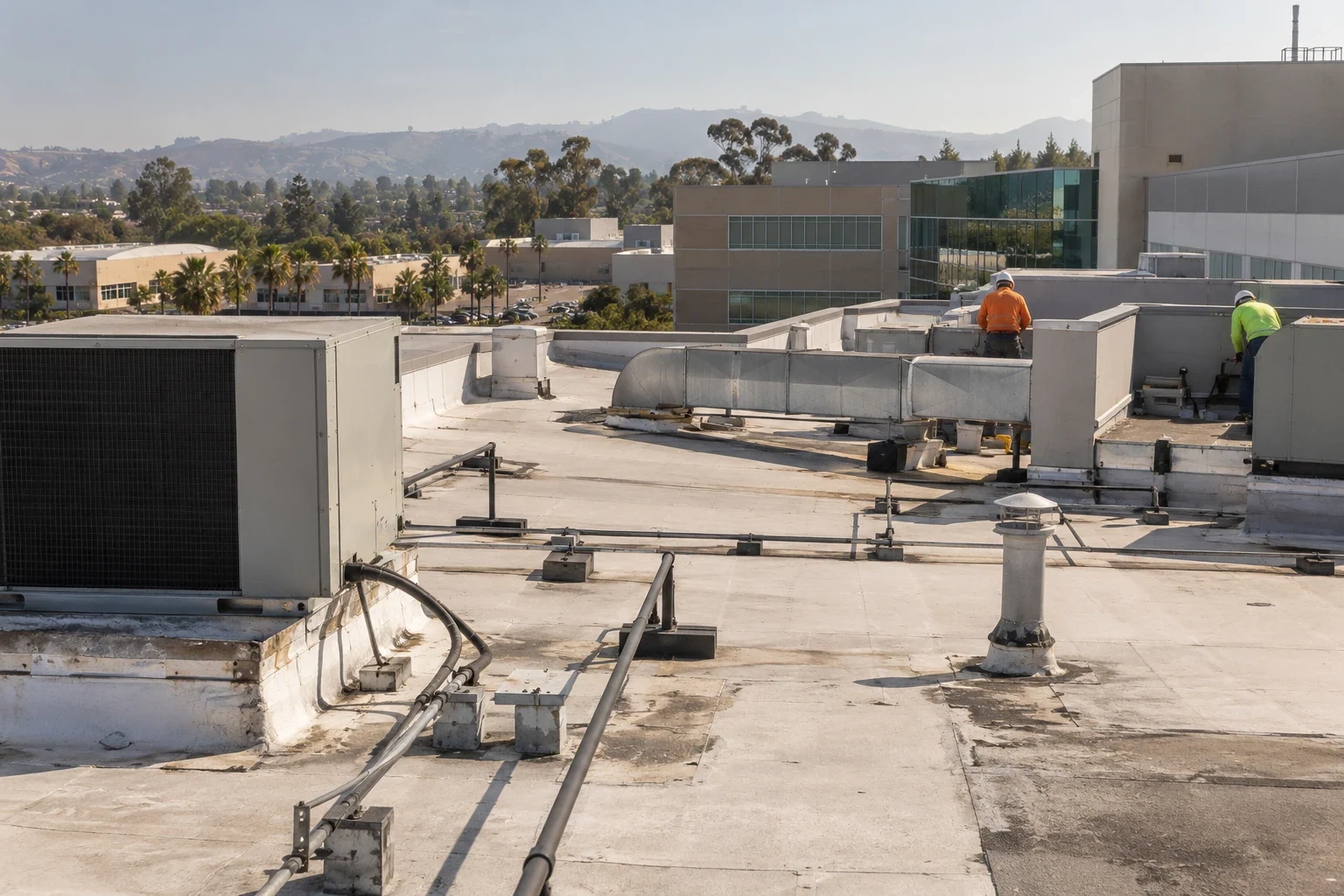
The review checks seams, flashing, roof drains, equipment curbs, and transitions around additions. We trace reported water and document whether the likely repair is ready to scope or needs another test. A commercial roof inspection gives the facilities lead photos and findings that can be assigned to the right store and approval record.
Where can a roof leak affect a store?
Water above a point-of-sale area, stockroom, kitchen, or customer route creates different protection needs. We map the report to the roof zone above it, then inspect drains, seams, penetrations, wall transitions, and equipment flashings. The visible ceiling mark can sit away from the entry point, so we look for a path across the roof assembly and record any portion that cannot be confirmed without additional access.
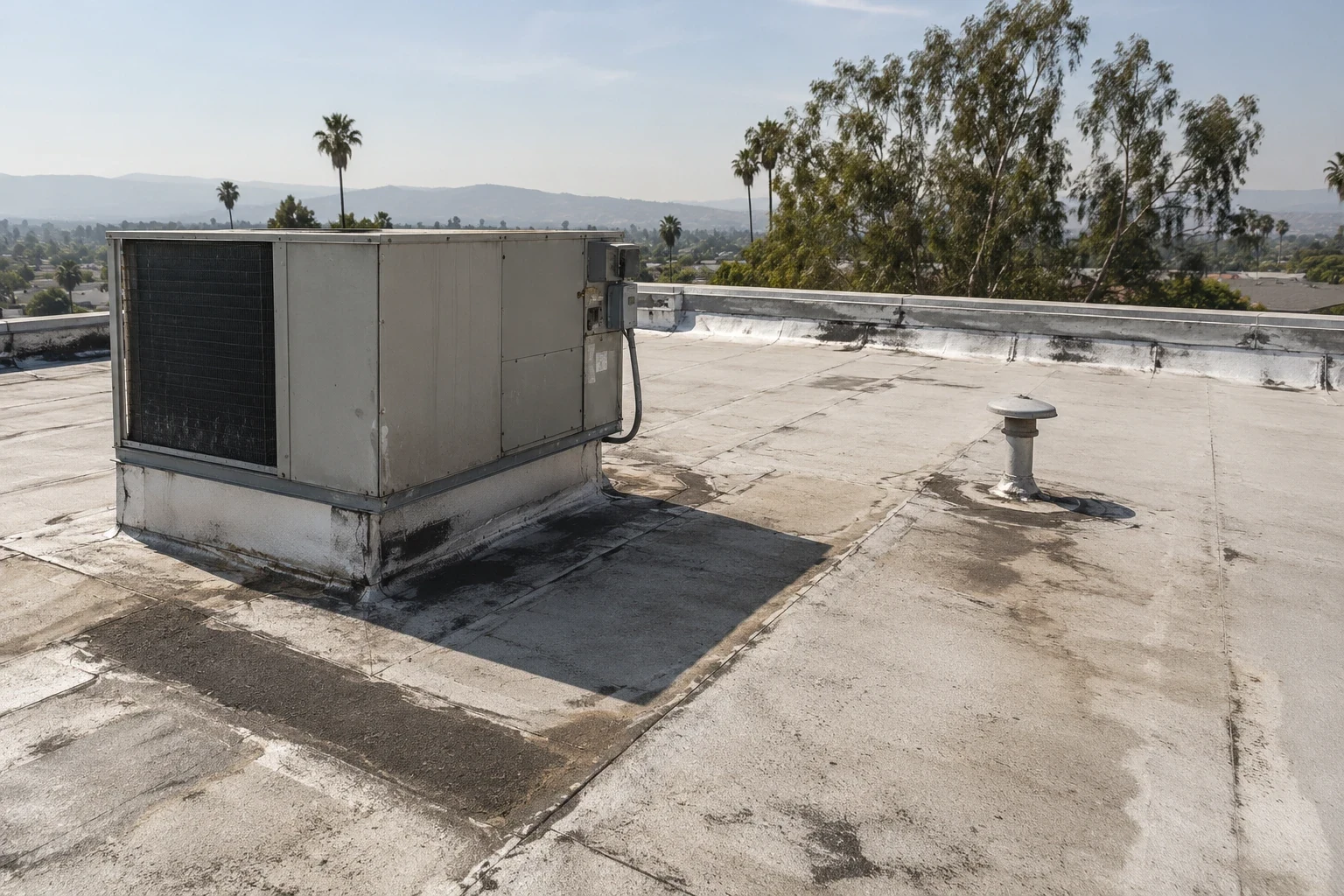
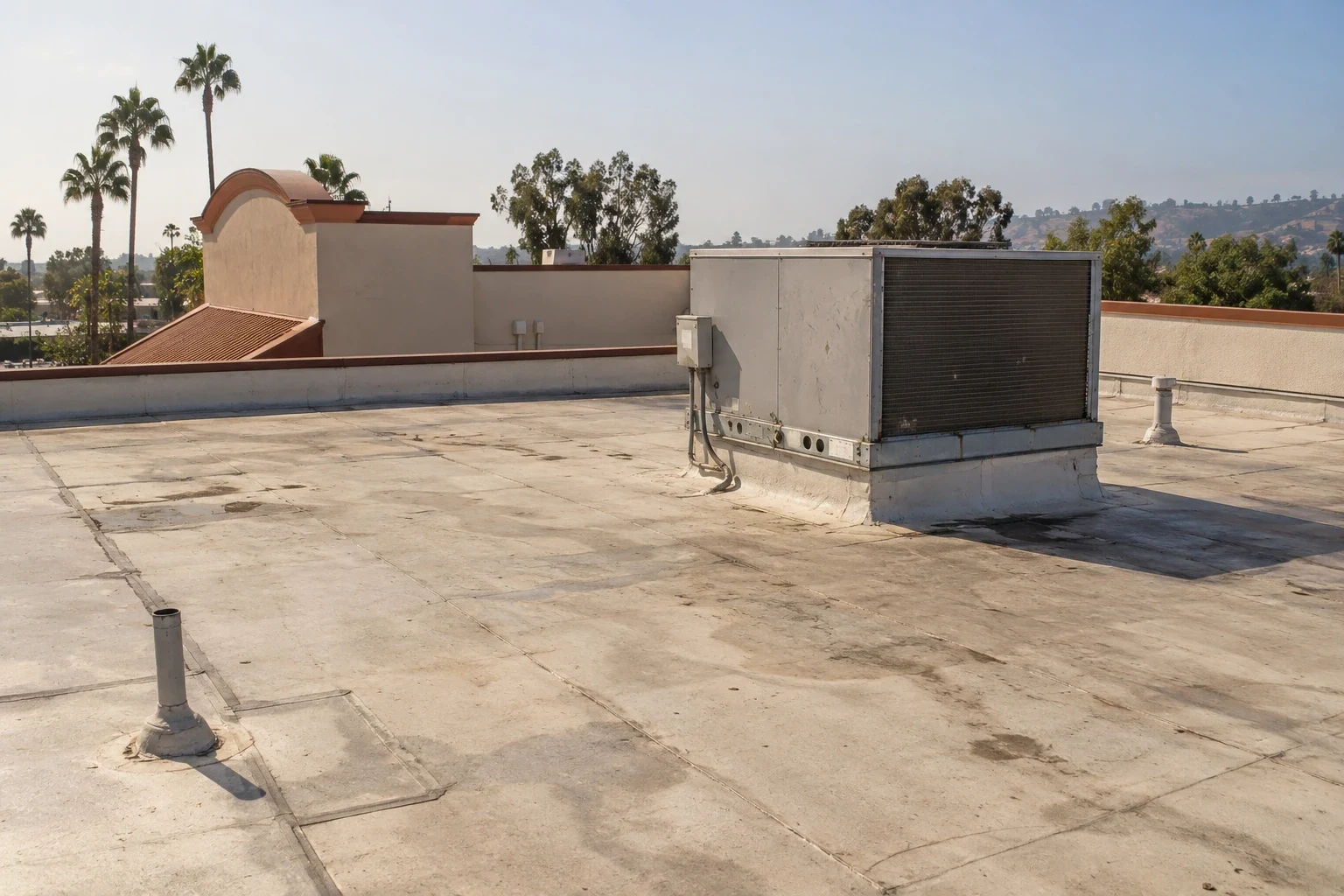
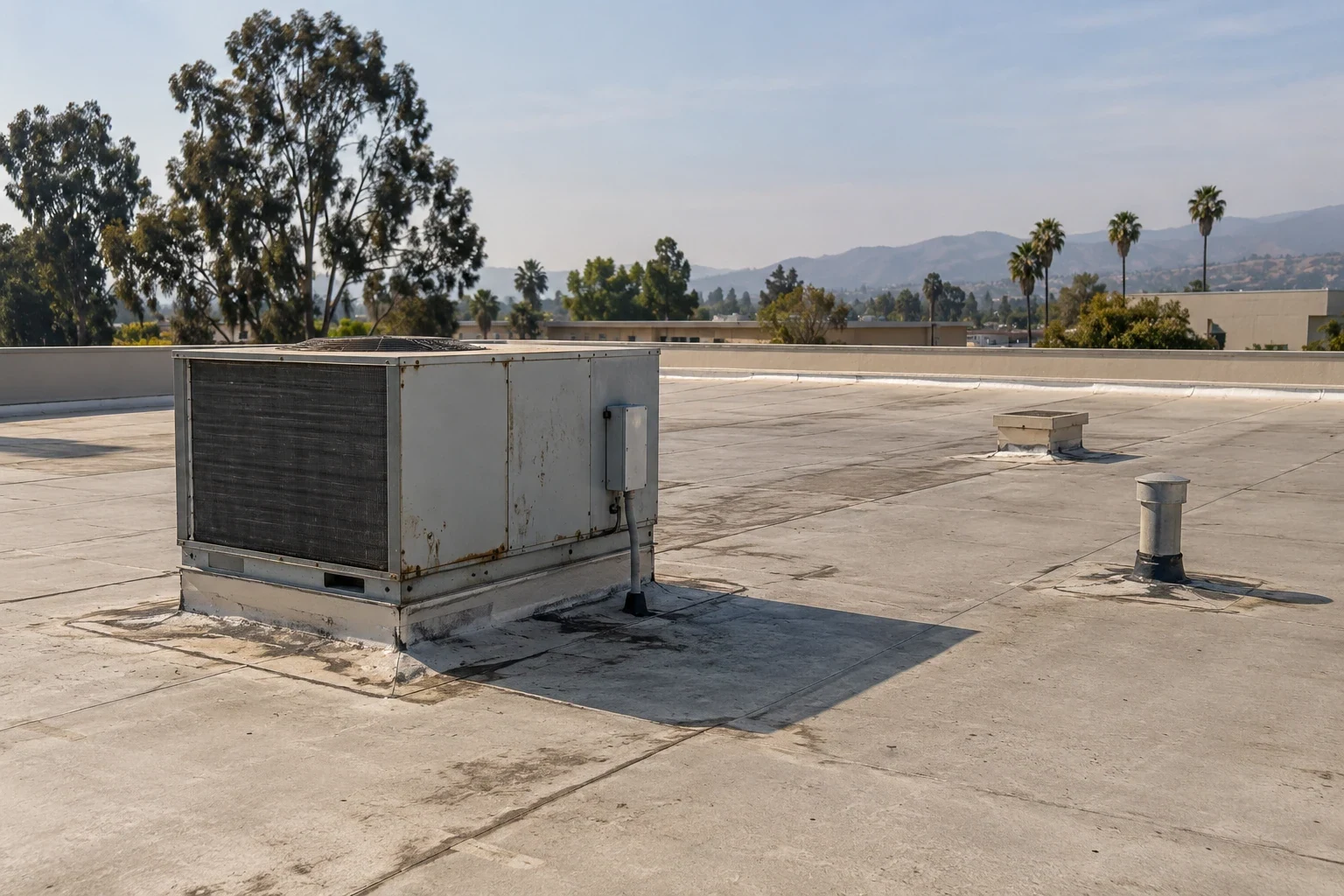
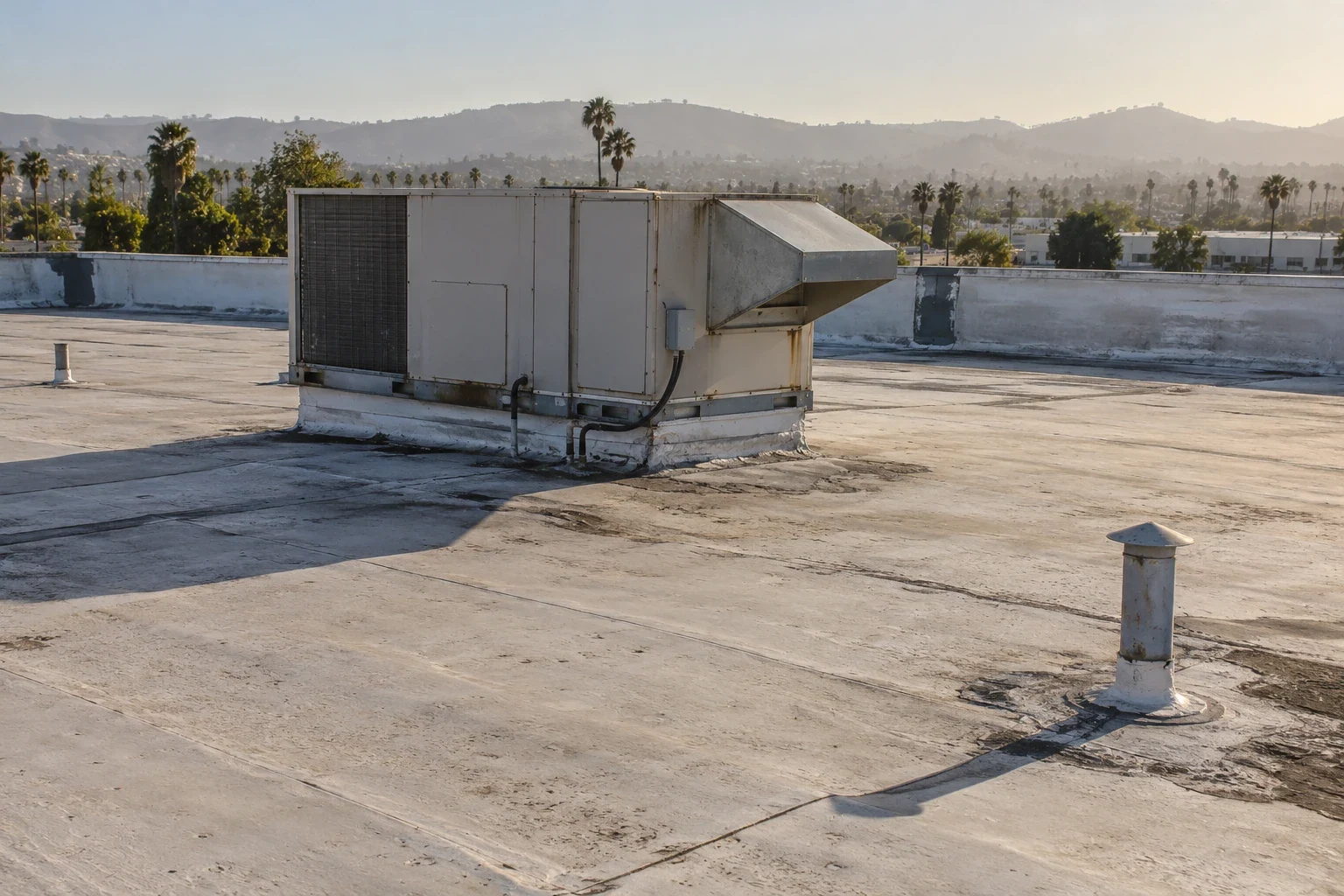
Restaurants also depend on rooftop exhaust, refrigeration, and ventilation equipment. A service visit that moves a unit or touches its curb can leave flashing incomplete unless the trades agree on who restores the roof detail. We identify the equipment involved and coordinate the order of work with the facility contact. Our equipment curb and support work accounts for those penetrations while keeping service access in the plan.
Retail properties in the Salinas Business Park's planned industrial mix differ from shops and restaurants in Downtown Salinas, but either can have public entrances and scheduled deliveries. Those locations are useful context for routing a visit; they do not establish the roof system. For a store near East Alisal and East Market, we confirm the actual receiving door, customer route, and work hours with the site lead.
What should a chain inspect before winter rain?
Cool-season rain puts attention on roof outlets and the paths leading to them. We check drain bowls, strainers, scuppers, low areas, and the membrane or flashing around each outlet. A blockage calls for maintenance; separated flashing or a seam opening calls for repair. The record should keep those actions distinct so clearing debris does not close a work order for a damaged detail.
At the Salinas #2 station, June through September normals total 0.19 inches against a 15.38-inch annual mean; most precipitation falls in cooler months. The Salinas Valley also experiences frequent summer fog and low cloud cover. Dry-season access can help a chain schedule visual reviews, but we still confirm moisture and surface conditions at the property on the day of work. Where water may be below the membrane, an infrared moisture survey can identify areas for further checking rather than treating every thermal indication as a confirmed leak.
A chain can group maintenance visits by region and retain a dated checklist for each address. The checklist should record drain condition, membrane defects, flashing at equipment, and any interior report since the prior visit. A scheduled roof maintenance visit can close routine items before they become separate emergency calls.
How can work fit store and kitchen hours?
Work can affect deliveries, customer parking, kitchen service, ventilation, and staff movement. Before mobilization, we confirm the lift route, staging location, delivery window, roof access, and any customer area that needs a barrier. If equipment shutdown or interior protection is needed, the store contact should know the sequence and expected duration before the crew arrives.
Some repairs can be isolated to a roof zone while the store remains open. Other conditions require a room or service to pause until the roof is dry and sealed. We identify those limits and the daily closeout plan in the scope, including how an exposed section will be protected if weather changes. For a larger project, phased reroofing in an occupied store should follow the location's operating hours and customer routes.
The company can standardize report fields across locations while leaving the condition specific to each building. A store on a corridor such as North Main Street may have different delivery access from a restaurant closer to the central area. We confirm site rules with each manager and keep repair photos tied to the location and roof zone.
When does a chain need more than a patch?
A patch can address a localized opening when the surrounding membrane is sound and compatible with the repair. We state the boundary and inspect nearby seams, flashing, and drainage for connected defects. Repeated leaks at different points, widespread surface deterioration, wet insulation, or prior patches that have separated can indicate a broader problem. Testing may help determine whether the scope should stay local or include a larger roof section.
Coating, recovery, and replacement have different preparation and transition requirements. We inspect the assembly and substrate, then account for tear-off, equipment moves, edge work, staging, and store access in the comparison. If the roof is near the end of serviceable condition across multiple zones, a TPO roof system may be considered only when its details and compatibility fit the building. The record should state the basis for the choice, not presume that one chain standard suits every location.
Active water entry can be addressed through our emergency service at any hour, with temporary protection documented apart from permanent work. We can document temporary protection separately from the permanent repair so district staff can protect inventory and keep the final scope clear. The next budget decision should include observed conditions, unanswered questions, and how each option affects store operations.
What should corporate facilities keep for each store?
Store records should capture the assembly if known, roof zones inspected, dated photos, interior reports, completed repairs, and follow-up items. Each action should be tied to a location and the employee who can approve access. The same format across a portfolio makes it easier to compare store needs, while separate findings prevent an issue at one roof from being applied to another building.
For ownership reviewing leased sites, a property manager's roof record can keep tenant coordination and asset history attached to the right facility. For locations with back-of-house supply operations, a distribution facility roof review also needs clear receiving access. Downtown, East Alisal, and Airport Industrial Park provide place context without determining any individual roof condition.
Choose stores with active leaks, repeated service calls, or planned equipment changes for the first review. Share the site contact, store hours, roof plans if available, and any refrigeration or exhaust work already scheduled. We will organize the findings by location and show the next step for each roof.
Questions Owners Ask
Can a restaurant stay open while roof work is underway?
The work zone, service being affected, ventilation needs, and route for customers determine that. We confirm the operating window with the store lead and define any room or entrance that must be cleared. If a kitchen function needs a pause, that requirement belongs in the schedule.
Why does water appear far from a roof opening?
Water can travel along the deck or framing before reaching a ceiling. We compare the interior mark with drains, seams, flashing, and equipment curbs overhead, then document the likely path and any testing needed to confirm the repair boundary.
Can several store locations be reviewed in one visit?
Visits can be grouped for scheduling, but each store receives its own observations, photos, access records, and repair list. That keeps a shared report format useful without treating one location as evidence about another.
What roof details matter around kitchen exhaust?
We inspect the curb, flashing, nearby membrane, fasteners, and technician access route. If equipment is being serviced or replaced, the mechanical and roofing sequence should identify who restores the roof detail and when the area can be closed.
How should facilities compare two proposals for a leaking store?
Compare the observed defect, repair boundary, material compatibility, interior protection, access window, and any concealed condition each proposal assumes. We state the open questions and separate temporary protection from permanent work so the scopes can be reviewed on equal terms.
Related Roofing Work
Keep each location tied to its roof findings
Arrange a Salinas roof review around store hours, deliveries, and customer access. We will document the condition by location, identify immediate protection, and organize repair steps that the facilities team can track.