

Solar-Ready Commercial Roofing in Salinas, CA
Prepare a commercial roof for solar in Salinas, CA by reviewing remaining roof life, attachment zones, penetrations, drainage, and future access.
Overview
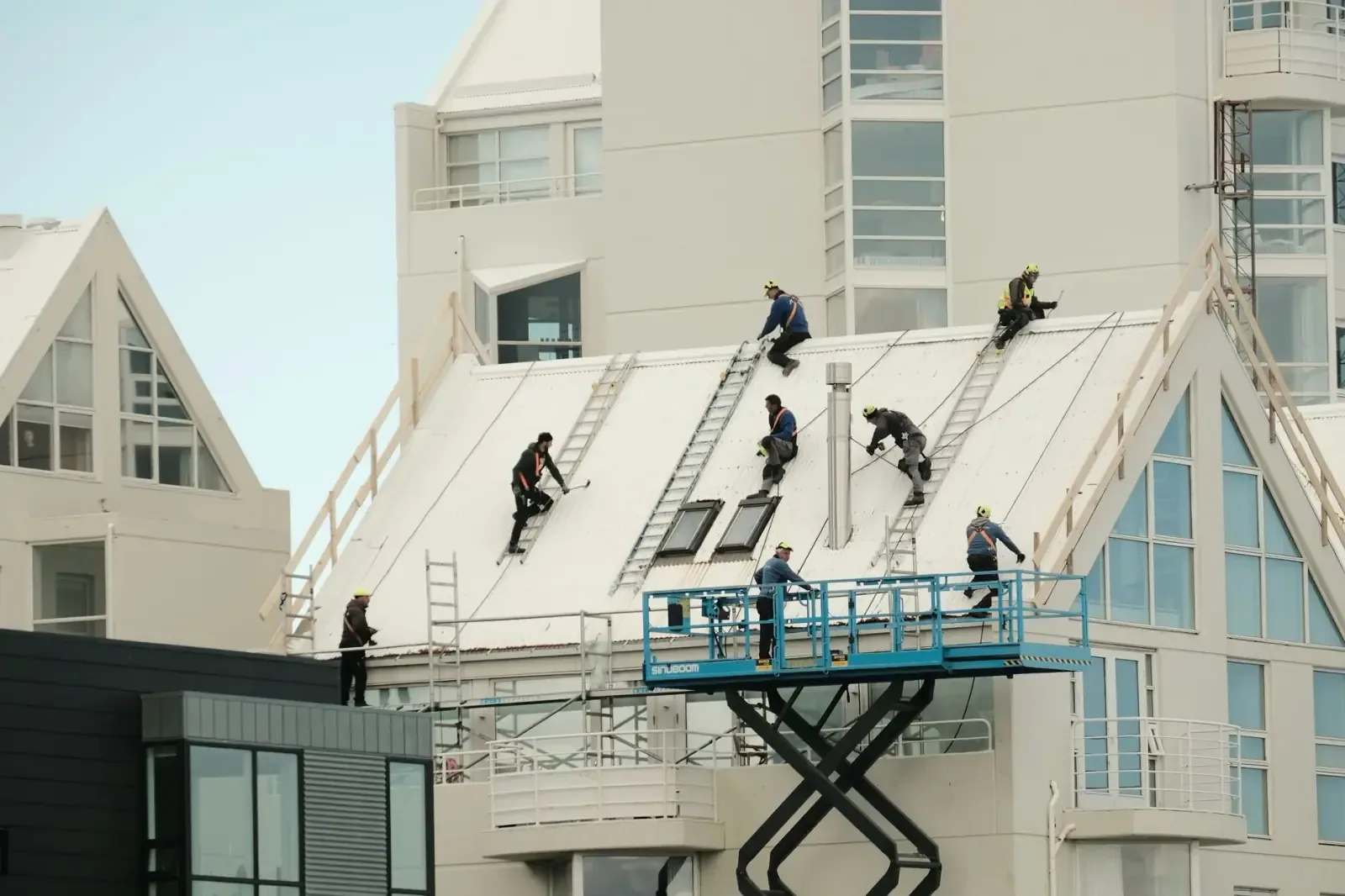
A solar proposal starts with the roof that will carry the equipment for years to come. Before an array is planned, a commercial owner needs to know whether the membrane, insulation, deck, drainage, and flashing can support the project schedule. We evaluate the roof condition and coordinate the roofing scope with the solar designer and installer so a new array does not cover unresolved problems.
Salinas has a mild coastal-valley climate, and local building uses range from agricultural processing to warehousing, office, and retail. Those facts provide context for roof access and operations, but solar readiness is a property-specific decision. We inspect the actual assembly, review available roof records, and explain the details that need resolution before equipment is installed.

How much roof life remains?
An owner should compare the expected service interval of the roof with the planned solar equipment and electrical work. If the roof is near a major repair or replacement decision, installing an array first may require removing and resetting it later. We inspect seams, flashings, insulation, deck, drains, and prior repairs, then identify what is known and what remains concealed.
A condition inspection can show whether maintenance or localized repair may keep the roof serviceable. If the assembly has widespread moisture, repeated seam failures, or unstable areas, replacement before the array is considered may reduce future work around mounted equipment. Testing can help define a boundary where visible observations are not enough.
Where can solar equipment attach?
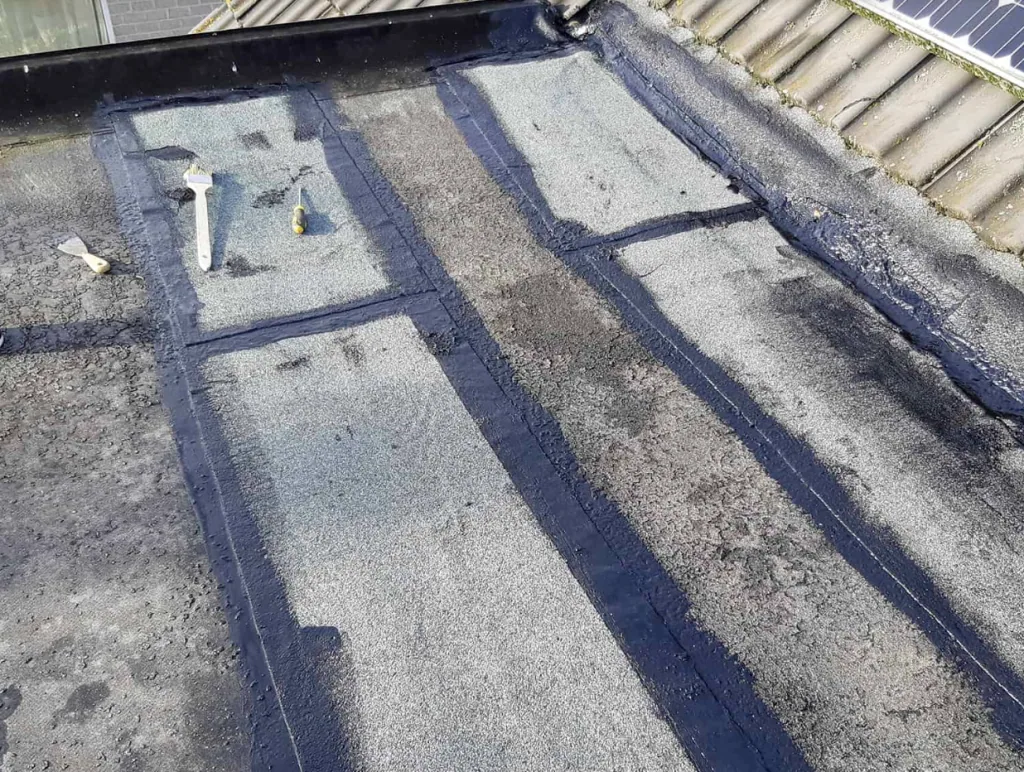
Attachment locations depend on the roof assembly, structure, wind design, equipment layout, and the solar engineer’s plans. We review proposed supports, ballast, pathways, penetrations, conduit, and equipment curbs against the roof details. The roofing scope should state how each attachment is flashed or protected and who is responsible for restoring the membrane after installation.
Any roof penetration can create a water path if its flashing does not integrate with the membrane. A support placed across a seam, drain path, or expansion joint may also make future inspection more difficult. We review the proposed layout and identify locations that conflict with drains, rooftop units, skylights, roof hatches, or maintenance walkways.
For a ballasted system, the added load and pressure distribution need structural review by the appropriate design professional. For a mechanically attached system, fasteners and flashing details must match the roof design. We do not determine structural capacity from a roof walk. Instead, we coordinate the roofing information the design team needs and flag conditions that require engineering review.
Will the array leave drains and service paths clear?
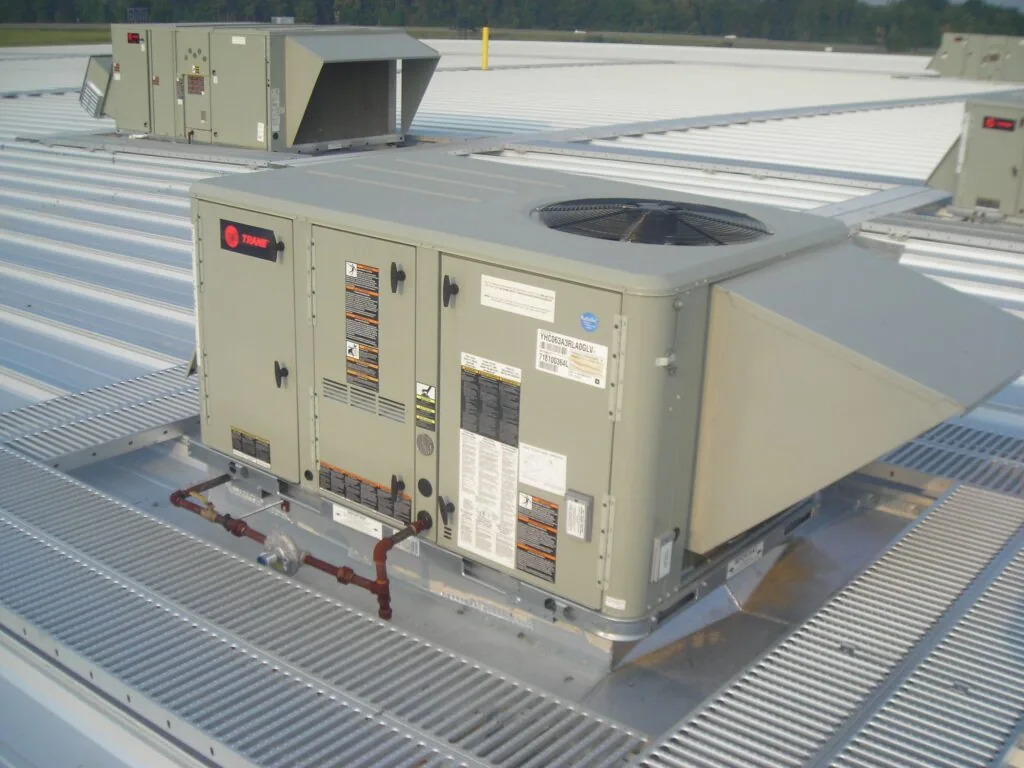
Solar equipment should not block primary drains, scuppers, overflow routes, or access to mechanical equipment. We compare the panel layout with the roof’s flow paths and record areas where supports or conduits could collect debris. If the array changes access to a curb, drain, or roof edge, the plan should include a practical inspection and cleaning route.
Salinas business areas near Airport Boulevard and U.S. 101 serve distribution, warehousing, packaging, and agricultural-support uses. At Airport Industrial Park or Salinas Ag-Industrial Center, a facility may need to preserve paths for roof technicians and equipment service. The owner identifies which equipment must remain reachable, and the array layout should reflect those site needs.
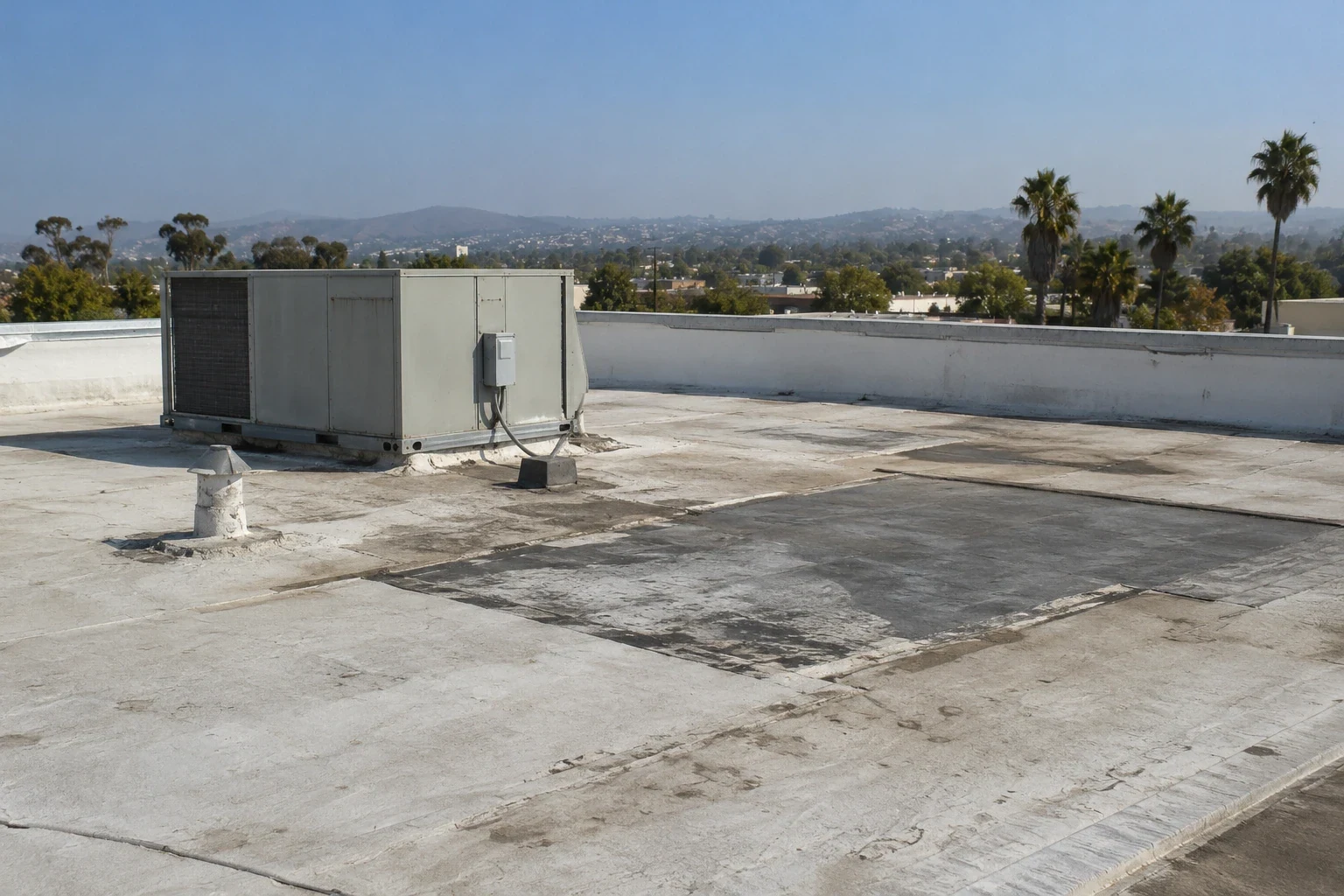
Where roof geometry already creates ponding, adding supports without reviewing drainage can make maintenance harder. We identify the current flow path and any correction that should happen before the solar installer mobilizes. The roof and solar teams can then coordinate the work sequence, access route, and final condition record.
How should roofing and solar work be sequenced?
The roofing contractor should complete authorized repairs or replacement before the array covers those zones. Solar installation should then follow the approved layout and roof-attachment details. If the project is phased, the schedule needs clear boundaries for completed roof sections, temporary protection, and areas where electrical work is still underway.
We coordinate with the solar contractor on roof access, material staging, penetrations, and any work that affects the membrane. The solar team owns its equipment and electrical scope; our role is the roof assembly and its transitions as defined in the proposal. A written interface plan prevents gaps where each trade assumes the other will flash or repair a connection.
For occupied buildings, staging and shutdowns should match the property’s daily operations. A packing or distribution facility may need delivery routes preserved. We identify roof zones where work may affect interior areas and coordinate notices with the facility contact. Weather can also alter the sequence, so each shift needs a plan to leave the roof secure.
What can local weather change?
Most normal precipitation in Salinas occurs in the cool season, while summer is typically much drier. The Salinas Valley also has frequent summer fog and low clouds. These patterns can influence roof access, surface preparation, and the timing of membrane repairs, but current surface conditions and forecasts determine whether work can proceed.
If a roof is repaired or replaced before array installation, the selected membrane and flashing materials must be installed under appropriate conditions. We confirm dry surfaces, safe wind limits, and protection against rain before opening the assembly. If a temporary cover remains, the solar installation should not proceed until the roof scope is completed and the owner accepts the condition record.
The City’s adopted 2025 code applies to certain work beginning January 2026. Permit timing, existing construction, and the solar and roof alterations determine which provisions apply. We provide roofing details and coordinate with the design and permitting team before construction.
How will the roof be maintained under an array?
Future inspections need safe access to seams, drains, flashings, equipment, and attachment points. The solar layout should preserve practical routes and identify any roof area that will be difficult to inspect. The owner can keep the roof plan and array drawing together so maintenance staff know where cables, supports, and penetrations cross the membrane.
After the solar work, we can inspect the roof-side details and document any penetrations or repairs within the authorized scope. If the installer later adds conduit or replaces a component, the roof connection should be restored and photographed. A maintenance plan can check accessible seams, drains, and flashings during future visits.
If an issue arises beneath the array, access may require coordination with the solar contractor. A roof inspection can identify which area is affected, and a repair scope can define work around equipment. Clear records of the original layout and roof condition make that future coordination easier.
What belongs in the readiness review?
The review should summarize the roof assembly, visible condition, repair needs, drainage, attachment coordination, and access limits. It should identify which sections are ready for the proposed work and which need testing, repair, replacement, or design review. A roof can be suitable for solar in one zone while another requires a different sequence.
We can provide roof drawings or records the solar designer needs, identify curb and flashing details, and state any assumptions that need confirmation. If the owner is also considering roof replacement or a recover, we compare that scope with the array schedule before equipment blocks the surface.
Questions Owners Ask
Should the roof be replaced before solar panels are installed?
That depends on the roof’s condition, repair history, and the project schedule. We inspect the assembly and identify testing or repairs that may be needed. The owner can compare roof work now with the disruption of removing equipment later.
Can a roofer determine whether the roof supports the array’s weight?
Structural capacity should be reviewed by the appropriate engineer using the building and equipment information. We can provide roofing assembly details and identify roof conditions that affect the design, but a roof inspection does not replace structural calculations.
Who flashes the solar attachments?
The interface should be stated in the project documents. The solar and roofing scopes need to identify who supplies, installs, and confirms each roof penetration or attachment flashing. We coordinate the roof-side details included in our authorized scope.
Can drains remain accessible after solar installation?
The panel layout should preserve service routes to drains, scuppers, overflow paths, and rooftop equipment. We review the proposed plan against the roof’s flow path and access needs before installation, then document any limits that remain.
Related Roofing Work
Review the roof before the array is designed
Share the roof plan, leak history, proposed solar layout, and equipment schedule. We will identify roof conditions and interface details that need resolution before installation.
