Auto Dealership Roofing in Salinas, CA
Protect Salinas dealership showrooms and service bays with roof repairs planned around vehicle routes, equipment, drainage, and operating hours.
Overview
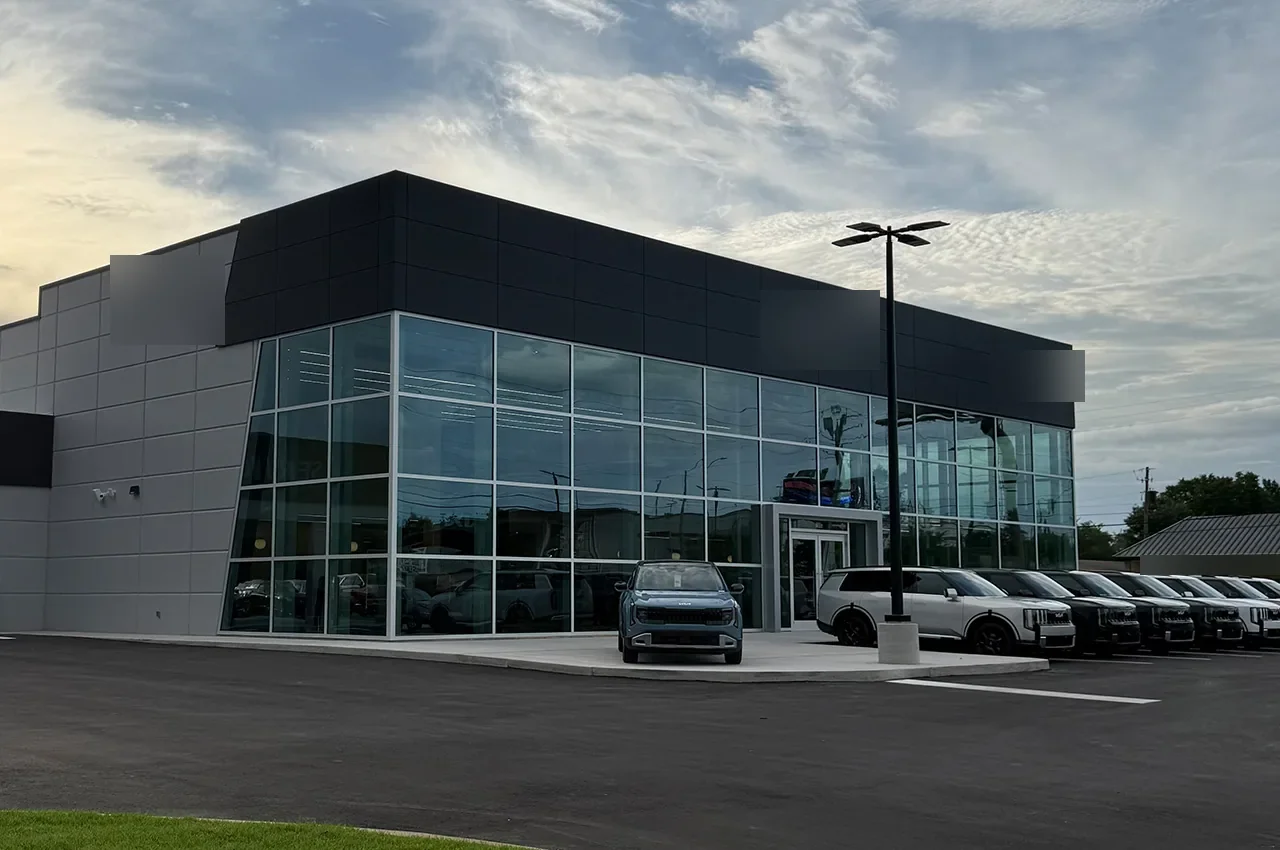
An auto dealership roof covers sales space, service bays, parts storage, offices, and areas where vehicles move in and out throughout the day. A leak above electrical equipment or a service lane can interrupt more than one department. We inspect the roof system, trace leak reports, and coordinate repairs or replacement around customer access, vehicle deliveries, and workshop schedules.
Salinas has retail and commercial areas as well as industrial and agricultural-support properties. Each dealership’s layout, roof type, and daily workflow are specific to the property. We confirm its operating hours, service-bay access, and roof history with management before setting a scope.
How do sales and service areas affect the roof plan?
A showroom may have customer-facing finishes and lighting, while service bays need clear vehicle access and safe overhead work. Parts storage and offices can have different interior protection needs. We identify which roof zones sit above each space, then map the work area and access route with the dealership contact. A report should state when a bay or entrance might be affected and how long the restriction is expected to last.
Work above vehicle lifts, inspection pits, or electrical service areas needs a plan for protection below and room for technicians to move. Sales and service teams may have different peak hours, so scheduling should account for both. Shopping-center roof work also requires customer coordination, while warehouse roofing protects inventory and loading. A dealership combines vehicle movement with customer and technician access.
Before mobilization, the plan should separate public circulation from the work zone. A lift near a showroom entrance can affect deliveries and customer parking even when the roof repair is small. We confirm staging space, fire-lane requirements, and the route for service vehicles with the property contact. For a multi-building dealership, each roof area gets its own access record so one restriction does not unnecessarily close sales or parts operations.
What should happen when a dealership reports a leak?
Management can record the department, bay, ceiling or wall location, and when water first appeared. We compare the report with recent rain, roof service, plumbing, and HVAC activity. The inspection checks seams, drains, curbs, skylights, and perimeter details above the affected area. Water can move along a deck before entering a showroom or shop, so we trace possible paths rather than assume the opening sits directly above the visible mark.
If water is active, the dealership may need to move a vehicle or equipment and keep the area clear while access is arranged. A permanent repair should address the roof detail with a material compatible with the installed system. Leak repair records the origin and repair boundary; a roof condition inspection can identify other areas needing attention. The closeout tells management which bay or room may need follow-up.
How should rooftop equipment and shop exhaust be managed?
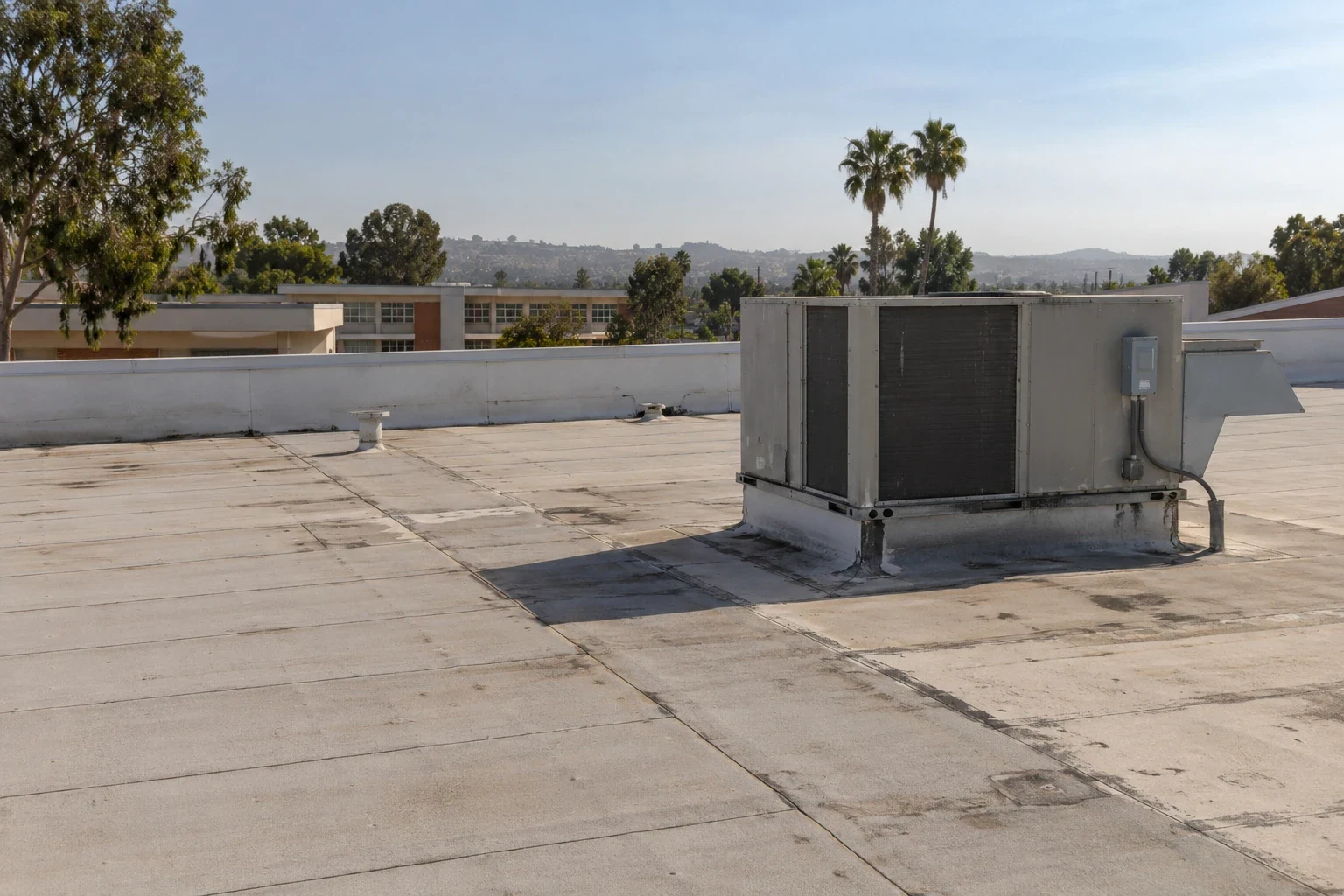
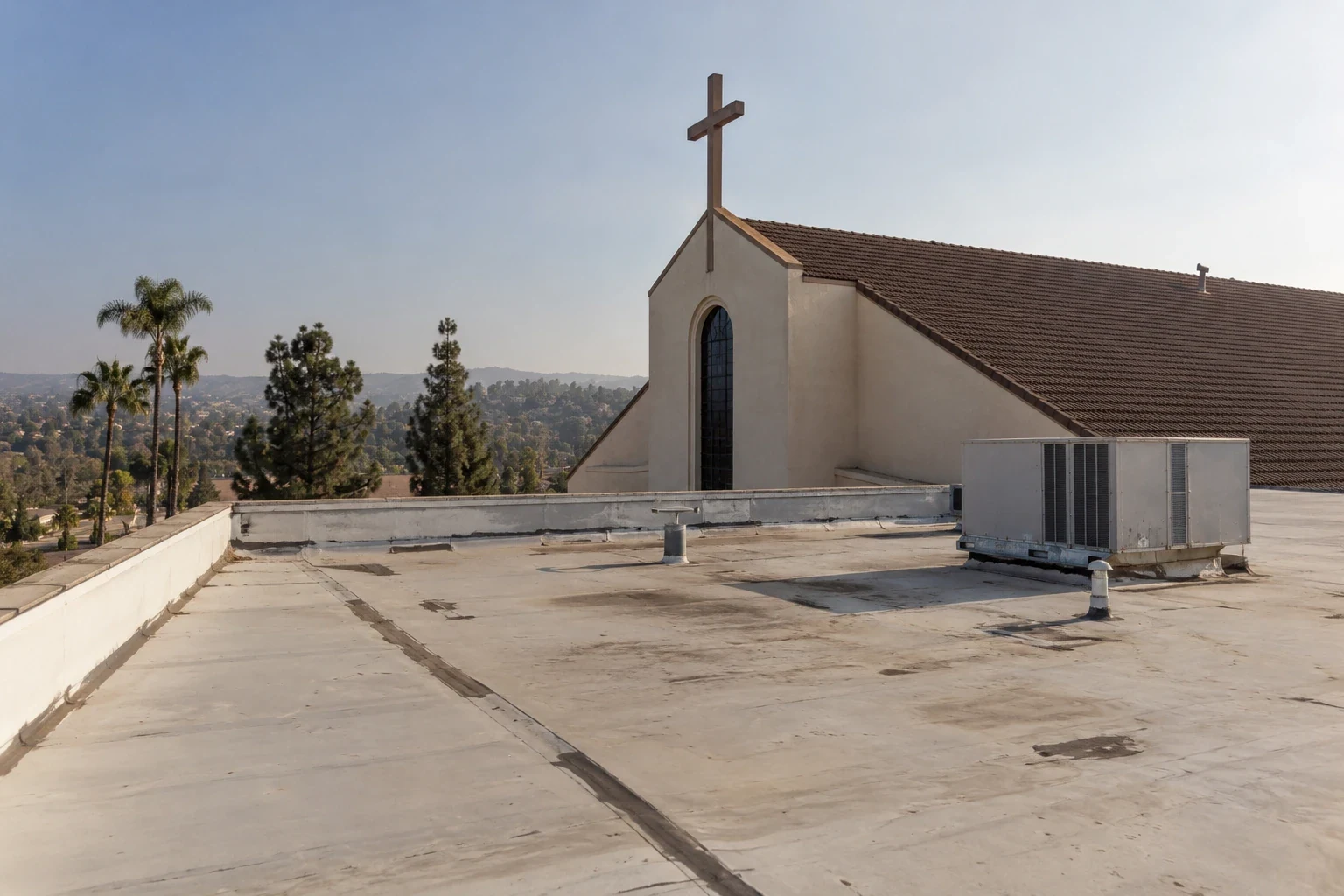
Dealership roofs may carry HVAC, exhaust fans, plumbing vents, antennas, skylights, and electrical conduits. Their curbs and supports need secure flashing while remaining accessible for service. We inspect for movement, loose corners, open fasteners, and repairs disturbed by another trade. Shop exhaust and other equipment should be reviewed with the facilities team so the roof repair fits the actual discharge and access conditions.
When a unit or exhaust is being replaced, the roofing contractor should confirm curb height and opening details before the mechanical work starts. The schedule needs to cover lifts, shutdowns, temporary covers, and final flashing. Equipment curb and support work can be coordinated with the service contractor; Skylights and other penetrations must reconnect to the roof assembly. The dealership receives a record of the completed connection and any service path needing protection.
Service-bay exhaust introduces heat, vibration, and maintenance access that can affect nearby flashings and supports. We look for movement at curb corners, cracked sealant, loose counterflashing, and water paths that start uphill of the equipment. If a mechanical contractor needs to lift or replace a unit, the roof opening and temporary weather protection belong in the schedule before work starts.
Why are drains and roof edges important?
Water from a large roof can collect near drains, scuppers, parapets, and service equipment. We inspect strainers, outlet connections, overflow routes, and the membrane or metal around each detail. If ponding repeats after a drain is clear, the cause may involve deck movement or slope. The repair scope should state whether it changes drainage or only restores the current surface.
Salinas receives most of its normal rainfall during the cooler season. Dealership facilities can schedule drain and edge checks while customer operations are less affected and before wet weather returns. Drain and scupper work should preserve the outlet and overflow path. We record the roof zones that feed each drain so a later interior report can be compared with the same area.
How do Salinas access patterns affect the work?
A sales lot near downtown Salinas may have limited staging space; a service department in Alisal and East Salinas may depend on separate customer and delivery gates. We confirm the property’s actual vehicle routes, service entrances, and delivery hours before locating a lift or material staging. A neighborhood does not identify the dealership’s lot plan or roof hatch.
The service manager can tell us when technicians need bays, when vehicle deliveries arrive, and which customer areas should stay open. We coordinate signs and ground-level barriers with those routes and clear the work area at the end of every shift. If a temporary restriction affects a vehicle pickup or service appointment, management receives the updated timing before customers arrive.
When should a dealership consider replacement?
A local puncture, failed curb, or open seam may be repaired if nearby membrane and insulation remain sound. Defects affecting the showroom, shop, and parts wing together may justify testing beyond the first visible entry, especially when insulation or attachment has also deteriorated. We map the defects by roof zone and identify testing that could change the recommendation. A replacement plan should address vehicle movement, bay closures, inventory protection, and how customer access is maintained in each phase.
Maintenance can check drains, equipment flashings, perimeter details, and trade routes before problems affect service work. Preventive maintenance logs changes and repairs; a replacement assessment compares recurring work with a new assembly. The owner should understand which departments can keep operating, what needs temporary protection, and which decisions require approval if removal exposes concealed conditions.
A replacement comparison separates the membrane from insulation, deck, drainage, and attachment. Local repairs may preserve a sound assembly, while widespread moisture or recurring failures can justify a larger evaluation. We describe what is visible and identify testing that could change the recommendation. If several dealership structures share one owner, repairs can be prioritized by leak activity, repairability, and the effect of restricting each building.
Questions Owners Ask
Can dealership roof work continue while service bays are open?
Often, with bay access, vehicle routes, equipment, and protection below coordinated by phase. We confirm the service schedule and identify any time when a bay or lane must be restricted.
What should staff do if a showroom leak appears?
Move people or equipment away if needed, record the location and time, and notify facilities. We inspect the roof and nearby details to locate the entry point and document the repair.
How do you protect vehicles during roof replacement?
The dealership identifies vehicle storage and movement below each work zone. We sequence roof areas, plan lifts and barriers, and confirm whether vehicles need to be relocated before work begins.
Can rooftop HVAC be replaced during a reroof?
It can be coordinated as part of the project when the mechanical and roofing scopes agree on curbs, equipment lifts, shutdowns, temporary weather protection, and final flashing.
Related Roofing Work
Keep roof work clear of sales and service
Share showroom hours, service-bay schedules, equipment layouts, leak reports, and vehicle routes. We will inspect the roof and plan work around customer access and shop operations.